


Recent neuroscience studies have shown that women are likely to be better leaders due to higher emotional intelligence than men. Is that reflecting in Indian workplaces?

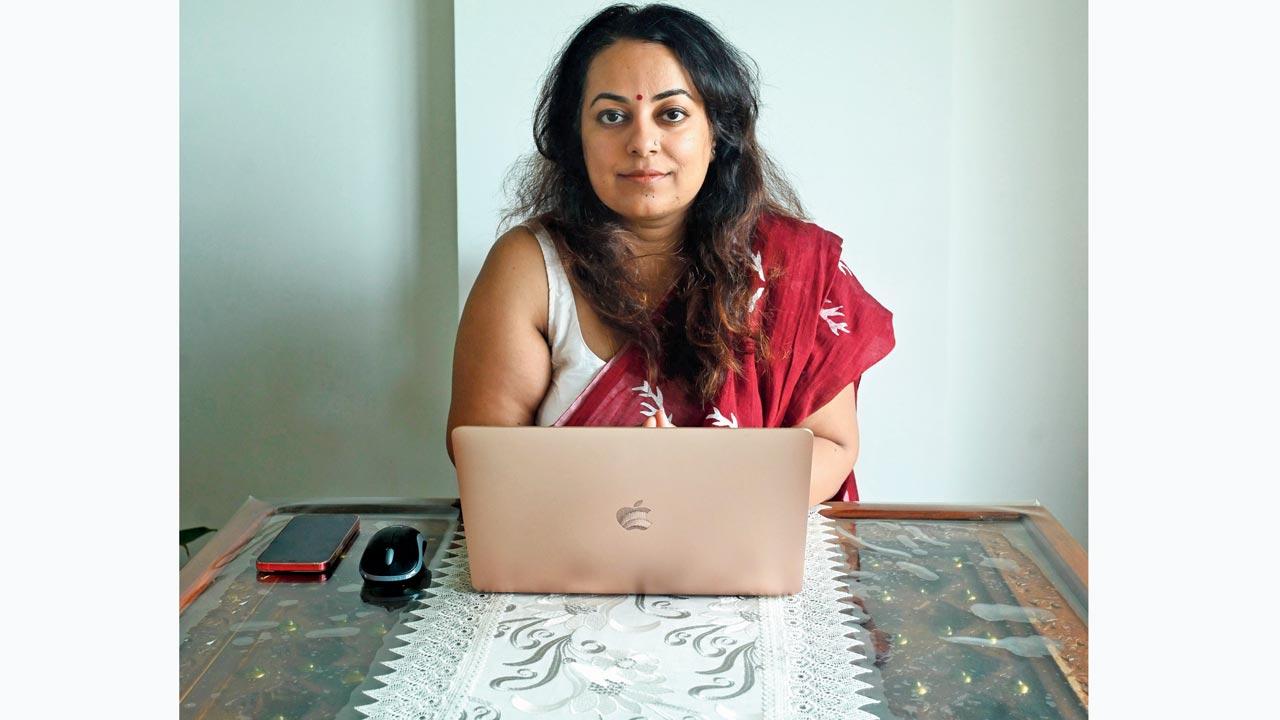
Aanya Jain, leading a largely female team, often navigates long hours, personal storytelling, and high-stakes feedback with empathy at the core. Pic/Atul Kamble
In today's workplace, where deadlines loom and emotional bandwidth runs thin, leadership is no longer defined by control but by connection. And, it turns out, women may be biologically better equipped for it. Neuroscience is now catching up to what many women have long intuited. The brain can shape leadership. At the forefront of this research is Mr Kumaar Bagrodia, founder and lead neuroscientist at NeuroLeap, a brain enhancement company that uses non-invasive neurotechnology to assess and enhance the brain. Through deep brain-mapping of over 20,000 individuals, his findings show that women leaders, especially the younger women, consistently demonstrate stronger connectivity in regions tied to empathy, self-awareness, and social perception which are the pillars of emotional intelligence.
Take Aakanksha Sadekar, for instance, who leads a team of seven engineers in offshore AI drilling. In an industry where a single decision can impact a massive number of lives hundreds of kilometres away in the ocean, emotional regulation isn’t optional. It’s essential. She credits her leadership strength to her deep sense of self-awareness. “Being emotionally connected with the people around you, and understanding that a problem could be stemming from an emotional place can often solve issues more effectively than anything else,” she says.
 Aakanksha Sadekar credits her leadership strength to her deep sense of self-awareness. Pic/Kirti Surve Parade
Neuroscience backs this up. Women often show stronger interoceptive awareness — the brain’s ability to read internal emotional and physical states — which allows them to anticipate stress and respond with balance. “If I know I’m going to be edgy, I delegate more tasks to others. I lean on my team. It makes me lead better,” Sadekar says. Far from being a limitation, her emotional intelligence is a leadership tool which is not rooted in softness, but in strategic foresight and team safety.
“Women leaders show stronger connectivity in brain networks tied to empathy, reflection, and perception, helping them navigate teams with emotional clarity,” explains Mr Bagrodia. And in people-first industries like public relations, that clarity shows up daily.
 Mr Kumaar Bagrodia
Praniti Bhadouria, who leads an all-women team at a PR agency, feels that emotional clarity is a daily balancing act. “It’s reductive to claim one can entirely suppress personal emotions in the workplace — they inevitably surface. And that’s not inherently negative,” she says.
Her leadership style reflects what neuroscience calls stronger social perception networks in women where the brain regions help detect emotional undercurrents in others and navigate group dynamics with empathy. But it comes with its own set of challenges. Leading young professionals who are still defining workplace boundaries, she often finds herself toeing the line between mentor and manager. “Once, a young girl joined our team and became everyone’s favourite. But eventually, she started acting like the baby of the agency and became too complacent probably because of all the pampering. So, I had to sit her down and talk to her calmly and privately. When you’ve had enough experience dealing with people, you can start mapping out behavioural patterns. You begin to understand their potential,” she recalls amicably.
As Mr Bagrodia notes, “Women in leadership tend to score higher or show better regulation across key networks because they can pick up on their emotional shifts earlier. In the workplace, this shows up as better timing, stronger intuition, and more thoughtful responses.” However, that same strength can become draining without firm internal boundaries. For Bhadouria, it’s a learning curve she’s constantly refining.
On the other hand, Aanya Jain, a 23-year-old co-founder of a women-dominated production house called Run Frenzy Films, is building not just a company but also a culture of emotional transparency. Her leadership began instinctively, rooted in a long-valued sense of emotional perception. “Ever since the teams and stakes have grown with time, we try to actively sharpen it,” she says.
She leads a largely female team, often navigating long hours, personal storytelling, and high-stakes feedback with empathy at the core. But that closeness comes at a cost. Jain admits that, early on, making tough decisions while staying emotionally present was difficult. “Women often feel with people, not just for them,” she explains. “It doesn’t have to clash with being decisive but it takes effort.”
Mr Bagrodia highlights that Gen Z women leaders show heightened brain activity in networks tied to empathy and reflection because they grow up talking freely about mental health. For Jain, this has shaped a leadership style that’s emotionally intelligent but one she’s had to consciously structure to avoid burnout. Being close in age to her team, she balances relatability with clarity, leading not only by authority but by emotional credibility, too.
While emotional intelligence is a strength, it can quickly become a strain. Interestingly, Gen Z women leaders, though emotionally fluent, may struggle with overprocessing and emotional overload, unlike older leaders who tend to compartmentalise better under pressure. “The ability to feel doesn’t always mean the ability to regulate,” warns Mr Bagrodia. Many young professionals, he notes, are fluent in emotional language but struggle to regulate themselves better for their own mental health and optimal performance.
Bhadouria agrees, “I’ll admit I do grow emotionally invested in my team. And that kind of empathy, while essential, can be profoundly exhausting.” Jain, too, admits that emotional openness often makes her feel responsible for everyone’s wellbeing.
That is exactly where science offers hope. Now with access to neurotechnology, Mr Bagrodia and his team at NeuroLeap map real-time brain activity to help individuals build emotional resilience at a neural level. While women may be naturally wired with certain emotional strengths, the science is clear. With the right tools, anyone can develop the brain patterns to lead with empathy, clarity, and lasting impact.
As Sadekar puts it, “I’m always open to anything that helps me grow, especially if it helps me protect the environment I’ve built for my team.”
 Subscribe today by clicking the link and stay updated with the latest news!" Click here!