01 March,2026 09:52 AM IST | Mumbai | Fiona Fernandez
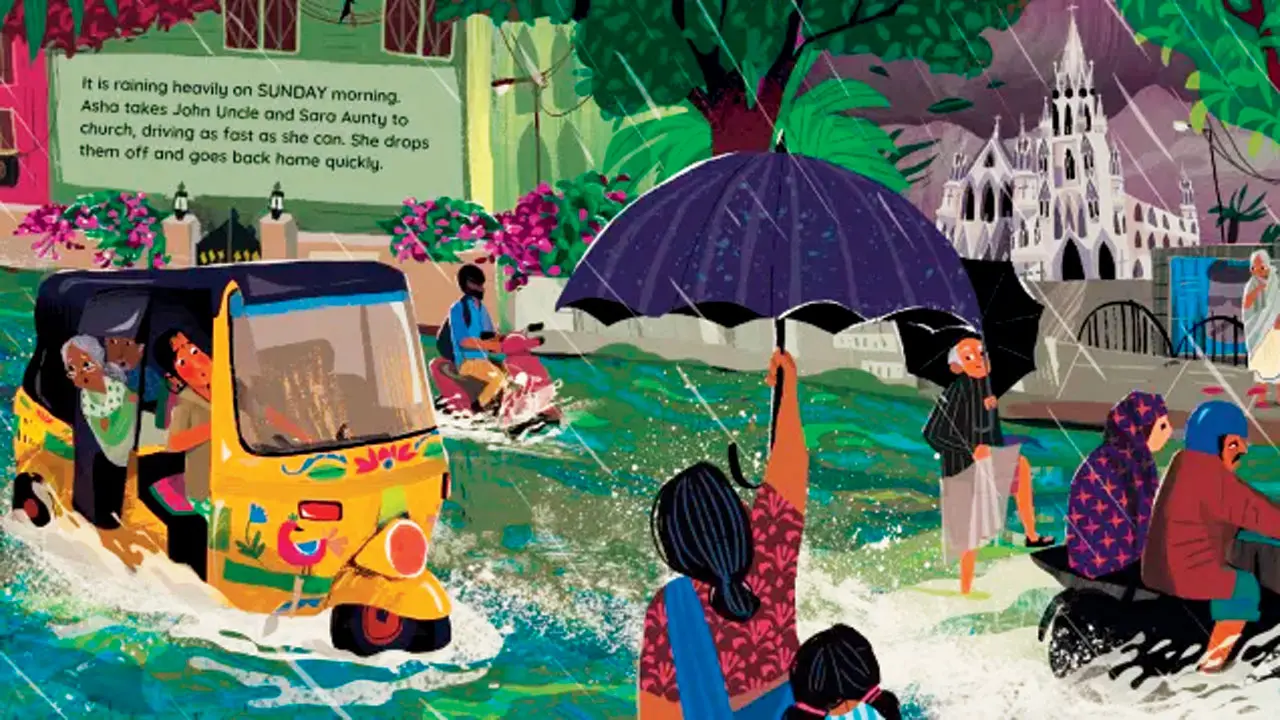
Illustrations from Asha the Auto-Driver that is aimed to tell children stories that they can contextualise with their environment
Dedicated to the art of writing the old-fashioned way, Tulika (meaning feather quill in Sanskrit) was set up as an independent publishing house with a simple, ambitious dream offering exciting, insightful and engaging picture books for children in English and Indian regional languages, including Hindi, Marathi, Tamil, Gujarati and Bengali, among others. Thirty years later that dream continues to be realised, one story at a time.
Excerpts from an interview with publisher Radhika Menon.
Tulika has been engaging in refreshing, pictorial storytelling, showcasing lesser-known stories from across India. How did this become your core?
WE started with the conviction that children's introduction to books had to be in their own languages. Picture books that bridge the oral and written organically, allowed us to publish books simultaneously in several languages.
From board books, to bilingual stories, the Tulika stable offers stories for different readers. What are the challenges to sustain this model?
Many challenges! For more than a decade after we began publishing in 1996, there was no market for the kind of books we produced. In English, we were up against the Western-imported books, and the cheaper mass-produced Indian books. In languages, there was no market for such books, and we had to create it through sheer persistence and continuing to bring out books against all odds.
Your commissioned collaborators are an eclectic mix. How do you ensure people from varied backgrounds and experiences sync with the Tulika philosophy?
We are always open to good, original manuscripts across categories and age groups. The diversity of our publishing programme allows us to include a wide range of stories, ideas, and voices.
In your books, the storytelling organically flows from text to images. Tell us about this craft between the art and edit teams.
The editors work very closely with the illustrators every step of the way. Beyond the illustrations, we pay equal attention to the overall design. Every element comes together to enrich the reading experience.
How did the pandemic affect Tulika? Were there any seismic or subtle shifts in how you functioned as a publishing house?
The pandemic did affect us. At first, they were small changes but one fine day we realised that our entire way of functioning had shifted! Today, half the office works in a hybrid mode, dividing time between home and office on alternate or half days. The other half continues as before, handling the daily orders and enquiries and managing the bookstore.
What lies ahead in the Tulika castle of storytelling?
As we celebrate our 30th anniversary, the outpouring of good wishes has been deeply heartening. Knowing that our books have had such impact is profoundly rewarding. What lies ahead is a continued commitment to that spirit - to publishing books that challenge, comfort, and expand young imaginations.
Asha the Auto-Driver written by Aruna Shekar and illustrated by Sandhya Prabhat was selected as the Honor Book at the 2024 South Asia Book Award. The story is about a woman auto driver who plies her auto across Chennai's streets, normalising a typically male-dominated profession.
Tulika's logo, a crow called Kaka, is a hat-tip to the intelligent bird, and its common presence in India
LOG ON TO: www.tulikabooks.com