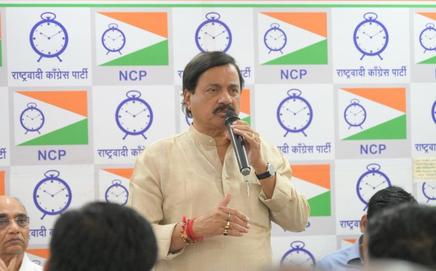
Maharashtra NCP Chief Sunil Tatkare has said that while he does not personally oppose a merger between the Ajit Pawar faction with NCP-SP, any such decision would be made collectively by the party leadership, reported news agency IANS. NDA decision defended as long-term strategic move He spoke at length on the merger between the two factions and the Ajit Pawar-led NCP's strategic shift since joining the National Democratic Alliance (NDA). ‘We remain firm with NDA despite criticism’ Tatkare defended the decision to join the NDA, noting that the move had been under internal discussion for years. "We faced criticism for this role and continue to do so, but we remain firm in our decision to stay with the NDA," he said, reported IANS. Cautious response on Sharad Pawar joining NDA When asked if veteran leader Sharad Pawar should join the NDA, Tatkare remained guarded. "I am not a big enough leader to advise Sharad Pawar on such matters; I know my limitations," he remarked, reported IANS. Merger talks currently limited to select regions Addressing Ajit Pawar's recent comments regarding a potential merger, Tatkare clarified that the sentiment is currently localised, particularly in Pune and Pimpri-Chinchwad. He said that while Ajit Pawar has the authority to express views as NCP President, the matter has not formally reached the state leadership. Swipe at Sanjay Shirsat over NDA remark Tatkare also criticised Shiv Sena leader Sanjay Shirsat for suggesting Sharad Pawar might join the NDA, calling the statement unauthorised. In a related development, Deputy CM Ajit Pawar said election commitments have delayed any serious consideration of a merger but acknowledged worker-level satisfaction with cooperation. ‘No permanent friends or enemies in politics’ Ajit Pawar reiterated that political alignments are fluid, leaving room for future decisions, reported IANS. Ajit Pawar’s remarks reignited debate over a possible reunion with Sharad Pawar, especially after the Thackeray brothers’ reconciliation ahead of civic polls. Local alliance fuels reunion buzz in Pune, Pimpri-Chinchwad Political interest has intensified as both NCP factions have announced a local-level alliance for ongoing municipal elections. Analysts believe a reunion could significantly alter Maharashtra’s political equations by consolidating the Maratha vote bank. (With inputs from IANS)
09 January,2026 09:17 AM IST | Mumbai | mid-day online correspondentStacked one on top of the other between Malad and Dahisar, the three administrative wards that comprise the R ward in the western suburbs of Greater Mumbai mark the entry into the city from Mira Bhayandar, Vasai-Virar, and Uttan in the Mumbai Metropolitan Region (MMR). While the R South ward comprises areas in Malad; the R Central ward comprises Kandivli and Gorai, and the R North ward, comprising Dahisar, marks the boundary between the MMR and Greater Mumbai. All three wards also contain the no-development zone of Sanjay Gandhi National Park (SGNP), which gives the area a large open space and a high ratio of per capita open space as well. Approximately 60 per cent of the combined R ward comprises parts of SGNP, home to two reservoirs that provide drinking water to Mumbai: Vihar and Tulsi. The Tulsi dam comes within the jurisdiction of the R wards. The Global Vipassana Pagoda. File pic/Satej Shinde Until the 2000s, the entire region was divided into two wards — R North and South, with about five per cent of its area comprising an industrial zone for prominent manufacturing units of automobile companies. The area today continues to draw a large number of tourists, and is known as Mumbai’s Goa due to Gorai, with its quiet beaches, gaothans, and tourist attractions such as shacks and sea sports. The iconic EsselWorld was located in Gorai, and the area is home to the catchment zone of one of Mumbai’s five prominent rivers — Dahisar river. Approximately 27 per cent of the ward falls in the residential zone, with a high demand for spacious homes in new and upcoming high-rise buildings. The Western Express Highway (WEH) cuts through the R wards, and has witnessed transit-oriented development over the past decade, where homes close to the commuting corridor are in high demand. About R North Ward Area under ward: Dahisar Characterised by: Awaited Population of ward: 4,84,747 Density of ward: 304 Chronic waterlogging spots: None for BMC Vulnerable populations Settlements: 4, due to landslide and creek Population: 31,000 Open spaces: 59Road concreting statusPartially completed - 22Completed - 65Not started - 6 Electoral ward 1 Ganpat Patil Nagar, Borivli RTO, Dahisar River and IC Colony Demographic details Total population - 61,071SC Population - 3153ST population - 956 Political details Municipal councillor’s name (2017) - Manoj Kishorbhai Kotak (BJP)Votes received - 14,063Total votes cast - 26,904Winning margin - 52%Ward reservation (2017) - OpenWard reservation (2025) Women Electoral ward 2 Avdhut Nagar, Anand Nagar, NL Complex, Sudhindra Nagar Demographic details Total population - 56,016SC Population - 1975ST population - 529 Political details Municipal councillor’s name (2017) - Jagdish Karunashankar Oza (BJP)Votes received - 10,719Total votes cast - 22,163Winning margin - 48%Ward reservation (2017) - OpenWard reservation (2025) Women Electoral ward 3 Ketkipada, Dharkhadi, Diamond Industrial Estate, Vaishali Nagar, Dahisar check naka Demographic details Total population - 57,471SC Population - 3693ST population - 825 Political details Municipal councillor’s name (2017) - Balkrishna Jaysing Brid (Shiv Sena)Votes received - 5193Total votes cast - 23,656Winning margin - 22%Ward reservation (2017) – OpenWard reservation (2025) – Open Electoral ward 4 Ghartan Pada, Konkani Pada, Ekta Nagar, Rawal Pada Demographic details Total population - 59,083SC Population - 1204ST population - 923 Political details Municipal councillor’s name (2017) - Sujata Udesh Patekar (Shiv Sena)Votes received - 11,078Total votes cast - 23,006Winning margin - 48%Ward reservation (2017) - OpenWard reservation (2025) – OBC Electoral ward 5 Ashokvan, Chogle Nagar, Ganesh Nagar, Chintamani Nagar, ST depot Demographic details Total population - 58,049SC population - 1535ST population - 828 Political details Municipal councillor’s name (2017) - Sanjay Shankar Ghadi (Shiv Sena)Votes received - 11,659Total votes cast - 25,220Winning margin - 46%Ward reservation (2017) – OBCWard reservation (2025) - Open Electoral ward 6 Ratan Nagar, Ambewadi, Ovaripada, Maratha Colony, Manav Kalyan Kendra Demographic details Total population - 52,773SC Population - 1557ST population - 707 Political details Municipal councillor’s name (2017) - Harshad Prakash Karkar (Shiv Sena)Votes received - 11,355Total votes cast - 23,762Winning margin - 48%Ward reservation (2017) - OBCWard reservation (2025) – OBC Women Electoral ward 7 Dahisar river, Navagaon, Kandarpada Demographic details Total population - 49,125SC Population - 1427ST population - 871 Political details Municipal councillor’s name (2017) - Sheetal Mukesh Mhatre (Shiv Sena)Votes received - 8205Total votes cast - 20,942Winning margin - 39%Ward reservation (2017) - WomenWard reservation (2025) Open Electoral ward 8 Mary Immaculate School, St Francis School, Bhagwati Hospital, LIC Colony, Mandpeshwar Colony Demographic details Total population - 48,911SC Population - 1582ST population - 524 Political detailsMunicipal councillor’s name (2017) - Harish Ravji Chheda (BJP)Votes received - 8534Total votes cast - 19,453Winning margin - 44%Ward reservation (2017) - OpenWard reservation (2025) Women
09 January,2026 09:05 AM IST | Mumbai | Eshanpriya MSAmid ongoing election activity in the 29 municipal corporations in Maharashtra, the Shiv Sena (UBT) has launched a fierce attack on the Bharatiya Janata Party (BJP), accusing it of abandoning its core ideology for the sake of power, reported news agency IANS. ‘Shameful display of hypocrisy’: Saamana editorial on BJP’s political moves The party described the BJP's recent political manoeuvres in Maharashtra as a "shameful display of hypocrisy" following revelations of local alliances with the AIMIM and the Congress party. The Thackeray camp in the party mouthpiece Saamana editorial said, “The BJP’s current mindset is to do whatever it takes to stay in power and avoid sitting in the opposition as it lacks an original ideology; their Hindutva is a pretence used for selfish political gain…,” reported IANS. AIMIM called BJP’s ‘hidden helper’ in elections The editorial alleged that the BJP has frequently utilised Asaduddin Owaisi’s AIMIM as a "hidden helper" in elections across Uttar Pradesh, Bihar, and Maharashtra to divide opposition votes. "Whenever Owaisi arrives in Maharashtra to give the 'call to prayer' (Azaan), it is a signal that the BJP has begun its election preparations," said the editorial, describing the relationship as a covert alliance that has now surfaced publicly. Municipal council alliances cited as proof The Thackeray camp referred to recent developments in municipal councils, accusing the BJP of entering into an "open marriage" with AIMIM in Akot and collaborating with the Congress in Ambernath to weaken the Eknath Shinde-led Shiv Sena faction. After public outcry, Chief Minister Devendra Fadnavis attempted damage control by promising action and severing alliances, but the editorial claimed the reputational damage to the BJP was irreversible. Secret negotiations exposed, says Thackeray camp The Uddhav Thackeray-led Shiv Sena further alleged that negotiations, bargaining, and secret meetings for political tie-ups were initially conducted privately until they were exposed. According to the editorial, while Prime Minister Narendra Modi promoted the slogan of "Congress-mukt Bharat", the BJP has now transformed into a "Congress-yukt BJP". BJP accused of importing leaders from rival parties "The BJP has absorbed corrupt Congress leaders into its fold… Nearly 80 per cent of the BJP’s MLAs, MPs, and corporators are imports from the Congress, NCP, or Shiv Sena," it alleged, reported IANS. The Thackeray camp concluded that by recruiting corrupt leaders and criminals to secure electoral victories, the BJP’s only remaining policy is winning elections at any cost. (With inputs from IANS)
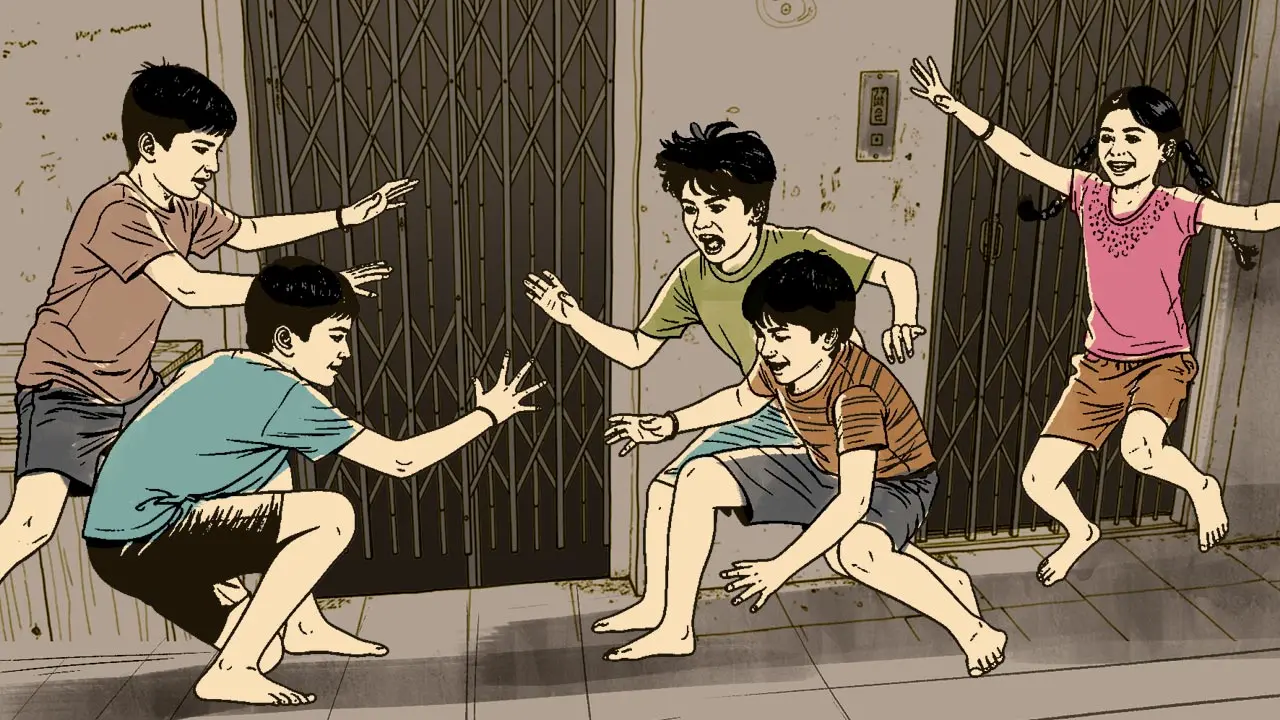
09 January,2026 08:59 AM IST | Mumbai | mid-day online correspondentWhat began as an innocent game of kabaddi turned into a nightmare late Wednesday night, when two boys aged 11 fell from the third floor into a lift shaft of a residential building in Dr Babasaheb Ambedkar SRA CHS Ltd in Goregaon West’s Mitha Nagar area. The incident occurred around 10 pm at the R-1 Building, leaving one child battling for life. According to preliminary information, Vignesh Mahatre and Rudhra Susvirkar were playing kabaddi with other children in a passage near the lift. During the game, the boys accidentally collided with the lift’s grill, causing its lower portion to break off and the entire frame to give way inward, and both children plunged straight into the duct. Around 10 pm, while the children were pushing and tackling each other, they collided into the grill of a 21-year-old lift, causing it to break and give away Residents rushed to the scene after hearing screams. Society youths acted swiftly and rescued the boys, carrying them to nearby hospitals. Vignesh, who fell first, sustained severe head and chest injuries and was initially taken to Kapadia Hospital, then shifted to SRV Hospital, and later admitted to Kokilaben Hospital, where doctors have described his condition as critical and placed him in a special care unit. Rudhra, who fell on top of Vignesh, suffered fractures to his hand and leg but is reported to be stable and undergoing treatment at a private hospital. Speaking to mid-day, Vignesh’s cousin Divyansh Mohite said he arrived at the building moments after the accident and saw residents carrying the injured children. “We later learned they were playing kabaddi. During the game, both hit the lift grill, which broke. Vignesh fell first and suffered serious head injuries after hitting the broken grill,” he said. Further inquiry revealed that Vignesh is a Std V student of a Goregaon-based school and lives in R-4 Building with his parents and two sisters. Vignesh frequently visited the nearby R-1 Building, where his grandmother resides. Vignesh plunged down the lift shaft first after the lift grill broke, suffering serious head injuries on impact; (right) Rudhra fell on top of Vignesh, suffering fractures to his hand and leg but is reported to be in stable condition. Illustrations/Uday Mohite Rudhra, a Std V student at St Thomas School, lives on the second floor of R-1 Building with his parents. How did it happen? The lift is nearly 21 years old and undergoes routine servicing every month. “Greasing and maintenance are done regularly, but how the grill snapped remains a mystery. Had it been replaced in time, this tragedy might have been avoided,” said Mohite. Vignesh Mahatre, who suffered serious head injuries; (right) Rudhra Susvirkar, who fractured his hand and leg Another youth, Arnav Kadam, told mid-day that he and his friends helped pull the children out of the duct before rushing them to the hospital. The incident has left Vignesh’s mother, Sheetal, and grandmother, Suman, deeply traumatised and unable to speak. The Goregaon police officers confirmed that a panchnama of the spot had been conducted. Officers from the lift department also visited the building, and a detailed investigation is underway to determine whether negligence or faulty maintenance led to the accident. The building in Mitha Nagar, Goregaon West, where the mishap occurred; (centre) the broken grill of the 21-year-old lift on the third floor of R-1 Building of Dr Babasaheb Ambedkar SRA CHS Ltd; (right) the shaft through which the children fell. Pics/Satej Shinde The lift department officials were contacted, but they did not pick up mid-day’s calls. Messages were also sent; however, no response was received by press time.
09 January,2026 08:48 AM IST | Mumbai | Samiullah KhanShiv Sena (UBT) chief Uddhav Thackeray has admitted that one may see his reunion with cousin Raj Thackeray as unexpected. However, he said the cousins coming together is driven by a shared commitment to Marathi asmita and the larger interest of Maharashtra. Interestingly, when asked whether there is a possibility of realigning with the Bharatiya Janata Party (BJP) in the future, he neither confirmed nor denied it. In a wide-ranging interview, Thackeray spoke candidly about Mumbai’s worsening civic crisis, air pollution and political realignments ahead of the high-stakes Brihanmumbai Municipal Corporation elections. Thackeray repeatedly returned to one central theme: that Mumbai itself is what is truly at stake. Excerpts from an interview: Mumbaikars face the same problems every year, potholes, broken roads, flooding and no safe space to walk. Can this really change, or should people accept that this is how Mumbai will always be?There is no denying that Mumbai has always had problems. What is worrying, however, is that these problems have sharply worsened in the last few years. Since February 2022, after the term of 227 BMC corporators ended, the city has been run by administrators. During this period, the situation has deteriorated further, with little accountability and no one to answer citizens’ questions. Instead of fixing basic civic issues, the current Maharashtra government, in the name of development, has allowed haphazard construction, whether it is roads, infrastructure projects, redevelopment or unchecked building activity. Mumbai citizens are already dealing with several problems, and in the past few years, another has been added to the list, poor air quality, which was not as bad a decade ago.The quality of work has fallen so badly that roads barely last a season, construction dust hangs in the air, and pollution levels have reached dangerous limits. Mumbaikars are no longer just battling potholes and broken roads; they are also struggling to breathe clean air. The situation has become so serious that, like the warning printed on tobacco products, one feels the city now needs caution boards everywhere stating, “Inhaling this air is injurious to health.” During Bal Thackeray’s time, there were differences and dissatisfaction within the party, but no one openly rebelled against the organisation. Your leadership style is seen as calmer and more accommodative. Do you believe this difference played a role in the rebellion and eventual split?Maybe my nature did play a role. But I will not change the way I am. I believe in trusting my cadre and leaders and treating everyone with equal respect, love, and affection. That is how I function, and I see no reason to correct myself for that. I choose to trust people and give them responsibility. It is then up to them to live up to that trust and deliver. Raj Thackeray quit the undivided Shiv Sena in 2005. Did you ever imagine that the two cousins and their parties would come together again?One may call it unexpected, but this reunion is deeply rooted in Marathi identity and the pride of Maharashtra. We were separated earlier, but when there were attempts to impose Hindi, we felt it was being done to divide us for someone else’s political motives. Both Raj and I felt there was no reason to give in to what others wanted. That realisation brought us together. We have come together with the resolve to stay united and stand for Marathi pride and Maharashtra’s interests. We intend to stay united forever. You have often said your differences are not with the entire BJP but with a few leaders at the Centre and in the state. If those leaders were no longer in the picture, would you consider joining hands with the BJP again?When the time comes, we will see. Why discuss it now? [Neither confirming nor denying the possibility] Several welfare schemes have been announced, including R1500 monthly assistance to domestic workers and meals at R10. Where will the funding come from? Will this strain the BMC’s finances?This is a valid question, and I am glad it is being asked. We plan to stop unnecessary and haphazard development works that are carried out only to benefit contractors and generate kickbacks for elections. By cutting wasteful spending and prioritising essential projects, funds can be redirected towards genuine welfare schemes. You launched the Mee Mumbaikar initiative in the early 2000s. At a time when the narrative is increasingly Marathi versus non-Marathi, do you still stand by that inclusive vision?Marathi people have never hated or clashed with any other community. Tensions arose only when Marathi identity, language or regional pride was provoked. Reactions came in response to such incidents, not out of hostility. For us, anyone who loves and respects Mumbai, its language and Maharashtra’s culture is a Mumbaikar. Cordial relations between Marathi and other communities have always existed and will continue to exist. I firmly believe in the Mee Mumbaikar campaign and its inclusive spirit. Do you believe having the Congress in the alliance could have prevented a split in anti-BJP votes and changed the BMC outcome?Congress initiated the move and announced it would contest the elections separately. They did not leave space for dialogue or further discussions. Finally, what is at stake for you personally in this BMC election?For me, it is Mumbai that is at stake.
09 January,2026 08:46 AM IST | Mumbai | Sanjeev ShivadekarWith education at the centre of its agenda, the MahaMumbai Shikshan Sanstha Sanghatana (MMSSS) has released its manifesto ahead of the municipal body elections. The 13-point agenda highlights key challenges such as rising education costs, inadequate infrastructure, non-academic workload on teachers, and policy inconsistencies, among others. With board examinations approaching, the group has demanded robust infrastructure at Std X and XII exam centres, including CCTV surveillance, security personnel, power backup through generators, and adequate technical facilities. “We are reaching out to political candidates and urging them to include these concerns in their agendas. Our demands are aimed at the overall welfare of teachers and students across the city,” said Sadanand Raorane, president, MahaMumbai Shikshan Sanstha Sanghatana. Tax waiver requested The organisation has also sought a complete waiver of property tax for schools operating in the metropolitan region, timely disbursal of RTE grants, exemption of teachers from non-academic duties, additional financial grants for BMC and government schools beyond salaries, and state-provided facilities at board exam centres. The manifesto further calls for effective implementation of the National Education Policy (NEP), including the appointment of qualified teachers for arts, sports, music and computer education in all schools, along with trained counsellors. Post-election break Members of the Maharashtra Progressive Teachers Association have demanded a holiday on January 16, as teachers and non-teaching staff will be on election duty on January 14 and 15. The association said the break would serve as compensation for continuous duty and the loss of the Makar Sankranti holiday.
09 January,2026 08:21 AM IST | Mumbai | Aditi AlurkarThe making of matchwinners A group of focused young cricketers train at the Mumbai Police Gymkhana at Marine Drive. From E-waste to e-useful Robo Crafter (left); Waste material used to make Robo Crafter. Pics Courtesy/Nehru Science Centre Cannot think of how to discard e-waste? We’ve come across an innovative idea. Nehru Science Centre is hosting the Swachhta Pakhwada campaign, which highlights creative reuse and sustainability through innovative displays made from discarded electronic waste. The campaign is currently organised for staff members of Nehru Science Centre and focuses on encouraging mindful waste management practices. A key attraction is Robo Crafter, a robot sculpture created entirely from e-waste by artist HD Barapatre, exhibition officer at Nehru Science Centre. “It took me a total of three days to make this,” Barapatre says. “I used various e-waste materials such as wires, old torches, circuit boards, CCTV glass covers, speakers, old equipment, keyboards, a ball, and other items that would otherwise be considered unworthy.” The sculpture demonstrates how discarded materials can be repurposed creatively rather than sent to landfills. Another notable mention is the Wake Up Rooster, crafted by Avani A Rane, artist at Nehru Science Centre, which further reinforces the message of sustainability and responsible reuse through art. HD Barapatre Be a WISE voter With the Brihanmumbai Municipal Corporation elections scheduled for January 15, citizens are being encouraged to understand who they are voting for and why. Youth-led social change platform Blue Ribbon Movement, will host a pre-election gathering titled ‘We Vote WISE’ at Nariman Point on January 10. The event will bring together citizens across Mumbai to collectively warm up for the polls. The initiative has invited volunteers, including writers, poets, and storytellers, to help shape a creative manifesto rooted in Mumbaikars’ voices. The team and volunteers of Blue Ribbon Movement. Pics courtesy/Akash Upase “The proposed event, ‘We Vote WISE — (Well-being, Inclusion, Sustainability, Expression, and Entrepreneurial energy) — is a fun and engaging citizens’ meet held before the elections. The aim is to reflect on the impact of three years without local elections, seek accountability from the Municipal Corporation of Greater Mumbai (MCGM), and understand what voting wisely means, and, where possible, engage with political parties around citizens’ key concerns,” WISE lead, Blue Ribbon Movement, Akash Upase, told us. Akash Upase A slow Sunday morning ritual A designated reading space. PIC courtesy/Kitaabghar reading room and bookshop Kitaabghar Reading Room and Bookshop in Andheri will launch a new weekly community initiative in 2026, centred on a calm and unhurried Sunday reading ritual. Held every Sunday, the gathering invites strangers to come together for silent reading — with no pressure to speak, interact, or finish a book. Readers are welcomed into a designated quiet space where they can read peacefully without disturbance, for a minimal fee of '100 every Sunday. The space offers a mix of old favourites and newly added books across genres, allowing participants to either bring their own book or choose one on site. Amal Solanki, founder of Kitaabghar, said, “Many people don’t like to talk about what they’re reading because it’s an intimate activity. This is a safe space for readers who want to bury their faces deep in their books.” Economic start Pic Courtesy/Wikimedia Commons If you were looking for ideas to figure your financial game plan for 2026, Worli was the place to be. Former chief economic advisor Arvind Subramanian (below) was joined by political scientist Devesh Kapur in a talk by the Asia Society India Centre at Club Jolie’s yesterday. “They plunged deep into almost 80 years of development data, and it’s wonderful to start the year off by examining how the data can surprise us and make us re-evaluate our nation’s history and economy,” shared Inakshi Sobti, CEO, Asia Society India Centre. Fringe benefits in March Soha Ali Khan during 3 Art House’s in-house fest, Neighbourhood Festival. Pics Courtesy/3 Art House; (right) Banat Kaur Bagga Mumbai is expecting an intriguingly unconventional showcase soon. From March 12 to 15, the Mumbai Fringe Festival will be hosted at 3 Art House in Khar. The Fringe, which has been a global phenomenon for decades, curates intimate, original performances. These, however, are not traditional acts. The concept is to craft performances that will come alive best in small rooms, creating an authentic connection between the performer and the audience. The festival consists of theatre, comedy, spoken word, storytelling, amongst other experimental formats. “[It] is really about live performance that feels close and honest; it’s not about big stages or creating a spectacle, but about storytelling and connections. We’re excited to see how artistes and audiences respond to this format in Mumbai,” revealed Banat Kaur Bagga, co-founder, 3 Art House. Those interested can follow @mumaaifringefest for more updates.
09 January,2026 08:15 AM IST | Mumbai | Team mid-daySantacruz residents have raised serious allegations against the Slum Rehabilitation Authority (SRA), claiming that key provisions of the Development Control and Promotion Regulations (DCPR) 2034 have been violated, leading to potential long-term inconvenience for daily commuters. At the centre of the controversy is TPS 6 Road No. 1, a proposed 12.20-metre-wide road, planned to provide direct access to Santacruz railway station to the local residents. According to the locals, the entire stretch of the proposed road has been encroached upon by a private developer, upon which a mall has been constructed. “The construction of the mall has completely obstructed the planned road alignment, defeating the very purpose of the sanctioned development plan,” said Navneet Madan, a local resident. The mall that residents claim was illegally built and which has become an obstruction to construction of a road to Santacruz station. Pics/Nimesh Dave Due to the obstruction, commuters who were earlier expected to benefit from a direct road link are now forced to use the PM Road to reach the station. This road has been diverted and connected to Phirozshah Mehta Road, further complicating access. Residents point out that under DCPR 2034 (Development Control and Promotion Regulation 2034), diversion of roads is not permitted. The regulations only allow realignment of roads within the same designated boundaries, and even that requires due approvals. Locals allege that despite these clear provisions, the SRA went ahead and regularised the mall, which was originally constructed illegally. They further claim that the road diversion plan was earlier rejected by the Development Plan Department (DP department), yet the diversion was implemented regardless. Recently, a part Occupation Certificate (OC) was also granted to the mall, raising fears that the obstruction may now become permanent. “The proposed road was meant to make our lives easier. Instead, we are now spending nearly 25 minutes and at least R40 per trip just to reach the railway station,” said a local resident. According to residents, once the road is fully operational as per the DCPR norms, pedestrians would be able to reach the station within five minutes (by walking). With the mall now standing on the proposed road alignment, residents worry that restoring the planned access road may become increasingly difficult. Citizen groups have demanded immediate intervention, cancellation of the alleged illegal regularisation, and strict adherence to DCPR 2034, warning that failure to act would set a dangerous precedent for urban planning violations in Mumbai. Residents Speak “Not establishing the proposed Road No. 1 will lead to excessive inconvenience. The road can help us reach [Santacruz] railway station by walking in 5 minutes. However, if the proposed road is not established, we will be forced to take a longer route which is always jammed with traffic. Additionally, we will have to spend at least 20 minutes and spend R40 one-way,” said Ajit Ajgaonkar, one of the residents. “Despite several complaints and even raising the matter in Vidhan Sabha, the mall stands. Also, as per the MRTP Act, SRA does not have the power to divert any roads. They only have power to realign the roads, and that too within the boundaries of the area. Moreover, whether diversion or realignment, SRA must take suggestions and objections from the residents” said Ajay Desai, another local resident. “The main question here is how was a proposed road encroached? Post encroachment, how was the builder allowed to construct a ground+3 mall? Post construction, how was the illegal construction of the mall regularised? The mall also received part OC. We don’t understand who exactly should be blamed for this,” said Sanjay Patkar, another local resident. Questions raised with SRA . How did the SRA approve the diversion of PM Road and its connection with Phirozshah Mehta Road despite the DP Department rejecting the diversion?. Why did SRA violate the DCPR-2034 rules and regularise the construction of the mall by giving a notice to the developer and making him pay a fine?. Will the SRA demolish the obstructing mall to establish the proposed Road No. 1? SRA’s response . The 12.20-metre-wide DP Road was realigned in the year 2017, as per regulation 11(4) of DCR 1991 by the then CEO of SRA, subject to concurrence from BMC. The BMC had given concurrence for the realignment on August 3, 2019.. The work was carried out beyond the Commencement Certificate, but an approval was regularised by recovering the penalty (R2.49 crore) as per the prevailing policy.. Action is not warranted as the realignment of the DP Road has been done as per the regulation, and the BMC had given concurrence for the same. 12.2 metresWidth of the road
09 January,2026 08:09 AM IST | Mumbai | Ritika GondhalekarWhile Mumbai grapples with deteriorating air quality and shrinking green cover, 255 trees within the eco-sensitive zone (ESZ) of Sanjay Gandhi National Park (SGNP) will face the axe, and another 201 will be transplanted, to set up the Indian Institute of Creative Technologies (IICT) campus near Film City in Goregaon East. According to sources in the government, wildlife clearance for the project, whose estimated cost is Rs 588.82 crore, was granted during the 25th State Board of Wildlife (SBWL) meeting, which took place on January 7. The chief wildlife warden laid down 18 terms and conditions before clearing the project, but final clearance from the National Board for Wildlife is awaited. About the project It is said that the Ministry of Information and Broadcasting wants to establish this centre to provide high-quality education in the field of animation, visual effects, gaming, and comics (AVGC) across India, by making advanced and specialised courses available in this field, and also as a National Centre of Excellence for AVGC. According to the proposal, a total of 10 acres of land will be required for the facility, necessitating the removal of 456 trees from the site. Of these, 201 trees will be transplanted while 255 will be felled. ExpertSpeak Environmentalist Stalin D from NGO Vanashakti alleged that all government institutions were engaged in the destruction of forests and wildlife areas. “Every possible argument is put forward to justify this destruction. In a situation where the admitted position is that there is no space in Mumbai for compensatory afforestation, what can be the justification for permitting more trees to be cut? For every project, however nonsensical it may sound, the excuse is that it’s of national importance. The truth is that everything, except conservation and the preservation of nature, is of national importance.” Mincing no words, he added, “Never in the history of Independent India has the environment been battered as it has been in the past ten years. The situation is not going to improve. It can only get worse from here on. Environmental justice is as good as dead. All institutions have lost their spine and purpose, deviating consistently from constitutional duties and obligations.” Wildlife Conservationist Kedar Gore from The Corbett Foundation, meanwhile, said, “Cutting of trees in protected areas and ESZs must be an absolute no-no and should be made a non-bailable offence in India. Nobody with a sane mind and common sense will plan such a massacre of trees. The IICT must be established elsewhere, where no destruction of nature is necessary.” 10 ACRESArea required for IICT campus
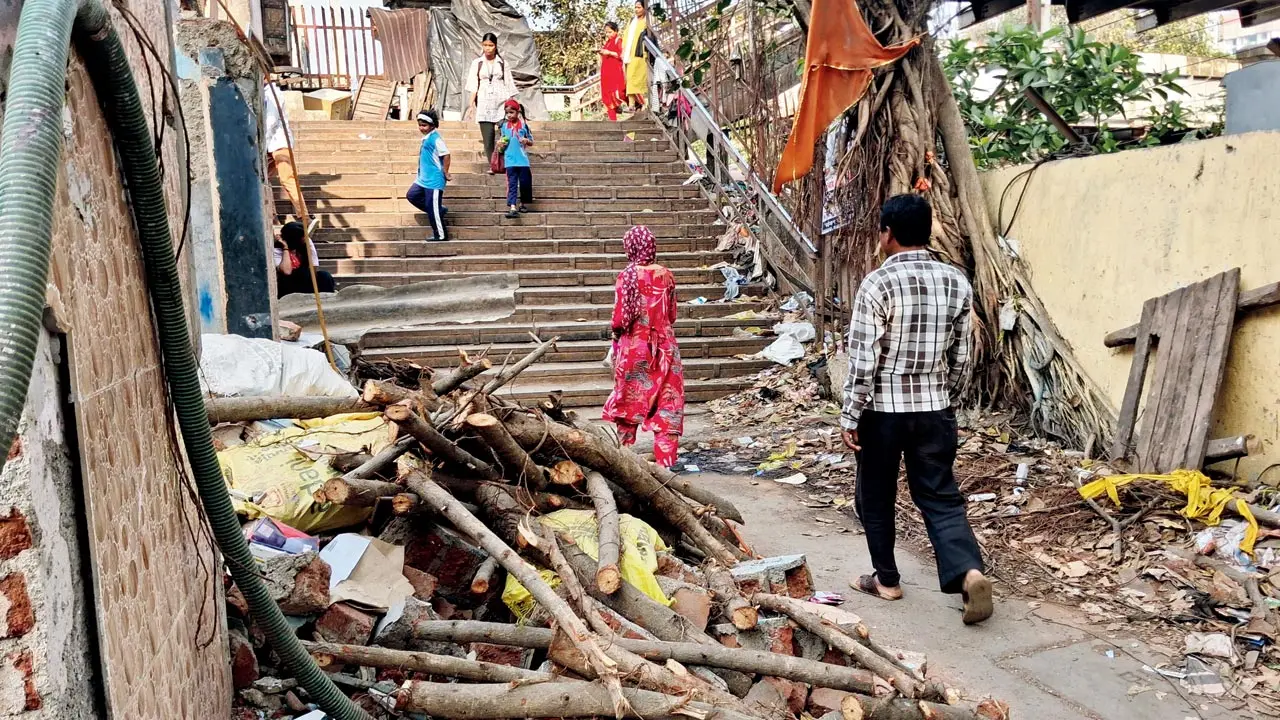
09 January,2026 08:02 AM IST | Mumbai | Ranjeet JadhavThe foot overbridge connecting Bhau Daji Road to Matunga West near King’s Circle, an age-old yet crucial connector, has fallen into a state of disrepair. Widely used by schoolchildren and senior citizens, the bridge has become a safety hazard. “The staircases are uneven and in poor condition, making the bridge feel too steep. Negotiating the steps and broken railings is a challenge. The bridge needs a replacement or at least an upgrade. We have been complaining, but no action has been taken,” said senior citizen Shalini Tripathi. Overgrowth of trees is making the bridge hazardous Commuter Yugantar Deo added, “The bridge is inconsistently wide, with damaged flooring and broken steps. It feels risky every time you cross it.” Residents also pointed out the problem of debris and overgrowth. “Both ends, especially the Matunga East side, are littered with dried leaves and wild plants. The walkway narrows, making it slippery during the monsoon,” said another local. Broken and steep staircases in Matunga East The bridge, which links Matunga East and West and served as a key connector during the construction of the Z bridge, is divided into two sections. The portion over the railway line is wider, while the road-crossing extension on the east side is narrow and in worse shape. The east staircase is broken, the railings are overrun by weeds, and the west landing and steps also need attention. Commuter Munesh Yadav urged authorities, “It’s high time the bridge was upgraded. If not, at least maintain it properly to make it walkable.” The path is littered with garbage and debris, narrowing the space for commuters. Pics/Rajendra B Aklekar Official response Railway officials said they would inspect the bridge, while BMC local ward authorities confirmed that a maintenance team would be sent to assess the structure. What’s wrong . Poor condition: Overall unsafe for frequent users, uneven staircases, steep, with broken railings. Surface issues: Broken steps and inconsistent width. Debris & garbage: Cluttered ends, especially on Matunga East side. Structural complications: The road portion is narrower and was added later, causing issues. Vegetation overgrowth: Weed and grass over railings worsen the hazard
09 January,2026 07:51 AM IST | Mumbai | Rajendra B. AklekarAs the city prepares for the Brihanmumbai Municipal Corporation (BMC) Election on January 15, a new and increasingly vocal constituency is stepping into the civic spotlight: Gen Z. Young voters, many casting their ballots for the first time, are making it clear that they want tangible improvements in everyday urban life, and not political theatrics. For 21-year-old Arts graduate Shreyas Patil, civic priorities are straightforward but often overlooked. Shreyas Patil 21-year-old Arts graduate. (Pic/ Special Arrangement)“Instead of focusing on minor issues such as detaining college students who smoke, BMC officials should address real problems like repairing roads and maintaining public services,” he says. “It feels like the system is more interested in earning revenue from students rather than looking out for the welfare of Mumbaikars,” added Patil. Recalling his college days in Wadala, he points to a glaring example of misplaced priorities. “There was a huge pile of garbage near our college that attracted flies and insects. The entire area had a foul stench,” he says, adding, “The BMC and Mumbai Police would visit the area — not to clean it up or to make it safer for students, but to nab collegegoers who were smoking. They didn’t care about the garbage or the health risks it posed.” BMC Election 2026: Disconnect, apprehension among some youngsters Not all young voters, however, feel confident about the power of their vote. A 22-year-old student from KEM College in Mumbai candidly admits, “How does it even matter if we vote or not?” The remark reflects a growing sense of disconnect among sections of the youth, underlining the need for stronger civic awareness and engagement ahead of the polls. Asadullah Chaus, a 20-year-old PR agency executive, echoes similar scepticism. “Gen Z often feels acknowledged only during elections,” he tells mid-day.com.Asadullah Chaus, a 20-year-old PR agency executive. (Pic/ Special Arrangement) “When young people raise real issues or participate in protests, political systems are largely absent. But during elections, the same youth are mobilised through money, optics, and temporary engagement. Many so-called ground workers today are Gen Z, not always driven by belief, but by influence and incentives. This has led to deep scepticism toward performative politics rather than a lack of political awareness,” he adds. For others, leadership and inclusivity matter deeply. Candidates must move beyond political narratives, say Mumbai’s first-time voters Mihir Pawar, 22, believes the new BMC Mayor should serve as a role model for young people. Mihir Pawar, 22. (Pic/ Special Arrangement) “The mayor should promote civic sense and unity, not divide people based on religion or language,” he says. Despite doubts among some, many Gen Z voters see the elections as an opportunity to shape Mumbai’s future. 21-year-old graduate student Poorva Gaikwad hopes that candidates will move beyond political narratives. “I expect them to focus on real civic issues like roads, cleanliness, water supply, and public transport. As a young voter, I want people to choose representatives based on performance and accountability, leading to better governance and a more liveable Mumbai,” she says. 21-year-old graduate student Poorva Gaikwad. (Pic/ Special Arrangement) Vaishnavi Patkar, a 21-year-old media student, views the BMC polls as a chance for meaningful, ground-level change. “Gen Z wants transparent governance, better roads, effective waste management, flood control, and safe public transport,” explains the mass media graduate. Vaishnavi Patkar, a 21-year-old media student. (Pic/ Special Arrangement)“More than promises, we want accountability, digital-first solutions, and leaders who actually listen. Civic politics should focus on everyday urban issues and long-term sustainability, not political narratives,” added Patkar. BMC Election 2026: Young Mumbaikars demand transparency Adding another dimension, Samiksha Borade, a 22-year-old media student, stresses the importance of opportunity alongside infrastructure. “We want more employment options, skill development, and support for entrepreneurship. At the civic level, we expect cleaner roads, proper waste management, and transparent governance. A well-functioning city directly contributes to a stronger economy and a better quality of life,” said Borade.Samiksha Borade, a 22-year-old media student. (Pic/ Special Arrangement) Taken together, these voices signal a clear generational shift in civic priorities. While traditional election debates often revolve around party loyalties and rhetoric, Gen Z is focused on outcomes, how effectively leaders manage the city’s most pressing challenges. Flood-prone streets, overcrowded public transport, erratic water supply, and inefficient waste management are daily realities that young voters want addressed. Digital transparency and citizen participation are equally important. Many young Mumbaikars want civic issues handled openly, with accessible platforms that allow residents to engage directly with decision-makers. In short, they are looking for leaders who don’t just promise change, but deliver it. The BMC Election 2026 is more than a routine civic exercise; it’s a test of whether Mumbai’s youth feel seen and heard. For Gen Z, the question is simple: will the city’s leaders act on their priorities and improve everyday life? For many young voters, this election is a chance to finally make their vote count.
09 January,2026 07:44 AM IST | Mumbai | Anushree GaikwadADVERTISEMENT