












A reflective piece exploring India’s moral crossroads-Ram Rajya’s justice vs Jungle Raj’s inequality-and the urgent need for systemic reform.
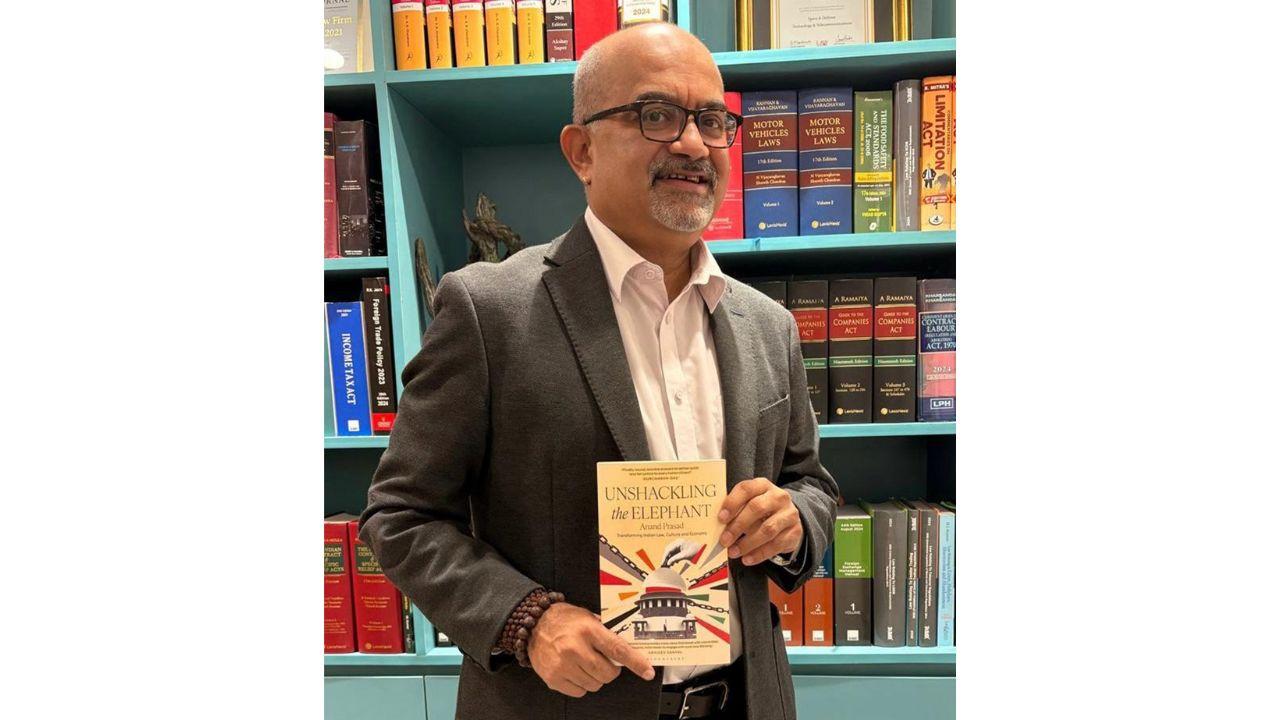
Anand Prasad, author of Unshackling the Elephant published by Bloomsbury.
When I first became aware of the phrase “Ram Rajya or Jungle Raj?”, I couldn’t help but think of the kind of India we live in today. It’s a question that feels both moral and personal, something that goes beyond politics or religion. For most of us, Ram Rajya is not about gods or temples. It’s about a dream - a time when people lived without fear, when the ruler was just, and when everyone, rich or poor, feel heard and the state responds to feedback from the remotest of corners. Jungle Raj, on the other hand, is the opposite - a world where might is right, where the weak are silenced, and where the rules bend for those with money, status or power.
We’ve all heard stories from our grandparents about how Ram Rajya meant fairness - a time when justice didn’t depend on who you knew or how much you had. Mahatma Gandhi once said that in Ram Rajya, the sovereignty of people rested on moral authority. In simpler words, the power of right was greater than the right of power. But looking around today, it feels like that idea has slowly faded, replaced by something harsher, something closer to Jungle Raj.
Let’s take a simple example - if a poor man loses his land to a builder or a powerful politician, what are his chances of getting it back? He might file a case, but years will pass before he even gets a hearing. By then, the land would have changed hands multiple times. On the other hand, a rich businessman accused of fraud might get bail in days, or even a stay order before the case properly begins. This is not an isolated story. It’s something every Indian knows - justice in our country depends not just on truth, but on who can afford to chase it.
This difference between Ram Rajya and Jungle Raj is visible in our daily lives. For example, when a traffic cop stops a rickshaw driver but ignores the SUV that broke the same signal, it’s Jungle Raj. When a poor woman spends months running around government offices for her widow pension while a contractor gets his payment cleared overnight, that too is Jungle Raj. It’s not about one law or one leader - it’s about the system itself, where fairness has become selective and where the strong and the powerful devour upon the weak or powerless.
In Ram Rajya, the king served the people. In today’s world, it often feels like people serve the system. Files don’t move unless you know someone or pay someone. Even to get a basic document - a ration card, a medical certificate, or a land record - you need connections or luck. The poor man’s time, effort, and dignity are treated as if they have no value. That’s not justice. That’s survival in a jungle.
Yet, despite all this, we continue to adjust. We tell ourselves “chalta hai” - that this is how things work. Maybe we’ve all become like that frog in boiling water, sitting still as the heat rises. We adapt so well that we forget how wrong things have become. When we hear news of a scam or a rape case, we get angry for a few minutes, maybe post something on social media, and then move on. That silence, that helpless acceptance, is what keeps the Jungle Raj alive.
But Ram Rajya is not just a mythological dream. It’s also a mirror showing us what governance can look like - when honesty is valued over influence, when the law protects the weak, and when people feel heard. It’s about the spirit of fairness.
What hurts more is how common people begin to normalize it. We say, “This is India, nothing will change.” But that mindset is exactly what keeps us trapped. Ram Rajya isn’t going to fall from the sky - it needs people who demand better, who believe that fairness isn’t a luxury. It starts when we stop tolerating small injustices - when we refuse to pay bribes, when we stand up for someone being wronged, or when we vote not for caste or religion, but for integrity.
Our democracy was meant to protect everyone equally. Yet, somewhere along the line, we began to mistake fear for respect and power for leadership. In a true Ram Rajya, leaders would serve guided by conscience, not by self-interest. Today, too often, they rule with arrogance and impunity, forgetting what Ram Rajya means.
The question “Ram Rajya or Jungle Raj?” is not just for our leaders - it’s for all of us. Do we want to live in a society ruled by fairness or by fear? Do we value empathy more than ego? Our answer will decide the kind of India our children inherit.
Ram Rajya may sound like an ancient idea, but at its heart, it’s about humanity - about building a society where everyone has a voice, where justice isn’t sold to the highest bidder, and where governance is an act of service, not domination. Jungle Raj, on the other hand, is what happens when we stop caring - when we let corruption, inequality, and silence define us.
Where the law is followed and Dharma established.
In the end, Ram Rajya and Jungle Raj are not two different places - they are two directions. One leads us toward a society of dignity and fairness, and the other toward chaos and fear. The choice, as always, is ours.
Still, there’s hope. India has seen countless moments where the people rise above the system - from social movements that changed laws to citizens who keep fighting for justice despite all odds. Every time someone chooses truth over convenience, compassion over apathy, or honesty over corruption, we inch closer to the spirit of Ram Rajya. But this will not happen unless the justice system facilitates such transformation.
The thing is that promise of a better justice system is unlikely to attract votes, and in someways the national leadership will have to rise above what appeals to popular mandates, and establish true Ram Rajya and true rule of Dharma.
 Subscribe today by clicking the link and stay updated with the latest news!" Click here!