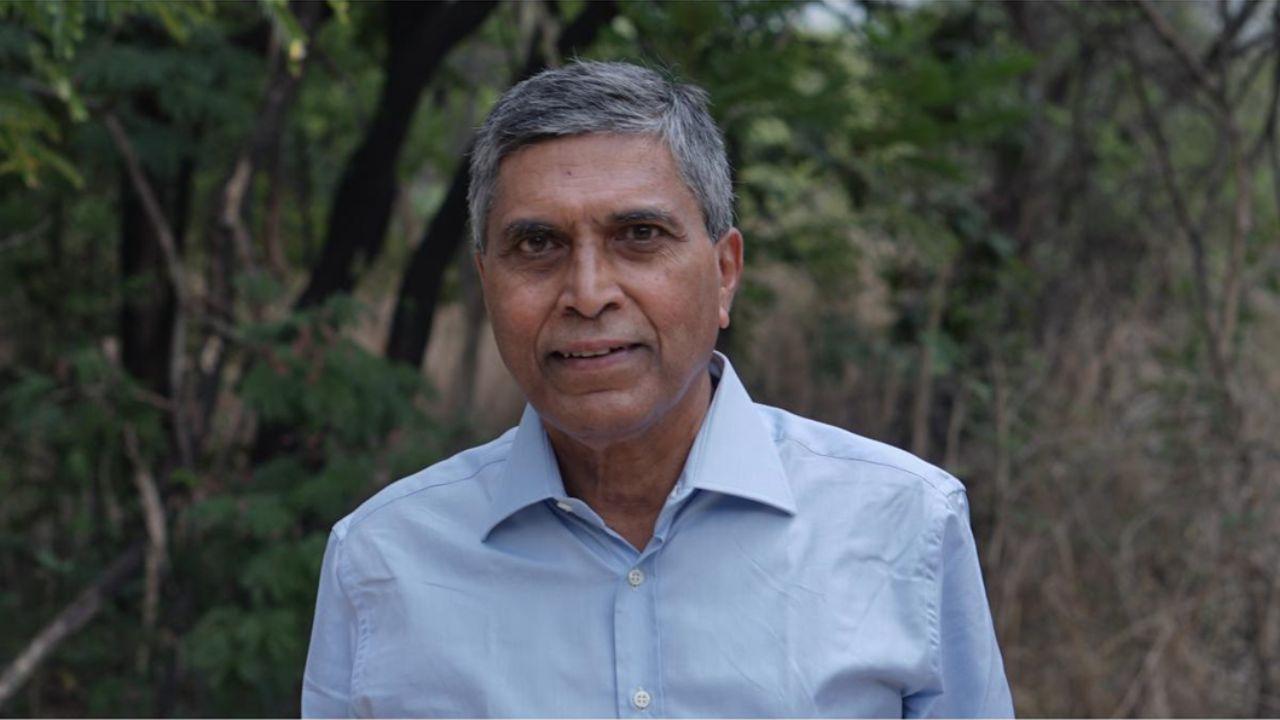
Vishwanath Alluri, Krishnamurti Foundation, explores self-inquiry: What & Why. Examine relationships for deep inner clarity and honesty.

Vishwanath Alluri, Secretary at Krishnamurti Foundation
This article is attributed to Mr. Vishwanath Alluri, Secretary of Krishnamurti Foundation.
One is faced with questions in the daily living and daily work in the office. Normally these questions crop up due to various issues faced in daily work.
One looks for answers from outsiders or external sources, such as Google or ChatGPT. This is what happens normally. This is alright as far as the functional area is concerned. By functional area, I mean the physical domain, which is also the outer as opposed to the inner of our being. When it comes to the inner domain, there is a dimension which is not normally touched by many. How about raising questions spontaneously by oneself and not under any compulsion? Not only raise questions, but it also examines them oneself and checks if the answer can be found in the question itself. These questions are neither raised by anyone outside nor are they to be answered to anyone outside. The important thing is to examine with objectivity and not with prejudice or prejudgment. This may lead to deep internal honesty.
There are two fundamental questions, i.e. What and Why, in one’s life hold immense value. What one is doing and why one is doing what one is doing. What one is not doing and why one is not doing what one is not doing. We are dealing with both what is and what is not. These two elements become so important in one’s life. It is imperative that ‘what is not’ is a way of understanding what is. These are questions any Manager should pose to themselves and not wait to be posed by any outside agency. You pose these questions to yourself, examine them and answer yourself. In this way, there is no outside examiner, and one becomes the examiner and the examined. The duality of the examiner and the examined as two separate entities ceases. It also means deep honesty within oneself.
In the examination of what one is doing, also is involved the question of the relationship with that ‘what’. What that relationship is and what that relationship is not. The question of the relationship is quite comprehensive. Conventionally relationship is construed as that exists between a man and a woman, a woman and a boy or a mother and a son.. In reality relationship exists with one’s academic background, experience, with one’s function, ideas, nature, etc. In fact relationship is with everything around and all through life. In this way, life itself becomes a movement in relationship.
Let us take a simple case of owning a car. The question of the relationship with the car comes in. The relationship with one’s car is to use this as a means of transportation. It means the relationship is purely functional. Or is the relationship with the car to show off this as a status symbol to others, or the so-called society? If the relationship with one’s car is to show off to others, it implies the relationship has spilt over into the psychological domain from a functional domain. This movement that spills over into the psychological domain from a functional (physical domain) becomes the root cause of disorder in one’s life.
In the examination of what one is doing, this relationship is an important factor. Ruling out ‘what it is not’ is as important in understanding what relationship one has with this what. Without knowing this relationship, one is like a blind man and may be trying to lead another blind man.
In this whole process of understanding what one is doing, the tool of negation and the mirror of relationship are the most important and lively tools. The word tool may not be appropriate as this relationship is not a frozen thing because we are talking of life, which is dynamic and a moving relationship. If the manager has this clarity of what and why, he naturally brings clarity, transparency to the team. The spirit of working together or team spirit, as it is called, becomes a natural outcome. All this needs to be tested out and felt by oneself to check the validity. Unless one feels this validity, this all becomes theory or intellectual knowledge.
I must make certain disclaimers from the bottom of my heart, and also as a matter of caution here. Acknowledgements are due to the source of light from which this piece of knowledge is gained. I have come across this due to my exposure to J Krishnamurti’s teaching. Secondly, it is only my understanding that I have shared here, and it is not ’the understanding’. You may get your understanding of the matters if you get exposed to his teachings directly, so you don’t need to go by my understanding. I am saying this true to the intent of J Krishnamurti that there is no need to depend on interpreters and pundits. One has to have one’s own understanding. I am stating all this, as I don’t want to be construed as intellectually dishonest by default.
About the Author:
Vishwanath Alluri, former founder of IMImobile, a global technology firm acquired by Cisco. He made the conscious decision to step away from corporate success to pursue deeper questions of life, learning, and leadership. Currently serving as Secretary of the Krishnamurti Foundation India, Vishwanath integrates his expertise in technology and storytelling with a commitment to inner inquiry. He has produced acclaimed films such as Monk with a Camera and is the author of an upcoming book on conscious leadership. Vishwanath’s journey serves as a compelling reminder that lasting impact is rooted not in ambition but in awareness.
Subscribe today by clicking the link and stay updated with the latest news!" Click here!