










After the Bombay HC cleared Ajey for release, director Ravindra Gautam opened up, recalling how the CBFC originally asked the biopic’s makers for 29 cuts and an NOC from Yogi Adityanath
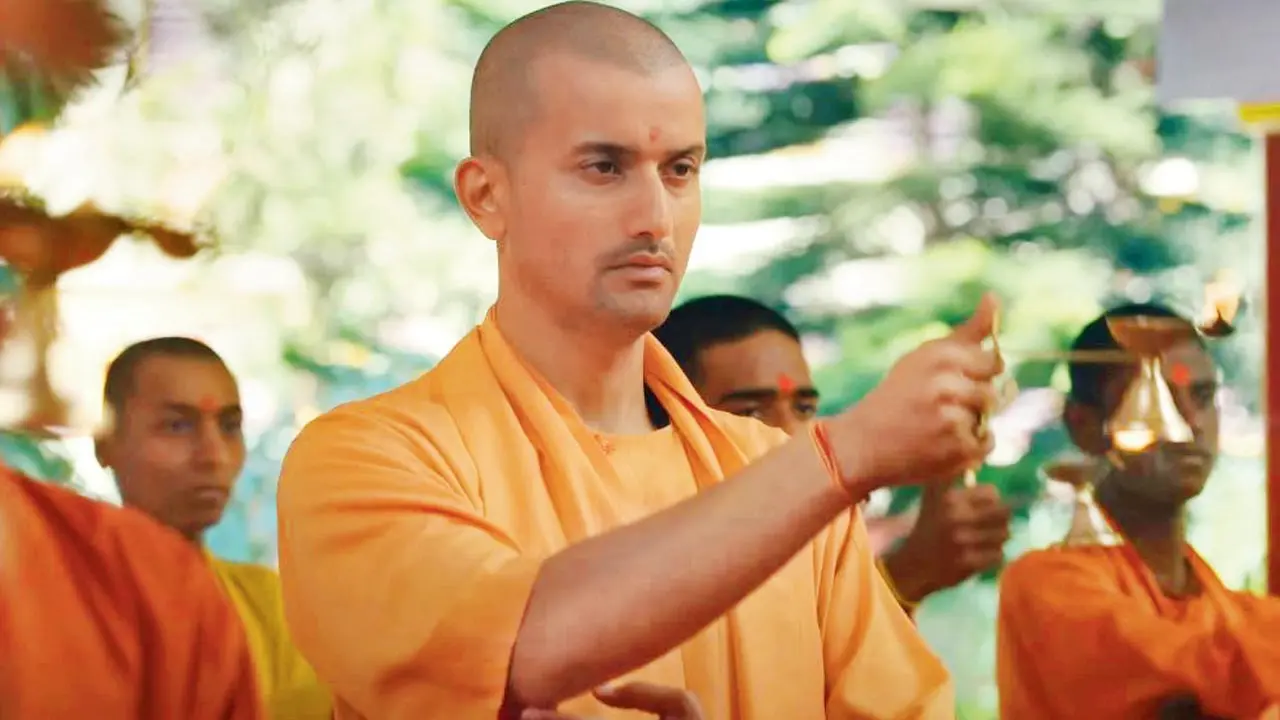
Anant V Joshi in the film
On August 25, the Bombay High Court directed the Central Board of Film Certification (CBFC) to clear Ajey: The Untold Story of a Yogi for release without any cuts, thus ending the makers’ month-long battle with the board that originally demanded 29 cuts. The ordeal, however, has left director Ravindra Gautam reconsidering a theatrical release of Uttar Pradesh Chief Minister Yogi Adityanath’s biopic. Instead, the director has initiated conversations with streamers for an OTT release.
When we get on a call with Gautam, he admits that the tussle -- which first saw the Examining Committee rejecting the film has taken a toll on him. “They rejected the film without even seeing it. The committee gave 30 cuts. Thirty cuts which were irrelevant. It is such a beautiful film that we have made. As a filmmaker, I feel it is my responsibility to make a neutral film. A film that does not spark any violence, caste violence, or anything like that. It is a very personal film, the journey of one person. That’s what I liked about it — the fact that only in India can a person born in a remote village, with no political background, no religious backing in the family, rise to become the Chief Minister of one of India’s most populous states. That’s a 360-degree turn that no one had dared to show."
 Ravindra Gautam and Yogi Adityanath
Starring Anant V Joshi in the titular role, Ajey is said to be an adaptation of Shantanu Gupta’s book, The Monk Who Became Chief Minister, and charts Adityanath’s turn to spirituality and his eventual rise in politics. Probe Gautam on the 29 cuts that were handed out, and the director reveals that one of the scenes was set in the protagonist’s college. “In the men’s restroom, obscene things about women were scribbled on the walls. Ajey goes inside to wipe off the writing. The board objected to this, saying that it would hurt women’s sentiments. But in storytelling, you need to show what is wrong in order to rectify it,” reasons the director.
Aside from the cuts, the CBFC had also asked the makers to obtain a No Objection certificate from Adityanath, an instruction that Gautam found unreasonable. He says, “We had the book — The Monk Who Became Chief Minister. The producers had all the necessary legal clearances to make the film. Every legal aspect was taken care of. So I don’t know why or how they took this position. Their perspective was simply: “The film is rejected because of these cuts.” They didn’t even say, “Bring it back after the cuts.” They just said, “Rejected.” It is evident from the High Court’s order. In the end, the judges themselves watched the film and ordered the CBFC to release it without any cuts."
Usually, one might cast a star, but the team clearly went for an actor when they brought Joshi on board to headline the film. "As a maker, I believe you should not cast a very well-known face. A star comes with an identity of his own, with baggage that overshadows the character. The producers also believed in this. They put money behind a newer face, someone without that strong pre-set identity. Of course, he has done a lot of work — ads, modelling and so on — but he doesn’t come with the baggage of being a film star or a television star. If it’s a TV star, the audience remembers the roles they’ve played. If it’s a film star, the audience sees the star’s persona. Here, we wanted a fresh face who could embody the role without baggage. Anant connected with the story. He is a very open-hearted, hardworking, and respectful person. I am so happy with him. In recent times, I haven’t seen this kind of passion. Even when we were about to shoot and he had just come out of a tough phase, he internalised the character deeply. You might not always see him on the surface working hard, but he puts in the work quietly, sincerely."
It’s very interesting to make a film on Yogi’s life. But it’s also challenging, because there’s so much public sentiment around him as a figure. How does the film navigate that? "I always feel I should be true to the story and the subject. Yes, there are a lot of sentiments involved, so we have to take care not to hurt them. I believe that if someone has risen to such heights, there must be something extraordinary in him — maybe character, maybe resilience. Hiding that would be wrong. Instead, we should highlight those qualities and make the film inspirational. At 22, when other boys were chasing girls, this man became a sanyasi. What happened in his life that led to that choice? That’s what interests me. My approach is emotional storytelling. Everything else about him is already on YouTube. What isn’t there — that’s what I want to bring to the audience."
A story like Ajey can glorify a figure who is polarising. While many in Uttar Pradesh view Adityanath as an inspirational leader, some minority communities don’t share the view. How does one walk that tightrope? "The view you’re expressing is largely a Bombay view. On the ground in UP, the minority community sees it differently. We researched this thoroughly while making the film. We visited many places and spoke to people from different communities, including minorities — and by minority I mean common people, not political voices. While shooting in Lucknow, Rishikesh and other places, we spoke to them, and surprisingly, the common man is happy with him. You might not believe it, but that’s what we found. The common man isn’t interested in political mudslinging or circuses; he’s interested in daily life. And in their day-to-day lives, across communities, they are happy with him. I’m not saying this just because I’ve made a film on him — we researched it. Any young woman — from any community — is happy because she can now walk alone at nine at night and return home safely. That matters. Even my driver, who belongs to a minority community, told me this.
He said, “We also call him Baba.” Back in 2008–09, when I went to shoot in UP, it was a nightmare. If we were on the road with a unit, shooting on live locations, you would not imagine the kind of filthy comments we were getting. But we had to shoot because the film demanded it. Cut to 2018, when I shot in Gorakhpur. All I needed was one permission from the District Magistrate, and we could shoot anywhere we wanted. Not a single person, not a single local gunda, not a single comment. Before going to UP, I had even told my unit — especially the girls — that they would have to be mindful of how they dressed, how they carried themselves. But while shooting in 2018, I was so relieved. We cannot become so volatile. That was a purely entertaining film, yet the goons still came and harassed them badly. It is very scary."
Aug 1
When the film was initially slated for release
 Subscribe today by clicking the link and stay updated with the latest news!" Click here!