Four-time Grammy-nominated drummer Billy Kilson, celebrated for his improvisational flair, impeccable timing and electrifying stage presence, will perform in Mumbai this January. Known for his vibrant original music that blends upbeat energy with equal parts swing and groove, Kilson brings a dynamic new sound to the stage. Kilson’s musical foundation was shaped early on at Berklee College of Music, where he trained under the legendary Alan Dawson. This experience set the course for his emergence as a drummer of exceptional range and authority. His early tours with artists such as Donald Byrd, Ahmad Jamal, and Dianne Reeves quickly placed him in the company of leading jazz voices. The drummer later became a defining force in the Dave Holland Quintet, where his rhythmic instincts and mastery of complex meters helped craft the group’s signature sound, earning him Grammy recognition and widespread critical praise. His versatility led him to collaborate with artists across genres—from Chris Botti and Sting to Yo-Yo Ma—yet his strongest creative pull has always been to shape his own music. Kilson’s original work blends the funk, fusion and swing influences of his youth, marked by a rhythm-forward energy and an unmistakable groove. For his performance at the NCPA, Kilson performs with the trio featured on his newest album. Grammy-winning pianist Geoffrey Keezer and acclaimed bassist Essiet Okon Essiet. Join us and witness three world-class musicians come together for an unforgettable night of music at the NCPA. Age Recommendation: 6 years and above; Late entry not permittedWhen: January 26Time: 6:30 pm; Duration: 2 HoursTickets (Plus GST)Members: Rs 450 onwardsNon-members: Rs 500 onwards
21 January,2026 06:46 PM IST | Mumbai | mid-day online correspondentRenowned folk and playback singer Kalpana Patowary, known for her multilingual vocal practice, is set to perform ‘Folk Ecstasy’ in Mumbai this January. “Folk Ecstasy comes from the moment when folk music stops behaving solely like heritage and starts behaving like my truth. I named it for the emotional peak I experience while singing these songs live. This concept was born from years of field listening, stage work, and lived contact with communities where music is not performance but survival,” explains Kalpana. 'Folk Ecstasy' will be presented for the first time in Mumbai on January 24 at NMACC before travelling to other cities in India such as Kolkata, Chennai, Delhi, Bengaluru, Hyderabad, and Chandigarh. The 90-minute live performance treats Indian folk traditions as living sonic archives. Kalpana further shares, “Expect immersion. Expect languages you do not speak, but emotions you recognise. Expect raw voice, controlled arrangements. This concert asks the audience to slow down and stay present.” She curates and leads the work. Her method places Indian folk forms in direct conversation with contemporary jazz structures, preserving source integrity while reshaping form for present audiences. The set runs for ninety minutes and functions as a single, deliberate narrative. “Folk Ecstasy is not merely a fusion set. It is a content-based, carefully structured 90-minute arc where ethnic folk songs from different regions of India speak about their identity through contemporary rhythm and harmony,” says Kalpana Patowary. The sound archive includes tribal songs and folklore celebrating women from Assam, Bhojpuri women’s traditions such as work songs, ritual songs, and narrative forms shaped by migration and labour. Performances span seven Indian dialects, without translation dilution. Traditional vocal methods are paired with live contemporary instrumentation. The performance records lineage. “These are songs carried through memory, not notation,” says Kalpana. The work pays tribute to Bhupen Hazarika, a carrier of Assamese cultural memory, and honours Bhikhari Thakur, a foundational architect of Bhojpuri performance ethics. Kalpana foregrounds rural narratives, ritual practice, and collective memory. Extended vocal range and complex rhythmic cycles support archival accuracy, while live instrumentation sustains immediacy and transmission. Folk Ecstasy positions folk as a living record. It retains historical and social specificity while speaking in a present sonic language. “In today’s cultural space, Folk Ecstasy places folk music at the forefront. Not as background culture. It stands as a contemporary artistic language capable of complexity, scale, and global dialogue,” signs off Kalpana. Apart from folk music, Indian folk singer has also lent her voice to several popular Bollywood songs, including 'Gandi Baat' from 'R... Rajkumar' (starring Shahid Kapoor and Sonakshi Sinha), 'Ore Kaharo' from 'Begum Jaan' (starring Vidya Balan), 'Ek Uncha Lamba Kad' from 'Welcome' (starring Akshay Kumar and Katrina Kaif), and 'Aila Re Aila' from 'Khatta Meetha' (starring Akshay Kumar).
21 January,2026 04:11 PM IST | Mumbai | mid-day online correspondentNeo-classical musician and Indian sitar maestro Rishab Rikhiram Sharma will embark on a 10-city India tour as part of the Asia leg of his 'Sitar For Mental Health Tour' 2026. The 10-city India leg of the tour will see Sharma perform in Bengaluru, Mumbai, Pune, Hyderabad, Chennai, Jaipur, Ahmedabad, Chandigarh, Kolkata and New Delhi between March and April this year. The pan-India trek arrives at a time when classical and neo-classical music is witnessing a notable resurgence among millennials and Gen Z, with audiences increasingly embracing music for its therapeutic and meditative impact. Sharma’s Sitar For Mental Health series has garnered widespread acclaim across the United States, Canada, Europe and the United Kingdom for sparking meaningful conversations around mental well-being through sound. The India tour, promoted and produced by Team Innovation and District by Zomato, also carries special significance as it reaffirms Sharma’s commitment to fans following the postponement of his 2025 India tour due to geopolitical tensions. However, he expects to cater to his fanbase that not only include music enthusiasts but also wellness seekers, family audiences and the youth alike. As the youngest and last disciple of the legendary Pandit Ravi Shankar, Rishab Rikhiram Sharma's work bridges centuries-old tradition with a contemporary sensibility, making Indian classical music accessible and relevant to global audiences. Blending the depth of Indian classical ragas with contemporary textures and improvisational elements, Sharma’s live performances are designed as multi-sensory, immersive experiences. On a mission to redefine how Indian classical music connects with modern listeners, the 'Sitar For Mental Health' aims for the sitar to be a conduit for inner reflection and emotional release. Each concert will be curated as a holistic experience—blending classical frameworks, cross-genre sounds and moments of guided mindfulness—resulting in performances that feel both emotionally resonant and avant-garde. Attendees can expect a thoughtfully curated set featuring new compositions alongside signature works such as ‘Shiv Kailash’, ‘Chanakya’, ‘Tandavam’, ‘The Burning Ghat’, ‘Varaha Roopam’ and ‘Shankara’. Rishab Rikhiram Sharma states, "Music and its power to heal is truly a blessing, and I feel incredibly grateful to be able to share this gift with the world. While we made the difficult decision to postpone the 2025 India tour, it was done with purpose and solidarity, standing with my country when it mattered most. Since then, the journey has taken us across the globe, performing to sold-out audiences in some of the world’s most revered venues. As we step into a brand new year, I’m filled with excitement to finally return home and honour the many heartfelt requests from my Indian fans. This homecoming will be grand, immersive, and an experience of a lifetime, celebrating the healing power of the sitar while continuing to raise awareness for mental health. Sitar for Mental Health is coming back home, and I can’t wait to share this journey with you.” Mohit Bijlani, who is the founder of Team Innovation states, “Rishab Rikhiram Sharma’s work represents a rare intersection of classical excellence and contemporary relevance. The response to ‘Sitar For Mental Health’ globally has been extraordinary, and we are proud to yet again bring this powerful experience to audiences across India as part of the Asia Tour 2026.” Later this month, Sharma will also achieve major international milestones with his Singapore debut at the iconic Esplanade – Theatres on the Bay, followed by his first-ever performance in Dubai at the Coca-Cola Arena. Tickets for the tour will be available exclusively on the District app. An exclusive 12-hour presale will be available from 12 noon on January 30 till 12 noon on February 1. General sales will go live on February 1 at 2 pm. Tour details March 15 - BengaluruMarch 20 - MumbaiMarch 22 - PuneMarch 27 - HyderabadMarch 29 - JaipurApril 3 - ChennaiApril 5 - AhmedabadApril 10 - ChandigarhApril 12 - KolkataApril 19 - New Delhi
21 January,2026 03:19 PM IST | Mumbai | mid-day online correspondentShriniwas Rai, a founding member of the Hindi Society in Singapore and a steadfast champion of Gandhian values, passed away at his home on Sunday at the age of 83, according to a media report on Tuesday, January 20. The former nominated Member of Parliament arrived in Singapore at the age of 10 and went on to study law at the then University of Singapore and built a distinguished legal career that spanned over five decades. One of Rai's most enduring contributions was his role in founding the Hindi Society (Singapore) in 1988, and he worked with fellow community leaders to have Hindi recognised as a second language in Singapore's national education system. In recognition of his lifelong devotion to the language, Rai was awarded the Hindi Society's highest honour, the Hindi Ratna, in 2024. Remarkably, he continued practising law until his final days never officially retiring, according to an online Indian weekly tabloid. Born in March 1943 in Kanaicha, a village in Uttar Pradesh's Gorakhpur district, Rai's contributions to the Indian community were far-reaching. He played a key role in the formative years of the state-supported Singapore Indian Development Association (SINDA), serving as its secretary and helping lay strong institutional foundations. Rai also served on the Hindu Advisory Board and other civic organisations. Appointed as a nominated Member of Parliament (1997-1999), he brought to Parliament a voice of reason, compassion and cultural insight. He was instrumental in raising issues concerning minority communities, education and cultural preservation. "I had the privilege of meeting Rai Sahib on many occasions, and was consistently impressed by his impassioned yet objective approach, his forward-looking perspectives and his thoughtful insights," said Mahendra Prasad Rai, president of The Hindi Society (Singapore). "These qualities left a lasting impression on all who interacted with him." "Despite his many leadership roles and professional achievements, Rai remained a simple, humble and unassuming person, deeply respected for his sincerity and quiet grace. A steadfast champion of Hindi, he devoted himself to preserving and promoting the language as a vital expression of cultural identity," the weekly had MP Rai as saying in a report on Tuesday. As chairman of the Board of Trustees of the Mahatma Gandhi Memorial, Rai was instrumental in preserving and revitalising the iconic Race Course Lane site. Working closely with the Singapore Indian Fine Arts Society (SIFAS), he helped transform the building into the SIFAS Annexe, ensuring the Mahatma's ideals of service and non-violence lived on. K V Rao, president of SIFAS, said, "He was a true Gandhian in thought and action. He quietly slipped a donation cheque into my pocket and said, 'You all are doing a good job.' That was Shriniwas Rai, always kind, always generous, always helpful." Friends and colleagues remember him as calm, thoughtful, and deeply wise, "statesman without pretence" and a "scholar with humility". His scholarship extended to his love for the Hindi language and his cultural curiosity. One of his proudest works was a book exploring the linguistic connections between Hindi and Malay, a testament to his belief that languages are bridges between communities. Rai is survived by his wife Ratneshwari Devi, son Satish Rai, daughter Suchitra Rai, son-in-law Dhruv Jain, and granddaughter Dishani Rai Jain. His son Satish, himself a lawyer, described his father as "a wonderful father and teacher, always there for us, and always helping the downtrodden". In the words of former civil servant, diplomat, businessman, and community leader Haider Sithawalla, "Shriniwas Rai was dedicated and humble. He lived by Gandhian ideals and was always ready to talk to people, especially the underprivileged." This story has been sourced from a third party syndicated feed, agencies. Mid-day accepts no responsibility or liability for its dependability, trustworthiness, reliability and data of the text. Mid-day management/mid-day.com reserves the sole right to alter, delete or remove (without notice) the content in its absolute discretion for any reason whatsoever.
21 January,2026 02:24 PM IST | Singapore | PTIContemporary artist Seema Kohli's practice, from her early exploration of the self in the mythical to her more recent works that explore the body as an archive of stories, traverses across material histories, mythic imagination, and deeply personal narratives of feminine resilience and self-discovery. Two new art exhibitions by Gallery Nvya at Triveni Kala Sangam -- "Bodies of Sky, Bodies of Earth" and "With Her Hair Running Wild" -- offer a layered and expansive view of Kohli's artistic practice, spanning sculpture, painting, printmaking, embroidery, and mixed media. "Bodies of Sky, Bodies of Earth" brings together Kohli's works across terracotta, woodcut, embroidery, sculpture, and painting to explore the idea of the body as an archive of earth, species, and stories. The exhibition features works that reflect her sustained inquiry into matter as simultaneously physical, metaphysical, and philosophical. "The exhibition unfolds as a conceptual passage that reflects Kohli's long-standing engagement with the body as a locus of experience. Its arc moves from the idea of origin or womb, through the conditions of earth and embodied life, toward sky, release, and shedding, with moksha functioning as an orienting horizon. This progression is articulated materially rather than symbolically, echoing philosophical traditions in which transcendence is understood not as a departure from matter, but as transformation through it," curator Satyajit Dave said in the curatorial note. Appearing as fragments, markers, or vessels, the terracotta pieces evoke archaeological and vernacular forms without settling into historical quotation. "I am an artist. And for me, all these things are coming from a very personal space. And it's like pulling out different kind of memory through different layers of consciousness. "So, whenever I am talking about my work, I am talking about unseen bodies that are there which are around us, which we don't see, but we never considered them alive. But there are beings always around us which are without body. The clouds, the sky, everything is conscious, everything is alive," Kohli said. The second exhibition, "With Her Hair Running Wild", curated by Adwait, presents works spanning key phases of Kohli's artistic journey, from fleeting sketches made during the nights to early explorations of colour, and eventually to the bold palettes and intricate patterns that define her mature practice today. As she moves form her monochrome exploration of domestic narratives in the 80s with mythological icons to her vibrant mix of tribal, natural, and mystical now, the art exhibition offers an almost intimate look at Kohli's own artistic and individual journey. "Between these moments lie narratives of domestic rupture, feminine solidarity, and the gradual reclaiming of artistic voice. Drawing on stories of undomesticated goddesses and impassioned gods, the works uphold the possibility of regeneration amidst stifling convention," Adwait wrote in the curatorial note. As she struggled to keep her skills sharp in a troubled marriage where colours were frowned upon, Kohli found herself turning towards "accounts of recalcitrant and unrestrained femininity in mythology, folklore, and day-to-day life, epitomised by the figure of Kali roaming the shamshan". "The goddess' transfixing gaze, abject appearance, and lolling tongue offer a sharp contrast to the demure devinities, bestowing smiles and benedictions from the walls of Hindu homes. In her truculent dishabille, Kali offers a model of liberation-a welcome break from gruelling social conventions, regimenting women's bodies, appearance, and movement; her streaming halo of hair, like Medusa's snakes, pointing to myriad possibilities for bodily rewilding," the curator said. In a later phase, after Kohli joind Triveni Kala Sangam in 1994, she turned towards painting "saintly, self-sacrificing profiles", a reflection of the toll taken by years of mandatory matrimony. "The saintly, self-sacrificing profiles are in contradistinction to the irreverent exploits of Kama Dev and Rati of former years - a fact that only serves to emphasise her desperation for an escape, even a renunciatory one. Symbols of confinement - hands grabbing at prison bars and plumb bobs signalling a stalemate between conjugality and creativity - hint at torrential currents underneath surficial placidity," Adwait said. In contrast with her early and mid-career works, Kohli's latest paintings are marked by the use of bright colours, almost as if a celebration of life. "Before long, the muted palettes and sfumato of these paintings will yield to the bolder expressions, typified by the Golden Womb series, as a life of comforts gets swapped for a barsati of her own, and a new domesticity discovered. This emergent, ebullient, and ennobling domesticity will continue to animate her subjects and palettes for many years to come," the curator added. While "Bodies of Sky, Bodies of Earth" comes to an end on January 25, "With Her Hair Running Wild" will run till March 15. This story has been sourced from a third party syndicated feed, agencies. Mid-day accepts no responsibility or liability for its dependability, trustworthiness, reliability and data of the text. Mid-day management/mid-day.com reserves the sole right to alter, delete or remove (without notice) the content in its absolute discretion for any reason whatsoever
21 January,2026 10:06 AM IST | New Delhi | PTIWhen a mega music festival weekend rolls into town, the city shifts gears - the tempo picks up, the buzz gets louder and every street hums with anticipation. As Lollapalooza India 2026 returns to Mumbai for its fourth edition, travelling to the festival is going to be easier this time. Taking place at the iconic Mahalaxmi Racecourse on January 24 and 25, the festival, produced and promoted by BookMyShow Live in India, will see the likes of Yungblud and Linkin Park perform some of their biggest hits. With that being said, a little planning goes a long way in making sure you arrive relaxed. From routes to rides, here’s your complete travel guide to the festival: Travel with the Aqua Line Metro For the first time in Lollapalooza India music festival's history in Mumbai, getting to the festival is going to be faster, smoother and more accessible than ever before because another mode of transport added to the mix owing to the Aqua Metro Line. Get off at Science Centre Station (B2 Exit) and you’re just minutes away from Lolla India’s brand-new second entry gate, created especially to make your arrival seamless. You don't have to go the extra mile and spend more time travelling, and it gets better because once you arrive by metro, there is a reward. Simply show your wristband and your metro ticket at the festival counter and enjoy a free beverage for us. Limited, on a first come first served basis, while supplies last. Take the Mumbai local train The music festival’s long-standing effort to encourage people to take the public transport also continues in full swing. Take the train to Mahalaxmi station to skip traffic woes, travel comfortably and quickly in Mumbai locals. Festival attendees who take the train, can enjoy a free beverage. Simply show your festival wristband or along with your train ticket at the festival counter. Limited, on a first come first served basis, while supplies last. Travel with Cityflo Attendees can book a seat on the dedicated Cityflo shuttles to and from the venue. Step 1: Register on the Cityflo app, add your preferred pick up location Step 2: Add drop off point as Lollapalooza India. Select date and time of travel as well as your preferred seat Step 3: Review ride details. Pay/book your ride. You will receive a confirmation by mail from support@cityflo.com. No parking at Lollapalooza India 2026 There is no car or bike parking at the venue. However, there is a dedicated Uber pick-up and drop-off facility is also available at the NSCI Dome so that you can enjoy all the performances till the end.
20 January,2026 06:05 PM IST | Mumbai | mid-day online correspondentA rare Buddhist relic dating back to the 3rd century BC was brought out of museum and put on public display at Lalitgiri in Jajpur district to allow monks, scholars and devotees from across the country to get an opportunity to have a glimpse of it, an official said on Monday, January 7. The occasion was the second Guru Padmasambhava ceremony at Lalitgiri on January 16. The sacred precincts of Lalitgiri witnessed rituals, prayers, and meditation in honour of Guru Padmasambhava, the revered Buddhist master credited with the propagation of Vajrayana Buddhism, and reflected upon his teachings of compassion, mindfulness, and enlightenment, the official said. "Marking the solemn occasion, a rare Buddhist relic dating back to the 3rd century BC, as identified by the Archaeological Survey of India, was ceremonially brought out of its protected enclosure at the ASI Lalitgiri Museum and placed on public display on January 16," an official statement issued by the state government said. Generally preserved under stringent conservation protocols, the relic was made accessible for public viewing as part of the religious observance, offering devotees a rare and deeply reverential opportunity to pay homage, it said. "The observance reaffirmed Lalitgiri's importance on the global Buddhist map and further positioned Odisha as a custodian of ancient Buddhist civilisation, heritage, and living traditions," said Minister for Odia Language, Literature & Culture department, Suryabanshi Suraj. The public display of the sacred relic was undertaken as an initiative of the ASI, in collaboration with the Department of Tourism and the Department of Odia Language, Literature and Culture, reflecting a shared commitment to preserving, promoting, and respectfully presenting Odisha's rich Buddhist heritage. The event was organised with due coordination among religious authorities and archaeological custodians, ensuring that the dignity, security, and preservation of the relic were maintained at all times. This story has been sourced from a third party syndicated feed, agencies. Mid-day accepts no responsibility or liability for its dependability, trustworthiness, reliability and data of the text. Mid-day management/mid-day.com reserves the sole right to alter, delete or remove (without notice) the content in its absolute discretion for any reason whatsoever.
20 January,2026 02:02 PM IST | Bhubaneswar | PTIToday's diners aren't just ordering food—they're voting with their wallets for businesses that share their values. Sustainability has moved from a nice-to-have to a must-have, especially in the restaurant industry. Yet while many establishments have upgraded their practices, one persistent challenge remains: packaging takeout soups, stews, and other liquid-heavy dishes without creating environmental waste or operational headaches. Traditional plastic and styrofoam containers continue to dominate this space, but they come with serious drawbacks. They leak during transport, fail to keep food at the right temperature, contribute to mounting landfill waste, and increasingly signal to customers that a restaurant hasn't kept pace with modern expectations. The solution isn't complicated. Switching to purpose-built, sustainable soup bowls represents a strategic decision that simultaneously addresses environmental responsibility, enhances customer satisfaction, and streamlines your operations. This isn't about following a trend—it's about future-proofing your business while solving real problems that affect your bottom line and reputation every single day. The Problem with Traditional Take Out Food Boxes for Soups & Stews Traditional plastic and styrofoam containers create a cascade of problems that directly impact your restaurant's operations and reputation. Leakage tops the list of customer complaints—soups seeping through bag seams or lids popping off during transit generates immediate negative reviews and refund requests. These containers simply weren't engineered for liquid foods, yet restaurants continue using them because they're familiar and cheap upfront. The insulation performance is equally problematic. Styrofoam may retain some heat, but plastic containers allow soups to cool rapidly, meaning customers receive lukewarm meals that don't represent your kitchen's standards. Beyond functionality, the environmental toll is staggering. These materials persist in landfills for centuries, and styrofoam breaks into microplastics that contaminate ecosystems. Customers notice when their takeout generates excessive waste, and it shapes their perception of your brand values. The regulatory landscape is shifting too—cities and states are implementing bans on polystyrene foam and certain single-use plastics, forcing restaurants to scramble for compliant alternatives. Continuing with outdated packaging isn't just environmentally irresponsible; it's a business liability that exposes you to customer dissatisfaction, potential fines, and the reputation of being behind the curve while competitors advertise their sustainable practices. Beyond the Bowl: The Comprehensive Benefits of Eco-Friendly Packaging Adopting sustainable soup bowls creates a ripple effect that extends far beyond a single menu item. Once you've identified effective compostable containers for liquids—arguably the most challenging packaging category—you've essentially road-tested solutions that can work across your entire takeout operation. Many restaurants discover that the same molded fiber or lined paperboard bowls handling hot soups perform equally well for grain bowls, salads, and entrées, allowing you to consolidate inventory around a smaller selection of versatile, eco-friendly containers. This streamlines ordering, reduces storage space, and simplifies staff training. The marketing value is substantial and immediate. Today's consumers actively seek out restaurants that demonstrate environmental responsibility, and your packaging is the most tangible proof of that commitment. When customers receive their order in compostable containers, they're holding physical evidence that you share their values—something that translates directly into loyalty, positive reviews, and word-of-mouth recommendations. You can leverage this switch across all customer touchpoints: website copy, social media announcements, in-store signage, and even printed messages on the containers themselves. The perception shift is real—premium sustainable packaging elevates the entire dining experience, making your food feel more carefully considered and higher quality. Customers subconsciously associate thoughtful packaging with thoughtful cooking. There's also a growing segment of corporate clients and catering customers who specifically require sustainable packaging for events, opening revenue streams that were previously inaccessible. While the per-unit cost of eco-friendly containers may initially appear higher than conventional plastic, the total cost equation changes when you factor in waste hauling fees (many municipalities charge less for compostable waste), the ability to justify slightly higher menu prices for sustainably packaged items, reduced refunds from packaging failures, and the long-term customer lifetime value gained through enhanced brand reputation. Sustainable packaging isn't an isolated decision—it's a strategic foundation that supports premium positioning, operational efficiency, and genuine differentiation in an increasingly crowded market. Your Practical Guide to Choosing the Right Sustainable Soup Bowls Step 1: Assess Material Options (Compostable Containers Deep Dive) Understanding your material choices is fundamental to selecting containers that actually perform. Molded fiber, typically made from bagasse (sugarcane pulp) or bamboo, offers excellent heat tolerance and structural strength, making it ideal for hot soups and stews. These containers handle temperatures up to 200°F without warping and provide natural insulation. The texture feels substantial to customers, but unlined versions can become soggy with extended contact with liquids—look for variants with plant-based moisture barriers. PLA (polylactic acid) containers, derived from corn starch, resemble traditional clear plastic and work well for cold or room-temperature soups, but they soften above 120°F, making them unsuitable for piping-hot liquids. Their transparency does showcase colorful soups attractively. Recycled paperboard bowls with bioplastic linings combine familiar aesthetics with functionality—the inner coating prevents leaks while the paperboard provides insulation and rigidity. The critical distinction across all these materials is certification: commercial compostability (requiring industrial facilities) versus home compostability. Most compostable containers need commercial composting to break down properly, so verify what waste infrastructure exists in your area and communicate this clearly to customers to avoid confusion. Step 2: Prioritize Functionality for Security and Freshness A sustainable bowl that leaks defeats the entire purpose, so functionality must drive your selection. Lid security is non-negotiable—test whether lids require a firm snap that you can hear and feel, indicating a proper seal. Vented lids allow steam to escape gradually, preventing condensation that makes food soggy, but ensure vents are designed to prevent spills during transport. Temperature retention directly affects customer satisfaction; double-walled containers or those with air-gap insulation keep soups hot for 45-60 minutes, which covers most delivery windows. Structural integrity under stress matters more than you'd expect—containers must maintain their shape when stacked, carried in bags, or held by one hand. Fill a sample container with hot liquid, seal it, shake it gently, let it sit for 30 minutes, then transport it in a typical delivery bag. This real-world test reveals whether the container will perform during actual service. Size accuracy is equally important; your 12-ounce soup portion needs a container with appropriate headspace—too much empty space looks cheap and allows excessive sloshing, while overfilling guarantees leaks. Order samples in multiple sizes and conduct side-by-side comparisons with your actual menu items before committing to bulk purchases. Step 3: Source Reliable Suppliers and Calculate True Cost Supplier reliability determines whether your sustainable packaging strategy succeeds or creates new operational headaches. Prioritize suppliers who provide third-party certifications like BPI (Biodegradable Products Institute) or TUV Austria, which verify compostability claims—greenwashing is rampant in this space. Request certificates of analysis and ask about their supply chain consistency; the last thing you need is a sustainable container that's perpetually out of stock. Major tableware suppliers like Jolly Chef have expanded their product lines to include certified compostable options alongside traditional offerings, making it easier to source sustainable containers through established vendor relationships. Calculate true cost beyond the unit price by creating a comprehensive comparison. Factor in your current waste hauling fees (many waste management companies charge 30-40% less for compostable waste streams), the reduction in refunds and remakes from packaging failures, and the premium pricing opportunity sustainable packaging creates. If switching allows you to add even fifty cents to your soup prices without customer resistance, that margin change often exceeds the per-unit cost difference. Consider volume discounts and storage requirements—sustainable containers sometimes require more space than compressed plastic stacks. Request net-30 payment terms from suppliers once you've established reliability, improving your cash flow. Finally, build relationships with 2-3 certified suppliers rather than relying on a single source, protecting yourself against supply disruptions while maintaining negotiating leverage on pricing. Implementing and Marketing Your New Sustainable To-Go System Successfully transitioning to sustainable soup bowls requires more than just ordering new containers—you need a deliberate rollout strategy that maximizes operational smoothness and marketing impact. Start with staff training at least one week before launch. Walk your team through the proper sealing technique for new lids, emphasizing the firm snap or press required for leak-proof closure. Explain the environmental benefits in simple terms so servers can confidently answer customer questions; when staff understand why the change matters, they become authentic ambassadors rather than reluctant participants. Update all customer-facing materials simultaneously to create consistent messaging. Add a brief callout on your website menu: "Now serving in 100% compostable containers" with a link to a short explanation page. Contact your third-party delivery platform representatives to update your restaurant profile with sustainability badges or descriptions—many platforms now feature filters for eco-conscious restaurants. Simple in-store signage near the pickup counter works remarkably well; a small tent card stating "These containers are commercially compostable—thank you for supporting our commitment to sustainability" educates customers at the moment they receive their order. Leverage the switch for content marketing by documenting the transition on social media with behind-the-scenes photos of your new packaging, brief videos explaining the materials, and posts inviting customers to share their experience with your new containers. Local media often covers sustainability initiatives, so send a simple press release to neighborhood publications and food bloggers. Finally, actively solicit feedback during the first month through comment cards, follow-up emails, or social media polls asking specific questions: "Does your soup arrive hot?" and "How do you feel about our new compostable containers?" This feedback loop helps you identify any functional issues early while demonstrating to customers that their opinion shapes your decisions, deepening their connection to your restaurant's evolution. Making the Strategic Switch to Sustainable Packaging Sustainable soup bowls represent far more than a packaging upgrade—they're a strategic investment that positions your restaurant for long-term success in an evolving marketplace. By making this switch, you simultaneously address three critical business objectives: reducing your environmental footprint and meeting regulatory requirements, elevating your brand reputation among increasingly conscious consumers, and improving the functional quality of your takeout experience through containers specifically engineered for liquid foods. The initial transition requires deliberate planning and modest upfront investment, but the returns manifest quickly through enhanced customer loyalty, reduced operational problems from leaks and complaints, and the ability to authentically market your commitment to sustainability. The restaurants thriving today aren't those clinging to outdated practices because they're familiar or marginally cheaper—they're the ones recognizing that customer values have fundamentally shifted and responding with tangible changes customers can see and touch with every order. Start by auditing your current takeout packaging, identifying which items generate the most complaints or waste, and requesting samples from certified sustainable suppliers. The gap between intention and implementation is simply one decision: choosing containers that reflect the quality of your food and the values of your community. Your customers are ready for this change—the question is whether you'll lead or follow.
20 January,2026 11:47 AM IST | Mumbai | Agencies | Aarav GargUS lawmakers and child development experts have warned that artificial intelligence chatbots pose new and potentially more dangerous risks to children than social media, urging Congress to move quickly to impose safeguards as the technology spreads. Testifying before the Senate Commerce Committee at a hearing titled “Plugged Out: Examining the Impact of Technology on America’s Youth,” experts said AI-powered “companion” chatbots are being designed to encourage emotional dependency, blur reality and, in extreme cases, contribute to self-harm. Senator Ted Cruz said lawmakers were increasingly concerned that children are forming emotional relationships with AI systems that simulate friendship, romance and validation. “We don’t want 12-year-olds having their first relationship with a chatbot,” Cruz said, calling the trend “deeply disturbing.” Psychologist Jean Twenge told senators that AI companion apps raise even greater concerns than social media because they are designed to be endlessly agreeable and emotionally responsive. “These are sycophantic systems,” Twenge said. “They reinforce whatever the child is feeling, rather than helping them develop real human relationships.” Pediatrician Jenny Radesky said AI chatbots are now adopting the same engagement-driven designs that made social media addictive, but with higher emotional stakes. “They are being built to optimise time spent, attachment and dependency,” Radesky said, warning that children may turn to chatbots when they are lonely, anxious or afraid of judgment from real people. Radesky cited cases in which AI systems have encouraged self-harm, eating disorders or risky behaviour, saying such incidents should be treated as “sentinel events” requiring immediate regulatory intervention. Lawmakers also raised alarm over the use of AI chatbots in schools, where students increasingly access them on school-issued devices to complete assignments or seek emotional support without adult supervision. Senator Maria Cantwell, the committee’s top Democrat, said AI was “amplifying every existing harm” associated with social media and online platforms. “As AI accelerates, it makes existing privacy and mental health concerns even more urgent,” Cantwell said, pointing to recent cases involving AI-generated sexualised images, including deepfakes of minors. Several witnesses warned that children often believe AI systems can think, feel and care about them, a misconception that experts say is especially dangerous during key stages of emotional development. Unlike traditional media, AI chatbots respond directly to users, tailoring language and tone to maintain engagement. Experts said this can undermine children’s ability to form healthy boundaries, cope with disagreement and develop independent judgment. Lawmakers from both parties said existing laws have failed to keep pace with the technology and warned against allowing AI companies to operate without clear rules. This story has been sourced from a third party syndicated feed, agencies. Mid-day accepts no responsibility or liability for its dependability, trustworthiness, reliability and data of the text. Mid-day management/mid-day.com reserves the sole right to alter, delete or remove (without notice) the content in its absolute discretion for any reason whatsoever
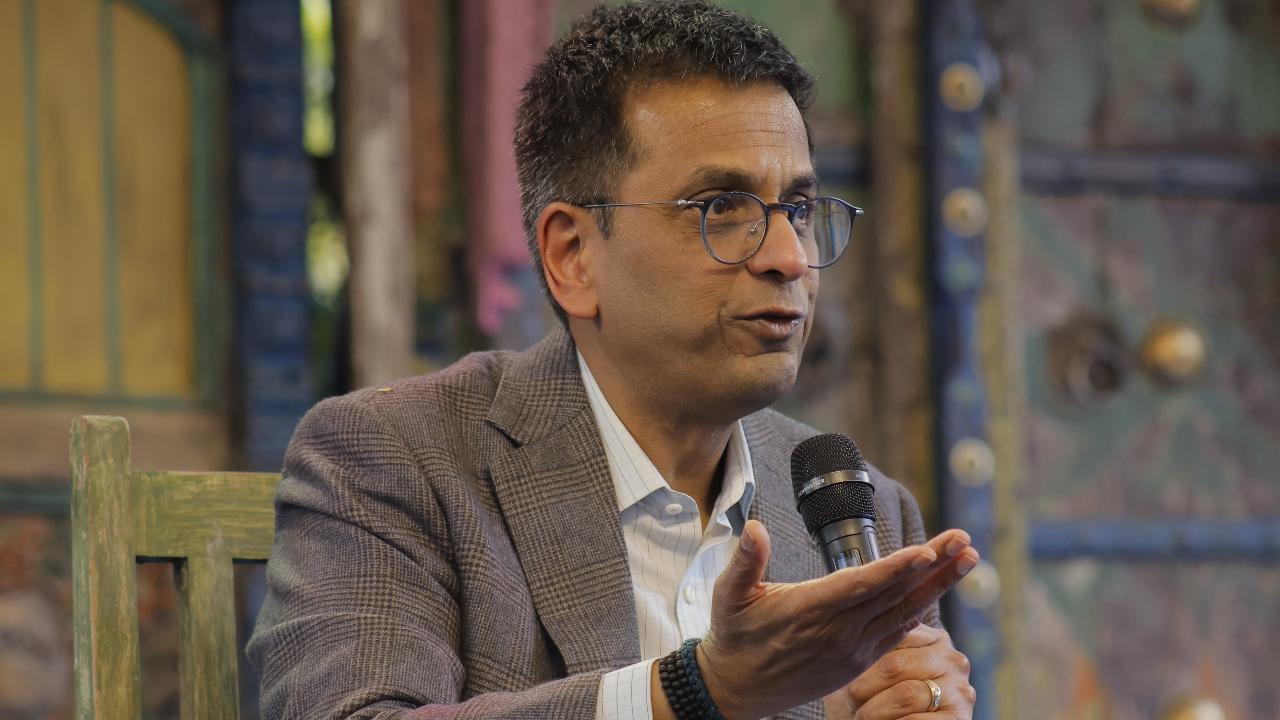
20 January,2026 09:58 AM IST | Washington | IANSThe fourth day of the Jaipur Literature Festival, presented by Vedanta, continued its tradition of rigorous debate and wide-ranging conversations, bringing together leading voices from literature, politics, law, and technology to reflect on power, justice, leadership, and the stories that shape our world. Earlier, on day 3, a much-awaited session with comedian and actor, Vir Das, drew packed audiences with a profound conversation on grief. Das described grief as an inability to breathe fully, explaining how loss reshapes the body and spirit when someone who once lived outside you begins to live within you. He also shared a powerful memory from the night he won an Emmy when standing an Emmy in hand, he had reflected on his incredible journey from being a dishwasher in Chicago to receiving one of the highest honours in entertainment. Acclaimed novelist Richard Flanagan was in conversation with Tim Adams in a thought-provoking examination of the moral urgency of literature in an era defined by ecological collapse, political turbulence, and contested histories. Flanagan reflected on the writer’s responsibility to bear witness and to challenge complacency through storytelling. Flanagan’s book links personal history with global events through an inventive mix of memory, science, and history. He examined how individual lives are shaped by the past and the narratives we build around it. Flanagan also spoke about the idea of memory and quipped that memory is not always an act of testimony, but an act of creation. In A Continent in Crisis: Russia, Ukraine and the European Story, former Polish Foreign Minister Radosław Sikorski joined Navtej Sarna for a sharp analysis of Europe’s political fault lines. The discussion addressed the war in Ukraine, Russia’s geopolitical ambitions, and the future of European unity and global security. Ireland’s former Taoiseach Leo Varadkar appeared in Speaking My Mind, in conversation with Georgina Godwin. Introduced by Kevin Kelly and supported by the Embassy of Ireland in India and Culture Ireland, the session offered candid insights into public life, political leadership, and the personal convictions that shape decision-making in government. One of the day’s most significant conversations was Ideas of Justice, featuring Justice D.Y. Chandrachud, former Chief Justice of India, in dialogue with Vir Sanghvi. Justice Chandrachud spoke on constitutional morality, judicial independence, and the evolving meaning of justice in a diverse and democratic society. Drawing from his book, Why the Constitution Matters, the discussion explored what justice truly means in a constitutional democracy. Justice Chandrachud stressed that justice is not abstract but lived, rooted in transparency, fairness, and accountability. He described the Constitution as the “common stone” holding society together, highlighting how courts have expanded it to include dignity, liberty, and the right to a speedy trial. The future of the internet took centre stage in This Is For Everyone, presented by HPCL–Mittal Energy Limited, as Sir Tim Berners-Lee, inventor of the World Wide Web, spoke with Georgina Godwin about digital rights, decentralisation, and the urgent need to protect the web as a public good. Bringing a literary close to the day, The Murder Dialogue featured filmmaker and actor Anirban Bhattacharyya and writer Rudraneil Sengupta in conversation with Amrita Mahale, exploring crime fiction, cinematic storytelling, and the moral complexities that lie at the heart of the genre. Bhattacharyya discussed Swipe Right to Kill, tracing the journey of a young woman who cons hundreds of men through dating apps before committing murder. He described the book as less about shock than about greed, ambition, and the moment “the switch flips.” Sengupta spoke about his debut novel ‘The Beast Within,’ drawing on years of embedded reporting with the Delhi Police to examine the death of an underage domestic worker, deliberately centring a victim who would otherwise be forgotten. As Day 4 drew to a close, the Jaipur Literature Festival's final day will feature conversations on likes of Alice Oswald: A Journey Through Words and Worlds: Alice Oswald in conversation with Jeet Thayil; Celebrating Manga and Graphic Novels: Yoshitoki Ōima, Ujan Dutta, and Abeer Kapoor in conversation with Radhika Jha, with translator Tomoko Kikuchi; The Legend of Kumarikandam: Anand Neelakantan in conversation with Mridula Ramesh and Legenda: The Real Women Behind the Myths: Janina Ramirez in conversation with Narayani Basu.
19 January,2026 02:56 PM IST | Jaipur | mid-day online correspondentJaipur Music Stage 2026, held alongside the Jaipur Literature Festival, drew to a spectacular close, celebrating the energy, creativity, and diversity of India’s contemporary music landscape. The evening started with Soumik Datta’s Travellers who mesmerised with an immersive blend of sarod, ambient textures, and spoken word enthralled attendees with many different sounds. It was not only them but also the electrifying Vasu Dixit Collective who continued with an immersive performance, one they have been known for over the years. If that was anything to go by, then Parvaaz took it a step further with their signature progressive and psychedelic rock, followed by the introspective yet genre-defying Raman Negi. Yugm, whose folk-fusion narratives bridged tradition and modernity, only went a step further to take the evening to a whole new level beyond literature. The festival culminated with a grand finale featuring Thaikkudam Bridge, the acclaimed 15-member ensemble renowned for their large-format, cross-genre performances and worldwide touring experience, alongside Gauley Bhai, a dynamic quartet blending Nepali folk, blues, rock, and hip hop with a strong community ethos. Across three days, the Jaipur Music Stage provided audiences with a platform to experience innovative collaborations, fresh sounds, and unforgettable live performances, reaffirming its position as a cornerstone of India’s evolving contemporary music scene.
19 January,2026 01:50 PM IST | Jaipur | mid-day online correspondentADVERTISEMENT