Farmers at Kallair Balla village in Punjab's Amritsar celebrated Vaisakhi on Tuesday with great joy and enthusiasm. On this auspicious day, wheat was harvested by the farmers with sickles in the traditional way as they enjoyed the drum beats. Before harvesting, Ardas was performed by them as a way to thank God for a good harvest of Rabi crops, especially wheat. The festival marks the Punjabi New Year and symbolises prosperity and gratitude for a good Rabi harvest. Ranjit Singh, a farmer from Kallair Balla village, said with great enthusiasm that Punjab is celebrating the festival of Vaisakhi, which holds immense cultural and religious significance. He said that this day is remembered for the historic moment when Guru Gobind Singh Ji established the Khalsa Panth and initiated the tradition of Amrit Sanchar. Ranjit Singh further explained that this is also the time when the wheat crop in Punjab ripens, and harvesting begins. He highlighted that farming has always been a major source of livelihood in Punjab, providing employment to both farmers and labourers. Despite the advancement of modern machinery and technology, many farmers still begin the harvest manually as part of tradition, before large-scale cutting is carried out using combine harvesters. Across Punjab, a vibrant harvesting atmosphere can be witnessed during this time. He added that it is a long-standing tradition in Punjab to begin any new work, especially harvesting, with prayers and Ardas, seeking blessings from God. Following the same tradition, farmers have started the harvesting season today. Ranjit Singh emphasised that the wheat crop is crucial, as it fulfils the food requirements of people for the entire year. He also recalled that there was a time when India had to import wheat under the PL-480 Act from the United States to feed its population. However, the farmers of Punjab played a key role in making the country self-reliant in food production and filled the national granaries. Today, even though challenges remain, Punjab's farmers continue to be the backbone of India's food security While speaking, farmer Kawardeep Singh said that today they are standing in village Kalerwala, where a wave of happiness can be seen among farmers. He said that this joy is not limited to just one village, but is being felt across the entire state of Punjab as people celebrate the festival of Vaisakhi. The day holds great historical as well as cultural significance. A farmer, Daljit Singh, said that today marks the festival of Vaisakhi, which is a significant day for the farming community. He stated that the wheat crop has now fully ripened and is ready for harvest. On this occasion, farmers have begun the cutting process after offering prayers (Ardas) and taking the name of God for blessings. He added that there is a strong sense of happiness and excitement among farmers, as this crop is extremely valuable to them, just like a precious possession that one brings home with pride. For farmers, this harvest represents the reward of nearly six months of hard work, dedication, and patience. Today is the day when that long wait finally comes to an end. He further said that this festival brings immense joy and satisfaction, as the crop they have nurtured with care is now ready to be harvested and taken home. Kawardeep Singh explained that for farmers, this is a very special occasion because it marks the beginning of wheat harvesting. After nearly six months of hard work, where farmers nurture their crops like their own children and face various weather challenges, this day brings the reward of their efforts. He added that this is the time when the crop reaches its final stage, bringing income, happiness, and stability to farmers and their families. Many household needs and future plans depend on this harvest. Across Punjab, the harvesting season officially begins on this day. As per tradition, farmers start the process by offering prayers (Ardas) and seeking blessings for a successful season. A festive atmosphere can be witnessed, with dhol beats and celebrations adding to the spirit of the occasion. The beginning of the harvest is being marked with great enthusiasm and energy. He further said that just like any business reaches its final stage of returns, for farmers, this is that crucial moment when their "golden crop" finally comes home. This harvest not only fulfils present needs but also helps them prepare for the next cropping season. This story has been sourced from a third party syndicated feed, agencies. Mid-day accepts no responsibility or liability for its dependability, trustworthiness, reliability and data of the text. Mid-day management/mid-day.com reserves the sole right to alter, delete or remove (without notice) the content in its absolute discretion for any reason whatsoever.
14 April,2026 04:13 PM IST | Amritsar | ANIThe week-long celebration of Rongali Bihu, the biggest festival of of Assam, has began across the state on Tuesday, starting with traditional Goru Bihu (Cattle Bihu). Assam is celebrating the first of Rongali Bihu as the Goru Bihu (Cattle Bihu). Goru Bihu has observed on the first day of Rongali Bihu, is dedicated to the worship of cow. Bulls and cows are bathed with a paste made of fresh turmeric, black lentils, other ingredients and fed with gourds and brinjals and provided with new attaching ropes. People also sing traditional songs to the cattle, "Lao kha, bengena kha, bosore bosore barhi ja, maar xoru, baper xoru, toi hobi bor bor goru" (means "Eat gourd, eat brinjal, grow year by year, your mother is small, your father is small, but you will become a large, strong cow"). Worship of cattle on this occasion means showing respect and gratitude to the cattle, bulls, that are important parts in farming and daily life. Along with other parts of the state in Guwahati also, people on Tuesday have observed traditional Goru Bihu on the first day of Rongali Bihu. This story has been sourced from a third party syndicated feed, agencies. Mid-day accepts no responsibility or liability for its dependability, trustworthiness, reliability and data of the text. Mid-day management/mid-day.com reserves the sole right to alter, delete or remove (without notice) the content in its absolute discretion for any reason whatsoever.
14 April,2026 12:31 PM IST | Guwahati | ANIMarking the start of Bikram Sambat 2083, people across Nepal are celebrating the New Year on Tuesday. Baishakh 1, the first day of the Bikram Sambat calendar, is widely observed across the country as the Nepali New Year. The day holds deep cultural and spiritual significance, with people celebrating the new year. According to the solar calendar, Baishakh 1 marks the start of the year, while in the lunar calendar, the New Year begins on the first day of the bright fortnight of Chaitra. The Bikram Sambat calendar, based on the Hindu Panchanga, the official calendar system in Nepal. On this occasion, people exchange greetings and best wishes. The eve of the New Year is often celebrated with friends and family, as people welcome the coming year with joy and hope. Many visit temples and monasteries to offer prayers, while also reflecting on the past year. Individuals set new goals and resolutions, aiming to overcome past shortcomings and begin the year with renewed energy and determination. President Ram Chandra Poudel has emphasized the need to set common national goals and renew collective commitment toward achieving them. Extending his best wishes for happiness, peace, prosperity, good health, and longevity on the occasion of New Year 2083 BS, the President emphasized that success does not come by chance but through determination, discipline, and consistent effort. He stressed the importance of upholding laws and maintaining civilized conduct to achieve national aspirations. Highlighting the significance of traditional calendars, he noted that they reflect Nepal's history, civilization, and social values, while also inspiring citizens to move toward a prosperous future. He added that the New Year has long been regarded as a time to reflect on the past and make meaningful resolutions for the days ahead. President Paudel also said that the recent parliamentary elections have helped steer the country out of political uncertainty and led to the formation of a new government with a fresh public mandate. He noted that the people have expressed their aspirations for rule of law, sustainable peace, good governance, development, and social justice under the federal democratic republican system. He called on citizens and leaders alike to remain committed to these ideals, emphasizing the need to prioritize citizens, strengthen good governance, and uphold inclusion and social justice without compromising national sovereignty. The President expressed hope that the New Year would reinforce unity, mutual trust, tolerance, and cooperation among Nepali, while inspiring collective efforts toward national progress.
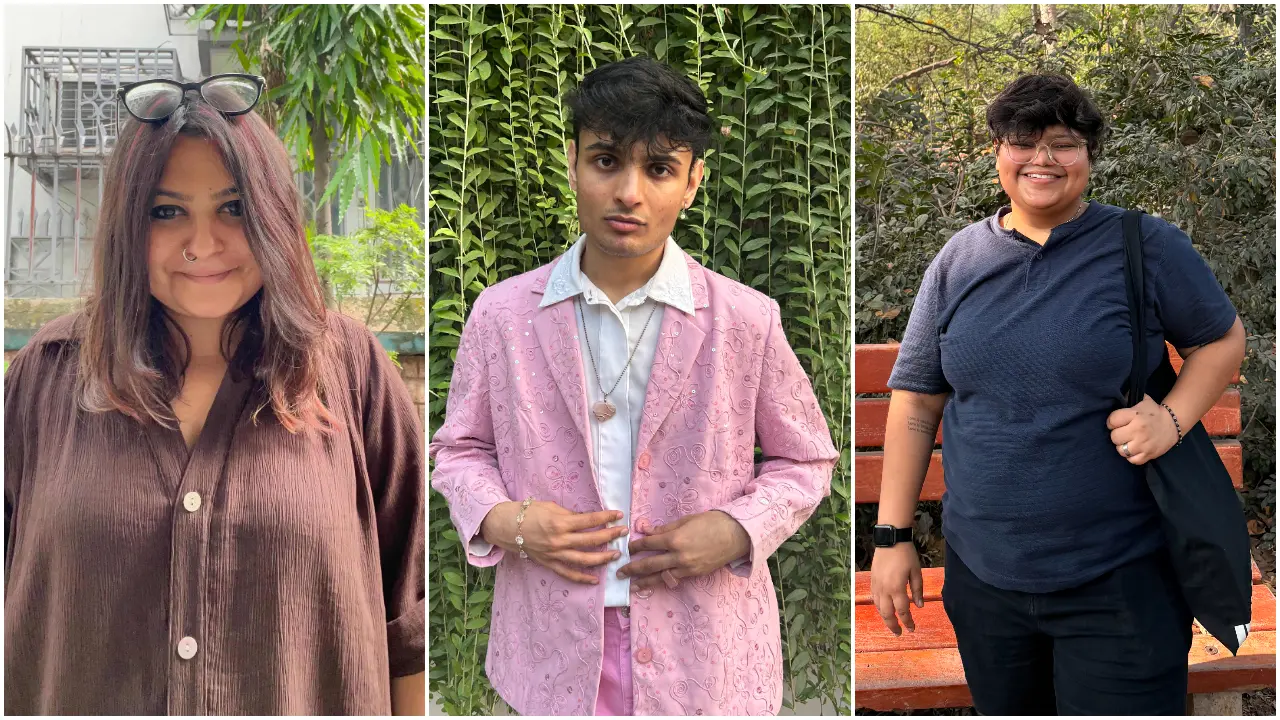
14 April,2026 09:49 AM IST | Kathmandu | ANIThe 2026 Amendment to the Transgender Persons (Protection of Rights) Act has effectively gutted the soul of trans dignity in India: the right to self-identification. This move stands in direct defiance of the landmark 2014 NALSA v. Union of India verdict, in which the Supreme Court of India ruled that the individual—and only the individual—is the sovereign authority over their own gender. Today, that sovereignty is being subdued by a state that treats legal history as something that can be undone with a single signature. The scale is staggering. While the 2011 Census officially recorded 4.87 lakh transgender individuals, the National AIDS Control Organisation and community advocates estimate the actual figure is closer to one crore. By replacing self-identification with a medical tribunal, the state is attempting to funnel millions of diverse lives through a single clinical needle—a bureaucratic bottleneck designed to exhaust a population into invisibility. For Priyadarshini, a 29-year-old non-binary femme lesbian brand manager, and gender and sexual rights activist in Kolkata, the speed of the legislation felt like a physical strike. "The bill came to the floor of the lower house—passed amidst opposition—and within a week it went to the upper house, and the President gave it an assent," she recalls. Priyadarshini, who has spent years balancing a corporate career with front-line advocacy, sees the timing as a deliberate tactic of exhaustion. "By 11 o’clock at night, we start hearing things, and by the very next morning, there’s a gazetted copy. If our government really works so fast, why does our country have so many issues?” She says wearily, “It feels like they are moving under the cover of night to overwrite our humanity before we can even organise a response. How can the legislature go against what the Supreme Court has already said?" The intrusion of the cis gaze The ‘audacity’ at the heart of this crisis doesn’t belong to the protestors screaming in the streets— it belongs to the architects of this erasure. There is a grotesque irony in watching a room of cisgender politicians legislate the boundaries of trans existence."Imagine a stranger, who has never lived a day in your skin, deciding if you are 'real' enough to exist in the eyes of the law. It is a profound violation to have your truth treated as a debatable topic by people who have no skin in the game," counters Priyadarshini.This is the institutionalisation of the ‘cis gaze’—the state’s declaration that an internal truth is a mere suggestion, while a clinical observation is the absolute fact. When laws are built on the assumptions of those who have never navigated the vulnerabilities of gender nonconformity, the result is a framework of indifference. By reversing the burden of proof, the Act forces trans individuals to justify their existence to a committee of cisgender strangers, transforming a birthright into a medical permit. "It forces my trans siblings to stand before a medical board, to potentially strip, to be 'assessed' by people who have likely never read the NALSA judgment. We are being told to wait for a stranger’s verdict on our own identity. This amendment is fundamentally broken,” she insists. The clinical weapon: Assessment as assault The amendment introduces a mandatory ‘District Screening Committee’ and a medical verification process for anyone seeking a gender certificate. This isn’t just a new layer of red tape—it is a psychological siege. Adityuh, a 24-year-old trans-masculine psychology student and community support worker in Delhi, views the move as state-sponsored gaslighting."Identity isn't something you prove; it’s something you are," they say. This clinical turn is particularly harrowing given the existing healthcare landscape. According to a report by the National Human Rights Commission, roughly 92 per cent of transgender people in India are deprived of the right to participate in any form of economic activity, due to institutional discrimination.For Adityuh, the hospital—a place that should theoretically be a sanctuary of healing—is being repurposed. "When I think of a hospital now, I don't think of care. I think of trauma and doctors with God complexes who treat you like a fascinating specimen," they recoil. Under the 2026 amendment, the clinic is transformed into an outpost of the police station—a site for reporting and verification. The white coat becomes a uniform of the state. "The state is saying, ‘We’ll let you live, provided you transition on our terms’. But who is ensuring that process isn't a nightmare? Trans individuals are treated with blatant transphobia by the very staff supposed to 'verify' us," Adityuh questions. A safety net in flames Beyond the individual struggle for a piece of identification, the Act threatens the informal support systems the community has spent decades weaving together. In India, where traditional family structures often reject queer children, the ‘chosen family’ or the Gharana system has been a literal life-saver. Rio, a 25-year-old trans-masculine non-binary corporate professional and community advocate in Delhi, points to the calculated vagueness of the amendment as a tool for systemic erasure."The language here is a trap," Rio elaborates. "By making self-identification illegal and requiring 'medical proof' for legal recognition, the bill endangers the safe homes, the NGOs, and even the families who choose to stand by us. If you aren't legally recognised, anyone harbouring you could be accused of kidnapping or enticing a minor, even if you are an adult."Rio, the primary earner for their family, faces a terrifying paradox. Even their supportive mother now lives in terror, "My mom told me, 'Don't leave me if you are thinking of doing that.' The government criminalises her with the kind of vague language it brings into action. That fear is now a permanent resident in our home.”This ambiguity systematically abolishes the support systems that have historically buffered trans individuals from homelessness and violence. "I fear what’s next—will they take my citizenship? My right to breathe?" he admits. "The government isn't just targeting my wallet or my job; it's targeting my right to a family. We are being watched, and our right to associate is being strangled." The ideal citizen and the margins The violence of this legislation is not distributed equally. A recurring theme in these conversations is the intersection of caste and class. The Act appears designed to protect a very specific, sanitised image of the Indian citizen—one that has no room for those on the periphery.“The blueprint for the 'ideal' citizen under the current regime is clear: upper-caste, Hindu, cisgender, heterosexual male,” Priyadarshini notes, acknowledging that while the law targets the entire community, the blow falls heaviest on those already pushed to the furthest margins."I’ve been able to navigate certain spaces because I have the privilege of education. But for a Dalit trans woman in a rural village, or a Hijra elder who has never owned a birth certificate, this law is an invisible wall. It isn’t just transphobic; it is classist and casteist to its core," she points out. The data support this grim reality. The 2011 Census noted that the literacy rate among the trans community was only 46 per cent, far below the national average. For those already on the margins, a law requiring complex documentation and medical proof is essentially an expulsion order. The state counts on this exhaustion. As Adityuh puts it, "The state knows that if they make life hard enough, eventually, we might just stop fighting." The audacity of vocabulary Despite what Priyadarshini terms a ‘death warrant,’ the community finds its strength in the very vocabulary the state seeks to regulate. For many, finding the right words for themselves wasn't about a label—it was about finding a map home. In a society that often uses ‘transgender’ as a catch-all for anything outside the binary, the nuance of modern identity is a shield."When you finally find the word that defines you—whether it's non-binary, genderqueer, or trans-femme—it feels like oxygen," Priyadarshini reveals. She recalls how meeting a non-binary person for the first time in Brighton changed her life: "Growing up, I never thought of myself as a man... Then I met a non-binary person. That one conversation changed my life."Adityuh finds a similar power in bridging the gap between their identity and their mother tongue. "There’s always been a disconnect with me and my mother tongue, Hindi, because there were not a lot of instances where I could really explain... this is exactly how I feel, and there is a terminology for it," they observe. In the face of systemic erasure, this vocabulary isn't just a label—it's a refusal to be edited out. For Adityuh, this reclamation is the foundation of their survival. "Identity, for us, has always been synonymous with resilience. We’ve had to invent ourselves because the world didn't have a space for us," they reflect. The long road ahead As India moves further into 2026, the trans community faces a threshold of survival. Compounding the fear of the Amendment is the government’s recent legislative pivot toward re-examining the nuances of Section 377. After the 2018 decriminalisation, many now fear a stifling return to criminalisation under the guise of new morality frameworks.The Act envisions a nation where everybody is standardised, categorised, and controlled. The community isn't just fighting for labels—they are fighting to exist without being vetted by those whose lives are entirely unimpacted by the laws they sign."This is a signal," Priyadarshini concludes. "Bodies that don't fit the mould are being told to vanish. But even a minority of one has a truth that no gazette can erase. I will keep fighting for a world where we don’t have to beg for our humanity from an apathetic state. We are not asking for a favour; we are reclaiming what was always ours."The protests continue. While the rest of the country sleeps under the ‘protection’ of these laws, the trans community is awake, rewriting the script, and proving that audacity isn't just about survival—it's about the refusal to be erased."If you think they won't come for you because you are 'normal,' you’re wrong. Once they finish with us, they will find something 'abnormal' about you too,” Rio warns. “We are being treated not as citizens, but as something to be cleared away. Don't look away."
13 April,2026 04:04 PM IST | Mumbai | Maitrai AgarwalPunjabi pop icon Karan Aujla brought his record-breaking 'P-POP Culture India Tour' to a powerful close with the much-anticipated Mumbai 2.0 concert, delivering an unforgettable night defined by electrifying performances, but now without paying tribute to Indian music legend Asha Bhosle, who passed away on Sunday. In a deeply moving moment, the Punjabi popstar paused the high-energy show right before he zoomed the arena on a zipline to pay a tribute to Bhosle by marking a moment of silence followed by a retrospective mash-up featuring 15 of her timeless singles including Piya Tu Ab To Aaja, Dum Maro Dum, Chura Liya Hai Tumne Jo Dil, Yeh Mera Dil, O Haseena Zulfonwale amongst others. The gesture carried profound emotional weight as news of her passing at the age of 92 in Mumbai emerged the same day marking the end of an era in Indian music. Asha Bhosle, one of the most influential voices in Indian cinema, had notably connected with a new generation of listeners, even performing Aujla’s hit ‘Tauba Tauba’. His on-stage tribute symbolized a poignant bridge between generations of Indian music. What began as a celebratory concert transformed into a collective moment of remembrance, as thousands of fans joined in honouring her legacy. Aujla’s heartfelt acknowledgment of her impact created a goosebumps-inducing pause in an otherwise high-octane evening, making the night truly historic. With a crowd of over 35,000 attendees, the show reaffirmed Aujla’s position as one of India’s most dominant live music performers and marked the grand finale of the tour. Mouni Roy, Aditya Narayan, Munawar Faruqui, Shefali Bagga, Orry, Dhwani Bhanushali, Avneet Kaur, Mannara Chopra, Riva Arora, Karan Kundra, Tejaswi Prakash, Ankita Lokhande, Vicky Jain, Disha Parmar, Rahul Vaidya, Sakshi Malik, Riyaz Ali, Parmish Verma, Sonam Bajwa were spotted in the audience. Produced by Team Innovation, Mumbai 2.0 was a free concert for fans who attended the March 3 show at MMRDA Grounds, after fans expressed disappointment during the earlier concert. During the concert, he shared that he owes everything to the love of his fans and the blessings of his parents, saying he wouldn’t be standing there without them, and asked the crowd to cheer for his mom and dad, believing they are watching him from above; he added that he says this at every show to remind people to respect their parents, as they are the foundation of life, and urged everyone, especially the younger generation, to stay connected, talk openly about their feelings, support one another and spread love, emphasising that love will always be greater than hate. Aujla opened the show with a dramatic entrance, rising from beneath the stage on a hydraulic lift to roaring applause. The hit-packed set featured some of Aujla’s biggest anthems, including Softly, Winning Speech, 52 Bars, Take It Easy, Admirin U, P-POP CULTURE, Try Me, Daytona and Gangsta as well as Bollywood classics like Gulabi Aankhen, Oh Oh Jaane Jana and ‘Kala Chasma, bringing the audience to a euphoric close with high-energy singalongs, mobile light displays and multiple encores. Karan Aujla states, “Closing the P-POP CULTURE India Tour in Mumbai felt special. Mumbai 2.0 was built to push the experience forward, not just in scale, but in emotion and energy. The passion, sincerity and love all came together in a way I’ll never forget. This night was a gesture of gratitude to all my fans who made this entire tour what it became.” Mohit Bijlani, founder, Team Innovation states, “This show represents a new way of thinking in live entertainment, where audience feedback is not just heard, but acted upon. Mumbai 2.0 is a reflection of accountability, innovation, and putting fans at the centre of everything we do. With the P-POP CULTURE India Tour, our vision was to build more than a series of concerts; it was to create a connected cultural journey across cities. Each show was designed to scale the experience further and Mumbai 2.0 became the defining culmination of that vision.” As the grand finale of the P-POP CULTURE India Tour, Mumbai 2.0 underscored a defining shift in India’s live entertainment landscape where fan experience, responsiveness and production innovation are increasingly central to the concert ecosystem. The tour follows the massive success of Aujla’s 'It Was All A Dream India Tour 2024', further cementing his position as a global force in Punjabi music and live performance culture.
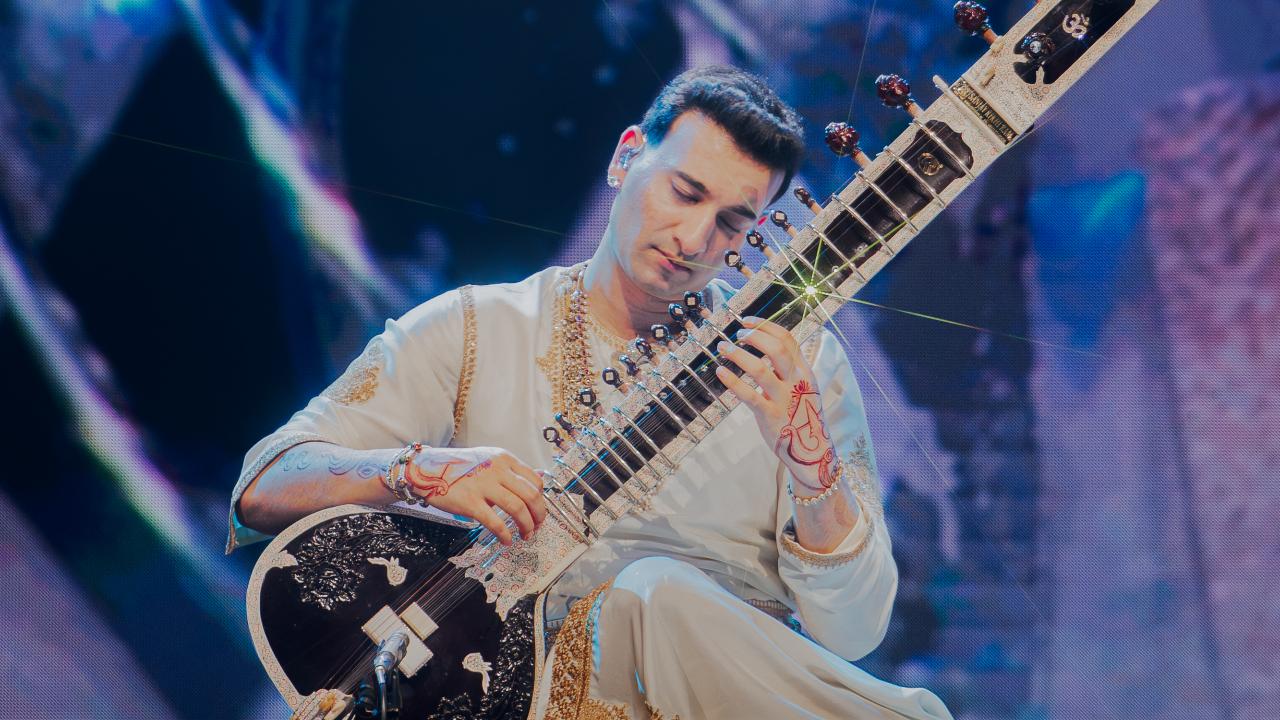
13 April,2026 02:50 PM IST | Mumbai | mid-day online correspondentIndian sitarist Rishab Rikhiram Sharma, who performed for his fans in Kolkata, also paid tribute to legendary Indian singer Asha Bhosle, who passed away on Sunday, April 12, at 92; he presented a sitar rendition of ‘Abhi Na Jao Chhod Kar’ during his performance. With over 10,000 attendees gathered at Biswa Bangla Mela Prangan, WBTP0, the performance honoured tradition and culture while celebrating the art of experimentation. Produced by Team Innovation and District by Zomato, the 10-city 'Sitar for Mental Health India Tour' opened with its classic meditative opening that set the tone for an emotionally rich musical journey, with Gen Z hot favourite exploring intricate ragas ragas including 'Bihaag', 'Kedar', 'Tilak Kamod' and 'Shyam Kalyan' while weaving in his signature fusion style and lighting up the stage fashionably in bespoke Tarun Tahliani attire. Armed with the SITARA, which he calls the next-generation electric sitar custom-created sitar by his father and master luthier Sanjay Sharma added a striking visual dimension, the performance saw him perform some of his biggest hits spanning original compositions like 'Shankara', 'Shiv Kailash', 'Burning Ghat', 'Belua' and 'Roslyn' to reimagined popular melodies including 'Harry Potter x Game of Thrones', alongside Bollywood classics like 'Kal Ho Naa Ho', 'Zara Zara' and 'Tumhi Dekho Naa' kept the audience deeply engaged. As a special performance for his fans in Kolkata, he also performed ‘Ekla Cholo’, the timeless masterpiece by Rabindranath Tagore. The performance concluded with a powerful finale with 'Chanakya', 'Kautilya', 'Venkateswara' and 'Tandavam' that earned prolonged applause. Following a remarkable run across Bengaluru, Mumbai, Pune, Hyderabad, Jaipur, Chennai, Ahmedabad, he landed in Kolkata before he travels to Chandigarh on April 17 and ends the tour in Delhi on April 19.
13 April,2026 02:28 PM IST | Kolkata | mid-day online correspondentThe sound of buzzing tattoo machines filled the air at every stall as artists worked on intricate designs blending traditional deities with modern artistic concepts at the 13th International Nepal Tattoo Convention, which continues to celebrate body art and global tattoo culture in Lalitpur, as it was held from April 10 to 12. The ongoing convention has brought together over 250 tattoo artists from around 25 countries, showcasing a diverse mix of styles, techniques and cultural influences. The event, which began on Friday, features artists inking a wide range of designs, including Hindu deities such as Ganesh, Hanuman, Lord Buddha, the Living Goddess Kumari, as well as contemporary and abstract concepts that fuse tradition with modern aesthetics. Organisers said the event has become a major global platform for cultural exchange in tattoo artistry. "We have around 250 tattoo artists from all around the world, about 25 countries, out of which we think it is around sixty per cent international and forty per cent national. Countries from Colombia, Mexico, Australia, New Zealand, China, Taiwan, there are about 25 countries, of course, from India and Nepal," Bijay Shrestha, Director at the International Nepal Tattoo Convention being held in Lalitpur, told ANI. Organised annually by Nepal Tattoo, the convention also features competitions among the exhibitors on a daily basis. Artists are assigned to their respective stalls to paint tattoos on the bodies of customers, following certain measurements and utilising permitted ink. The competition broadens its scope with "Ornamental, Tribal, and Dot Tattoo," welcoming entries of any size and colour. This competition not only promises to be a feast for the eyes but also a testament to the artists' creativity and skill under pressure. "The whole point of doing this is to teach and show our national artists, because back then, it was not easy for them to travel to other conventions. So what we did was to have a convention here where we could bring artists from all around the world--different styles, techniques, and approaches to the tattoo world and art. Also, for them (international artists) to see what Nepal is all about, our rich culture and arts. It's a kind of exchange between the two sections, and that's how we have been doing it. In the past fifteen years, the quality of our artists has gone really high. Artists now travel to different conventions, countries, and they have guest spots around the world," Shrestha added. Tattoo culture in Nepal is one of the oldest traditions practised widely by Newa, Tharu, Gurungs, and Magar, the aboriginals of the Himalayan nation. As per the younger generation, traditional tattoos lacked precise details, linking them more to communities and spiritual beliefs, but modern tattoo designs focus more on aesthetics. Being driven by aesthetic values, younger generations are now making a fusion of traditional beliefs with modern designs to ink on various parts of their bodies. In the Kathmandu Valley, tattoos in earlier days were mostly done during Jatras (festivals) and Melas (carnivals) like Rato Machindra Jatra and Indra Jatra. Kathmandu's Tebahal and Bhaktapur's Thimi were famous for tattoo art, which is called "Lha: Chyogu" in the Nepali Bhasha or the Newa: language. 'Lha' in Newa: means 'flesh' and 'chyogu' means 'writing'; tattoos on the legs of Newari women symbolise their strength, and a belief follows that a person takes nothing but the tattoos on his or her body after death. On the way to heaven, if one faces hardships, he or she can sell the tattoos and thus make the journey more comfortable. Earlier, coal and milk were mixed with plants to produce colours for the ink used to design tattoos. Now, inks are widely used, poured into machines, and then run over the sketched areas of the body. "It's really nice to be in a sense of community and getting to meet all the local artists and connect. It creates a nice community here and it runs for the art of creativity and hanging out, which is awesome. There is no feeling of too much pressure, not many expectations--go with the flow of the Nepali people and get connected," Jaya, a tattoo artist based in Australia, told ANI. In Nepal, the trend of cultural tattooing has evolved and taken different forms. Nowadays, getting a tattoo is a way a person expresses themselves through art, words, or symbols. Nepal is now known as one of the best destinations for getting inked. Many Nepalese artists have gained international recognition for their artistic work and creativity. Nepal is a very affordable and special place for getting inked. However, the ongoing tension in the Middle East has had a ripple effect on this year's convention. As per the director of the convention, Bijay Shrestha, many artists are now absent. "The last-minute cancellations because of the ban on flight routes meant people had to take different routes; even I had to take a different route. Many of my friends couldn't come because flight tickets are expensive and cancellations occurred. It has affected us--not in a big way, but it has. I miss some of my close friends who had been coming with us for the past ten years; they couldn't come because they couldn't fly," Shrestha told ANI. This story has been sourced from a third party syndicated feed, agencies. Mid-day accepts no responsibility or liability for its dependability, trustworthiness, reliability and data of the text. Mid-day management/mid-day.com reserves the sole right to alter, delete or remove (without notice) the content in its absolute discretion for any reason whatsoever.
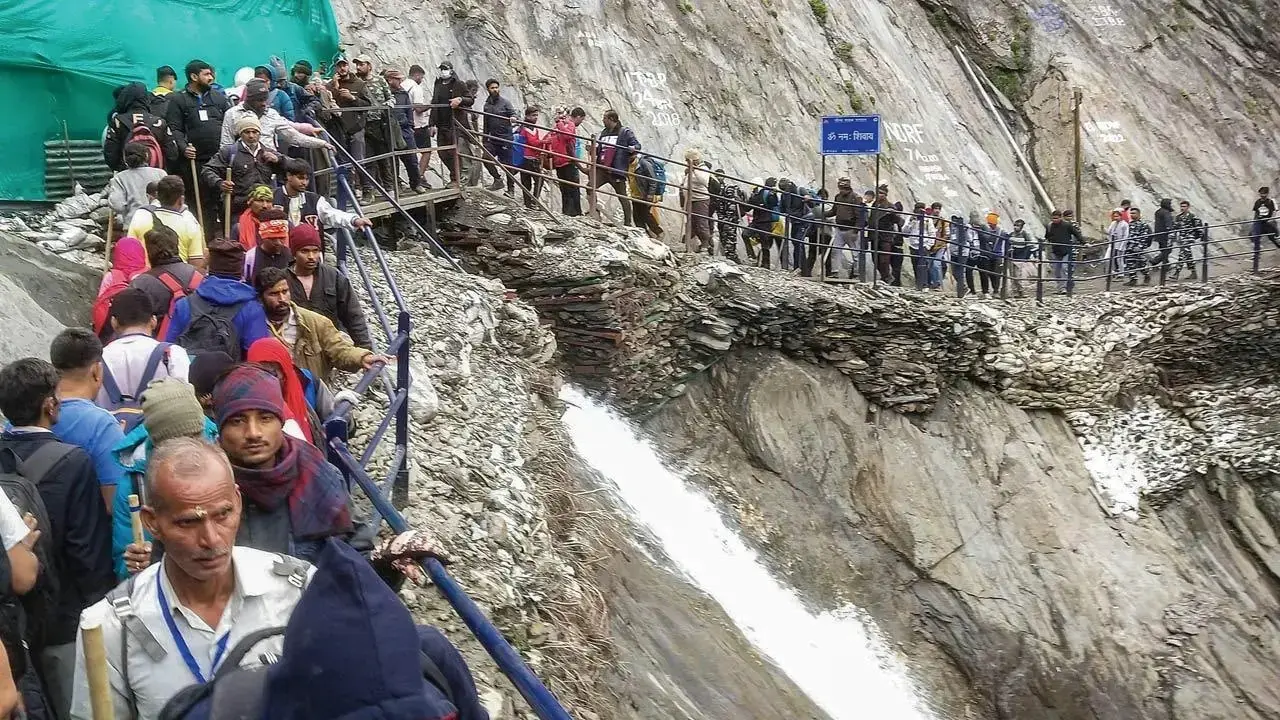
13 April,2026 12:26 PM IST | Lalitpur (Nepal) | ANIThe annual pilgrimage to the holy cave shrine of Amarnath in south Kashmir will commence on July 3 and conclude after 57 days on August 28, Lieutenant Governor Manoj Sinha said. Pilgrims between the ages of 13 and 70 can undertake the yatra and registrations will begin from April 15, the LG told reporters at the Lok Bhavan in Jammu. The dates for the yatra were decided at a meeting of the Shri Amarnath Ji Shrine Board (SASB) under the chairmanship of Sinha. "The Amarnath Yatra will commence on July 3 and conclude on August 28. Overall, this year's pilgrimage will be slightly longer, lasting about 57 days," the LG said. Registration for the pilgrimage has been made mandatory and will begin from April 15. The minimum age for pilgrims has been fixed at 13 years and the maximum at 70 years, he said. "Advance registration can be carried out through about 556 designated bank branches across the country, while online registration will also be available through the official website of the Shri Amarnathji Shrine Board," Sinha said. Yes Bank, ICICI Bank, Punjab National Bank, State Bank of India and Axis Bank will facilitate registrations through their branches, he said. The LG said the first puja will be performed on June 19, on the occasion of Jyeshtha Purnima. The pilgrimage will commence from the twin tracks, the traditional 48-km Nunwan-Pahalgam route in Anantnag district and the 14-km shorter but steeper Baltal route in Ganderbal district.
12 April,2026 03:07 PM IST | Jammu | PTIStudents of a college in Maharashtra's Latur city have observed Social Equality Week by participating in an 18-hour study session to mark the birth anniversaries of Mahatma Jyotiba Phule and Dr B R Ambedkar. A total of 101 students of the College of Agriculture joined the programme, which began at 6 am on Saturday. College dean Dr Babasaheb Thombre stressed the importance of time management and self-study, recalling how Dr Ambedkar himself studied for long hours. "Make the best use of every moment - that is the true mantra of progress," he said. Former principal of another Latur-based college, Dr Sanjay Gawai, said the initiative aims to instil a strong habit of reading and self-learning. He urged students to adopt at least one principle from Phule and Ambedkar's teachings, and to rely on original texts even in the age of artificial intelligence. According to college authorities, the 18-hour study activity has been organised annually for the past 22 years. Phule's birth anniversary falls on April 11 and Ambedkar's on April 14. This story has been sourced from a third party syndicated feed, agencies. Mid-day accepts no responsibility or liability for its dependability, trustworthiness, reliability and data of the text. Mid-day management/mid-day.com reserves the sole right to alter, delete or remove (without notice) the content in its absolute discretion for any reason whatsoever.
12 April,2026 02:16 PM IST | Latur | PTICelebrated Indian singer Lata Mangeshkar passed away on February 6 in 2022 but her legacy will remain close to every Indian forever. With her melodious voice spanning generations and transcending language barriers, Mangeshkar's influence on the music industry is unparalleled. Lata Mangeshkar's voice became synonymous with soulful, evocative singing. Spanning over seven decades, she recorded more than 30,000 songs in over 36 languages. Whether it was the melancholic "Lag Jaa Gale" or the vibrant "Ajeeb Dastaan Hai Yeh," her voice resonated with audiences across the world. Mangeshkar's songs have become timeless classics. From "Pyaar Kiya To Darna Kya" to the patriotic "Ae Mere Watan Ke Logo," she sang in every genre imaginable, capturing the nuances of love, sorrow, joy, and patriotism. These songs continue to be passed down through generations, keeping her musical legacy alive. Lata Mangeshkar's collaborations with India's most celebrated music composers and lyricists, including S.D. Burman, R.D. Burman, Madan Mohan, and Shankar Jaikishan, produced some of the most memorable hits of Indian cinema. Her voice complemented the melodies of these musical maestros, creating magic that still resonates with fans of Hindi film music. Lata Mangeshkar was the voice behind countless iconic Bollywood heroines, from Nargis and Madhubala to Sridevi and Aishwarya Rai. Her ability to adapt her voice to match the personalities of different actresses made her the go-to playback singer for generations of filmmakers and actors. Her contributions to music earned her numerous accolades, including the Bharat Ratna, India's highest civilian award. Lata Mangeshkar was also honoured with Padma Bhushan, Padma Vibhushan, and several Filmfare Awards. Lata Mangeshkar's voice had a unique quality--timeless, ageless, and capable of capturing a range of emotions. She sang for generations of listeners, from the youth of the 1950s to the listeners of today. Apart from her singing career, Lata Mangeshkar's philanthropic efforts earned her respect. She was involved in charity work, supporting causes ranging from education to healthcare. Mangeshkar passed away at the age of 92, following a battle with multiple organ dysfunction syndrome. She had spent 28 days receiving intensive treatment for pneumonia and COVID-19. After her death, Prime Minister Narendra Modi visited the Mangeshkar family and her sister Asha Bhosle in Mumbai to offer his condolences, following a tribute to the legendary singer. In honour of her immense contribution to Indian music and culture, the Government of India declared a two-day period of national mourning, with the national flag flown at half-mast from February 6 to 7 across the country. Leaders from all walks of life, including the then President Ram Nath Kovind, Vice President Venkaiah Naidu, Prime Minister Modi, Union Ministers, Chief Ministers, along with members of the Indian music and film industries, celebrities, and fans, all expressed their sorrow and paid tribute to the musical icon. This story has been sourced from a third party syndicated feed, agencies. Mid-day accepts no responsibility or liability for its dependability, trustworthiness, reliability and data of the text. Mid-day management/mid-day.com reserves the sole right to alter, delete or remove (without notice) the content in its absolute discretion for any reason whatsoever.
12 April,2026 01:37 PM IST | New Delhi | ANILeo XIV will become the first pope to visit Algeria on Monday, taking a message of dialogue with Islam on a trip that also represents a personal pilgrimage for the American pontiff. Algeria is the first stop on an 11-day tour of four African nations, covering 18,000 kilometres and also taking in Cameroon, Angola and Equatorial Guinea from April 13 to 23. No other pontiff has visited Algeria, a North African country where Islam is the state religion, and the 70-year-old's arrival is being eagerly awaited by the Catholic minority. The visit also holds a strong personal dimension for Pope Leo, as modern-day Algeria was home to Saint Augustine (354-430), a great Christian theologian whose spiritual legacy permeates his pontificate. As the world watches anxiously with war raging in the Middle East, peaceful coexistence will be at the heart of the pope's message in a country where 99 percent of its 47 million inhabitants are Muslim. Vatican spokesman Matteo Bruni said the pope's aim was to "address the Islamic world, but also to confront a common challenge of coexistence". Algeria's constitution guarantees freedom of worship, although the authorities must approve both the place of worship and the preacher. Yet human rights groups say the repression of religious minorities has continued in Algeria in recent years. Three organisations -- Human Rights Watch, EuroMed Rights and MENA Rights Group -- issued a joint letter last week calling on the pontiff to push the issue during his visit. Soft power The trip has been hailed in the local press for its "symbolic and historical significance," extending far beyond Algeria's 9,000 Catholics. For the government daily El Moudjahid, it is a symbol of "Algerian soft power", that reflects the country's "stability, its role as a regional mediator, and its capacity to engage in dialogue with global actors," the newspaper stated. In Algiers Monday morning, Pope Leo will meet with President Abdelmadjid Tebboune and deliver a speech to the authorities and the diplomatic corps. No public appearances are planned in the capital, and the famous popemobile, the white vehicle pontiffs use to drive past crowds of the faithful, will remain at the airport, according to the Casbah Tribune news site. In the afternoon, the pope will visit the Great Mosque of Algiers -- one of the largest mosques in the world -- and also meet with the Catholic community. Leo will also pray privately in the chapel dedicated to 19 priests and nuns murdered during the dark decade of civil war (1992-2002). However, he will not visit the Tibhirine monastery, whose monks were kidnapped and murdered in 1996, an event still shrouded in mystery. Son of St Augustine The most symbolic stop for the pope will be on Tuesday with a trip to the eastern city of Annaba, the one-time home of Saint Augustine, where Leo will hold a mass. From the moment he became pope on May 8, 2025, following the death of Pope Francis, Leo has presented himself as a "son" of the famed theologian. The former Robert Francis Prevost is a member of the Augustinian order, which was founded in the 13th century and is based on the ideals of communal living and sharing. Father Fred Wekesa, rector of the Saint Augustine Basilica at Annaba, said Leo's visit was a "deeply significant moment" that would give his small flock a "message of encouragement and solidarity". "All too often, some people view this country only through the lens of the 'dark years'," he added, alluding to the country's bloody civil war from 1992 to 2002, when 200,000 people were killed in the conflict between Islamists and security forces. "With the Holy Father's visit... the whole world will see the hospitality and generosity of the Algerian people," said Wekesa. "We are capable of living together in peace." This story has been sourced from a third party syndicated feed, agencies. Mid-day accepts no responsibility or liability for its dependability, trustworthiness, reliability and data of the text. Mid-day management/mid-day.com reserves the sole right to alter, delete or remove (without notice) the content in its absolute discretion for any reason whatsoever.
12 April,2026 01:34 PM IST | Vatican City | AFPADVERTISEMENT