There was a gentle, unhurried energy at the opening of Tela Art Gallery’s exhibition ‘To Be Continued…’ at Jehangir Art Gallery in Mumbai. It is the kind that only art, and people who truly care for it, can bring into a room. The exhibition brings together artists across generations, placing emerging voices alongside seasoned practitioners. And perhaps that is what made the evening feel special… there was pride, a little nervous excitement, and a palpable sense of arrival. Visitors spent time with the works, many expressing how beautifully they connected with the pieces on display, lingering longer than usual and engaging in conversations around the art. The art exhibition was inaugurated by actor Boman Irani, alongside theatre personality Raell Padamsee, aviation consultant Parvez Damania, and Rajendra Patil, President of the Bombay Art Society. Besides curators Ritu Chopra and Vikas Singh, the gathering also saw artists and friends of the arts including Gautam Patole, Prakash Bal Joshi, Safdar Shamee, Sangeeta Babani and lensman Pradeep Chandra, gallerist Bhadresh Sheth among others. The way Boman Irani moved through the gallery is whhat stood out just as much as the art on the walls. He took his time, stopping at each artwork, listening to the artists, asking questions, and really engaging with what they had created. He posed for photographs with them, but more importantly, he encouraged them warmly, making each one feel seen and valued. It was not a hurried walkthrough, but a genuine interaction… something the artists are unlikely to forget. “Art can calm you, it can excite you, it can make you do better things. It may want you to be a better human being also,” Boman Irani said, summing up the spirit of the evening. He also appreciated the effort by the curators to bring emerging artists together with veterans on a shared platform at a space like the iconic art gallery, which often takes years to access. Reflecting on his own relationship with art, he added, “Whenever I go any place in the world, and even in Mumbai, I take a picture of me at an art gallery and post it on Instagram.” “Parents,” he urged, “when you take your kids abroad, just don’t take them to Disneyland and some fun fair… Take them to an art gallery also, even if they don’t understand art. They will be influenced. They will find inspiration… not just to be painters, but to understand that there’s a different world out there that you can explore, love, be inspired by, and maybe even become artists.” ‘To Be Continued…’ is about dialogue between experience and experimentation, legacy and newness. For emerging artists, exhibiting alongside established names not only offers visibility but also a sense of validation, opening doors to conversations, mentorship, and wider audiences that might otherwise take years to build. The show features nearly 70 works, including paintings and sculptures in oils, acrylics, 3D canvas, scrap metal, bronze and fibre, moving across moods and mediums with ease. The participating artists include Kiran Chopra, Neeraj Sharma, Antra Srivastava, Amita Goswami, Kailash Kale, Chandan Roy, Asurved, Shreyas Khanvilkar, Susanta Sarkar, Isha Patel, Deepika Shah, Cheena Madan and Dr. Mayera Suman, each bringing their own distinct rhythm to the exhibition. Presented by Tela Art Gallery, ‘To Be Continued…’ is, in many ways, exactly what its title suggests… an ongoing journey. It is one that honours where art has come from, while gently opening doors to where it can go next. The art exhibition will be on view at Jehangir Art Gallery auditorium until April 20 from 11 am to 7 pm daily.
17 April,2026 04:18 PM IST | Mumbai | mid-day online correspondentThe most popular last names in the US might be unchanged from the previous decade, but Asian surnames were the fastest-growing at the start of this decade, the US Census Bureau said Tuesday. Smith, Johnson, Williams, Brown and Jones remained the top five last names in the United States in 2020, as they were in 2010, according to a tally from the last US head count. Most of the fastest-growing last names from 2010 to 2020 were Asian, according to the Census Bureau. The top three of those were Zhang, Liu and Wang. In the 21st century, Asians have been the fastest-growing of the country's largest racial or ethnic groups, and they now make up 7 per cent of the US population. Rounding out the top 10 most common last names in 2020 were Garcia, Miller, Rodriguez, Davis and Martinez. The only change from 2010 was Rodriguez, which jumped ahead of Davis for the No. 8 spot. There were 7.8 million unique last names, according to the Census Bureau. The Census Bureau has tallied counts of the most common last names in each once-a-decade head count since 1990. The 2020 census was the first since 1990 to provide data on first names, although the Social Security Administration keeps a count of the most popular male and female first names for babies each year. The census tally showed that the most popular male first names at the start of this decade were Michael, John, James, David and Robert, while the most common female first names were Mary, Maria, Jennifer, Elizabeth and Patricia. Not too much has changed since 1990, though there was a little more variety for female names. Back then, the most popular male first names were James, John, Robert, Michael and William. The most popular female first names were Mary, Patricia, Linda, Barbara and Elizabeth. Unlike the Social Security Administration's count, the Census Bureau's tally includes everyone, not just newborns. Liam and Olivia have been the top names for babies over the last several years in the Social Security Administration's annual count. The overall most popular first names were so different between the two federal agencies because the 2020 census captured people from all age groups, and not just newborns like the Social Security Administration's tally, said Michelle Napierski-Prancl, a sociologist at Russell Sage College in New York. "So you have generations that were likely named Mary or John and follow more traditional family naming patterns or religious naming patterns," Napierski-Prancl said Tuesday. "The names people choose are a function of what they are exposed to, so culture certainly plays a role, but so does social influence," said Jonah Berger, a professor of marketing at the University of Pennsylvania. "People are constantly exposed to names of others around them, and that can shape not only which names they like, but also which ones they avoid." This story has been sourced from a third party syndicated feed, agencies. Mid-day accepts no responsibility or liability for its dependability, trustworthiness, reliability and data of the text. Mid-day management/mid-day.com reserves the sole right to alter, delete or remove (without notice) the content in its absolute discretion for any reason whatsoever.
17 April,2026 11:48 AM IST | Orlando (USA) | APA Parisian art enthusiast could not believe his luck when he found out Tuesday he'd won a Pablo Picasso painting worth USD 1 million with a USD 117 raffle ticket. "How do I check that it's not a hoax?" said Ari Hodara, 58, after organisers called him following the draw at Christie's auction house in the French capital. Hodara described himself as an art amateur fond of Picasso and said he bought his ticket over the weekend after finding out about the charity raffle by chance during a meal in a restaurant. "First, I will tell the news to my wife, who has yet to return from work," said Hodara, a sales engineer. "And at first, I think I'll take advantage of it and keep it." The third iteration of the "1 Picasso for 100 euros" lottery was for Picasso's "Head of a Woman," a portrait of Picasso's longtime muse and partner Dora Maar. The gouache-on-paper was painted by the artist in 1941. The online draw offered the chance to win a USD 1 million portrait by the Spanish artist in aid of Alzheimer's research. Organisers said all 1,20,000 tickets were sold worldwide, netting 12 million euros (USD 14 million). Of that, 1 million euros will be paid to the Opera Gallery, an international art dealership that owned the painting. Gilles Dyan, the gallery founder, said he offered a preferential price for the painting, with the public price at 1.45 million euros. The first raffle in 2013 saw a Pennsylvania man who worked at a fire-sprinkler business win "Man in the Opera Hat," which the Spanish master painted in 1914 during his Cubist period. The oil-on-canvas "Still Life" was raffled off in 2020 and won by Claudia Borgogno, an accountant in Italy whose son bought her the ticket as a Christmas present. Painted in 1921, that painting was purchased for the raffle from billionaire art collector David Nahmad, who argued in an interview with The Associated Press that Picasso would have approved of his work being raffled. Picasso died in 1973. The Alzheimer Research Foundation, the charity raffle's organiser, is based in one of Paris' leading public hospitals and says it has become France's leading private financier of Alzheimer-related medical research since its founding in 2004. Organisers said the two previous Picasso raffles raised a total of more than 10 million euros for cultural work in Lebanon and water and hygiene programmes in Africa. This story has been sourced from a third party syndicated feed, agencies. Mid-day accepts no responsibility or liability for its dependability, trustworthiness, reliability and data of the text. Mid-day management/mid-day.com reserves the sole right to alter, delete or remove (without notice) the content in its absolute discretion for any reason whatsoever.
17 April,2026 11:30 AM IST | Paris | APFans of William Shakespeare know that the great playwright came from Stratford-upon-Avon, the riverside English town where tourists still throng to see his childhood home. But he made his name in London - though few traces of him remain in the British capital. A newly discovered 17th-century map sheds new light on the Bard's London life, pinpointing for the first time the exact location of the only home Shakespeare bought in the city, and where he may have worked on his final plays. Shakespeare scholar Lucy Munro, who found the document, said that it supplies "extra bits of the jigsaw puzzle" of Shakespeare's life. And as with so many discoveries, it was partly due to luck. "I came across it in the London Archives when I was looking for other things," Munro said. New evidence of the building's location Historians have long known that Shakespeare bought property in 1613 near the Blackfriars Theatre, but the exact location was a mystery. A plaque on a 19th-century building records only that the playwright had lodgings "near this site." A plan of the Blackfriars precinct found by Munro and disclosed Thursday by King's College London shows in detail Shakespeare's house, a substantial L-shaped dwelling carved from a former medieval monastery, including its gatehouse. The 13th-century Dominican friary had been redeveloped for more secular uses after the dissolution of the monasteries by King Henry VIII in the mid-16th century. The precinct included the Blackfriars playhouse, which Shakespeare part-owned. Munro, professor of Shakespeare and early modern literature at King's College London, said it was a desirable area moving slightly down-market â¿¿ due to people like Shakespeare, who was affluent but associated with the slightly declasse world of the stage. "After the dissolution of the monasteries, a lot of the nobility, quite high-ranking courtiers, court officials are living in the Blackfriars," Munro said. By the time Shakespeare bought his property, "there are still a lot of important people living there, people who make protests against the playhouses at various points, because they see the playhouses as a bit of a public nuisance." Shakespeare used the profits of his plays to build a fine family house, now demolished, in Stratford, about 100 miles (160 km) northwest of London. He died there in 1616 at the age of 52. It's not certain whether Shakespeare lived in his London property or just rented it out. But Munro said that the size of the house and its location a five-minute walk from the Blackfriars Theatre suggest he may have spent more time in London toward the end of his life than is widely assumed. She said that he may have worked here on his final plays, "Henry VIII" and "The Two Noble Kinsmen," both co-written with John Fletcher. Will Tosh, director of education at Shakespeare's Globe - a reconstruction of the open-air Elizabethan playhouse where many of the Bard's plays were first performed - said that Munro's discovery provides a "dazzling new sense of Shakespeare the London writer. She's helped us to understand how much the city meant to our greatest ever dramatist, as a professional and personal home." Destroyed in the great fire Shakespeare left the property to his daughter Susanna, and it remained in the family for another half-century. Munro also found two archival documents detailing its sale by the playwright's granddaughter Elizabeth Hall Nash Barnard in 1665. A year later, the building burned to the ground in the Great Fire of London, which destroyed much of the medieval city. Only a few remnants of Shakespeare's London remain in the area, now part of the city's financial district, including a fragment of wall from the medieval friary. Nearby, the name Playhouse Yard is a reminder that a theatre once stood here. And visitors can have a pint in the Cockpit pub across the street from the site of Shakespeare's house. The 1600s map shows it as a building called the Sign of the Cock, likely a tavern. It's not difficult to imagine Shakespeare and his colleagues carousing there. "There are certainly complaints in the period about the playhouses leading to the opening of more and more drinking houses - houses for tippling,' as they call them in one of the documents I was looking at," Munro said.
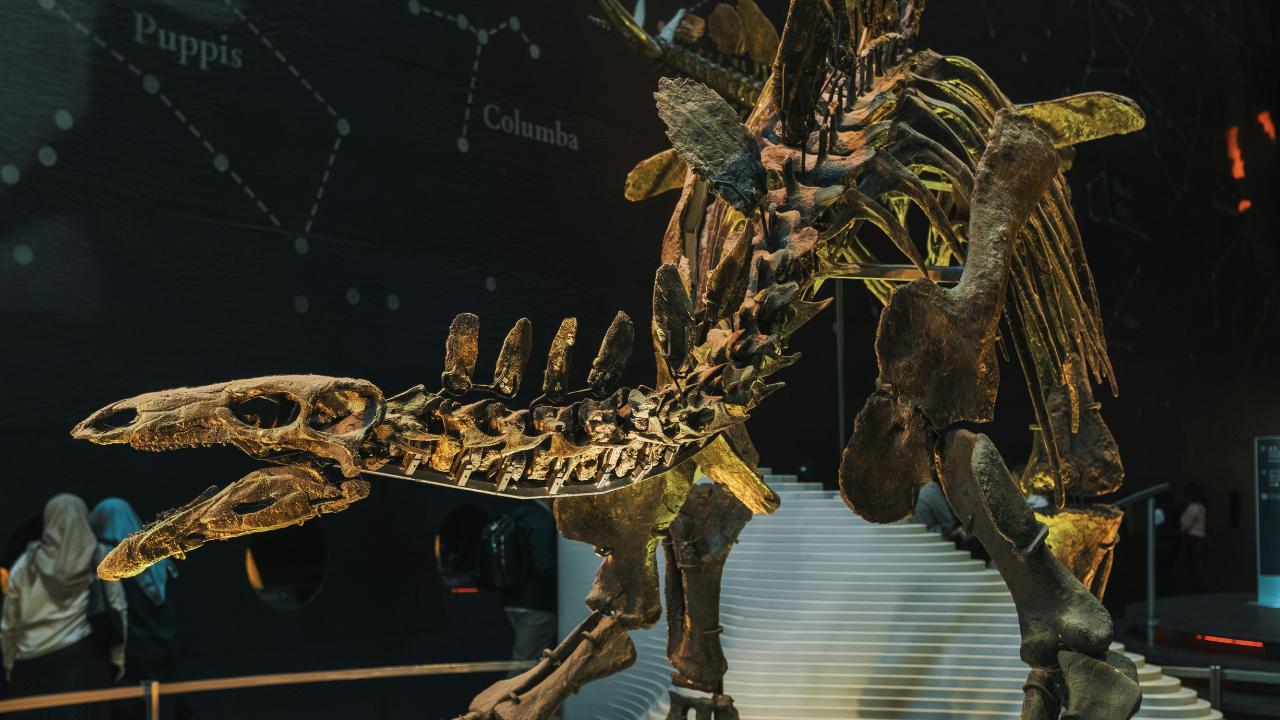
17 April,2026 10:02 AM IST | London | APHanging by a thin metal strap, a 67-million-year-old triceratops skull twirls above a coral sculpture, the centrepiece of a new exhibition aiming to make art out of prehistoric fossils. The "Relics" show at Amsterdam's Art Zoo will display nine works by creative duo Jaap Sinke and Ferry van Tongeren that combine science and art. The aim was to highlight the aesthetic side of the fossils, usually presented in an educational way in natural history museums, van Tongeren told AFP. The artists tried to give the fossils "a more monumental form" with "more stature," the 59-year-old told AFP in an interview. The exhibition also features the bones of a basilosaurus, which roamed the seas up to 40 million years ago, but arranged as a sculpture rather than a traditional skeleton reconstruction. Natural history museums have a valuable scientific and educational value "but lack a captivating element," said van Tongeren. "And that was the starting point for everything we did." The artists worked with Zoic, an Italian palaeontology company that processes fossils and reconstructs dinosaur skeletons. Creating the exhibits required "an extraordinary combination of knowledge and different processes," Iacopo Briano, 42, curator of the exhibition and palaeontology expert at Zoic, told AFP. First comes the "puzzle" of unearthing and reconstructing the bones from a fossil discovery. Then the fragile bones need to be transported so the artists could start their own work -- a 10-year process in the case of this exhibit. This prehistoric show, whose oldest exhibit is a dinosaur vertebra about 150 million years old, opens to the public on Friday and runs until November 2026. This story has been sourced from a third party syndicated feed, agencies. Mid-day accepts no responsibility or liability for its dependability, trustworthiness, reliability and data of the text. Mid-day management/mid-day.com reserves the sole right to alter, delete or remove (without notice) the content in its absolute discretion for any reason whatsoever.
16 April,2026 03:58 PM IST | Amsterdam | AFPA national awardee artist from West Bengal, Noordin Chitrakar, has urged the central and state governments to provide a platform to the folk artists to showcase their talent on a global scale. Chitrakar pointed out that the 'Patachitra,' a form of painting, incorporates songs inspired by Krishna Leela, Ramayana, Goddess Durga, and other themes. The painting style often raises social issues such as child marriage, women's empowerment, road safety, plantations, etc. "We are artists, and an artist has no religion. We should work for humanity. We should work in unity. An individual's first religion is to work for humanity. My grandfather, father, and mother were practising this art, which is painting coupled with song based on Krishna Leela, Ramayan, Goddess Durga and others. We also raise awareness about social issues like child marriage, plantation, safe drive-save live, women empowerment," he said. "To preserve this centuries-old art form, the government at the centre as well as the state should provide artists a platform so that it can be displayed worldwide," he added. Noordin Chitrakar and his wife, Kalpana Chitrakar, are committed to preserving 'Patachitra', continue to paint and sing intricate sequences from the Ramayana, Mahabharata, and Krishna Leela, ensuring these epics remain alive for future generations. National awardee artist Kalpana Chitrakar added, "I received the award in 2016. We love doing this work. This work is in our blood. My grandfather, father, and mother also used to practice this art. If we get good marketing, it will help us." Patachitra is a traditional scroll painting art form, associated with the states of Odisha and West Bengal. Artists traditionally paint stories from Hindu epics like the Ramayana, Mahabharata, and tales of Krishna and Jagannath. It has bold lines and intricate detailing. The entire canvas is filled with patterns and figures depicting the social and cultural life of villages. In West Bengal, it often includes tribal and folk storytelling styles. The paintings are traditionally not just visual art but part of a performing storytelling tradition. They sing 'Patua Sangeet' to narrate the stories. The songs are usually in local dialects and explain the painted scenes, mythology, social issues, or folklore. This story has been sourced from a third party syndicated feed, agencies. Mid-day accepts no responsibility or liability for its dependability, trustworthiness, reliability and data of the text. Mid-day management/mid-day.com reserves the sole right to alter, delete or remove (without notice) the content in its absolute discretion for any reason whatsoever.
16 April,2026 09:52 AM IST | Purba Medinipur (West Bengal) | ANIAs Mumbai gears up for one of its biggest music weekends, the energy across the city begins to build with anticipation in the air at every turn. With Calvin Harris set to make his India debut in Mumbai on April 18 at Infinity Bay, Sewri, a bit of planning ahead can make all the difference. Whether you’re making your way across Mumbai or flying in for the night, here’s what to keep in mind before heading to Calvin Harris’ India debut in the city. Here’s your complete travel guide to his debut show at Infinity Bay: Pickup Door to drop - zero detours, all energy For a seamless, door-to-door ride, hopping into a cab is easily the most effortless way to get to watch Calvin Harris live at Infinity Bay, Sewri. Book your ride on any of the ride-hailing applications, and you’re set with a direct, no-switch route straight to the venue. Sit back, skip the logistics and let the anticipation build as the city rolls by. Pro tip: head out a little early to get straight into the action. Skip the traffic and ride straight into the drop If you’re looking to beat the traffic and get straight into the vibe, the train is your best bet. The Harbour Line drops you closest - Sewri station is just a five-minute walk from the venue. Coming in from the Western Line? Switch off at Dadar. Central Line travellers can route their travel via Byculla or CSMT. With seamless connectivity across the city, this is hands down the smartest (and smoothest) way to arrive. From pick-up to pre-party - your ride, your vibe Slide into that energy as you head to Sewri with Cityflo. With pick-ups across Goregaon, Andheri East, Thane and Kharghar, you’re joining a moving crowd all headed to the same drop. The anticipation is shared, the energy is real and it only gets better as you get closer. Open the Cityflo app, pick your boarding point, set Calvin Harris – Infinity Bay as your destination, check your ride details and lock it in. Drop Straight from airport arrival to the action: For those flying in to catch Calvin Harris live for the show produced and promoted by Sunburn and BookMyShow Live, the energy kicks in the moment you land at Chhatrapati Shivaji Maharaj International Airport. From here, Infinity Bay, Sewri is about 18 kilometres away. Step out of the terminal and you’ll find cabs and ride-shares ready to go. As you drive in, the city slowly shifts gears - from airport rush to the electric pull of the night ahead. Your checklist for the night Tickets ready, essentials sorted and your phone fully charged - that’s your fast pass into the night. Carry a clear water bottle and a power bank, because the memories (and videos) won’t stop. Dress for comfort and travel light but smart. Get this right and once you’re in, it’s all about the music!
15 April,2026 04:59 PM IST | Mumbai | mid-day online correspondentFor decades, the music of Scorpions has travelled across India in ways that feel deeply personal, from cassette players in college hostels to late-night radio, from cover bands at campus festivals to streaming playlists that continue to introduce them to new listeners. And yet, for nearly twenty years, Indian fans have experienced this connection from afar through memory, nostalgia and sound, but not in the electrifying immediacy of a live performance. That changes this April. Marking their long-awaited return with the Scorpions Coming Home 2026 Tour - India, one of Germany’s greatest hard rock bands is set to perform in Shillong on April 21 at RBDSA Sports Complex, Delhi-NCR on April 24 at HUDA Grounds, Bengaluru on April 26 at NICE Grounds, and Mumbai on April 30 at Jio Gardens, BKC. With a legacy spanning over five decades, more than 120 million records sold and performances in more than 80 countries, this return is not simply a tour, it is a rare cultural moment, one that bridges generations of listeners with the live experience they have waited years for. Here are five reasons why this is one concert that demands to be experienced, not merely heard about: A homecoming the band feels just as strongly What makes this return even more compelling is the shared anticipation it has generated. Klaus Meine says, “We are incredibly excited to finally be touring India again after such a long time and are looking forward to meeting our many, many fans in India. The concerts will also be a very special experience for us.” Rudolf Schenker says, “Sixty years after the band's founding, we're bringing our 'Coming Home' concert to India. It will be a unique celebration for our fans and for us.” Matthias Jabs says, “Finally playing in India again – and on top of that our now iconic ‘Coming Home’ concerts – will be spectacular and unforgettable for us as well.” For a band that has spent over five decades touring the world, this sense of emotion underscores just how meaningful this return is not merely as a performance, but as a reunion. A legacy rock experience that truly feels like a once-in-a-lifetime opportunity The global live music landscape has undergone a dynamic transformation, with emerging genres increasingly shaping large-scale tours and festival line-ups. Amid this evolution, performances rooted in the scale, legacy and musical depth of classic rock have become far less frequent. Scorpions embody a defining era of live music, one characterised by commanding vocals, powerful instrumentation and an electrifying stage presence built to resonate across arenas. Their concerts go far beyond traditional performances; they are immersive, high-energy spectacles refined over decades of global touring. For Indian audiences, this tour presents a rare chance to experience that legacy in its most authentic and powerful form not as a nostalgic revisit, but as a living, breathing showcase of a band that continues to command stages and captivate audiences worldwide. A landmark return two decades in the making It has been nearly twenty years since Scorpions last performed in India and in that time, their fanbase has not faded; it has only grown stronger, spanning those who have held on to their music for years and those who have discovered it anew. This prolonged absence transforms their return into something far more significant than a routine tour stop. It carries the weight of anticipation, nostalgia and, perhaps most importantly, rarity. At this stage in their remarkable journey, following their final studio chapter, this tour feels less like a continuation and more like a defining moment, one that carries a rare sense of significance for both the band and their audience. A powerful coming together of generations through music In India, their music has travelled seamlessly from one generation to the next, from parents who grew up rewinding cassette tapes to younger listeners discovering the same tracks through streaming platforms and social media. This tour becomes a meeting point for those worlds. It is where nostalgia meets discovery where one generation relieves its memories while another experiences those same songs live for the very first time. That shared experience elevates this beyond a concert. It has become a cultural bridge, connecting audiences through music that has remained relevant throughout the decades. Songs that have been lived with, not just listened to For Indian fans, songs like “Rock You Like a Hurricane,” “Still Loving You,” “Send Me an Angel,” and “Wind of Change” fall firmly into that category. They have soundtracked personal milestones, road trips, college festivals, moments of heartbreak and quiet reflection. Hearing these songs live transforms them entirely. What was once a solitary or intimate experience became collectively amplified by thousands of voices singing along, each carrying their own story tied to the same lyrics. It is this emotional resonance that makes the live experience irreplaceable something no recording, however iconic, can replicate.
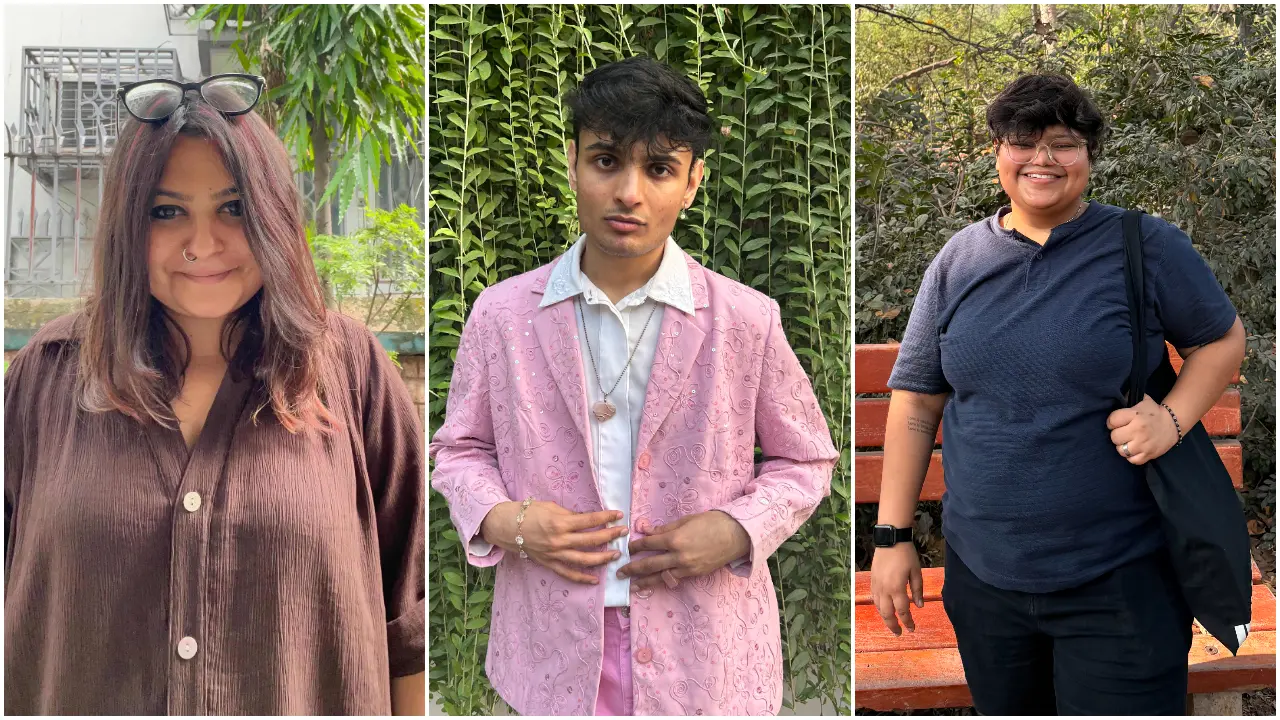
15 April,2026 03:58 PM IST | Mumbai | mid-day online correspondentThe 2026 Amendment to the Transgender Persons (Protection of Rights) Act has effectively gutted the soul of trans dignity in India: the right to self-identification. This move stands in direct defiance of the landmark 2014 NALSA v. Union of India verdict, in which the Supreme Court of India ruled that the individual—and only the individual—is the sovereign authority over their own gender. Today, that sovereignty is being subdued by a state that treats legal history as something that can be undone with a single signature. The scale is staggering. While the 2011 Census officially recorded 4.87 lakh transgender individuals, the National AIDS Control Organisation and community advocates estimate the actual figure is closer to one crore. By replacing self-identification with a medical tribunal, the state is attempting to funnel millions of diverse lives through a single clinical needle—a bureaucratic bottleneck designed to exhaust a population into invisibility. For Priyadarshini, a 29-year-old non-binary femme lesbian brand manager, and gender and sexual rights activist in Kolkata, the speed of the legislation felt like a physical strike. "The bill came to the floor of the lower house—passed amidst opposition—and within a week it went to the upper house, and the President gave it an assent," she recalls. Priyadarshini, who has spent years balancing a corporate career with front-line advocacy, sees the timing as a deliberate tactic of exhaustion. "By 11 o’clock at night, we start hearing things, and by the very next morning, there’s a gazetted copy. If our government really works so fast, why does our country have so many issues?” She says wearily, “It feels like they are moving under the cover of night to overwrite our humanity before we can even organise a response. How can the legislature go against what the Supreme Court has already said?" The intrusion of the cis gaze The ‘audacity’ at the heart of this crisis doesn’t belong to the protestors screaming in the streets— it belongs to the architects of this erasure. There is a grotesque irony in watching a room of cisgender politicians legislate the boundaries of trans existence."Imagine a stranger, who has never lived a day in your skin, deciding if you are 'real' enough to exist in the eyes of the law. It is a profound violation to have your truth treated as a debatable topic by people who have no skin in the game," counters Priyadarshini.This is the institutionalisation of the ‘cis gaze’—the state’s declaration that an internal truth is a mere suggestion, while a clinical observation is the absolute fact. When laws are built on the assumptions of those who have never navigated the vulnerabilities of gender nonconformity, the result is a framework of indifference. By reversing the burden of proof, the Act forces trans individuals to justify their existence to a committee of cisgender strangers, transforming a birthright into a medical permit. "It forces my trans siblings to stand before a medical board, to potentially strip, to be 'assessed' by people who have likely never read the NALSA judgment. We are being told to wait for a stranger’s verdict on our own identity. This amendment is fundamentally broken,” she insists. The clinical weapon: Assessment as assault The amendment introduces a mandatory ‘District Screening Committee’ and a medical verification process for anyone seeking a gender certificate. This isn’t just a new layer of red tape—it is a psychological siege. Adityuh, a 24-year-old non-binary psychology student and community support worker in Delhi, views the move as state-sponsored gaslighting."Identity isn't something you prove; it’s something you are," they say. This clinical turn is particularly harrowing given the existing healthcare landscape. According to a report by the National Human Rights Commission, roughly 92 per cent of transgender people in India are deprived of the right to participate in any form of economic activity, due to institutional discrimination.For Adityuh, the hospital—a place that should theoretically be a sanctuary of healing—is being repurposed. "When I think of a hospital now, I don't think of care. I think of trauma and doctors with God complexes who treat you like a fascinating specimen," they recoil. Under the 2026 amendment, the clinic is transformed into an outpost of the police station—a site for reporting and verification. The white coat becomes a uniform of the state. "The state is saying, ‘We’ll let you live, provided you transition on our terms’. But who is ensuring that process isn't a nightmare? Trans individuals are treated with blatant transphobia by the very staff supposed to 'verify' us," Adityuh questions. A safety net in flames Beyond the individual struggle for a piece of identification, the Act threatens the informal support systems the community has spent decades weaving together. In India, where traditional family structures often reject queer children, the ‘chosen family’ or the Gharana system has been a literal life-saver. Rio, a 25-year-old trans-masculine non-binary corporate professional and community advocate in Delhi, points to the calculated vagueness of the amendment as a tool for systemic erasure."The language here is a trap," Rio elaborates. "By making self-identification illegal and requiring 'medical proof' for legal recognition, the bill endangers the safe homes, the NGOs, and even the families who choose to stand by us. If you aren't legally recognised, anyone harbouring you could be accused of kidnapping or enticing a minor, even if you are an adult."Rio, the primary earner for their family, faces a terrifying paradox. Even their supportive mother now lives in terror, "My mom told me, 'Don't leave me if you are thinking of doing that.' The government criminalises her with the kind of vague language it brings into action. That fear is now a permanent resident in our home.”This ambiguity systematically abolishes the support systems that have historically buffered trans individuals from homelessness and violence. "I fear what’s next—will they take my citizenship? My right to breathe?" he admits. "The government isn't just targeting my wallet or my job; it's targeting my right to a family. We are being watched, and our right to associate is being strangled." The ideal citizen and the margins The violence of this legislation is not distributed equally. A recurring theme in these conversations is the intersection of caste and class. The Act appears designed to protect a very specific, sanitised image of the Indian citizen—one that has no room for those on the periphery.“The blueprint for the 'ideal' citizen under the current regime is clear: upper-caste, Hindu, cisgender, heterosexual male,” Priyadarshini notes, acknowledging that while the law targets the entire community, the blow falls heaviest on those already pushed to the furthest margins."I’ve been able to navigate certain spaces because I have the privilege of education. But for a Dalit trans woman in a rural village, or a Hijra elder who has never owned a birth certificate, this law is an invisible wall. It isn’t just transphobic; it is classist and casteist to its core," she points out. The data support this grim reality. The 2011 Census noted that the literacy rate among the trans community was only 46 per cent, far below the national average. For those already on the margins, a law requiring complex documentation and medical proof is essentially an expulsion order. The state counts on this exhaustion. As Adityuh puts it, "The state knows that if they make life hard enough, eventually, we might just stop fighting." The audacity of vocabulary Despite what Priyadarshini terms a ‘death warrant,’ the community finds its strength in the very vocabulary the state seeks to regulate. For many, finding the right words for themselves wasn't about a label—it was about finding a map home. In a society that often uses ‘transgender’ as a catch-all for anything outside the binary, the nuance of modern identity is a shield."When you finally find the word that defines you—whether it's non-binary, genderqueer, or trans-femme—it feels like oxygen," Priyadarshini reveals. She recalls how meeting a non-binary person for the first time in Brighton changed her life: "Growing up, I never thought of myself as a man... Then I met a non-binary person. That one conversation changed my life."Adityuh finds a similar power in bridging the gap between their identity and their mother tongue. "There’s always been a disconnect with me and my mother tongue, Hindi, because there were not a lot of instances where I could really explain... this is exactly how I feel, and there is a terminology for it," they observe. In the face of systemic erasure, this vocabulary isn't just a label—it's a refusal to be edited out. For Adityuh, this reclamation is the foundation of their survival. "Identity, for us, has always been synonymous with resilience. We’ve had to invent ourselves because the world didn't have a space for us," they reflect. The long road ahead As India moves further into 2026, the trans community faces a threshold of survival. Compounding the fear of the Amendment is the government’s recent legislative pivot toward re-examining the nuances of Section 377. After the 2018 decriminalisation, many now fear a stifling return to criminalisation under the guise of new morality frameworks.The Act envisions a nation where everybody is standardised, categorised, and controlled. The community isn't just fighting for labels—they are fighting to exist without being vetted by those whose lives are entirely unimpacted by the laws they sign."This is a signal," Priyadarshini concludes. "Bodies that don't fit the mould are being told to vanish. But even a minority of one has a truth that no gazette can erase. I will keep fighting for a world where we don’t have to beg for our humanity from an apathetic state. We are not asking for a favour; we are reclaiming what was always ours."The protests continue. While the rest of the country sleeps under the ‘protection’ of these laws, the trans community is awake, rewriting the script, and proving that audacity isn't just about survival—it's about the refusal to be erased."If you think they won't come for you because you are 'normal,' you’re wrong. Once they finish with us, they will find something 'abnormal' about you too,” Rio warns. “We are being treated not as citizens, but as something to be cleared away. Don't look away."
15 April,2026 03:40 PM IST | Mumbai | Maitrai AgarwalThink you know every beat drop by Calvin Harris? Think again. The man behind some of the most defining anthems of the last decade, alongside global icons like Rihanna, Dua Lipa, Ellie Goulding and Sam Smith, has soundtracked everything from late-night parties to festival mainstages. Now, as he gears up for his first-ever India tour this month, it’s time to ask yourself: do you really know the songs, or just the choruses? Because when you’re in that crowd, every drop hits harder when you know it’s coming. Every hook feels bigger when you can sing it back. Consider this your pre-game - your chance to revisit the anthems, relive the memories and make sure you’re fully ready for every beat, every build and every moment when Calvin Harris takes over India! 1. ‘We Found Love’ (feat. Rihanna, 2011) A true cultural reset. Built on a euphoric progressive house backbone, Calvin Harris fused soaring synths with Rihanna’s raw, almost aching vocal delivery. The drop felt expansive yet emotional, helping EDM break firmly into mainstream pop. It didn’t just top charts, it redefined what global radio could sound like. 2. ‘I Need Your Love’ (feat. Ellie Goulding, 2013)A defining track of EDM’s emotional peak, blending electro house with melodic pop sensibilities. Ellie Goulding’s airy, almost fragile vocals float over shimmering synths and a rising build that feels both personal and cinematic. It struck a rare balance, equally suited for solitary listening and massive crowd singalongs. 3. ‘Outside’ (feat. Ellie Goulding, 2014)Polished and atmospheric, ‘Outside’ refined the duo’s signature progressive house-pop crossover. The production is tighter, cleaner, and more controlled, allowing the emotion to sit at the centre without overwhelming it. It became a staple across radio and festival circuits, capturing a slightly more mature evolution of their sound. 4. ‘This Is What You Came For’ (feat. Rihanna, 2016)Sleek, controlled and instantly recognisable, this track marked a shift toward minimal house and electro-pop. Instead of a massive drop, it relied on a looping hook and subtle build, creating a hypnotic, almost understated energy. It showed Calvin Harris’s growing confidence in restraint, proving a track could feel huge without sounding loud. 5. ‘Feels’ (feat. Pharrell Williams & Katy Perry, 2017)A bold pivot into funk-pop and disco-inspired grooves, ‘Feels’ swapped synth-heavy drops for live instrumentation and warm basslines. The track feels loose, sunlit and effortless, driven by rhythm rather than intensity. It marked a clear reinvention, proving Calvin Harris could move beyond EDM and still dominate global charts. 6. ‘One Kiss’ (feat. Dua Lipa, 2018)A global phenomenon built on simplicity. Rooted in classic house, the track strips everything back to a tight groove, looping bassline and crisp percussion. Its minimalism made it instantly addictive, while Dua Lipa’s cool, detached delivery gave it an effortless edge. It played a huge role in bringing house music back into mainstream pop. 7. ‘How Deep Is Your Love’ (with Disciples, 2015)Darker and more refined, this track sits firmly in the deep house space. Built around a rolling bassline, minimal vocals and subtle progression, it thrives on mood rather than spectacle. Its understated groove made it a late-night favourite, signalling Calvin Harris shift toward a more club-focused, nuanced sound. 8. ‘Where Have You Been’ (feat. Rihanna, 2012)One of the most explosive records of its time, this track leaned heavily into EDM and dance-pop with trance influences. Fast-paced, high-impact and built around a pounding rhythm, it was designed for peak-hour festival moments. The production carried a sense of urgency, matching Rihanna’s powerful vocals with relentless energy. 9. ‘Free’ (feat. Ellie Goulding, 2017)More subtle in its approach, ‘Free’ moves toward a smoother electronic pop and house blend. The production feels lighter and more spacious, focusing on melody rather than impact. It reflects a quieter phase in Calvin Harris catalogue- one where mood and flow take precedence over big, dramatic drops. 10. ‘Together’ (feat. Gwen Stefani, 2014)A softer, more understated moment in his catalogue, leaning into pop with light electronic textures. Without relying on heavy drops or dramatic builds, the track focuses on melody, rhythm and vocal interplay. It highlights Calvin Harris versatility, showing he can scale things back without losing impact. Produced and promoted by Sunburn and BookMyShow Live, Calvin Harris’ India Tour will kick off in Bengaluru on April 17 at NICE Grounds, followed by Mumbai on April 18 at Infinity Bay, Sewri and Delhi-NCR on April 19 at Leisure Valley Ground. These three unforgettable nights will bring his signature sound, energy, and spectacle to India for the very first time. Calvin Harris’ music has defined a generation, from festival anthems to chart-topping collaborations. These are the songs that get stuck in your head, move your feet, and create moments you never forget. Now, India finally gets to experience that energy live, not through headphones, but in the electrifying atmosphere of a stage you can feel.
15 April,2026 03:01 PM IST | Mumbai | mid-day online correspondentCalifornia Assembly has adopted a resolution recognising Baisakhi as one of the most significant days for Sikh Americans and encouraging people of the state to take part in its celebration. The resolution, moved by California Assembly member Jasmeet Kaur Bains, received support from 76 members of the 80-member House and adopted on Monday, on the eve of Baisakhi. "To Sikh communities throughout California celebrating Baisakhi, Jen and I send our best wishes for a joyful new year and abundant spring harvest. Vaisakhi diyan lakh lakh vadhaiyan, California," California Governor Gavin Newsom said in a post on X. "Resolved by the Assembly of the State of California, That the Assembly recognises this year's Vaisakhi celebration on Tuesday, April 14, 2026, and encourages Californians to take part in this joyous day of celebration; and be it further. "Resolved, That the Assembly observes Baisakhi as one of the most significant days for Sikh Americans and Sikh history and in observance of Vaisakhi, expresses its deepest respect for all who observe and celebrate Baisakhi with South Asian Americans and the Indian diaspora throughout the world on this significant occasion; and be it further," the resolution adopted by the California Assembly read. Several lawmakers, senators and congressmen extended greetings to the Sikh community in the US. "Happy Vaisakhi! Today Sikh communities worldwide celebrate the 1699 founding of the Khalsa - a vibrant tradition of equality, selfless service, and courage. Wishing everyone celebrating a day filled with joy and chardi kala," Senator Chuck Schumer said in a post on X. "Sikhs have been an integral part of America's fabric for more than 125 years and have contributed to our own community in ways that have had impacts across the country. Today, I wish our Sikh American neighbors and all those who celebrate a very Happy #Baisakhi," Lizzie Fletcher, Congresswoman from Texas said. "Wishing all who celebrate a very joyful #Vaisakhi as you mark a season of renewal, abundance, and faith. May this day honor the enduring strength of community and the values of service, resilience, and unity that bring us together," Congressman Brad Sherman from California said. "To Sikh Americans in MD-08 and all those celebrating around the world: happy Vaisakhi. May you rejoice during this harvest festival with family and friends," Jamie Raskin, Congressman from Maryland, said. "Armenians worldwide wish Happy #Vaisakhi / #Vaisakhi to our Sikh friends and all who celebrate. May the spirit of the Khalsa - courage, justice, equality, and service - continue to inspire us as we stand together in defense of human rights and dignity for all," Armenian National Committee of America said in a post on X. "California Assembly passes HR 100 recognizing Vaisakhi, with a massive 76 sponsors & co-sponsors, a powerful bipartisan show of support for the Sikh American and Hindu American community and their contributions to the state. A historic moment for representation, recognition, and respect," Hindu American Foundation said in a post on X. This story has been sourced from a third party syndicated feed, agencies. Mid-day accepts no responsibility or liability for its dependability, trustworthiness, reliability and data of the text. Mid-day management/mid-day.com reserves the sole right to alter, delete or remove (without notice) the content in its absolute discretion for any reason whatsoever.
15 April,2026 12:46 PM IST | Washington | PTIADVERTISEMENT