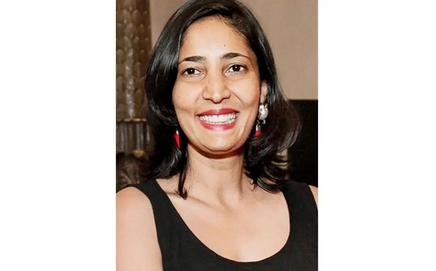
There is a real upside to loss, says celebrated author Kiran Desai who knows only too well what a win can take out of a person and would like to focus on her mother, the renowned Anita Desai. Kiran Desai was only 35 when she won the Booker for her 2006 novel "The Inheritance of Loss", the youngest woman author to do so at the time. She came close to it again last November when "The Loneliness of Sonia and Sunny" was shortlisted for the coveted prize. That second Booker didn't happen. But there are no regrets. "I've learned over time that, of course, it's an honour to win, but there is a real upside to loss. I remember telling my mother, 'I don't want to win' because I knew how much it takes out of you to have everyone's eyes on you. My mother, she's 88, 89 now, I want to focus on her. She's my priority," Desai told PTI during her recent visit to India. "And also, when there are no eyes on you, as I was telling my editor, you can go back to scratching in the dirt like a chicken in the yard, which is what writing is all about. You're alone, you're not self-conscious, and you're really free to work. So yes, there's an upside to loss," she added. Desai recalls how overwhelming the first Booker win was. The New York-based author, now 54, chuckles at the memory, noting that she barely grew outside the world of her book then. Her mother Anita Desai, who has been shortlisted three times for the Booker Prize -- for "Clear Light of Day" (1980), "In Custody" (1984), and "Fasting, Feasting" (1999) -- knows too well about the weight of recognition. Her words of wisdom after the close-call this time -- Kiran Desai lost out to Hungarian-British author David Szalay who won the Booker 2025 for his book "Flesh" -- landed perfectly for the daughter. "She told me, 'Now you're free to experiment with your life and your work'," Desai recalled. "That's exactly what I felt -- it gave me freedom." Her latest work, at nearly 700 pages, spans India, Mexico and the United States, tracing the intertwined lives of Sonia, a literature student wrestling with heartbreak and creative longing, and Sunny, a young journalist navigating cultural expectations and loneliness. Their paths eventually cross in India, sparking a deep, complex connection that unfolds against themes of family, identity and the global ache for connection and meaning. Desai, who like her mother writes daily and finds any interruption in her routine "upsetting", said she felt an enormous sense of relief after finally finishing "The Loneliness of Sonia and Sunny" which took nearly two decades to complete. "The sigh of relief was immense because, of course, after 20 years, it is far too long. If I had waited another 20 years, I would be 74. And if I want to write a few more books, there's an urgency to finish them now," she said. Notwithstanding the anxiety over the passage of time, the joy of creation remained the heart of the process, Desai said. "I was very happy working on this book. And I still think all the time, I could have done this differently, that could have been better. But that's part of writing," she added. After living with these characters for so long, the questions linger: do they ever truly recede, or do they quietly accompany her as she turns to new stories? As Desai sees it, the characters never fully disappear. Her first novel, "Hullabaloo in the Guava Orchard", was published in 1998. "They have a space for themselves. They kind of change you -- you become the characters you write. So in a way they stay with you, because you feel like after all of this time that they have kind of shaped you as well as a writer. Like so much exploring of these different people, that they become you," she explained. Based in New York for over two decades, Desai left India with her mother at 14. She is conscious that "The Loneliness of Sonia and Sunny" may be her "last in-depth" engagement with a country she has visited less often since her father's death in 2008. "During the process of writing this book, my father was still alive. I was keeping notes. I was going home (India). And I knew I would lose the ability to write about India. So I wanted to write one last book in this way," she said. The Delhi-born author often returns to the question of identity that also runs through the novel. She points to the protagonist, Sunny, who returns to India and wonders "if India is more familiar to him than he is to himself". It's a sentiment Kiran recognises, too: in the pull of a place the "body remembers", even as time and distance render her a stranger. "I sometimes feel that way. I come back and I am in the landscape I grew up in, so somehow my body remembers, even though I am a stranger now... there is something still profoundly familiar," Desai said. The sense of being "insider-outsider" persists in India as much as in the US, where the current political dispensation has unsettled the "little bit" sense of belonging she had of the place. This story has been sourced from a third party syndicated feed, agencies. Mid-day accepts no responsibility or liability for its dependability, trustworthiness, reliability and data of the text. Mid-day management/mid-day.com reserves the sole right to alter, delete or remove (without notice) the content in its absolute discretion for any reason whatsoever.
06 April,2026 02:55 PM IST | New Delhi | PTIThe magnificent abode of goddess Saraswati in South India and popular centre for "Aksharabhyasam", Basara Gnana Saraswati Temple is set to get a big facelift. Established by the sage Veda Vyasa, the famous temple in Telangana dedicated to the "three Goddesses" will captivate the hearts of devotees even more deeply with the addition of a towering "Rajagopuram "(main tower), a sacred pond, an enhanced Northern Gateway, and meditation halls. All these new structures are being designed in strict adherence to traditional rituals. According to Telangana CMO, the state government has already allocated Rs225 Crores for the reconstruction of the Basara Gnana Saraswati Temple. Chief Minister Revanth Reddy will perform Bhoomi Puja (groundbreaking ceremony) for the reconstruction works on Monday. The temple is situated on the banks of the sacred river Godavari, which is also revered as the "Dakshina Ganga" (Southern Ganges). Following the Kurukshetra War, Veda Vyasa sought tranquillity and came to reside on the banks of the Godavari at Basara. During his stay. Vyasa personally sculpted and consecrated the idols of Goddesses, Gnana Saraswati, Mahalakshmi and Mahakali by using the locally available sand of the river Godavari. From then, Basara gained popularity as a holy site with the enshrine of "Trimataas". The abode of Goddess Gnana Saraswati is witnessing an influx of visitors every year. The devotees come to perform Aksharabhyasam (the traditional initiation ceremony into formal education for their children) for their children. The temple bustles with religious activity with Aksharabhyasam during the auspicious occasion of Vasantha Panchami and other festive days every year. However, the increasing number of visitors has been facing hardships due to a lack of adequate facilities in the temple. The authorities consulted with the spiritual heads of the Sringeri Peethadhipatis before formulating the Master Plan and obtained their approval for the construction of the Sanctum Sanctorum (Garbhalayam), Artha Mandapam, Raja Gopuram (main tower), other towers, Mada Veedhulu (processional streets), temple tank (Koneru) and the Northern Gateway. In view of the growing number of devotees and future requirements, the Sanctum Sanctorum and Artha Mandapam, currently spanning 2,000 square feet, are being expanded to cover 5,000 square feet. The plans included the construction of a nine-storey Raja Gopuram on the northern side, seven-storey towers in the remaining three directions, Mada Veedhulu (processional streets) 33 feet in width encircling the temple on all four sides and a northern Gateway. In total, the temple's built-up area is being expanded from 20,000 square feet to 62,000 square feet. Stone is only being used for the entire construction and development of the temple. The construction works will commence at several facilities, queue complexes spanning 70,000 square feet and equipped with all amenities (including feeding rooms, food stalls, restrooms, etc.) to accommodate 6,000 devotees. A meditation hall was designed to allow 200 people to meditate simultaneously. Kitchen, dining halls, and a prasadam distribution centre covering an area of 20,000 square feet will be part of the master plan. A sacred pond (Koneru) situated in the northeast corner, magnificent ornamental arches, designed to radiate a spiritual aura, will also be erected on the eastern side, alongside an information centre. Road development works will be undertaken to the north and east of the temple. An underpass will be constructed to facilitate movement from the temple premises to the opposite side. A vehicle parking facility with a solar rooftop will be established on the other side. A flower garden with pleasant greenery will also be developed in the temple premises. A health centre will be established outside the temple complex. Saplings will be planted behind the temple to ensure that the area eventually flourishes with big trees. Godavari Pushkaralu will start in June next year. In view of the visit of lakhs of devotees to Basara to perform a holy bath in the river Godavari, all necessary amenities required for the devotees will be developed. CM Revanth Reddy ordered the officials to develop facilities in accordance with temple traditions and the beliefs of devotees. This story has been sourced from a third party syndicated feed, agencies. Mid-day accepts no responsibility or liability for its dependability, trustworthiness, reliability and data of the text. Mid-day management/mid-day.com reserves the sole right to alter, delete or remove (without notice) the content in its absolute discretion for any reason whatsoever.
06 April,2026 02:39 PM IST | Hyderabad (Telangana) | ANIIt was not how the Rev Maroun Ghafari had envisioned this Holy Week - for years, he had held Easter sermons in his predominantly Christian village of Alma al-Shaab in southern Lebanon, near the border with Israel. This year, he is preaching from a Beirut suburb, beside a cardboard cutout depicting his church in Alma al-Shaab, now caught in the crossfire between Israeli forces and Hezbollah fighters. Since hostilities erupted last month between Israel and Lebanon's Iran-backed Hezbollah militant group, in the shadow of the wider US-Israeli war on Iran, over 1,400 people have been killed in Lebanon, and more than 1 million have been forced to flee their homes. Among those displaced from the war-torn south are thousands of Christians. They now find themselves far from their ancestral churches in Lebanon, where Christians have maintained a strong presence through centuries of Byzantine, Arab and Ottoman conquest and plenty of modern-day crises. Christians are estimated to make up around a third of Lebanon's population of roughly 5.5 million people. With 12 Christian sects, the country is home to the largest proportion of Christians of any nation in the Arab world. Despite being far from the strikes in and around their villages in southern Lebanon, they were reminded of the war by the deep rumbling of Israeli jets and the sounds of deadly airstrikes over Beirut's southern suburbs. Huddling in a church, hoping for protection Christian villagers who stayed behind in southern Lebanon, ignoring Israel's blanket evacuation warnings for the area, have increasingly hardened into enclaves surrounded by fierce clashes. And though villagers in Alma al-Shaab had been uprooted before, in the 2024 Israel-Hezbollah war, this time around, they were adamant they wouldn't leave, even as airstrikes came closer and closer. The villagers huddled in their church for protection as Israeli warplanes pounded large swaths of southern and eastern Lebanon while Israeli troops stepped up a ground invasion and Hezbollah kept firing rockets at Israel. In his annual Easter homily, Patriarch Beshara al-Rai of Lebanon's Maronite Church blamed both Hezbollah and Israel for the suffering wrought by the war. "The country is going through a critical situation due to Iranian interference through Hezbollah and Israeli aggression," he said. "Our hearts bleed for the victims of the conflict imposed on Lebanon." Ghafari's brother, 70-year-old Sami Ghafari, was among the villagers who sought refuge at the church in Alma al-Shaab. But he dashed out briefly on March 8 to tend to his garden, and was killed by an Israeli drone strike. His killing prompted the remaining villagers - including his brother - to pack up their belongings. The UN peacekeepers in the area - a force known as UNIFIL that has monitored the region for nearly five decades - evacuated them to the northern suburbs of Beirut. "We wanted to stay, but it was always possible that one of us could be targeted or killed at any moment," the Rev Maroun Ghafari told The Associated Press from St Anthony Church in the northern Beirut suburb of Jdeideh, where the displaced from Alma al-Shaab came to worship on Saturday. "Everyone is tired, and we see that war brings nothing but destruction, death and displacement." Missing the 'smell of home' For many Lebanese Christians, it's a tradition on Holy Saturday - the day between Good Friday, which commemorates the crucifixion and death of Jesus, and Easter Sunday, which marks his resurrection according to the Gospels - to visit the graves of their loved ones. This year, displaced Christians could only reflect from afar. Nabila Farah, dressed in black for the Saturday service at St Anthony Church, was among the last to leave Alma al-Shaab. She still feels heartbroken, a month later. "You miss the smell of home, the lovely traditions and customs, the sounds of the bells of three churches ringing," she said, reminiscing about her village. "As much as we experience the Easter atmosphere here, it will never be as it is over there." Those who remain face other challenges. Marius Khairallah, a priest in the southern Lebanese city of Tyre, where much of the Christian community has hunkered down, says that he and his congregants are staying put "not out of stubbornness, but out of a sense of mission, to remain alongside their fellow faithful, as witnesses." "A significant number of parishioners have been displaced or are absent," he said. "Yet churches still open their doors. Prayers are still raised - even with fewer voices." Worries are mounting among Christians in the area as the Lebanese army - which seeks to stay neutral in the Israel-Hezbollah war - pulls out from parts of southern Lebanon, leaving them exposed to Israeli forces pushing deeper into the territory. St Antony's main priest, the Rev Dori Fayyad, used his Good Friday sermon to take solemn note of the war's widening toll on the southern Lebanese Christians, as the faithful recited prayers in Arabic and Syriac, a dialect of the Aramaic language spoken by Jesus. "Today, you understand what the cross means, not as an idea, not as a concept, but because you are going through it," he told the fully packed pews, the crowd so thick that dozens had to stand or crouch on the back stairs. Some wiped away tears as Fayyad named one by one the southern churches, illustrated in the cardboard cutouts next to the pulpit. "These churches in these villages are not only places of worship," he said. "They are silent witnesses to suffering and to faith." This story has been sourced from a third party syndicated feed, agencies. Mid-day accepts no responsibility or liability for its dependability, trustworthiness, reliability and data of the text. Mid-day management/mid-day.com reserves the sole right to alter, delete or remove (without notice) the content in its absolute discretion for any reason whatsoever.
06 April,2026 01:54 PM IST | Jdeideh (Lebanon) | APSpecial worship services, community feasts and distribution of Easter eggs marked Easter Sunday as Christian-majority Mizoram celebrated the day with religious solemnity. The state-wide festivities commemorated the resurrection of Jesus Christ following his crucifixion, bringing together thousands in a display of faith and traditional gaiety. Christian devotees across various denominations congregated at their local churches for special services during which biblical sermons on the resurrection were delivered, and prayers were held. Local choirs also performed, and church members sang hymns during such worship services. The sounds of the famous hymn "He Is Arisen" echoed through towns and villages as band parties of Salvation Army church took to the streets in the morning. Various local churches also held "sunrise services," a staple of the local observance where church members gathered at daybreak to offer special prayers. The Easter Sunday celebration began on Saturday evening with special worship services by different churches and Catholic communities holding the Easter vigil. On Sunday, most churches served high tea with Easter Eggs after worship services, while some churches, particularly United Pentecostal Church and Roman Catholic Church, held community feasts in the afternoon to celebrate the occasion. Catholic communities also organised mass on Sunday, and they will also hold Easter procession or candlelight procession in the evening. Easter is an important Christian festival or religious observance commemorating the resurrection of Jesus Christ from the dead. It is celebrated on the third day (first Sunday) after the crucifixion of Jesus Christ (Good Friday). This story has been sourced from a third party syndicated feed, agencies. Mid-day accepts no responsibility or liability for its dependability, trustworthiness, reliability and data of the text. Mid-day management/mid-day.com reserves the sole right to alter, delete or remove (without notice) the content in its absolute discretion for any reason whatsoever.
06 April,2026 12:57 PM IST | Aizawl | PTIDrinks giants Pepsi and Diageo on Sunday pulled out of sponsoring a music festival in London headlined by US rapper Kanye West, who has a history of antisemitic outbursts. The disgraced 48-year-old hip-hop star -- now known as Ye -- is due to play three nights at the Wireless Festival in London in July as part of a European comeback tour. A spokesperson for Pepsi, the festival's top sponsor, told AFP on Sunday that the brand "has decided to withdraw its sponsorship of Wireless Festival", without giving a reason. British Prime Minister Keir Starmer expressed concern about West's appearances, while campaigners against antisemitism urged the government to stop the rapper entering the UK. Starmer told The Sun newspaper it was "deeply concerning Kanye West has been booked to perform at Wireless despite his previous antisemitic remarks and celebration of Nazism". He added that "antisemitism in any form is abhorrent and must be confronted firmly". Diageo, whose labels Johnnie Walker and Captain Morgan were slated to be partner brands, also dropped out. "We have informed the organisers of our concerns and as it stands, Diageo will not sponsor the 2026 Wireless Festival," a spokesman told AFP. The festival's operating company, Live Nation, has not so far responded to a request for comment from AFP. Festival organisers announced West's appearance on social media last month, prompting criticism from Jewish organisations and London Mayor Sadiq Khan. Campaign Against Antisemitism, a British charity, on Sunday urged Starmer not to be a "bystander" and to ban West from entering the country. "Surely this is a clear case," the charity said on X, suggesting West could be banned as a non-citizen whose presence is not "conducive to the public good". West's European tour has already provoked controversy. In France, the mayor of Marseille said the rapper was "not welcome" for a concert there in June. West has expressed regret over his antisemitic rants, which he blamed on his bipolar disorder. In May 2025, he released a song called "Heil Hitler" to mark the 80th anniversary of the defeat of Nazi Germany in World War II. The song was banned by major streaming platforms. This story has been sourced from a third party syndicated feed, agencies. Mid-day accepts no responsibility or liability for its dependability, trustworthiness, reliability and data of the text. Mid-day management/mid-day.com reserves the sole right to alter, delete or remove (without notice) the content in its absolute discretion for any reason whatsoever.
06 April,2026 12:12 PM IST | London | AFPThane district's first planetarium was inaugurated on Sunday in a village near Shahapur town. The private Space Astrotainment Planetarium & Observatory (SAPO) is located on 3.5 acres in Sakadbav village, featuring a state-of-the-art 56-seat digital dome planetarium with 360-degree projection technology, offering shows in Marathi, Hindi, and English. The facility houses an open-sky observatory equipped with powerful telescopes for real-time stargazing of celestial bodies like Saturn's rings and the Moon. To encourage multi-day learning sessions, the centre also offers stay options for visitors. Shahapur MLA Daulat Daroda on Sunday said the facility would inspire children to learn astronomy. Astronomer D.K. Soman, who attended as the chief guest, called for the facility to be developed into a dedicated education and research hub for astronomy. This story has been sourced from a third party syndicated feed, agencies. Mid-day accepts no responsibility or liability for its dependability, trustworthiness, reliability and data of the text. Mid-day management/mid-day.com reserves the sole right to alter, delete or remove (without notice) the content in its absolute discretion for any reason whatsoever.
06 April,2026 11:26 AM IST | Thane | PTIResearchers have created a nanoscale structure that traps infrared light in a layer just 40 nanometres thick, over 1,000 times thinner than a human hair. By using a unique material with exceptional light-bending properties, they can confine and intensify light far beyond previous limits. This setup also dramatically boosts light conversion effects, turning infrared into visible blue light. The advance could pave the way for smaller, faster photonic technologies. Researchers from the Faculty of Physics at the University of Warsaw, working with teams from the Lodz University of Technology, the Warsaw University of Technology, and the Polish Academy of Sciences, have created a structure capable of trapping infrared light in a layer just 40 nanometres thick. Their approach relies on a design known as a subwavelength grating made from a specialised material called molybdenum diselenide (MoSe2). The findings were reported in the journal ACS Nano. Manipulating light at extremely small scales is key to advancing modern technology. As traditional electronics begin to reach their limits, photonics offers an alternative by using light instead of electrons to carry information because photons move faster and do not have mass like electrons; devices based on light could become both quicker and smaller, opening the door to more powerful and compact technologies. The challenge of light's wavelength Light behaves both as a particle and as a wave, and this wave nature introduces a limitation. Each type of light has a wavelength, which determines how small a structure can be while still controlling it effectively. Visible light has wavelengths of several hundred nanometres, while infrared light extends to a micrometre or more. This raises an important question: can light be confined in structures smaller than its own wavelength? The research team demonstrated that this is indeed possible. By engineering a subwavelength grating, they were able to trap infrared light within a layer only 40 nanometers thick. This structure consists of closely spaced parallel strips that interact with light similarly to a prism. When these strips are positioned closer together than the wavelength of light, the grating can act like a near-perfect mirror while also holding the light inside a very small volume. Why molybdenum diselenide works so well Earlier versions of such gratings, made from materials like silicon or gallium compounds, required thicknesses of several hundred nanometers to function effectively. Reducing their size caused them to lose their ability to confine light. The key difference in this new approach is the use of molybdenum diselenide, which has a much higher refractive index. In simple terms, light slows down more inside this material than in others. While light slows by about 1.5 times in glass and roughly 3.5 times in silicon or gallium arsenide, it slows by about 4.5 times in MoSe2. This strong slowing effect allows the structure to shrink dramatically while still trapping light efficiently, resulting in a layer more than a thousand times thinner than a human hair. Turning infrared light into blue light MoSe2 also brings additional advantages. Like graphene, it forms layered structures, but unlike graphene, it is a semiconductor. It also exhibits nonlinear optical behavior, including a process known as third harmonic generation. In this process, three infrared photons combine into one photon with a higher frequency, effectively converting infrared light into visible blue light. Because the grating strongly concentrates infrared light, this conversion becomes much more efficient. The researchers found that the effect is more than 1,500 times stronger compared to a flat layer of the same material. Another major advance lies in how the material was produced. Previously, thin layers of MoSe2 were created using exfoliation -- a method similar to peeling layers off a crystal with adhesive tape. While simple, this technique is inconsistent and limited to very small areas, typically around ten square micrometers, which is not suitable for real-world devices. To overcome this, the team used molecular beam epitaxy (MBE), a well-established method for growing semiconductor layers. This approach allowed them to produce large, uniform MoSe2 films spanning several square inches. Despite this large size, the layer maintained a thickness of just 40 nanometers, giving it an extreme aspect ratio. For comparison, the thickness-to-size ratio of this layer is about one to a million, while a typical A4 sheet of paper has a ratio closer to 1:2000. Toward practical photonic applications These results suggest that molybdenum diselenide produced in this way could significantly change how light is controlled in future technologies. Structures no longer need to be thick to manipulate light effectively. Instead, extremely thin layers can perform the same function, and in some cases even better. Because the production method is scalable, the path toward real-world applications, such as photonic integrated circuits, is becoming increasingly realistic. This story has been sourced from a third party syndicated feed, agencies. Mid-day accepts no responsibility or liability for its dependability, trustworthiness, reliability and data of the text. Mid-day management/mid-day.com reserves the sole right to alter, delete or remove (without notice) the content in its absolute discretion for any reason whatsoever.
06 April,2026 10:15 AM IST | Warsaw | ANIRenowned Indian painter Raja Ravi Varma’s artwork 'Yashoda and Krishna' has been sold for Rs 167.2 crore (USD 17,978,495), to Dr Cyrus S. Poonawalla at the Saffronart auction, setting a new Indian art record for the highest-value work of modern Indian art ever sold at auction. What is Raja Ravi Varma's artwork 'Yashoda and Krishna'? Painted in the 1890s, during the height of the artist’s career, the artwork 'Yashoda and Krishna' presents a nuanced interpretation of maternal love through the mythological figures of the infant Lord Krishna and his foster mother, Yashoda. Known for some of the most breathtaking artworks by Indian artists, this is also regarded as one of Varma’s most significant and evocative compositions. The painting was offered with a pre-sale estimate of Rs 80–120 crore (USD 8.6–12.9 million). Breaking records Commenting on the acquisition, Dr Cyrus S. Poonawalla said, “I am privileged to have the opportunity to acquire, preserve, and care for the iconic Raja Ravi Varma painting 'Yashoda and Krishna'. This national treasure deserves to be made available for public viewing periodically, and it will be my endeavour to facilitate this going forward.” Its final sale price surpasses the previous record held by M. F. Husain’s Untitled (Gram Yatra), which achieved over Rs 118 crore (USD 13.8 million) at auction last year. “Great art has a way of reaffirming its timeless value. The record-breaking sale of Raja Ravi Varma’s work not only underscores the strength of the art market, but also sets a new benchmark as the highest-value work of Indian art ever sold. It is not just a milestone for the market, but a powerful reminder of the enduring cultural and emotional resonance of Indian art,” said Minal Vazirani, who is the president and co-founder of Saffronart.
03 April,2026 04:08 PM IST | Mumbai | mid-day online correspondentA grand 51-foot-tall statue of Mahabali Bajrangbali was unveiled at the Janrai Toriya Temple in Chhatarpur on April 2, drawing attention for its scale and craftsmanship. The unveiling marked the occasion of Hanuman Jayanti in Chhatarpur. The statue has been made using 171 quintals of Ashtadhatu, a traditional alloy composed of eight metals, often used in the creation of sacred idols in India. The use of Ashtadhatu is considered significant in religious traditions due to its durability and spiritual importance. A large number of devotees thronged the Mansapuran Hanuman Mandir in Madhya Pradesh on Thursday to attend the 'mangal aarti' and offer prayers on the auspicious occasion. Visuals from Shri Hanuman Mandir Jam Sawli in Pandhurna district of Madhya Pradesh also showed devotees assembling in significant numbers to mark the auspicious occasion and seek blessings. Earlier, Prime Minister Narendra Modi extended greetings on the occasion of Hanuman Jayanti, praising Lord Hanuman as a symbol of devotion and strength. In a post on X, the Prime Minister said, "Lord Hanuman Ji is the unparalleled symbol of devotion, strength, and unwavering dedication. May the grace of the mighty one infuse courage and positivity into all his devotees." He also shared a Sanskrit verse, "Manojavam marutatulyavegam jiteindriyam buddhimatam varishtham, Vatatmajam vanarayuthamukhyam Sriramadutam shirasa namami," highlighting the virtues and greatness of Lord Hanuman. Union Home Minister Amit Shah also extended greetings to citizens on the occasion of Hanuman Jayanti, highlighting the virtues of Lord Hanuman. Hanuman Jayanti marks the birth of Lord Hanuman and is observed on the day of the full moon in the Hindu month of Chaitra. It also goes by the name Chaitra Poornima. This day typically falls in March or April. The festivities are marked by colourful processions, cultural performances, and the sharing of prasad. This story has been sourced from a third party syndicated feed, agencies. Mid-day accepts no responsibility or liability for its dependability, trustworthiness, reliability and data of the text. Mid-day management/mid-day.com reserves the sole right to alter, delete or remove (without notice) the content in its absolute discretion for any reason whatsoever.
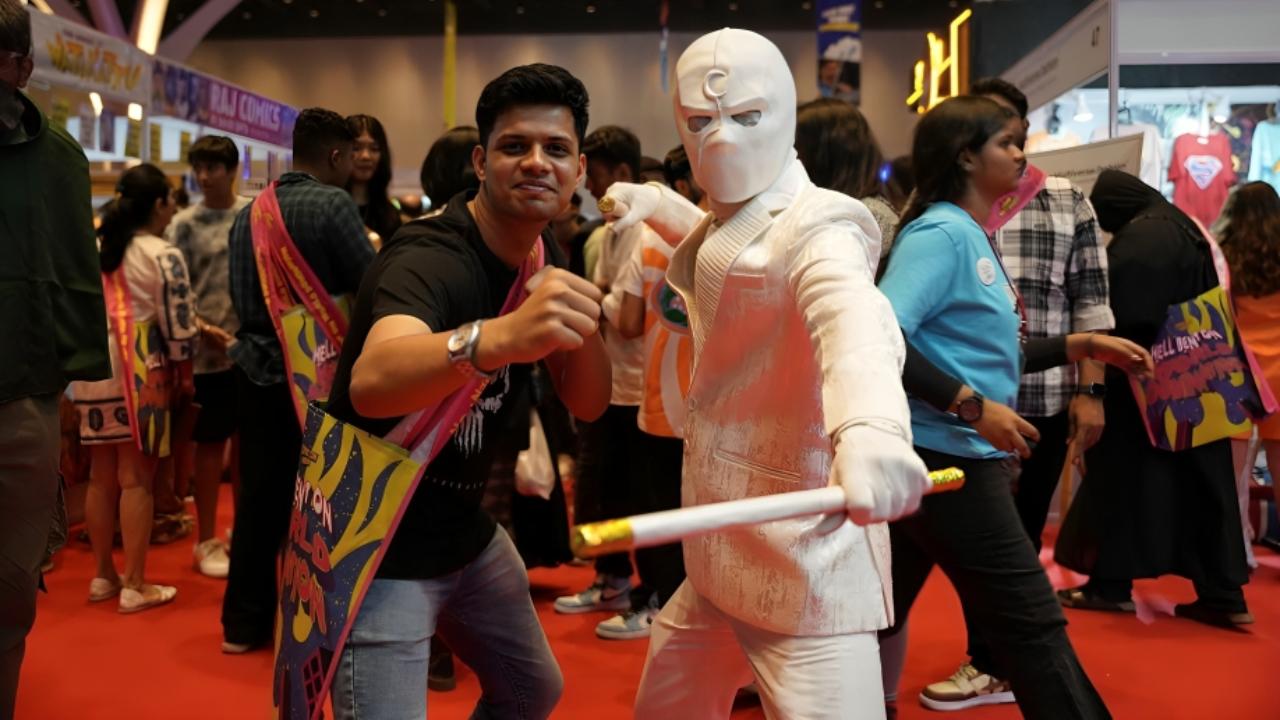
03 April,2026 04:07 PM IST | Madhya Pradesh | ANIComic Con India’s high-energy multi-city celebration of pop culture fandom is set to culminate at its flagship stop in the financial capital of the country as Mumbai Comic Con will take place on May 9 and 10 at the Jio World Convention Centre, BKC, bringing together fans, creators, and communities for a weekend shaped by imagination, storytelling, cosplay and a shared passion for all things pop culture. The 2025 edition of Mumbai Comic Con captured the city’s bubbling spirit, welcoming thousands of fans who showed up in full force to celebrate comics, anime, gaming, cosplay, and collectibles. The atmosphere reflected Mumbai’s deep connection with entertainment and its openness to global and homegrown narratives alike. One of the most memorable highlights from last year was the presence of iconic Japanese voice actors Kappei Yamaguchi and Hiroaki Hirata, celebrated for bringing to life the beloved One Piece characters Usopp and Sanji. Their appearance created an electric connection with fans, offering rare insight into the craft of voice acting and the creative discipline behind some of anime’s most enduring performances. Building on that excitement, a special panel at Mumbai Comic Con 2026 will see artists from various popular pop culture offerings share perspectives from their professional journeys, creative processes, and methods, promising a moment fans will carry with them long after the curtains close. Akshat Rathee, co-founder and MD, NODWIN Gaming, said, “Mumbai is often called the city of dreams, but it’s equally a city of opportunities, a place where people arrive with big aspirations and the freedom to express who they are. That spirit comes alive at Comic Con. You see fans showing up in cosplay despite the city’s fast pace, artists bringing influences from its streets, and communities celebrating fandom with effortless confidence. There’s a scale, ambition, and creative spark here that feels unmistakably “Aamchi Mumbai”. We are excited to return with a showstopper that captures the city’s energy, diversity, and love for great stories.” Shefali Johnson, CEO, Comic Con India, added, “There is something special about walking along the promenade of the newly constructed Mumbai Coastal Road on a beautiful evening, the hum of the city, the sea breeze, and the feeling that you belong to a place full of possibility. Mumbai brings that same warmth and openness to Comic Con. Fans show up wholeheartedly, friendships form easily, and creativity naturally finds its space. From dedicated cosplayers and artists to first-time visitors discovering a new fandom, the coming together of communities here feels effortless and joyful. We are thrilled to return this May to create another unforgettable celebration in a city that embraces both dreams and fandom with all its heart.” Mumbai Comic Con has historically also spotlighted India’s rapidly evolving gaming culture, with initiatives such as creating meaningful visibility for emerging developers, studios, and original titles. By bringing independent creators closer to passionate audiences, publishers, and brands, Comic Con continues to encourage a culture where new ideas are discovered, supported, and celebrated. The city’s thriving fan culture continues to grow through cosplay groups, collector circles, artist communities, and creator-led gatherings that keep the spirit of pop culture alive year-round. Mumbai Comic Con serves as a stage for this creativity, giving cosplayers the opportunity to showcase their craftsmanship and earn a place at the national finals of the Indian Championship of Cosplay, while enabling creators to connect, collaborate, and spark new ideas. At Mumbai Comic Con, attendees can browse a wide range of comics, discover the latest in anime and manga, meet Indian and international creators, and take home exclusive merchandise. The event will feature expansive gaming zones, engaging panel discussions, live performances, comedy acts, musical showcases, and immersive experiences designed to capture the energy of contemporary pop culture. Tickets for Mumbai Comic Con 2026 will be available exclusively on the District app by Zomato.
01 April,2026 10:56 PM IST | Mumbai | mid-day online correspondentWhile Sunburn has hosted one of the most renowned electronic music festivals in India for 18 years, they have also expanded to Abu Dhabi to host the first-ever edition later this year. Now going beyond music on land, Sunburn Europe Croatia Sail Week 2026 will take place this year, in partnership with The Playmaker Group. Sunburn’s Europe debut taps into the fast-growing global phenomenon of jet-set tourism, a growing movement of culturally attuned, experience-led travellers who are increasingly choosing destinations based on curated entertainment, social energy and immersive storytelling rather than just location. As electronic music continues to expand globally, festivals are evolving into destination-driven formats where travel and culture are as integral as the line-up. Croatia, with its established reputation as a hub for music tourism and its ecosystem of beach clubs, historic venues and island circuits, offers a natural stage for this evolution. In bringing together premium travel, curated community and high-energy programming, Sunburn positions itself at the intersection of music tourism and lifestyle, aligning with some of the world’s most progressive festival formats while introducing a distinctly Indian-born perspective to the global stage. Shedding more light on the new experience, Karan Singh, who is the CEO of Sunburn, said, “The way the community experiences music today has fundamentally evolved. They’re no longer just showing up for a festival, they’re travelling for it, seeking deeper, more immersive experiences that bring together music, culture and connection. With Sunburn Europe Croatia Sail Week 2026, we’re responding to that shift by creating a format where the journey itself becomes the festival: across destinations, on the water and through shared moments that go far beyond a single stage.” Kristijan Grzetic, who is the chief marketing officer, The Playmaker Group, added, “Croatia has emerged as one of the world’s leading destinations for experiential and music-led tourism. This collaboration represents a meaningful cultural exchange, bringing together diverse audiences through a shared love for music and travel.” The festival not only charts a path through Croatia’s most iconic coastal destinations, but also places the country’s natural beauty and cultural landmarks at the centre of the experience, reinforcing its position as a premier Mediterranean hub for high-value, experience-led tourism. The experience begins with yacht boarding in Split and Trogir, unfolding into a sunset opening at the historic Kamerlengo Fortress, where electronic music meets centuries-old stone walls. From there, the rhythm shifts to the sunlit shores of Bol, where beachside sessions at Zlatni Rat transition seamlessly into high-energy, open-air nightlife. At Stari Grad, the format reaches one of its most defining expressions with a signature raft party, a floating arena formed in open water, where yachts converge and the sea itself becomes the dancefloor, dissolving the boundaries between stage and crowd in an immersive, communal setting. The on-water experience will be delivered in partnership with The Bucketlust, a leading operator of curated yacht-based travel experiences, bringing proven expertise in delivering premium, ‘floating festival’ sailing events across Europe.” Hvar anchors the journey with its unmistakable duality, equal parts indulgence and intensity. From iconic beachside gatherings to sunset dining, curated wine experiences and late-night sessions, the island unfolds as a seamless continuum of sound, culture and social energy. In Vis, the experience turns more elemental. Attendees move through the luminous stillness of the Blue Cave before transitioning into one of the festival’s most striking moments, a night at Fort George, where a historic fortress is transformed into a high-energy electronic venue overlooking the Adriatic. The closing stretch softens into a slower, more reflective rhythm, with secluded beaches, hidden coves and open horizons giving way to a final sunset set as the fleet returns. Throughout, music remains constant but never static, a curated blend of house, techno and commercial EDM delivered by an international roster of artists, flowing seamlessly from sunrise into after-hours. Without a singular fixed stage, the environment itself becomes part of the performance, with shifting coastlines, open water and historic structures shaping an experience that is as much about movement and place as it is about sound. Tickets for the Sunburn Europe Croatia Sail Week 2026 will be available soon on BookMyShow.
01 April,2026 10:27 PM IST | Mumbai | mid-day online correspondentADVERTISEMENT











-1775212436411_d.png "File Pic")