IN PHOTOS | On Bram Stoker’s birth anniversary, here are 6 unique adaptations of Dracula
Updated On: 08 November, 2025 11:18 AM IST | Nascimento Pinto
On Irish novelist Bram Stoker’s birth anniversary, we revisit some unique adaptations and evolution of Dracula, one of the most terrifying figures from Gothic literature (Story by Nandini Varma)



1/7
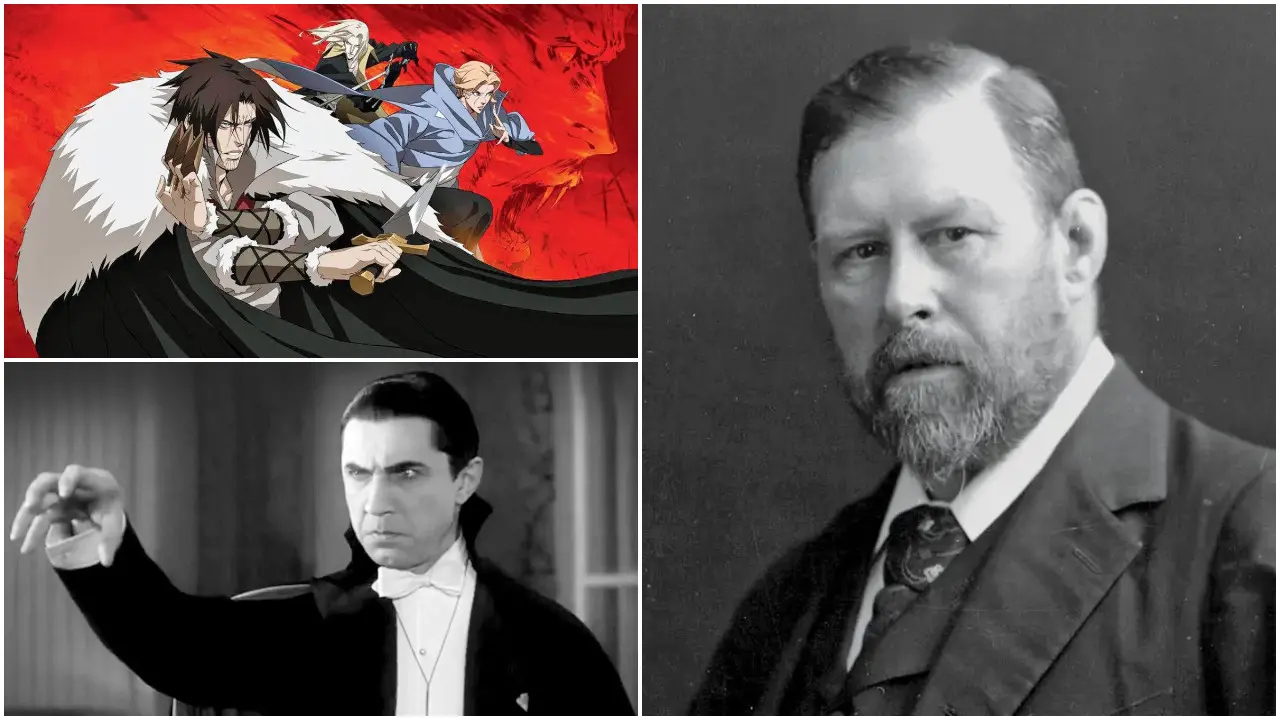
![Irish novelist Bram Stoker’s creation Dracula remains one of the most terrifying literary figures. In the 1897 Gothic novel, protagonist Jonathan Harker describes what he sees: “The whole man [emerging] from the window… [crawling] down the castle wall over that dreadful abyss, face down with his cloak spreading out around him like great wings… [moving] downwards with considerable speed, just as a lizard moves along a wall.”The 1901 edition featured a fairly accurate Dracula illustration for the first time. Since then, there have been 700-plus text adaptations. Here are The Guide’s top picks:](https://images.mid-day.com/images/images/2025/nov/Bramstoker2.jpg "Irish novelist Bram Stoker’s creation Dracula remains one of the most terrifying literary figures. In the 1897 Gothic novel, protagonist Jonathan Harker describes what he sees: “The whole man [emerging] from the window… [crawling] down the castle wall over that dreadful abyss, face down with his cloak spreading out around him like great wings… [moving] downwards with considerable speed, just as a lizard moves along a wall.”The 1901 edition featured a fairly accurate Dracula illustration for the first time. Since then, there have been 700-plus text adaptations. Here are The Guide’s top picks:")
2/7
Irish novelist Bram Stoker’s creation Dracula remains one of the most terrifying literary figures. In the 1897 Gothic novel, protagonist Jonathan Harker describes what he sees: “The whole man [emerging] from the window… [crawling] down the castle wall over that dreadful abyss, face down with his cloak spreading out around him like great wings… [moving] downwards with considerable speed, just as a lizard moves along a wall.”
The 1901 edition featured a fairly accurate Dracula illustration for the first time. Since then, there have been 700-plus text adaptations. Here are The Guide’s top picks:
ADVERTISEMENT

3/7
Comics
Dracula, a Graphic Novel: Retold by Michael Burgan, and illustrated by Jose Ruiz, this is a comic-style version of the classic. Through bold images and dialogues sharply borrowed from the original text, Burgan makes the story accessible to those who prefer short form writing. Burgan has also created a mini-series for younger kids, aged eight-12 years. This includes What is the Story of Dracula, with black and white images alongside the story to colour.
Available Leading bookstores

4/7
Films
Nosferatu: A Symphony of Horror (1922): FW Murnau’s film is among the earliest known adaptations of Stoker’s classic on screen. Murnau made changes to the plot and characters, but credited the novel as his primary inspiration. Set in Wisborg, the film follows Hutter, his wife Ellen, and Count Orlok. Unlike the text, Hutter finds a Book of Vampires at the inn before he visits the castle. The book is later discovered by Ellen, who reads that only “a woman pure in heart” could kill the vampire by offering herself to him. While Ellen makes a sacrifice, Orlok becomes sexually attracted to her.
Log on to Plex, YouTube
ADVERTISEMENT

5/7
Bram Stoker’s Dracula (1992): With a star cast featuring Gary Oldman as Count Dracula, Keanu Reeves as Harker, Winona Ryder as Mina, and Anthony Hopkins as Van Helsing, Francis Ford Coppola’s film begins many years before Harker’s visit to the Count’s castle. It depicts Dracula’s wife Elisabeta’s death, which leads to his transformation into a vampire. He waits for her for centuries, and when Harker’s wife Mina appears before him, resembling Elisabeta, he believes she’s returned. Dracula embodies a wolf-like wild figure, and appears distinct from his description in the novel as well as any early depictions.
Log on to Netflix

6/7
TV shows
Castlevania (2017): The Gothic horror tale has been adapted into multiple video games. Castlevania was one such popular Japanese series, which released its earliest version in 1986 on Nintendo’s Famicom. This animated film is based on the series and revolves around the adventures inside the castle. It developed into a story about Trevor Belmont, the last surviving member of a family of monsters. Belmont takes up the challenge to save the nation of Wallachia from Dracula and his army summoned to end the population.
Log on to Netflix
Dracula (2020): BBC One’s three-episode show, directed by Steven Moffat and Mark Gatiss, the creators of Sherlock, is a modern retelling of the classic. The show begins with Harker recalling what he witnessed years ago to the nuns nursing him. Most of the show is in flashback when Harker recounts his encounter with Dracula and his stay at the ominous castle. It is an unusual, fascinating adaptation that unpacks Dracula’s personality, humanises him, and inquires why he behaves the way he does.
Log on to Netflix
ADVERTISEMENT

7/7
Podcast
Dracula: A Comedy of Terrors: Gordon Greenberg and Steve Rosen’s play is a humorous rewriting of the classic, which satirises the Victorian gender ideals. It maintains the premise, but it is not meant to be a faithful adaptation. This is a radio version of the play, voiced by actors of repute: John Stamos, Annaleigh Ashford, Alex Brightman, Alan Tudyk, among others. Unlike the text, which is written purely as a collection of diary notes, letters, and medical prescriptions, this has an omniscient narrator, who accentuates the mood.
Log on to broadwaypodcastnetwork.com
ADVERTISEMENT
Photo of Day

Silent checkmate
Roshan Diware (left) plays against Pragti Tupe while sisters Sarita Karde and Vaishali Savarkar watch, at the Mind Over Sight Chess Championship in Churchgate on Sunday. Pic/Ashish Raje
ADVERTISEMENT