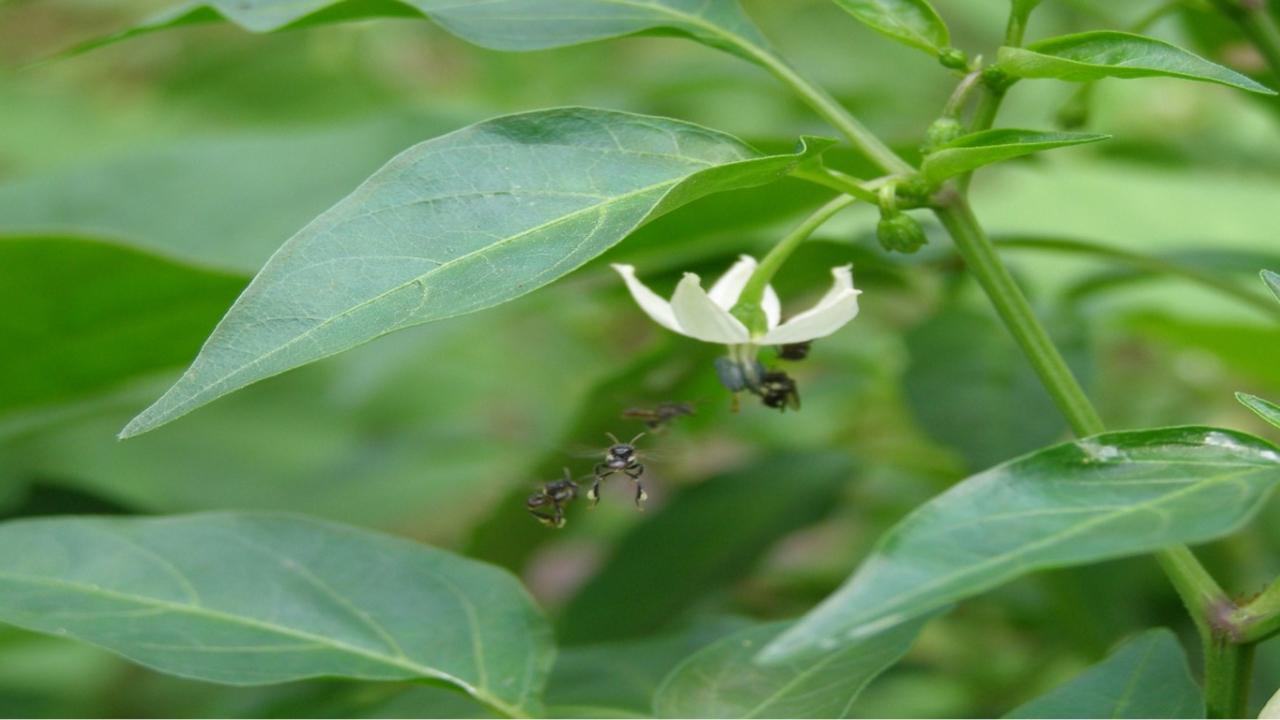
As Mumbai battles pollution and congestion, eco-friendly offices emerge as a breath of fresh air for the city’s workforce

Image for representational purpose only. Photo Courtesy: Special Arrangement
Unless you are a nature or animal lover, it’s hard to imagine somebody falling in love with insects let alone bees. Known to sting, bees aren’t a favourite for most people, and that is what makes it difficult to imagine them anywhere around us. While the honeycomb looks beautiful from afar, going to closer to them is not on many people’s to-do lists but that stems from not know enough about them.
Misconceptions about bees
Indian bee conservationist Amit Godse, also known as ‘Bee Man’, says there are several misconceptions that people have about bees, and that often makes it difficult for them to enjoy their true beauty. He explains, “The biggest myth is that all bees sting and are dangerous. Most bees, including stingless and solitary species, are harmless. Another misconception is associating bees only with honey, whereas their most important role is pollination supporting nearly 70 per cent of our food crops.”
It's not only these but also the fact that people often assume bees are pests, but in truth, they are vital pollinators that support biodiversity and agriculture, adds Godse, who is an engineer-turned-conservationist. The fact that there is also limited awareness that different bee species exist, explains the city-based conservationist, makes many people not realise that stingless bees are different from common honeybees and produce medicinal honey with unique health benefits.
Mindspace REIT’s has introduced stingless bees in their corporate park in Airoli, with an aim to conserve endangered indigenous species after consulting Godse.
At the same time, they are hoping to not only educate their employees about bees but make also make them fall in love with them or at least increase the odds of it happening. Having been around them for some time now, Rajesh Sundararajan, who works in the office space reveals, "As someone deeply fascinated by bees, having stingless hives within our campus is truly special. Walking around the green areas where the hives are kept feels calming and connects us with nature, even during a busy workday. The initiative has made our workplace more vibrant and refreshing, while also reminding us that small actions can help the environment in meaningful ways."
Even Donaros C, another corporate employee, adds, “As a long-time bee enthusiast, I was thrilled when I learned we'd have stingless bees on campus. I find myself checking on them whenever I can, observing how they interact with our plants. It's amazing to think we're providing a safe space for these native species that are becoming so rare in urban environments. What makes it even more special is seeing them flourish right here in the middle of a busy city. For someone who loves bees, having them as part of my workplace just feels perfect.”
Uniqueness of stingless bees
While the inclusion of bees seems interesting, it poses the question, why bees? The company statement said, “Bees were chosen over other animals and insects because they are keystone species, their role as pollinators directly sustains biodiversity, agriculture, and food security. Unlike many insects, bees contribute both to urban ecology by enriching green landscapes and to human well-being through pollination and medicinal honey. They are also safe to conserve in workspaces, especially stingless bees, which pose no harm to people.”
While that is just the start, Godse, who is involved with the project, says there is more to them. He explains, “Stingless bees are unique because they are primitive eusocial insects that have existed for over 65 million years, much before the common honeybees. They are called stingless because their stings are vestigial and non-functional, making them harmless to humans. Found mostly in tropical and subtropical regions, these bees build nests in tree hollows, bamboo, rocks, or cracks in walls.”
Their honey, he adds, is produced in small amounts but is highly valued for its medicinal properties—it contains antioxidants, flavonoids, and nutrients, and is used in traditional medicine systems like Ayurveda to treat ailments including cancer, inflammation, and infections. “They also pollinate small, medicinal plants that regular honeybees don’t visit, helping conserve biodiversity and improve crop yields,” he adds.
Can more business parks do it?
With such benefits, Godse says their introduction on campus is interesting because stingless bees bring unique advantages as pollinators. “Due to their small size, they can access tiny flowers and medicinal plants that regular honeybees often cannot reach. They show strong flower constancy and forage close to their hive within about 1 km making them ideal for localised pollination in urban settings. This supports the growth of diverse native plants and improves the yield of fruits, vegetables, and herbs grown on campuses,” he adds.
While this is just one campus, Mumbai boasts of many office campuses across the city, and he says such a program can be implemented across Mumbai. He sheds light, saying “Stingless bees are harmless due to their vestigial stings, making them safe for urban areas, schools, and residential colonies. This allows people to experience nature up close, promoting environmental awareness and appreciation.”
More show than substance, says biologist
Independent city-based wildlife biologist Kayden Anthony shares, “Overall, such initiatives look fancy but may not have an impact. It is important to ask, “What if the bee escapes?” There can be unforeseen challenges that we may not know. Firstly, what if it is invasive? Secondly, if you are introducing something, you don’t know how it will impact the organisms around it. Since it is an office, there may not be other organisms around it.”
Beyond that, it is also important to consider the native vs invasive species. Kayden further explains, “If it is native, they won’t have as big a negative impact. The best way to take such initiatives forward is to introduce native diversity as that would help a lot. Introducing invasive or GMO (genetically modified organisms) diversity may not help.”
Often, the wildlife biologist says, the simpler solutions are also useful in wildlife or the environment. Even as he has observed quite a few initiatives take root in the city, he also poses the question for every organisation that is thinking of such initiatives, “If you want to improve biodiversity, then why are you adding bees because they may help with pollination? That is one thing they do. Instead of adding something that is dependent on plants, if you add plants or trees like Palash or native plants that support a lot of diversity that will not only bring in bees but a lot of animals and wildlife. If you really want to make an impact, why don’t you introduce flowers as it may have much more impact? The flowering plant may have much more impact. You are bringing the food source with you, so animals that can fly will come.”
Subscribe today by clicking the link and stay updated with the latest news!" Click here!