The considerations and issues for LGBTQIA+ individuals and couples vary drastically from cis-het people, regardless of where they are travelling to. Seasoned queer travellers provide practical tips on choosing queer-friendly destinations and accommodations, navigating social interactions, and more

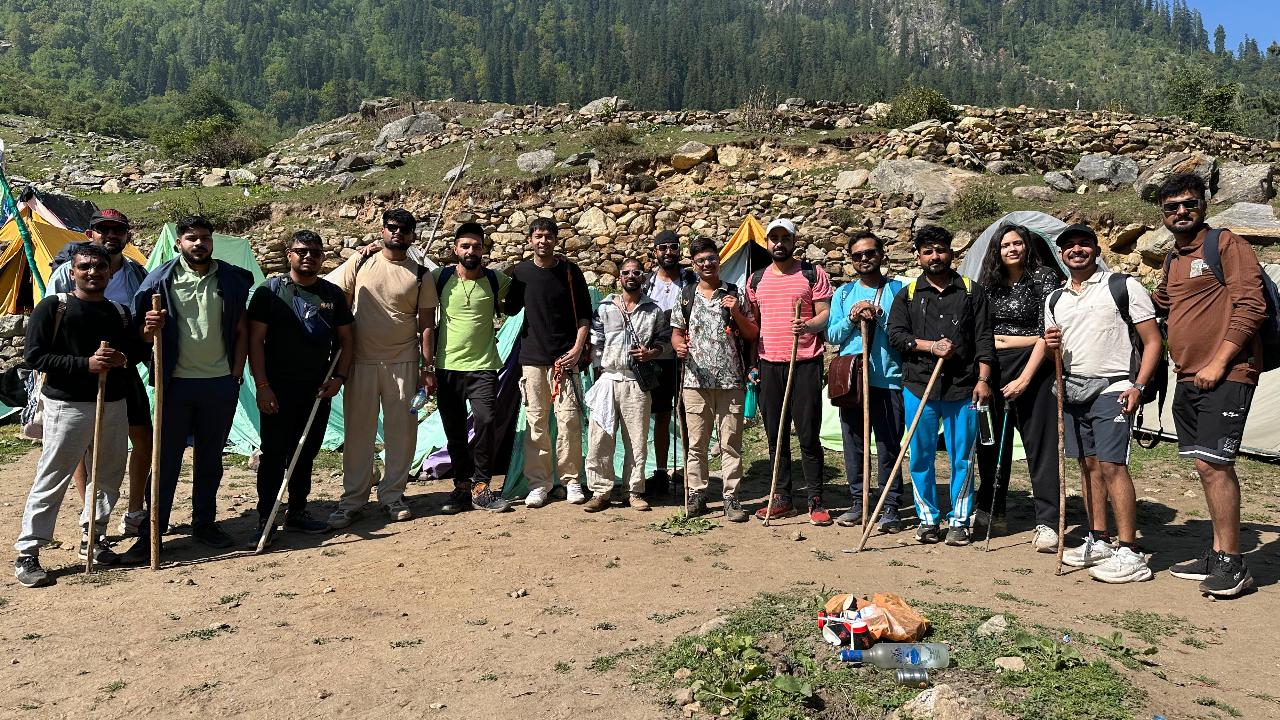
Queer Travelogue curates inclusive trips for LGBTQIA+ individuals. Photo credit/Queer Travelogue
Travelling should be an inclusive and exciting experience for everyone. However, LGBTQIA+ individuals and couples face different degrees of unique challenges while considering and planning a trip to ensure a safe journey.
Research conducted by Booking.com in 2024 revealed that for 86 per cent of LGBTQIA+ travellers in India, being part of the community directly impacts their trip preparation before booking, and three out of four travellers consider whether they can be their most authentic selves while travelling as a key factor.
Imagine going on a holiday with a partner, but being unable to hold hands, or being mistaken for friends or sisters? The list of considerations is seemingly never-ending, whether it is to shortlist destinations which are queer-friendly, or specific accommodations where they do not have to hide their relationships.
For LGBTQIA+ travellers, the joy of exploration often comes hand-in-hand with the need for careful planning and a deep understanding of local nuances. While the challenges faced by the LGBTQIA+ community are as diverse as the wide spectrum of identities, seasoned queer travellers, and an expert share insights, and practical tips on choosing queer-friendly destinations and accommodations, navigating social interactions, and public displays of affection.
The unique challenges of queer travel
"Travel should feel like freedom — not fear," says Kabir Singh Tomar, founder of Queer Travelogue in Gurugram. The 27-year-old, who identifies as gay, started Queer Travelogue to provide safe and inclusive spaces to all queer individuals, especially concerning initiatives for queer women and non-binary travellers.
Tomar outlines several common challenges faced by LGBTQIA+ travellers:
1. Lack of safe and inclusive spaces: Finding environments where queer identities are not just tolerated but celebrated is challenging in India. There needs to be dedicated effort in ensuring that spaces we visit, or people we engage with are inclusive.
2. Social stigma: Experiencing stares or judgmental behaviour can be quite commonplace for queer travellers. Even those who seem friendly at first might ask intrusive questions about their gender or relationship.
3. Safety concerns: Within the wide spectrum of the community, there is a concerning disparity between those who are perceived as straight-passing, and visibly trans and gender-nonconforming travellers. Misgendering, increased vulnerability to violence, and issues with authorities regarding documentation can prove to be issues.
4. Fear of expression: Every time a queer individual or couple goes to a new destination, there is an internal gauging of how cautious they need to be or if they can be relaxed and true to their authentic selves. The inability to freely express one's identity or affection without fear of negative repercussions severely impacts the experience of the journey.
Researching and verifying safety and acceptance
“Do I have additional safety concerns when I am picking a destination? Yes,” says marketer and solo traveller Maya (name changed on request) emphatically. The New Delhi resident identifies as queer and longs to visit lands that are historical yet conservative but saves them for a future group visit. While most people do not think twice before visiting countries with anti-LGBTQIA+ laws, community members do not have that liberty.
“The acceptance of LGBTQIA+ varies drastically across the globe. Being a brown visibly queer person (with short hair), in Spain evokes very different reactions than in Turkey or Russia. Remember the homophobic incidents in Qatar during the 2022 FIFA World Cup? The more you travel, you become aware of the risks associated with travelling internationally to certain countries. If you are not sure of how queer friendly a place is, it is highly advisable to do your research about laws and general acceptance,” she recommends.
Vaibhavi Belekar and Sukanya Chatterjee are finance professionals and married bisexuals currently residing in Hong Kong. From the canals of Amsterdam to the temples of Kyoto, they have traversed the world together for eight years, and offer a perspective rooted in their own experiences, "We have never really had any situation on a holiday where we have felt unsafe because of being queer. It is important to note that we haven’t travelled to more of the conservative countries, and if we do that - we might do it in a bigger group, rather than just the two of us," confesses Belekar. They also acknowledge that even in seemingly queer-friendly cities, caution is still necessary. "Even in the most queer-friendly cities like London or New York City, there are certain areas which would still be unsafe, so we would just steer clear of that," Belekar adds.
Ensuring a destination is truly safe and welcoming requires proactive research from tour providers as well. Tomar's Queer Travelogue often explores areas like Uttarakhand and Himachal in India, where awareness about LGBTQIA+ identities can be limited. "To ensure a safe and respectful experience, we connect with property owners beforehand and sensitise them about the community — including how to create a welcoming environment and what to be mindful of," Tomar explains. Beyond direct communication, one can also rely on social media, local contacts, and queer community members to get a better understanding of the place. For added security and solidarity, he advises, "Most importantly, we travel in groups to ensure added safety, support, and a sense of belonging for everyone."
Navigating less overtly "queer-friendly" destinations
Destinations come in all shapes and sizes. They can be within your state, or on the other side of the world, but not every desirable destination will be a beacon of queer visibility. Tomar explains, "Instead of forcing visibility, we try to blend in with the local culture when needed, allowing everyone in the group to travel freely and safely without clashing with local sentiments."
He further elaborates on their adaptive approach, "Depending on the situation, we choose how to respond — sometimes we gently educate and create awareness, and other times, it’s wiser to let certain things go, like ignorant or hateful comments, to protect our peace and safety. It’s always about reading the moment, prioritising well-being, and creating subtle shifts where possible."
Similarly, Maya, notes the personal calculus involved, saying, "Coming out is not a singular event. It happens every day. Each time you meet a person, whether it is a fellow traveller or someone local you cross paths with, you must decide whether you wish to omit this deeply personal piece of information or not. As a visibly queer person, especially in more conservative places, you quickly learn to adapt. It’s not about hiding who you are, but about being smart and safe. Sometimes that means dressing more conservatively or not saying anything to avoid unnecessary attention."
When travelling to sizeable cities, Maya recommends researching dedicated queer events and spaces that may comfort you. “Sometimes finding a queer bar or a community spot isn't just about entertainment, it's about finding a momentary safe space. It's where you can truly let your guard down, even for a little while, and just be. I often look for local LGBTQIA+ social media groups or online guides before I go, just to know where these spaces are, even if I don't always end up visiting," she shares.
Selecting accommodations: Asking the right questions
When it comes to lodging, direct communication and thorough vetting are key. Tomar suggests asking property owners and staff:
1. Do you welcome LGBTQIA+ guests and same-gender couples?
2. Are there any restrictions or local sensitivities we should be aware of for our queer travellers?
3. How aware are you of the community?
4. Do your staff receive inclusivity or diversity training?
The impact of cultural sensitivity
Tomar shares a powerful anecdote demonstrating how cultural sensitivity can profoundly improve queer travel experiences. "On one of our group trips to a small village near Chopta, Uttarakhand, we stayed at a locally run homestay. The views were stunning, but what stood out more was how our approach to local social norms made the whole experience smoother — and even more meaningful — for everyone involved," he recounts.
Before the trip, Tomar personally engaged with the owner, explaining the group's LGBTQIA+ identity and gently preparing them for potential differences in appearance or interaction. "We didn’t demand acceptance — we simply asked for respect and privacy. By the time we arrived, he’d set up extra blankets, made space for private group bonfires, and even chatted with one of our non-binary travellers about their tattoos and travel stories,” he shares.
The initial hesitation of the owner transformed into genuine warmth, and the trip culminated in a touching moment. Tomar emphasises a deliberate choice, "One evening, we decided not to express affection in public spaces nearby — not because we were hiding, but because we wanted to build trust first. That small adjustment led to locals becoming more curious in a respectful way, even offering help during our treks. By the end of the trip, the same host who was once unsure asked us: When are you bringing your group again? My son learned a lot from talking to you all.”
Public displays of affection
This form of expression while travelling can be especially tricky for Indian travellers considering how limited the acceptance is in the country. For many including Belekar and Chatterjee, PDA is generally not a major aspect of their travel. "We are generally not super into PDA, but when you travel enough, we do get a vibe about how accepting and relaxed a place is. Again, we tend to be respectful of people’s spaces. We are obviously a bit careful in conservative countries," Belekar explains. The burden of being careful and not offending others almost always falls on the travellers.
While for many solo travellers like Maya, the heteronormative standards weigh on their minds. She muses, “I love holding hands and throwing an arm around my partner, but the sad reality is that simple gestures can invite stares, comments, or worse. I find myself constantly trying to gauge the environment. Can people tell if we are together, are they staring, and most importantly are we in a safe space? This endless risk assessment in everyday life is exhausting, but much worse on a holiday. What is so offensive about expressing love that strangers get uncomfortable?”
Essential safety precautions
Beyond general travel safety, Tomar and Maya advise queer individuals to consider specific precautions:
1. Use dating apps cautiously: While dating apps can be an easy way to connect with queer locals, avoid sharing personal details too quickly and meet only in public places.
2. Be mindful when walking alone at night: The importance of choosing well-lit, populated areas — especially for trans, visibly queer, or gender-nonconforming individuals. It's also wise to have a transport plan in place.
3. Carry identification that matches your presentation (if possible): This is crucial for trans and non-binary travellers. “Mismatched ID can be a serious issue during police checks, hotel check-ins, or airport security,” Tomar warns. Where feasible, carry a copy of gender-affirming documents, or a support letter from a doctor or lawyer (especially when travelling internationally).
4. Know your rights — but don’t always assert them: Tomar offers a nuanced piece of advice, acknowledging that while knowing your rights is important, asserting them in every situation might not always be the safest or most peaceful option.
5. Attempt to deescalate: As a visibly queer person, you might find yourself in situations which encroach upon personal liberty or cause discomfort. But there are times, especially if you are by yourself when not engaging is the smarter move for your safety. Depending on where you are, it is advisable to de-escalate by walking away from an ignorant comment.
6. Manage visibility in public spaces: Many queer persons adjust their expression to not draw attention in unfamiliar spaces. For Maya, “It's about reading the room, all the time and sometimes that means adjusting how I carry myself. Not to hide, but to avoid becoming an unnecessary target. For example, wearing a cap or more neutral clothing might be a small adjustment that buys me more peace of mind in certain areas," she shares.
7. Share your itinerary: This is a classic safety measure that is adopted by many travellers—solo or not. Sharing your accommodation and travel details with a trusted friend or family member allows them to check-in. “This is standard solo travel advice, but it feels even more critical when you're navigating additional layers of social risk,” admits Maya.
Subscribe today by clicking the link and stay updated with the latest news!" Click here!