A practical guide with tips and advice from first-time and veteran marathoners for those planning to participate in the Mumbai Marathon next year

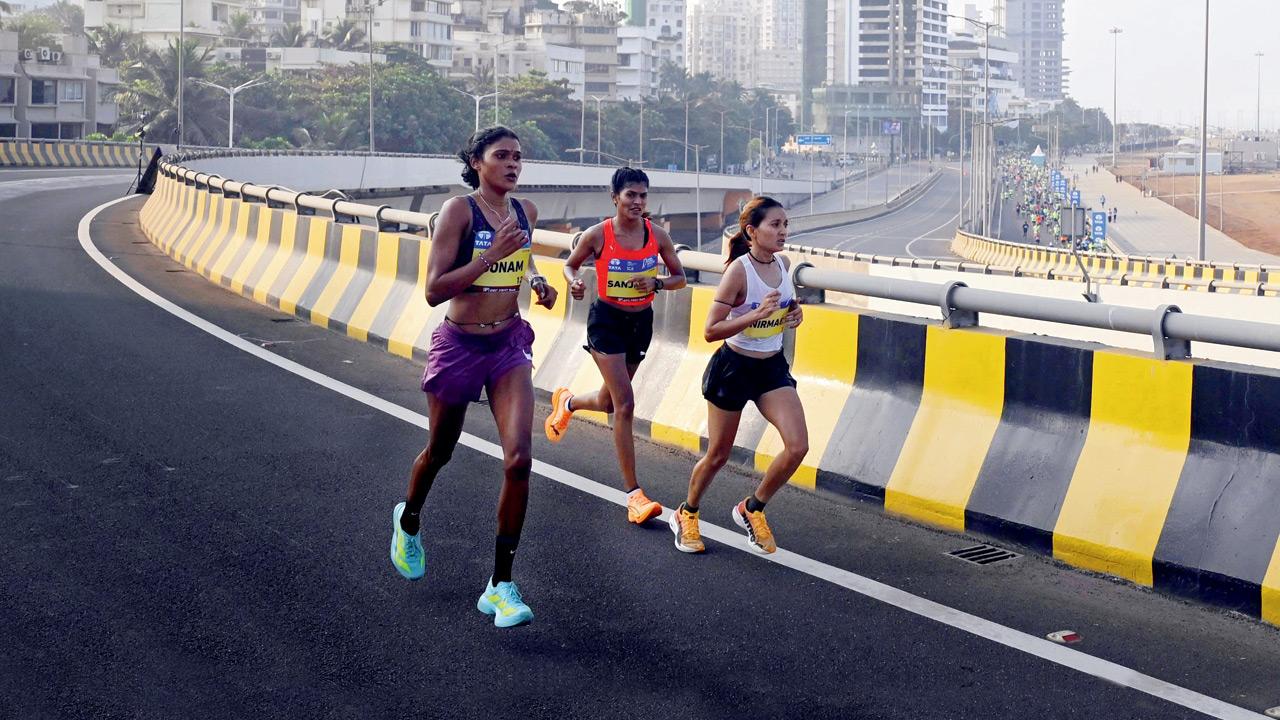
Runners make their way across the Coastal Road in Worli. Pic/Ashish Raje
Hype yourself first
One piece of advice I would share for first-time runners who intend on running the Mumbai Marathon next year is that it is more of an endurance game than a physical one. A calm mindset is essential, as anxiety can disrupt rhythm and energy. Give yourself enough time, and prepare well for the marathon, by keeping your body gently active in the days leading up to the race as that will ease the transition.

Vaibhavee Bhatt has been a regular participant at the marathon for the last three years. Pic courtesy/Vaibhavee Bhatt
A proper warm-up during every practice session is non-negotiable, with at least 20 minutes solely dedicated to lunges, high knee kicks, leg swings, hip and ankle rotations, as that helps prepare the body and muscles. Similarly, post-run stretching is equally important and should never be skipped.
As a beginner, I learnt that fancy gear is absolutely unnecessary — reliable running shoes, comfortable socks and basic workout clothes are sufficient. If I have to give one tip, which worked for me, it would be, to start running with a friend as that helps a lot with motivation. Lastly, always try to maintain a positive mindset and keep going, as the body adapts after the initial kilometre.
Vaibhavee Bhatt, 24, consultant, Tardeo
Base first, speed later
Having run marathons for 22 years, I request starting your preparation by getting all key medical parameters checked. This includes blood tests for haemoglobin, Vitamin D, Vitamin B12 and ferritin, along with heart and lung function tests, to ensure a strong and injury-free return to running.

(From left) Kaushik Panchal at the Tata Mumbai Marathon in 2024; and at the 2026 edition of the race. Pics courtesy/Kaushik Panchal
Gradual progression is essential — begin with a one-hour run and increase duration by 10-15 per cent each week. Alongside running, always focus on stability and mobility through regular yoga, functional workouts, or cross-training like cycling, swimming, or walking, which will help prevent injury as these activities engage different muscle groups. Do not skip strength training.
I keep reiterating that you are your best competition, and hence, analysing last year’s race pacing and setting realistic targets is helpful, especially before attempting a full marathon. Always listen to your body, prioritise muscle over fat, and support post-run recovery with a protein-rich diet and carbohydrates for energy.
Kaushik Panchal, 55, entrepreneur, Borivli
Beginners’ guide to acing marathons after turning 50

1. Preserve muscle with regular strength training
2. Make sure you get at least eight hours of sleep
3. Focus on balance and mobility
4. Treat runs as an aerobic activity, not a race
5. Keep average heart rate below 130-140 during training
6. Stop immediately if you feel any discomfort or pain
Subscribe today by clicking the link and stay updated with the latest news!" Click here!