Construction on the 21-kilometre tunnel, part of India’s first bullet train corridor, has reached a key milestone, with five kilometres fully excavated using the New Austrian Tunnelling Method (NATM). With excavation now complete in this section, work has progressed to the next stages of tunnel development, focusing on structural strengthening and long-term durability. Inside the tunnel, a drainage system is being installed using a drainage casting gantry to ensure that seepage water is efficiently collected and channelled through a dedicated network. Waterproofing gantries are also being deployed to install specialised membranes, creating a protective barrier against water ingress. Reinforcement bar cages are being placed along the tunnel profile, forming the steel framework required for the final concrete lining. This is followed by the lining gantry, which casts the permanent concrete layer, providing structural strength and a smooth internal finish. In addition, dedicated equipment rooms are being constructed to house critical systems required for tunnel operations and maintenance. With work progressing steadily across stages, the underground stretch of India’s first bullet train project is moving closer to completion.
02 April,2026 10:51 PM IST | Mumbai | A CorrespondentIn a major boost to intra-city connectivity, the Navi Mumbai Municipal Corporation (NMMC) on Thursday inaugurated a crucial arm flyover connecting Palm Beach Road to the Sion-Panvel Highway in Vashi. The flyover, located at Sector 17, was inaugurated by Maharashtra Forest Minister Ganesh Naik in the presence of Mayor Sujata Patil and other civic officials. Direct route to Pune, less detour The 290-metre-long and 6.5-metre-wide flyover has been constructed at a cost of Rs 18.32 crore. It provides a direct link for motorists travelling from Palm Beach Road towards the Sion-Panvel Highway, a key route for Pune-bound traffic. Until now, commuters had to take a longer detour via Sanpada, often adding 10–15 minutes to their journey. Relief for daily commuters Officials said the new arm is expected to significantly reduce travel time, fuel consumption, and congestion at key junctions near Vashi. Speaking at the inauguration, Naik termed the project a “practical solution” to existing gaps in Navi Mumbai’s road planning and praised the officials involved in conceptualising and executing the project. First ride by rider with disability In a symbolic gesture, the first ride on the flyover was undertaken by a rider with disability, Vaibhav Thakur, who was felicitated at the event. Engineers and team felicitated NMMC also honoured engineers and project stakeholders, including City Engineer Shirish Aradwad and the team overseeing the flyover’s construction. Big boost to traffic planning Civic officials believe the flyover will play a key role in streamlining traffic movement in Vashi and improving overall urban mobility in Navi Mumbai.
02 April,2026 08:51 PM IST | Navi Mumbai | Abhitash SinghThe Supreme Court has taken a serious view of the violence and intimidation faced by seven judicial officers, including three women officers, who are deployed to adjudicate claims in the Election Commission’s Special Intensive Revision (SIR) process in West Bengal’s Malda district. Describing the incident as a brazen and deliberate attempt to obstruct the administration of justice, a bench led by Chief Justice Surya Kant expressed concern that despite prior intimation, state authorities did not act promptly, leaving the judicial officers without protection, food, or water for several hours, news agency ANI reported. The apex court has issued show-cause notices to senior state officials, including the chief secretary, home secretary, and director general of police, over their inaction. It also directed the ECI to requisition and deploy adequate Central forces to ensure the safety of judicial officers and the smooth conduct of the SIR adjudication process. Further, it mandated strict security arrangements at all venues, restricted public entry, and ordered an immediate assessment of any threat perceptions faced by the officers or their families, ANI reported. Compliance reports have been sought, and officials have been directed to remain virtually present at the next hearing. “We are extremely disappointed to note these developments. Our previous order clearly reflects that judicial officers, who are entrusted with adjudicating the SIR process, must be allowed to perform their duties without fear or obstruction. The incident that took place is brazen and strikes at the very root of the rule of law. It amounts to a direct challenge to the authority of the Court. This was not a spontaneous act but appears to be a well-planned and deliberate attempt to demoralise judicial officers and obstruct the ongoing process of adjudication of objections. We will not permit any individual or group to take the law into their own hands or to create psychological fear in the minds of judicial officers,” the court stated. SC terms incident criminal contempt, raps WB officials Further slamming the state authorities, the court noted, “This conduct undoubtedly amounts to criminal contempt of court. It also exposes the failure of the State administration. The conduct of the Chief Secretary, Home Secretary, Director General of Police, Collector, and Superintendent of Police is highly deplorable. Accordingly, we issue show-cause notices to them as to why effective measures were not taken. The Election Commission of India (ECI) is directed to seek the deployment of central forces to protect the judicial officers. Taking cognisance of yesterday’s incident, we further direct that no obstruction or impediment shall be caused to the ongoing adjudication process. We reiterate that this Court shall ensure that the life, property, and family members of the judicial officers are duly protected.” Taking a serious view of the matter, the Court issued certain interim directions to ensure the protection of judicial officers performing SIR duties: “The ECI is directed to requisition adequate central forces and deploy them at all locations where judicial officers are conducting SIR adjudication. Adequate security must also be provided at hotels, guest houses, and other places where these officers are currently staying. If any judicial officer or their family members have apprehensions or threat perceptions, the same shall be immediately assessed and appropriate action taken.” It further stated that all necessary measures to ensure safety and smooth functioning shall be undertaken by the ECI in coordination with the state government. “The Chief Secretary, Home Secretary, and DGP are jointly directed to ensure that not more than 3–5 persons are allowed to enter the premises at a time for filing objections. At no venue where SIR adjudication is ongoing shall more than five persons be permitted entry at any given time. The Chief Secretary and DGP shall file a compliance report before the Court,” it ordered. The collector, chief secretary, dgp, district magistrate, and ssp have also been directed to show cause as to why appropriate action should not be taken against them in light of the letter received from the Chief Justice of the high court, ANI reported. They have further been directed to remain present (virtually) on April 6, the next date of hearing, it said. (With ANI inputs)
02 April,2026 08:21 PM IST | New Delhi | mid-day online correspondentAmid allegations that Praful Patel and Sunil Tatkare attempted to take over the NCP following the death of then Maharashtra Deputy Chief Minister Ajit Pawar, his son Parth Pawar on Thursday dismissed the reports targeting the two senior leaders as “baseless and speculative.” Such narratives were "nothing but fiction", he said in a statement, claiming that attempts were being made to drag these respected leaders into "manufactured controversies". Patel and Tatkare have demonstrated decades of commitment and leadership that continue to guide the party, Parth said, adding, "Such unfounded allegations are deeply unfortunate and must be called out." Parth’s statement came amid speculation that his mother and Deputy Chief Minister Sunetra Pawar was upset with Patel and Tatkare. Rohit Pawar claims Sunetra informed ECI of her appointment as party chief NCP (SP) leader Rohit Pawar claimed last week that Sunetra Pawar had written to the Election Commission of India on March 10, informing the poll body about her appointment as party president and stating that any earlier communication received from the party after her husband Ajit Pawar’s death in an air crash on January 28 should be ignored. According to political grapevine, Sunetra Pawar was not convinced by the clarification Patel and Tatkare gave regarding a letter sent to the ECI before she took over as party chief. Rohit Pawar alleges Patel, Tatkare sought control through ECI communication Patel and Tatkare had written to the ECI on February 16, informing it that the party constitution had been amended and that all powers had been given to working president Praful Patel, Rohit Pawar claimed, alleging that they were trying to seize control of the party. Meanwhile, the four-page letter purportedly written by Sunetra Pawar informing the ECI about her appointment as party chief has surfaced on social media. Tatkare and Patel are mentioned in the letter without any designations, leading to speculation about their status in the organisation. NCP spokespersons did not respond to calls seeking comment on the letter. Notably, Sunetra Pawar visited Delhi on Thursday, and the absence of Patel and Tatkare with her raised eyebrows. A senior party leader said she is still a member of the Rajya Sabha and attended Parliament, as Thursday was the last day of the Budget session. (With PTI inputs)
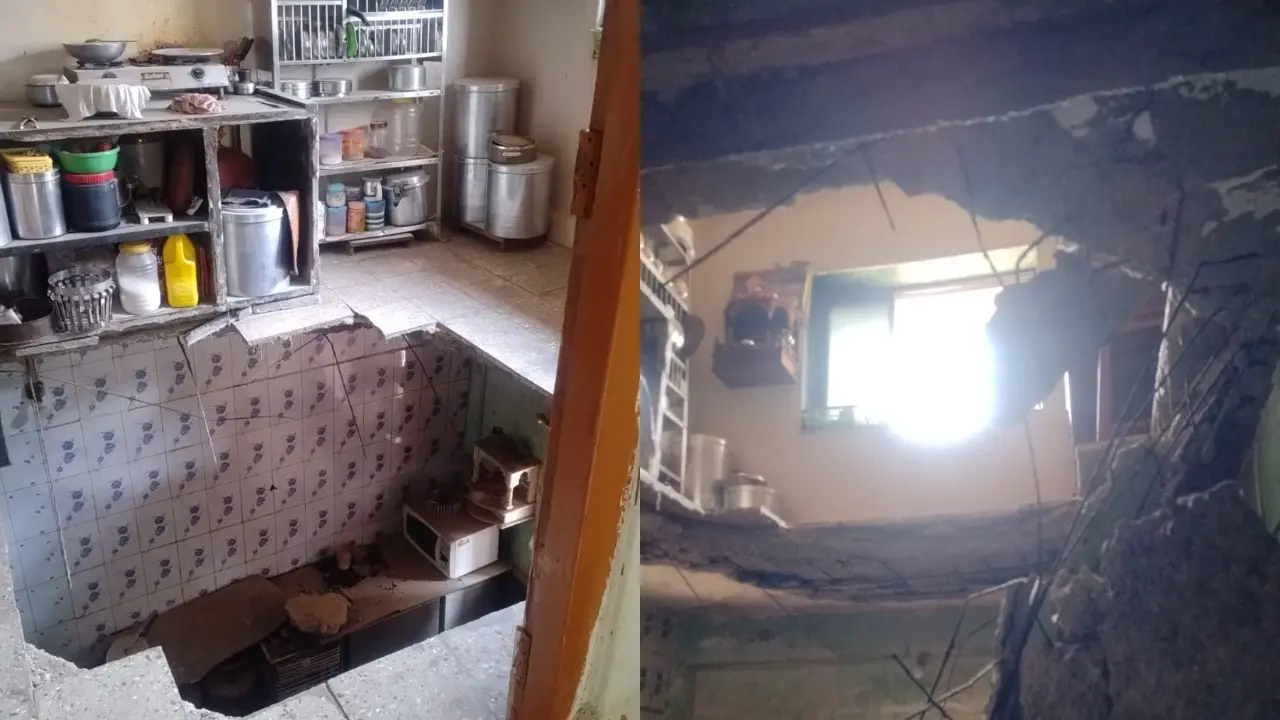
02 April,2026 08:05 PM IST | Mumbai | mid-day online correspondentA 75-year-old woman sustained injuries when the slab of a flat in a three-storey "dangerous" building collapsed in Thane city on Thursday, following which the civic authorities vacated the residential premises. According to the Thane Municipal Corporation's (TMC) Disaster Management Cell, the incident occurred around 4 pm in the Velankani building, a 30- to 35-year-old structure located near Fatima Church in Majiwada village. The Disaster Management Cell of the Thane Municipal Corporation, said that the slab of Room No. 103 on the first floor, owned by one Vivek Kavilkar, came crashing down. An elderly resident, identified as Kirti Kavilkar, sustained minor injuries, the Disaster Management Cell said. The building, which consists of 12 flats and housed 40 to 45 residents, had already been classified under the 'C2A' category. This classification indicates that a structure is dangerous, requires urgent major structural repairs, and is likely to require evacuation. Before the slab collapsed, Assistant Municipal Commissioner Sonal Kale said, the building was served a notice on Thursday. Following the incident, the building was completely evacuated as the remaining portion is in a highly dangerous condition. While some residents made their own arrangements, 12 to 15 people have been shifted to the TMC School No. 47 in Majiwada for temporary shelter. Man killed after tree branch falls on vehicles at police headquarters Meanwhile, a 45-year-old man was killed after a branch of a tree fell on parked vehicles at the Maharashtra Police Headquarters in south Mumbai on Wednesday evening, civic officials said. A large branch of a Gulmohar tree snapped and fell on four vehicles parked inside the campus in Colaba, leaving Anil Bhagoji Gore (45), who was present at the spot, injured. He was rushed to St. George's Hospital, where he was declared dead before admission. Mumbai Fire Brigade, police and civic ward staff rushed to the spot. Fire in Sion Hospital In another case, a fire broke out in the X-ray department of the civic-run Sion Hospital in central Mumbai on Tuesday, officials said. There was no report of any casualties, they said. The blaze erupted in an air conditioning unit on the ground floor of the hospital's X-ray department at 11.57 am, an official said. After being alerted by the hospital's dean, the fire brigade, police and civic staff rushed to the spot, and the blaze was doused, he said.
02 April,2026 07:22 PM IST | Thane | mid-day online correspondentMumbai Mayor Ritu Tawde on Thursday has directed officials to begin construction of the Phase 1 building of Rajawadi Hospital’s redevelopment project in Ghatkopar by next week, stressing that further delays will not be tolerated. Reviewing the project on-site, Tawde said the hospital is under significant pressure due to a high patient load and that any delay in redevelopment is unacceptable. According to a release, she instructed authorities to secure all pending permissions on a war footing to ensure the immediate commencement of work. The redevelopment of Seth V.C. Gandhi and M.A. Vora Municipal General Hospital, popularly known as Rajawadi Hospital, includes the construction of a 600-bed facility in the first phase. The proposed structure will comprise a lower basement, basement, ground floor, and 10 upper floors, with a built-up area of approximately 33,179 square metres and equipped with modern medical infrastructure. Officials said the foundation stone for the project was laid in December 2025 and that construction will begin once permissions related to minor minerals and debris clearance are obtained. Expressing displeasure over the four-month delay since the groundbreaking, Tawde directed officials to escalate administrative hurdles to senior authorities and seek support from elected representatives to resolve issues swiftly. She emphasised that obtaining necessary approvals is the contractor’s responsibility and warned against any further delays. The Mayor also instructed officials to ensure that construction activities do not inconvenience patients at the existing hospital, particularly in terms of noise, dust, and disruption. She further directed that local councillors be kept informed at every stage of the project and called for a detailed presentation on the redevelopment at the Brihanmumbai Municipal Corporation headquarters. Maharashtra launches slum-free Mumbai campaign, deploys NETRAM system to track encroachments In a bid to transform Mumbai into a slum-free city, Maharashtra Deputy Chief Minister (CM) Eknath Shinde on Monday announced the Hinduhrudaysamrat Balasaheb Thackeray Urban Public Welfare Campaign. The initiative aims to fast-track slum redevelopment while deploying the advanced NETRAM (Network for Encroachment Tracking and Reporting for Mumbai) system to prevent fresh illegal encroachments, news agency IANS reported. Shinde said the campaign, launched during the birth centenary year of Balasaheb Thackeray, is a tribute to the late leader’s vision for Mumbai. The government’s move is expected to give a major push to redevelopment efforts and enable residents to shift to safer, well-equipped housing. “We are committed to realising Balasaheb Thackeray’s dream of a slum-free Mumbai through this mission,” he said. The campaign will prioritise slum clusters spread over more than 50 acres where at least 51 per cent of the area is occupied by slums. The Slum Rehabilitation Authority (SRA) will implement cluster redevelopment projects across large parcels of private, government, and semi-government land.
02 April,2026 06:13 PM IST | Mumbai | mid-day online correspondentThe escalation in West Asia has resulted in a world-wide crisis, and India’s financial hub has also felt the impact of the conflict. Hundreds of labourers employed as loaders in south Mumbai have been witnessing a drop in their workloads. In this test drive, mid-day spoke to multiple stakeholders engaged in the import-export field to understand the impact of the West Asia conflict on the city’s traders. Industry players say that with the shipping routes hit in the Gulf region, customer demand is declining, thereby impacting the entire inner circle of the business chain. Freight costs surge, shipments stall The disruption of key maritime routes, including the Strait of Hormuz, and the partial shutdowns of the Gulf terminals have severely impacted global shipping. Shipments are now being rerouted through longer, multi-leg journeys, significantly increasing both time and cost. “I shipped goods to Saudi before the war but still had to pay war surcharges. What normally costs USD 800 is now costing nearly USD 5,000,” said Amir, an imitation jewellery exporter. “At a time of low demand and high risk, sustaining oneself is heroic,” he said. Air cargo has also taken a hit. Limited airline availability has worsened delays and inflated rates.“My customer in Dakar has been waiting over 10 days, but the freight is stuck,” another exporter, Surendra said. “Only select airlines like Lufthansa are accepting cargo to East Africa and rates have jumped from Rs 450 per kg to Rs 1,300 with no reliability and frequent cancellations.”For many, exporting no longer makes financial sense. “Costs are skyrocketing and customers are unwilling to pay more,” said a steel exporter. Manufacturing takes a hit The disruption in logistics has directly translated into a breakdown of supply chains. Industries that rely heavily on imports, especially from West Asia are facing acute shortages.“Earlier, materials came directly from China. Now they arrive through multiple routes with delays,” said Aksh, a steel manufacturer. “War surcharges are added at every stage, so costs keep rising.”The steel industry is among the worst affected, given its reliance on imports from the Gulf. Around 70–80 per cent of limestone is imported from the UAE and Oman, while nearly 59 per cent of Direct Reduced Iron (DRI) comes from the region. Industrial gases such as LPG, LNG, and propane, critical for welding and molding, are also in short supply. With input constrained, some factories have cut production by as much as 50 percent. Manufacturers now face a paradox: rising input costs combined with falling export viability are forcing production to halt. The domino effect: Demand, costs, and cash flow The crisis is not just about supply, it is equally about demand destruction and financial stress.Goods worth crores of rupees are stuck in transit, and payment cycles have become uncertain. Exporters are hesitant to ship due to high costs, buyers resist price hikes, and payments are delayed amid logistical risks. Currency fluctuations, particularly a rising dollar, add further strain. “We are facing shipping delays, pending payments and a rising dollar,” said Burad, a businessman with over three decades of experience.Small and medium enterprises (MSMEs) are among the hardest hit, lacking the financial cushion to absorb prolonged disruptions.A single disrupted shipment can wipe out months of profit. Jewellery exporters report consignments worth lakhs being returned undelivered. “Cargo sent to the UAE was returned to JNPT,” one exporter said.Insurance has become another bottleneck, with companies increasingly reluctant to cover shipments to high-risk regions. Ground zero: Labourers face crisis again While businesses struggle, the most severe impact is felt at the bottom of the economic pyramid. Daily wage labourers who form the backbone of the supply chain are facing a crisis reminiscent of the Covid-19 lockdown.With factories scaling down and logistics slowing, work opportunities have dwindled sharply. “We used to earn Rs 700– Rs 800 a day, but now it’s barely Rs 100–200,” said Jagdish Kanojia, who leads a group of loaders. “It feels like the Covid period again.”Fuel shortages coupled with rising prices have worsened living conditions. “There is no LPG available, it’s being sold in black,” said a factory worker. “Kerosene has gone up from Rs 110 to Rs 150, and even my regular eatery is shut, hence I am returning to my village,” he added.Like the factory worker quoted above, many others are now returning to their villages as survival in the city is becoming increasingly difficult. “My roommate left because there is no gas for welding work,” another worker said.“I have three daughters and I am the only breadwinner,” said Ibrahim, a hawker. “Where should the poor go?”The ancillary sectors are also under strain. Packaging costs, especially plastics, have surged sharply.“We used to buy plastic at Rs 1,100, now it’s above Rs 2,200,” said Mohammed Ali, who packages cargo for shipments. “Businessmen won’t pay more, but our costs have doubled and workers are leaving.”Iconic restaurant chains such as Bhagat Tarachand in Kalbadevi, small eateries, and several other establishments in the area are also struggling. Many have either shut down, shifted to coal and electrical appliances, or reduced operations due to LPG shortages, further impacting workers who depend on them for affordable meals. Pockets of opportunity amid crisis Interestingly, not all sectors are losing. Certain industries such as plastics, brass, and select metals may benefit from rising global prices and tightened supply.A few traders are holding inventory, anticipating better margins. However, most believe the situation depends on how long the conflict lasts.“A prolonged war could lead to bigger gas disruptions, higher input costs and inflation,” said Burad. “Domestic demand may hold, but exports will lag.”Still, some remain cautiously optimistic. “This is a short-term disruption, a mid-term opportunity and a long-term test of reliability,” said Pravin Wasan, who runs a shipping company. “Those who manage logistics well will emerge stronger.”For now, the focus across Mumbai’s trade ecosystem has shifted from growth to survival.The conflict serves as a stark reminder: in a globalised world, no economy is isolated, and the deepest impacts are often felt by those least equipped to bear them.
02 April,2026 05:32 PM IST | Mumbai | Mrinal DoshiThe Motor Accident Claims Tribunal (MACT) in Maharashtra’s Thane has awarded Rs 36.24 lakh to the parents of a 27-year-old road accident victim, six years after his death. A copy of the tribunal’s order, dated March 24, was made available on Wednesday. According to the claim petition, the victim, Jitendra Laxman Singh, was riding a motorcycle with a friend near Thane on May 30, 2020, when a tipper truck coming from the wrong side hit the two-wheeler, reported PTI. Singh lost his balance and fell onto the road, following which the truck ran over him, killing him on the spot. Tribunal member K P Shrikhande held that the vehicle was being driven negligently and awarded compensation of Rs 36.24 lakh to Singh’s parents. At the time of his death, Singh was earning a monthly salary of Rs 24,455 as a customer service associate. Thane tribunal awards Rs 7.76-lakh compensation to man disabled in accident a decade ago In a similar case, MACT awarded Rs 7.76-lakh compensation to a man who suffered permanent disability in a road accident in 2015. The order, passed on March 25 by Presiding Officer KP Shrikhande, brings relief to the petitioner after a long legal process. The incident took place on August 28, 2015, near a mosque on the Sion-Kurla Road in Mumbai. Wahid Aziz Khan, then aged 40, was working as a driver. According to the tribunal’s findings, a school bus, driven in a rash and negligent manner, crashed into a tempo. The impact caused the tempo to overturn and fall on Khan, who was offering namaz by the roadside, leaving him and others seriously injured. After the accident, Khan was rushed to the hospital, where he underwent surgery for fractures to his ribs and shoulder blade. The tribunal accepted that he suffered permanent partial disability and assessed his functional disability at 30 per cent, which affected his ability to work, news agency PTI reported. The tribunal noted that a criminal case had been registered against the bus driver under the relevant laws. The driver was later charge-sheeted and convicted, which supported the claim of negligence. It rejected the insurance company’s argument that the victim was partly responsible for the accident or that there was a violation of policy conditions. The tribunal observed that no evidence was presented to support these claims. The bus owner did not appear before the tribunal, and the case was decided ex parte against him. (With PTI inputs)
02 April,2026 05:20 PM IST | Thane | mid-day online correspondentResidents of Siddharth Nagar in Goregaon, known as Patra Chawl, are locked in a standoff with the Maharashtra Housing and Area Development Authority (MHADA) after the Bombay High Court set an April 2 deadline to accept newly allotted flats or risk losing them altogether. Residents reuse possession Several families have refused to take possession, alleging incomplete and unsafe construction. Residents, including women, senior citizens and teenagers, have launched an indefinite chain hunger strike, raising concerns over structural safety. What High Court said A bench of Justices GS Kulkarni and Aarti Sathe criticised the society for refusing to execute PAAA. The court warned that failure to comply by April 2 would allow MHADA to reallocate the tenements for public purposes and permitted the authority to stop paying transit rent from April 1, 2026. Voices Naresh Sonawane, 50Our draft DA was submitted in December 2022, but MHADA began work only in October 2025. The government waived '887 crore for developers, yet we are being given substandard flats. Handing homes to PAP after 18 years will destroy faith in the system. Shaila Vyas, 62We are being removed from our own homes. Possession was to be given only after registration of the Development Agreement (DA) and Permanent Alternate Accommodation Agreement (PAAA). But citing court pressure over rent, MHADA is forcing possession. Our DA registration is delayed due to MHADA constructing 72 unauthorised shops. We want our homes, but we are worried about our future.’ Bala Sakarkar, 67We came here in 1948 and cared for this land for 65 years. Under the 2008 tripartite agreement, we became partners in redevelopment, enabling MHADA to earn crores from the sale component. Today, we are being pushed out of our own land. Dr Vishakha Kanse, 33Patra Chawl existed before 1948. We are partners in this redevelopment, yet delays and irregularities have led to 18 years of injustice. How can our homes now be given to PAP? We will move the high court and the Supreme Court for justice. Suresh Vichare, 45We are not slum dwellers. Our homes were given up for redevelopment, but '1,200 crore was siphoned off and MHADA aided it. Now we are being denied our rightful homes. We have been on a hunger strike for 26 days, but no one is listening.
02 April,2026 04:10 PM IST | Mumbai | Anushree GaikwadThe Thane and Navi Mumbai civic bodies in Maharashtra have reported a significant rise in tax collections for the 2025-26 financial year, driven by intensified recovery efforts, amnesty schemes, and increased adoption of digital payment methods, officials said, reported the PTI. According to the officials, the Thane Municipal Corporation (TMC) recorded tax collections of Rs 878.37 crore, up from Rs 810 crore in the previous year. Notably, 87.37 per cent of taxpayers opted for online or digital payment modes. The Majiwada-Manpada ward emerged as the top contributor, generating Rs 236.51 crore. TMC Commissioner Saurabh Rao attributed the growth to increasing public confidence in technology-driven services, according to the PTI. NMMC achieves record collections The Navi Mumbai Municipal Corporation (NMMC) reported its highest-ever tax collection since inception at Rs 876 crore, compared to Rs 812 crore last year. Officials credited the use of Artificial Intelligence-based calling systems and data analytics to identify and target defaulters. The ‘Abhay Yojana’ amnesty scheme, which offered a 50 per cent waiver on penalties, contributed Rs 192.81 crore in March alone. Commissioner Dr Kailas Shinde highlighted administrative transparency and technological integration as key factors, as per the PTI. Nerul tops collection charts Among administrative wards, Nerul emerged as the top contributor with Rs 182.09 crore in collections. It was followed by Koparkhairane (Rs 163.40 crore) and Ghansoli (Rs 150.11 crore), indicating strong recovery across key nodes. BNCMC and MBMC also report increase The Bhiwandi Nizampur City Municipal Corporation (BNCMC) recorded tax recovery of Rs 103.31 crore, an increase from Rs 87.54 crore in the previous year. Commissioner Anmol Sagar said strict enforcement measures, including issuing 1,300 seizure notices and disconnecting 5,142 water connections, played a crucial role, the news agency reported. Similarly, the Mira Bhayander Municipal Corporation reported collections of Rs 254.09 crore, up from Rs 230 crore last year. KDMC records slight decline In contrast, the Kalyan Dombivli Municipal Corporation (KDMC) witnessed a marginal decline, collecting Rs 431.49 crore compared to Rs 453 crore in the previous financial year. Officials noted that the absence of the Abhay amnesty scheme in 2025-26 may have contributed to the dip. (with PTI inputs)
02 April,2026 03:16 PM IST | Mumbai | mid-day online correspondentThe Bombay High Court on Thursday directed the Maharashtra government to respond to a petition challenging its decision to cancel the five per cent reservation for the Muslim community in education and government jobs, reported news agency PTI. A division bench comprising Justices R I Chagla and Advait Sethna has asked the state to file its reply through an affidavit within three weeks. The court has scheduled the next hearing in the matter for May 4, reported PTI. Petition Challenges February 17 Government Resolution The petition has been filed by advocate Syed Ejaz Abbas Naqvi, who has challenged the Government Resolution issued on February 17 by the state’s Social Justice and Special Aid Department. The plea argues that the decision violates constitutional provisions and is detrimental to the interests of the Muslim community, reported PTI. According to the petitioner, the move lacks any reasonable justification and undermines the rights guaranteed under the Constitution. Allegations of Discrimination Against Minority Community In the petition, Naqvi has termed the government’s decision as discriminatory, alleging that it targets a minority community without valid grounds. The plea states that withdrawing the quota amounts to unequal treatment and infringes upon fundamental rights, reported PTI. The petitioner has further argued that the absence of a clear rationale behind the decision raises serious legal concerns. Background of 2014 Reservation Policy The issue traces back to July 2014, when the then Congress-NCP government introduced reservation measures for certain communities. The policy included a 16 per cent quota for the Maratha community and a five per cent reservation for Muslims in education and government jobs under a backward class category, reported PTI. However, the decision faced legal scrutiny. The High Court had struck down the provision granting reservation in jobs but allowed the continuation of the five per cent quota in educational institutions. Government Cancels Earlier Benefits and Certifications As per the February 17 GR, all previous decisions and the ordinance related to the five per cent reservation in government and semi-government jobs and educational institutions for the socially and educationally backward Muslim group, included under the Special Backward Category (A), have been cancelled, reported PTI. This has effectively removed the framework that enabled the community to avail reservation benefits in education and employment. Court to Examine Constitutional Validity of Decision By seeking a detailed response from the state government, the High Court has indicated that it will examine the legal and constitutional validity of the decision. The outcome of the case is expected to have significant implications for reservation policies and minority rights in Maharashtra. The matter will be closely watched as it raises broader questions about affirmative action and the rights of socially and educationally backward communities. (With inputs from PTI)
02 April,2026 03:08 PM IST | Mumbai | mid-day online correspondentADVERTISEMENT