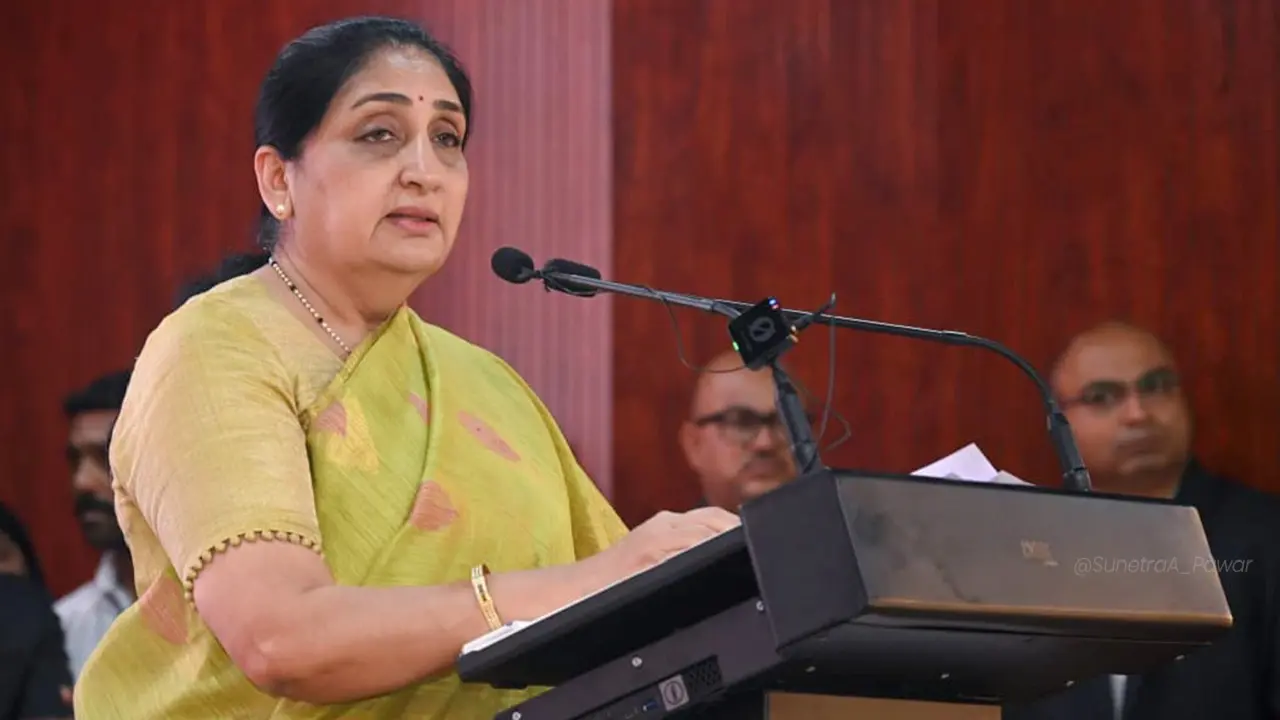
Amid rising summer temperatures and mounting pressure on the city’s water reserves, Mumbai Mayor Ritu Tawde has directed civic officials to take urgent and coordinated steps to ensure a steady and uninterrupted water supply across the city. During a review meeting with senior officials of the Brihanmumbai Municipal Corporation’s water department, the Mayor assessed the current water stock position and the growing number of complaints related to supply disruptions. She instructed officials to strengthen water management practices and optimise the use of available reserves to prevent shortages in the coming weeks. Rising demand, climate uncertainty add pressure Highlighting the challenges posed by Mumbai’s expanding population and increasing demand for water, Tawde stressed that traditional supply systems alone may not suffice. She pointed to the added uncertainty caused by changing rainfall patterns linked to climate variability, calling for a more sustainable and multi-pronged approach to water management. With summer intensifying, the Mayor emphasised the need to explore alternative water sources while reviving existing but underutilised ones. She also underlined the importance of involving citizens more actively in conservation efforts to reduce overall demand. Survey and revival of wells and borewells As part of immediate measures, Tawde directed officials to compile updated data on all public, government and private wells and borewells in Mumbai and assess their operational status. The move is aimed at identifying additional water sources that can supplement the city’s supply during peak demand. Referring to the 2009 water shortage triggered by deficient rainfall, she noted that the civic body had then relied on repaired public wells to ease the crisis. Drawing from that experience, she instructed that functional wells be prioritised for immediate use, while non-operational ones be repaired where feasible. Officials have also been asked to conduct necessary testing to determine whether water from such sources can be treated and used for drinking purposes, instead of limiting it to non-potable uses like gardening and cleaning. Housing societies urged to step up The Mayor called on private housing societies to play a more proactive role in water management. She said societies should ensure regular maintenance and cleaning of wells and borewells within their premises and install appropriate water purification systems where required. At the same time, she cautioned against excessive groundwater extraction, stressing that usage must remain within sustainable and regulated limits to avoid long-term depletion. Rainwater harvesting key to long-term security Looking beyond immediate measures, Tawde underscored the importance of rainwater harvesting and groundwater recharge systems in preventing future shortages. She urged housing societies to adopt such systems, noting their role in maintaining groundwater levels and improving long-term water security. Citing an example, she said similar systems are already operational in her residential complex in Ghatkopar, combining rainwater harvesting with borewell purification and supply. Call for collective responsibility The Mayor concluded by stressing that ensuring a reliable water supply requires coordinated efforts from the administration, citizens, housing societies and industries alike. She appealed to all stakeholders to minimise wastage, promote reuse and adopt responsible water consumption practices during the summer months.
04 April,2026 06:05 PM IST | Mumbai | mid-day online correspondentMaharashtra Deputy Chief Minister Sunetra Pawar has initiated outreach efforts ahead of the upcoming Baramati assembly bypoll, contacting Shiv Sena (UBT) chief Uddhav Thackeray to seek his party’s support. The conversation, which took place on Friday, is being viewed as a significant political development in the run-up to the crucial election, reported PTI. The Baramati bypoll is scheduled to be held on April 23, with Sunetra Pawar set to contest as the official candidate of the Nationalist Congress Party. Shiv Sena (UBT) leaders confirm discussion The outreach was confirmed by senior Shiv Sena (UBT) leaders, including Rajya Sabha MP Sanjay Raut and party secretary Milind Narvekar. According to Raut, the discussion between Pawar and Thackeray focused specifically on the bypoll and the possibility of electoral support, reported PTI. He also indicated that Thackeray is expected to make a formal announcement regarding the party’s stance at a press conference in the coming days, keeping political observers on watch for a potential shift in alliances, reported PTI. Sympathy factor and family ties may influence decision Sources suggest that Thackeray may not be opposed to backing Sunetra Pawar, citing longstanding personal and political ties with the Pawar family. The bypoll has been necessitated following the death of Ajit Pawar, who represented Baramati and was a prominent political figure in the state, reported PTI. Ajit Pawar’s passing in a plane crash earlier this year has created a sympathy factor that could play a role in shaping electoral dynamics. Sunetra Pawar, who assumed office as Deputy Chief Minister shortly after the incident, is now seeking to consolidate support across party lines. Opposition alliance dynamics face new test The development comes at a time when the opposition Maha Vikas Aghadi (MVA)—comprising Shiv Sena (UBT), Congress, and the Sharad Pawar-led faction of the NCP—is already navigating internal differences. While the Nationalist Congress Party (Sharad Pawar faction) has indicated it will not field a candidate against Sunetra Pawar, the Congress has taken a divergent position. Maharashtra Congress president Harshwardhan Sapkal recently announced that the party intends to contest the bypoll, stating that approval has been received from the central leadership. This divergence has added complexity to the opposition’s strategy in the state, raising questions about coordination within the alliance. Nomination filing and electoral history of Baramati Sunetra Pawar is expected to file her nomination papers on April 6, formally entering the race. The Baramati constituency has long been a stronghold of the Pawar family, with Ajit Pawar winning the seat multiple times with significant margins. In previous assembly elections, he secured victories by large vote differences, reinforcing the constituency’s importance in Maharashtra’s political landscape. The upcoming bypoll is likely to be closely watched, not only for its electoral outcome but also for the broader political signals it may send regarding alliances and leadership equations in the state. (With inputs from PTI)
04 April,2026 05:58 PM IST | Mumbai | mid-day online correspondentThe administration in Maharashtra's Thane district has launched a fortnight-long disaster preparedness exercise in collaboration with national and state response forces to strengthen emergency response mechanisms, officials said on Saturday, reported news agency PTI. The 'Familiarisation Exercise Programme', conducted from April 1 to April 15, aims to improve coordination and response capabilities during natural and man-made disasters, an official release stated, reported PTI. Teams from the National Disaster Response Force (NDRF) and the State Disaster Response Force are involved in the exercise. "A total of 25 trained personnel, including senior officers, have been deployed in the district to conduct hands-on training and familiarisation sessions across urban and rural areas," the release said, reported PTI. The exercise focuses on equipping local administrative staff and first responders with practical skills in rescue operations, inter-agency coordination and the use of specialised disaster-response equipment. Officials, including subdivisional officers and tehsildars, along with civil defence personnel, police patils and community volunteers such as 'Aapda Mitra' and 'Aapda Sakhi', are participating in the training sessions, reported PTI. Around 200 participants are being trained at multiple locations, including civic bodies and tehsil offices in Navi Mumbai, Thane, Kalyan-Dombivli, Ulhasnagar, Mira-Bhayander, Bhiwandi-Nizampur, Shahapur, Murbad and Ambernath. Konkan division employees to undergo training to enhance efficiency Meanwhile, Government employees in Maharashtra's Konkan division will undergo training in areas like AI, data analytics, blockchain and communication skills to enhance their efficiency and adaptability in governance, officials have said. The training sessions will be held as part of a weeklong programme being implemented in association with the Capacity Building Commission and Karmayogi Bharat, a release said on Thursday. The initiative, jointly organised by the Government of India and the Maharashtra government, aims to bring dynamism in administrative functioning and connect government employees with modern technologies, it added. (With inputs from PTI)
04 April,2026 05:34 PM IST | Thane | mid-day online correspondentThe Motor Accident Claims Tribunal (MACT) in Maharashtra's Thane district has awarded a compensation of Rs 21.5 lakh to the family of a 45-year-old woman run over by a speeding tempo in 2020, reported news agency PTI. The tribunal, presided over by K P Shrikhande, held the tempo driver solely responsible for the fatal accident, directing the vehicle owner and insurer to jointly and severally pay the compensation with a 9 per cent annual interest from December 9, 2020, when the claim was filed, till realisation, reported PTI. A copy of the order passed on March 30 was made available on Saturday. The accident occurred on August 30, 2020, on the Kalyan-Bhiwandi road near Kongaon when a speeding tempo hit the victim, Meera Kamlesh Singh, from behind while she was standing near a road divider, reported PTI. The victim succumbed to the grievous injuries sustained in the accident. The tribunal held that the vehicle was being driven in a rash and negligent manner. Quoting a Supreme Court ruling, the tribunal noted, "It is settled in law that once a chargesheet has been filed and the driver has been held negligent, no further evidence is required to establish negligence." The tribunal dismissed the insurer's contention regarding breach of policy conditions. Treating the deceased as a homemaker, the tribunal fixed a notional income of Rs 7,000 per month and calculated total compensation at Rs 21.5 lakh. Thane MACT awards Rs 44.13 lakh compensation to kin of man crushed to death by crane Meanwhile, the Motor Accident Claims Tribunal (MACT) in Maharashtra's Thane district has granted a compensation of Rs 44.13 lakh to the family of a 46-year-old man who died after a JCB crane crashed into a motorcycle in 2020, reported PTI. Tribunal member R V Mohite directed the crane owner and the insurer New India Assurance Co. Ltd. to jointly and severally pay the compensation with 9 per cent interest per annum from the date of the petition, reported PTI. A copy of the order passed on March 24 was made available on Friday. The accident occurred on February 5, 2020, when the victim, Prabhakar Bajrangi Sharma, was riding pillion on a motorcycle and a speeding JCB crane first dashed into a pedestrian and then hit the two-wheeler and ran over him, reported PTI. Sharma, who was employed as an assistant manager in an automobile firm, sustained serious injuries and died during treatment at a hospital in Navi Mumbai. The vehicle owner and the insurance company contended before the tribunal that the motorcyclist had been negligent. However, it rejected these claims, citing a lack of evidence. "The evidence on record shows that the operator of the offending vehicle (crane) was driving it in a rash and negligent manner," the tribunal stated, observing that there was nothing on record to show any contributory act on the part of the deceased, reported PTI. The insurance company sought to avoid liability by claiming the crane operator did not have a valid licence for the vehicle. The tribunal dismissed this technicality, noting that the unladen weight of the JCB was 7,460 kg, falling under the Light Motor Vehicle (LMV) category. The tribunal awarded Rs 44.13 lakh compensation to the deceased man's wife and three sons. (With inputs from PTI)
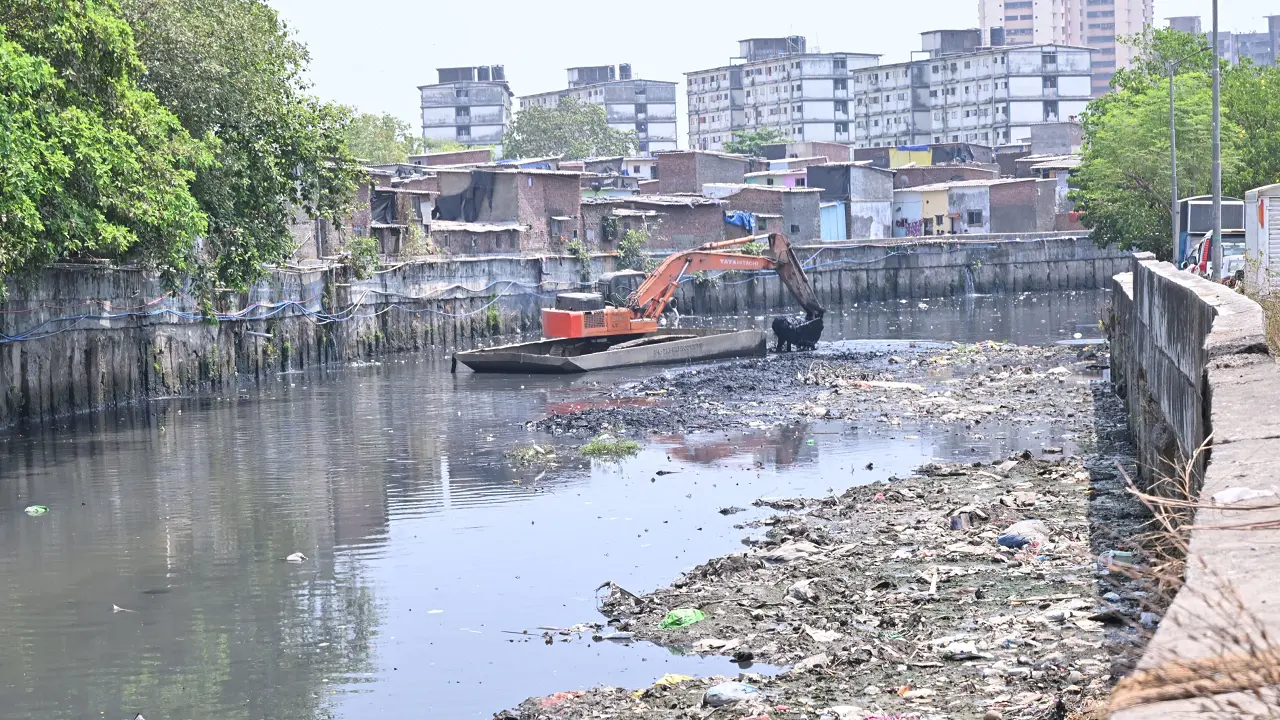
04 April,2026 05:27 PM IST | Thane | mid-day online correspondentThe Brihanmumbai Municipal Corporation (BMC) has intensified desilting operations across the Mithi River and key drainage networks, with officials setting a firm deadline of May 31, 2026, to complete the work ahead of the monsoon. Push for Faster Execution and Transparency Additional Municipal Commissioner (Projects) Abhijit Bangar has directed officials to accelerate desilting work across major and minor drains, particularly at waterlogging-prone locations. He emphasized the need for structured planning, including strict timelines for each drain, with start and completion schedules to be made publicly accessible via a digital dashboard. Daily targets have also been mandated to ensure timely completion, while contractors have been instructed to provide real-time updates on machinery deployment as per tender conditions. Field Inspections Across Key Locations Bangar conducted an on-ground inspection on April 3, reviewing ongoing desilting works in the Mithi River and eastern suburbs. Under a three-package plan, work has commenced at five locations along the river. Key sites inspected included stretches near the Bandra-Kurla Complex (BKC), the Mumbai Metropolitan Region Development Authority office, and areas near a prominent international school in the vicinity. In addition, inspections were carried out at Boundary Nala in Mulund and Somaiya Nala in Ghatkopar, where officials were directed to prioritise flood-prone zones and coordinate closely with local representatives. Focus on Flood Prevention and Micro-Planning Civic authorities are placing strong emphasis on micro-planning to ensure that flooding hotspots are effectively addressed. Bangar noted that desilting must cover the entire river stretch, with particular attention to narrow sections and densely populated areas. To prevent debris from flowing into the sea, the installation of trash boom systems has been recommended wherever feasible. Authorities have also been instructed to ensure that removed silt is dried for at least 48 hours before transportation, with daily progress to be uploaded on the monitoring system along with video evidence. Strict Monitoring and Contractor Accountability The BMC has introduced a digital monitoring mechanism to track progress, with officials required to update data daily. Payments to contractors will be released only after verification of work quality and adherence to deadlines. Bangar warned of strict action against contractors and officials in cases of negligence, poor-quality work, or failure to maintain transparency. Engineers have been directed to remain present at sites to ensure close supervision of operations. Crackdown on Illegal Dumping During inspections at the BKC stretch, authorities flagged concerns over illegal dumping of debris into the river. Bangar warned that strict action would be taken against violators, stressing that such practices could undermine flood prevention efforts. Coordination with Railways At Somaiya Nala, civic officials highlighted ongoing coordination with Central Railway authorities, who have initiated desilting work within railway culverts. This work is also expected to be completed within the May 31 deadline. Learning from Past Success Officials cited last year’s success in preventing flooding at several vulnerable locations, including Bhandup railway station and Chunabhatti, and stressed the need to replicate similar planning and execution this year. With just under two months remaining, the BMC has underscored the urgency of completing desilting works on schedule to minimise the risk of monsoon-related flooding across Mumbai.
04 April,2026 04:37 PM IST | Mumbai | mid-day online correspondentIs BEST operating broken and unsafe buses on Mumbai’s roads? A recent internal inspection report of BEST buses has revealed a worrying pattern of unresolved safety defects by various wet-lease contractors, raising concerns over commuter safety in the city’s public transport system. BEST chairperson Trushna Vishwasrao told mid-day that she had called an urgent meeting of BEST officials on Monday to discuss and resolve the issue. The report, based on cross-checking by BEST’s own staff of previously flagged issues on leased buses, a copy of which is with mid-day, shows that multiple buses continued to operate despite serious mechanical faults. What does the report say According to the report, the buses had problems with drag link assemblies, brake liner malfunctions, steering wheel defects, and damaged gearbox components—issues that directly affect vehicle control and braking efficiency. In several cases, defects identified as early as January and February 2026 were marked as “not attended” even during follow-up inspections conducted in March. The report warns that such lapses could lead to drivers losing control of vehicles, potentially resulting in serious or fatal accidents. Particularly concerning are repeated mentions of steering-related defects and brake failures, with remarks such as “driver may lose control over steering system” and “vehicle not able to stop,” highlighting the severity of the situation. Safety issues The findings come at a time when Mumbai’s bus network remains a critical lifeline for lakhs of daily commuters. The continued operation of buses with unresolved safety defects is likely to draw scrutiny from transport authorities and passenger groups. BEST committee member Nitin Nandgaokar, who flagged the issue, told mid-day that bus drivers are often forced to drive such buses under pressure. “This is not a minor lapse, it is a systemic failure that directly endangers lives. When buses officially flagged as unsafe, especially with critical defects in brakes and steering, are still pushed back onto the roads under the guise of ‘repaired,’ it reflects a complete breakdown of accountability,” he said. “It is concerning that bus drivers are being pressured to operate such vehicles. This not only puts passengers at risk but also places an unfair and dangerous burden on frontline staff. Every unsafe bus on the road is a potential tragedy in motion. Public transport is built on trust, and that trust is being severely undermined here,” he added. Demands in the petition A representation has been submitted to the authorities with the following demands: Conduct a high-level and independent inquiry into the matterTake strict action against responsible contractors and officialsCarry out an immediate safety audit of all contract buses across depotsNo bus to be operated without written clearance from the engineering departmentImplement strict monitoring mechanisms to prevent recurrence The petition warns that the issue is extremely serious, and if the administration fails to take immediate and strict action, it will be held fully responsible for any future accidents or untoward incidents. Major past bus accidents Kurla West, December 9, 2024: A BEST electric bus (Olectra-make, just 3 months old) rammed into pedestrians and vehicles on SG Barve Marg, killing 6 and injuring 49. Investigators suspected human error and lack of proper training; brakes were found to be functioning.Bhandup West, December 29–30, 2025: A BEST midi bus ran over pedestrians outside Bhandup West railway station at around 10:05 pm, killing 4 (including 3 women) and injuring 9. Officials speak BEST officials have yet to issue a detailed response to the report, but the revelations have led to calls for stricter maintenance audits and real-time monitoring of fleet safety compliance. BEST chairperson action Trushna Vishwasrao said any negligence would not be tolerated. “On Monday, I have summoned a meeting of all concerned BEST officials based on the revelations. We will not allow unsafe buses to run on Mumbai’s roads and endanger commuter safety.” She also appealed to the government for additional funding to expand the bus fleet and wrote to the BMC chief requesting Rs 3,000 crore, in addition to the Rs 1,000 crore allocated in this year’s BMC budget. Vishwasrao said the fleet is rapidly shifting to electric, with over a thousand e-buses, including AC double-deckers, while older CNG/diesel buses are being phased out. Despite modernisation, the network remains far smaller than the nearly 3,800 buses it had 15–20 years ago.
04 April,2026 02:48 PM IST | Mumbai | Rajendra B. AklekarThe Maharashtra State Contractors' Association (MSCA) has written to the BJP-led Mahayuti government, threatening to stop work on development projects from April 7 if dues amounting to more than Rs 96,000 crore are not cleared soon. In its letter on Friday, the MSCA said that the state government had cleared around Rs 20,000 crore last year following protests, but fresh bills from ongoing and completed works have pushed the total pending amount back to Rs 96,000 crore. The MSCA is a state-level body representing contractors engaged in development works across departments. "In the last over one-and-a-half years, the pending bill amount went up to Rs 1.16 lakh crore. Now it is around Rs 96,400 crore, which means the state government has only paid around Rs 20,000 crore. We had hoped that in March there would be significant payments towards the pending bills, but that did not happen," the letter stated. As per the letter, major arrears include Rs 29,000 crore under the Public Works Department, Rs 35,000 crore under the Jal Jeevan Mission and Maharashtra Jeevan Pradhikaran, Rs 6,500 crore for rural development and water conservation works, Rs 3,800 crore under the Maharashtra Tourism Development Corporation, Rs 2,100 crore for urban development special fund works, Rs 9,000 crore under the Water Resources Department, and Rs 11,000 crore under district development plans. Pending payments for works executed by local and civic bodies have also affected small contractors, it said. Contractors would halt work if payments do not begin soon, MSCA president Milind Bhosale said. After March 31, the pending dues have gone up to Rs 96,000 crore, affecting three lakh contractors involved in state government works, Bhosale added. The state government has been facing a cash crunch due to high expenditure on welfare schemes and a shortfall in revenue collection. Pressure on state finances increased in 2024 when the then Mahayuti government announced several welfare measures ahead of the assembly elections, including a provision of Rs 36,000 crore for the Ladki Bahin scheme and Rs 14,700 crore for free power to farmers. Despite borrowings of Rs 1.38 lakh crore in the last financial year, the capital expenditure stood at Rs 98,000 crore, reflecting stress on the state's fiscal position, officials said. (With PTI inputs)
04 April,2026 12:17 PM IST | Mumbai | mid-day online correspondentMumbai is set to witness mainly clear skies across the city and suburbs on Saturday, with the maximum temperature likely to reach around 33 degrees Celsius and the minimum settling near 23 degrees Celsius, according to the India Meteorological Department (IMD). Air quality in the city remains in the ‘satisfactory’ category, with an overall AQI of 65 recorded by the Central Pollution Control Board’s Sameer app. AQI across Mumbai areas Bandra Kurla Complex: 105Borivali East: 42Byculla: 52Andheri East: 89Chembur: 52Colaba: 62Deonar: 121 Neighbouring regions: Thane: 70Kalyan: 55Navi Mumbai: 72 While most parts of Mumbai are experiencing satisfactory air quality, areas like Deonar and Bandra Kurla Complex have recorded relatively higher AQI levels. Maharashtra weather update: temperatures stay below normal in several regions Parts of Maharashtra continued to witness relatively moderate temperatures on April 4, with several cities recording below-normal maximum temperatures, according to the India Meteorological Department. Temperature trends across key cities Aurangabad recorded a maximum of 35.2 degrees Celsius, nearly 2.7 degrees below normal, while the minimum stood at 22.8 degrees Celsius. Jalgaon and Jeur saw sharper departures, with maximum temperatures dipping over 5 degrees below normal. Sholapur remained among the hottest at 38.3 degrees Celsius, though still slightly below seasonal averages. Parbhani also recorded a high of 38 degrees Celsius, indicating warmer conditions in parts of Marathwada. Temperatures near coast In the coastal belt, Mumbai saw stable conditions, with Colaba recording a maximum of 32.2 degrees Celsius and a minimum of 24 degrees Celsius, both close to normal levels. Santacruz reported similar readings. Hill station Mahabaleshwar remained cooler, with a maximum of 27.6 degrees Celsius and a minimum dipping to 17.2 degrees Celsius. Humidity levels Morning relative humidity remained high across most regions, with coastal and western parts like Kolhapur and Mumbai recording levels above 80 per cent, indicating humid conditions. Overall, while daytime temperatures across Maharashtra are largely staying below normal, pockets of Marathwada and central regions continue to experience relatively higher heat.
04 April,2026 11:25 AM IST | Mumbai | mid-day online correspondentNathuram Sathvilkar’s first day on the job as a security guard ended in tragedy, after the 52-year-old fell into an open lift shaft in Vaibhav Laxmi Building No. 10 in Subhash Nagar, Chembur East, on April 3. The deceased, a resident of Ghatla in Chembur, was being shown around the premises by fellow security guard Dilip Kadam around 6.50 am before the mishap occurred. “As a precaution, I warned him not to walk ahead as the shaft of the lift in the parking area was open. I turned around for a moment, and when I looked back, he had already fallen inside,” said Kadam. People gathered after Kadam screamed for help. Chembur police officers reached the spot by 7 am and, with the help of fire brigade personnel, they got Sathvilkar out of the shaft and took him to Rajawadi Hospital, where doctors declared him dead on arrival. 6.50 amTime incident occurred on Friday Illustrations/Uday Mohite 1 Security guard Dilip Kadam shows Nathuram Sathvilkar around on his first day of work on Friday morning. 2 They stand near the car lift shaft used to move cars. Kadam warns Sathvilkar not to walk ahead, as the shaft is empty 3 As Kadam turns around, he sees Sathvilkar proceeding and accidentally falling down the shaft The aftermath The police have registered an accidental death report, and following the investigation, this may be converted into an FIR if negligence is suspected. PoliceSpeak PSI Ajit Shinde, Chembur police station‘Despite the building being fully constructed and residents living there, no CCTV cameras were installed around the parking area. We also found that safety barricading around the lift shaft was missing’By: Vaishnavi Shetty
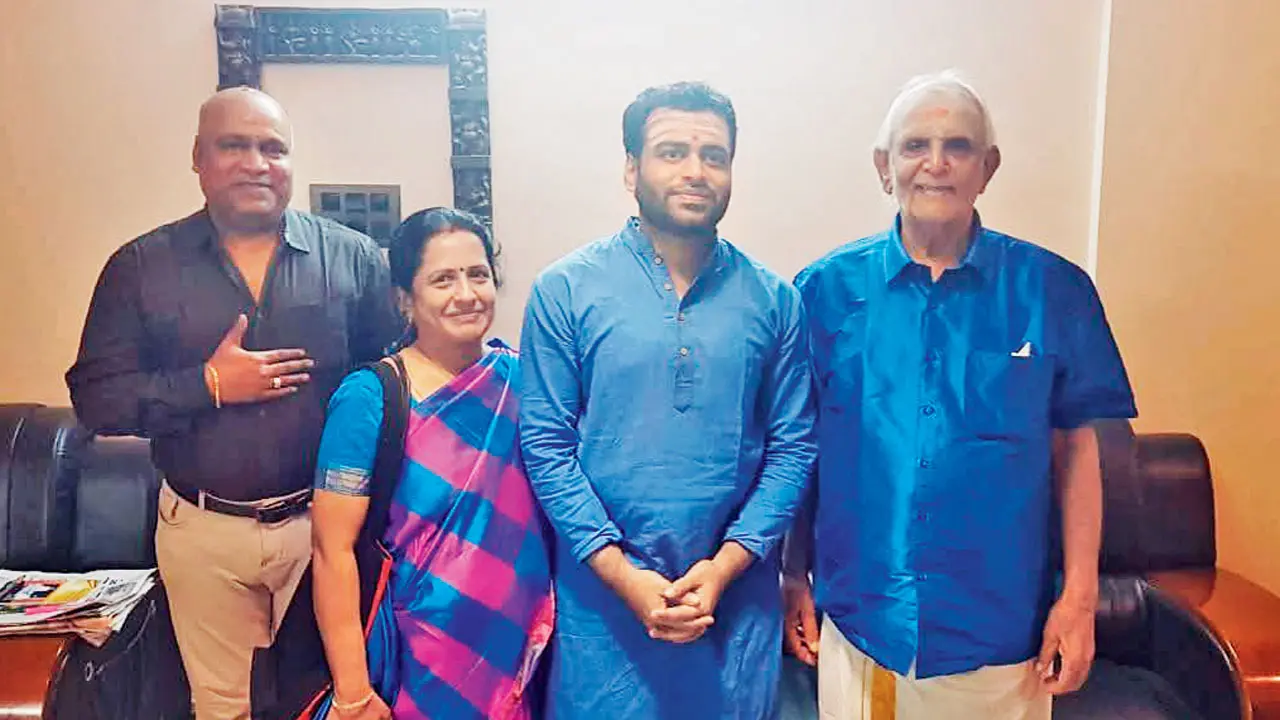
04 April,2026 10:17 AM IST | Mumbai | Vaishnavi ShettyOn World Drummers’ Day, celebrated annually to honour percussionists across the globe, the journey of Dr Seetharaman Iyer stands as a powerful testament to resilience, determination, and unwavering passion. Diagnosed with retinitis pigmentosa, a degenerative eye condition, he lost his vision at the age of 25. What could have ended aspirations, strengthened his resolve to continue his medical career and his love for music. Dr Seetharaman Iyer during a mridangam performance “I chose perseverance. My parents always encouraged me to pursue a career where I could serve people. They supported my decision to become a doctor while helping me continue playing my instrument,” said Dr Iyer. Dr Iyer with Deepa Pillai and her brother during a counselling session. Pic/Ritika Gondhalekar Alongside his demanding profession, he has remained committed to the mridangam, refusing to let his disability define his limits. Today, Dr Iyer treats patients at Sion Hospital and runs a clinic in Ghatkopar with his wife, Dr Sanjana Iyer. Navigating the field of mental healthcare without vision, he relies on heightened sensory awareness, structured systems, and strong support from peers. “There is a concept in medical science, neuroplasticity — the brain’s ability to reorganise itself through learning and experience. Fortunately, I benefited from it and was able to study effectively,” he said. Sudhir Kumar Singh April 4World Drummers’ Day Difficult task, strong ambition Dr Seetharaman performs with wife his Dr Sanjana Iyer Dr Iyer began losing his vision shortly after completing his MBBS in 2016. He took a two-year break following his diagnosis. In 2018, he chose to pursue psychiatry, not because of his condition, but because of his natural listening ability and communication skills. “When you treat a mentally ill person, you help the entire family. What better way to serve people?” he said. His journey was far from easy. Learning to listen Adapting his study method was one of his biggest challenges. Having relied on reading throughout his education, he now had to depend entirely on listening.“Initially, I was unsure if I could. But after completing the entire syllabus through audio lectures, I became confident,” he said. Doctor who is also a musician Beyond medicine, the mridangam remains central to his identity. “For many artists, including me, the inspiration is Padma Vibhushan Umayalpuram K Sivaraman. I have been his disciple for over a decade,” he said. He added that his guru encouraged him to excel in both music and medicine.
04 April,2026 10:00 AM IST | Mumbai | Ritika GondhalekarThe Congress has signalled that the upcoming by-elections in Baramati and Rahuri are unlikely to be unopposed. With the party’s high command giving a green light, the state Congress leadership thinks that there should be a contest for both seats, which have fallen vacant after the deaths of deputy chief minister and NCP leader Ajit Pawar and BJP MLA Shivajirao Kardile. State Congress President Harshwardhan Sapkal said the party has got approval from its high command to contest the Assembly bypolls. Speaking to reporters, he said the Congress will first hold discussions with its MVA allies before taking a final call. Poll schedule The by-elections were necessitated following the deaths of Ajit Pawar, who represented Baramati, and Shivajirao Kardile, the sitting MLA from Rahuri. As per the schedule announced by the Election Commission, voting for both constituencies will be held on April 23, while the counting of votes is set for May 4. BJP wants unopposed election Chief Minister Devendra Fadnavis had last month said that ideally, the upcoming by-elections to the Baramati and Rahuri Assembly seats should go unopposed but added that the government is fully prepared in case voting takes place. Candidates in fray Maharashtra Deputy Chief Minister Sunetra Pawar, wife of late Ajit Pawar, will file her nomination papers from Baramati, while the BJP has fielded Akshay Kardile, son of late MLA Shivajirao, for the Rahuri by-election.
04 April,2026 09:28 AM IST | Mumbai | Sanjeev ShivadekarADVERTISEMENT