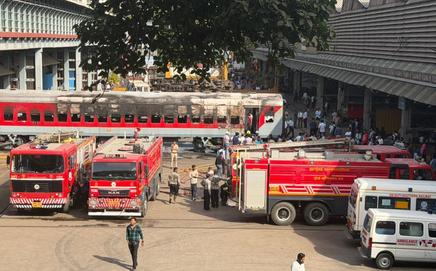
A fire broke out in an LHB sleeper coach at the Matunga Workshop of Central Railway on Tuesday afternoon, officials said. Fire Brought Under Control Within an Hour According to a Central Railway spokesperson, the incident occurred at around 3:10 pm, following which the fire brigade was immediately alerted. The blaze was successfully extinguished by 4:00 pm, preventing further spread. Upper Portion of Coach Severely Damaged Officials stated that nearly 70 per cent of the upper portion of the coach was damaged in the fire. However, the underslung equipment of the coach remained intact and unaffected. Welding Sparks Likely Triggered Fire Initial investigations indicate that welding work was underway in the toilet area at the Chhatrapati Shivaji Maharaj Terminus (CSMT) end of the coach. Sparks from the welding process are suspected to have ignited nearby materials, leading to the fire. Wind Conditions Accelerated Spread Authorities noted that strong winds, along with the non-air-conditioned structure of the coach, contributed to the rapid spread of the fire. No Damage to Other Coaches or Infrastructure Railway officials confirmed that no other coaches or workshop infrastructure were affected. The coach was immediately moved to an open area, which helped contain the fire and prevent further damage. Further investigations are underway, the spokesperson added.
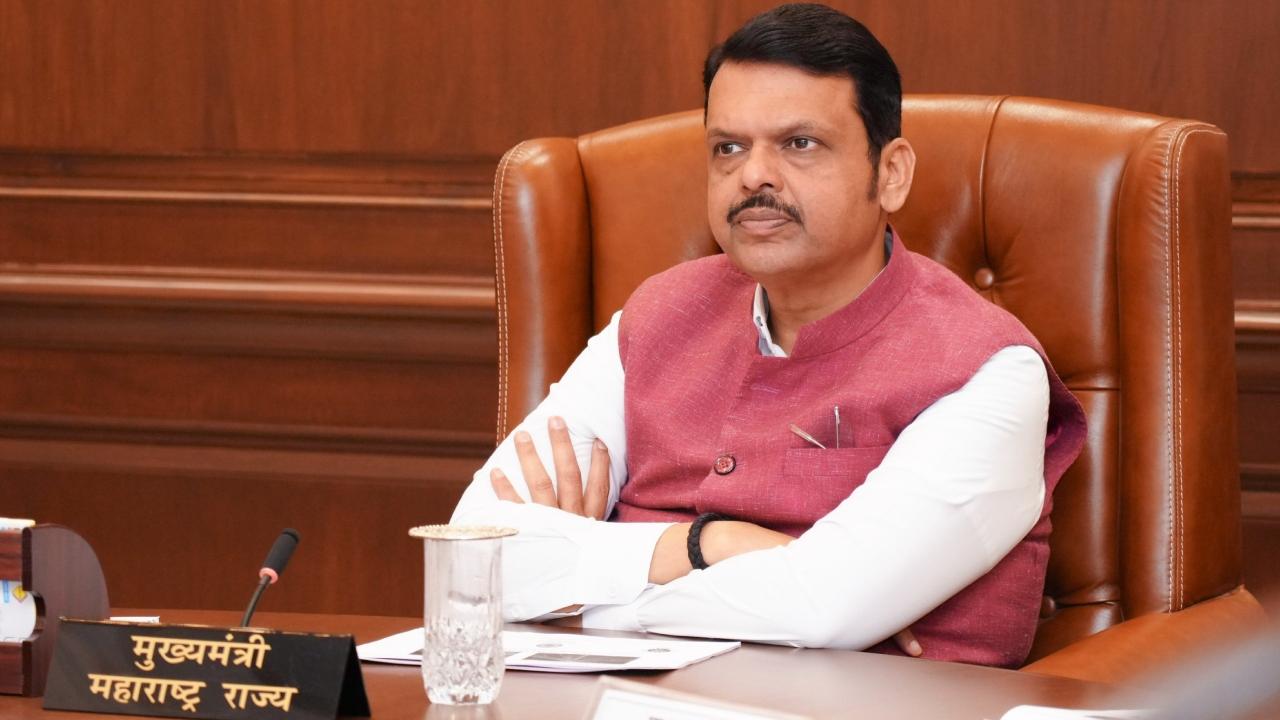
07 April,2026 06:06 PM IST | Mumbai | Rajendra B. AklekarIn a major infrastructure push, the Maharashtra government launched the tunnel boring machine (TBM) ‘Nayak’ for the Mumbai Metropolitan Region Development Authority’s (MMRDA) flagship Thane–Borivali Twin Tunnel Project. The ceremony was attended by Maharashtra Chief Minister (CM) Devendra Fadnavis, Deputy CMs Eknath Shinde and Sunetra Pawar, along with senior government and Mumbai Metropolitan Region Development Authority (MMRDA) officials. MEIL Managing Director Krishna Reddy, Director Subbaiah, and MMRDA Commissioner Sanjay Mukherjee were also present during the commissioning of ‘Nayak for the commencement of large-scale tunnelling of the transformative infrastructure project. The Thane–Borivali Twin Tunnel is a strategic initiative aimed at improving east–west connectivity across MMR. Stretching 11.84 km, the project includes 10.25 km of twin tunnels and 1.59 km of approach roads, linking Ghodbunder Road in Thane with the Western Express Highway in Borivali. Once operational, the travel time on this corridor is expected to drop from the current 60–90 minutes to around 15 minutes, providing a faster and more efficient commute for thousands of daily travellers. Advanced technology and safety The project features four state-of-the-art TBMs, including one of India’s largest single-shield hard rock machines, with a 13.34-metre cutter head diameter, 86 metres in length, and weighing approximately 2,500 tonnes. The TBMs will excavate tunnels at depths of up to 23 metres, including sections beneath the Sanjay Gandhi National Park, ensuring minimal surface disruption and environmental impact. Each tunnel will have two traffic lanes and one emergency lane, with cross-passages every 300 metres for safety. The project incorporates advanced safety systems, including mechanical ventilation, firefighting infrastructure, smoke detection, and retro-reflective LED signage, aligned with international NFPA 502 standards. The Thane–Borivali Twin Tunnel is divided into two civil packages: the Borivali section covers 5.75 km of tunnelling and underpasses, while the Thane section spans 6.09 km, including tunnels, a viaduct, and a toll plaza. The Hill–TCE Joint Venture is responsible for project design and consultancy. As of 31 August 2025, the project has achieved over 8 per cent physical progress, with further acceleration expected following the TBM launch. Impact on Mumbai commuters and environment The corridor is expected to ease congestion on Ghodbunder Road, which currently handles 1–1.2 lakh passenger car units daily, while reducing vehicular emissions and noise pollution. By 2029, the tunnel is projected to serve around 80,000 vehicles daily, shortening travel distance by 11–15 km, and supporting sustainable urban development. With TBM ‘Nayak’ now ready to begin excavation, MEIL has reaffirmed its commitment to delivering world-class infrastructure through innovation, sustainability, and engineering excellence, continuing its role in shaping the future of urban mobility in India. Thane–Borivali Twin Tunnel – Key project features Total project length: 11.84 kmTwin tunnel length: 10.25 kmApproach roads: 1.59 kmTunnel configuration: 2 traffic lanes + 1 emergency lane per tunnelCross-passages: Every 300 metresTBM specifications: 13.34 m diameter, ~2,500 tonnesMaximum tunnelling depth: ~23 metresEnvironmentally sensitive sections: Beneath Sanjay Gandhi National ParkSafety systems: Mechanical ventilation, firefighting, smoke detectionSignage: LED and retro-reflective, compliant with international standardsTravel time reduction: 60–90 minutes to ~15 minutesTraffic decongestion: Ghodbunder Road, reduced emissionsProjected traffic by 2029: ~80,000 vehicles per day
07 April,2026 05:58 PM IST | Mumbai | mid-day online correspondentIn a significant step towards improving urban mobility, Maharashtra Chief Minister Devendra Fadnavis on Tuesday performed the groundbreaking ceremony for India’s first pod taxi project in Mumbai. The Automated Rapid Transit System will connect Kurla with the Bandra Kurla Complex, aiming to strengthen last-mile connectivity for daily commuters travelling to the city’s key business hub, reported news agency PTI. Deputy Chief Ministers Eknath Shinde and Sunetra Pawar were present at the event, along with senior officials. MMRDA to implement project across key corridors The project is being executed by the Mumbai Metropolitan Region Development Authority (MMRDA). The full corridor will span 8.85 kilometres and will be developed in phases to ensure smooth implementation, reported news agency PTI. The first phase will cover a 3.36-kilometre stretch between Bandra East and Kurla. The route will connect important locations such as LBS Marg, Kalanagar, and Bandra Kurla Complex, while also linking suburban railway stations at Bandra and Kurla, improving access for commuters across different parts of the city, reported PTI. Driverless pods to offer faster and efficient travel The system will use driverless, technology-enabled pods that run on battery power along a dedicated elevated track. Each pod will accommodate up to six passengers and operate at a maximum speed of 40 kilometres per hour. A total of 22 air-conditioned stations will be constructed along the route, spaced at regular intervals of around 200 metres. The system is designed to improve efficiency, with pods stopping only at selected stations based on passenger choice, reducing unnecessary delays. With a frequency of one pod every 15 seconds, the service aims to provide quick and convenient travel, reported PTI. Integration with metro network to enhance connectivity The pod taxi system will be integrated with Mumbai’s metro network, creating a seamless multi-modal transport system. It will connect with Metro Line 3 at Bandra Kurla Complex and Metro Line 2B at key stations, enabling smoother transfers for commuters. A dedicated depot will also be developed at a Railway Land Development Authority plot in Bandra East to support operations and maintenance of the system. Project to reduce congestion and promote sustainable travel Officials stated that the project will be implemented under a public-private partnership model, ensuring that there is no financial burden on the state government. The system is also expected to generate revenue while improving urban transport infrastructure. The pod taxi project is expected to play a key role in reducing traffic congestion, cutting travel time, and promoting environmentally friendly transport solutions. Authorities estimate that by 2031, the system could serve more than 1.09 lakh passengers daily, making it a crucial addition to Mumbai’s evolving transport network. (With inputs from PTI)
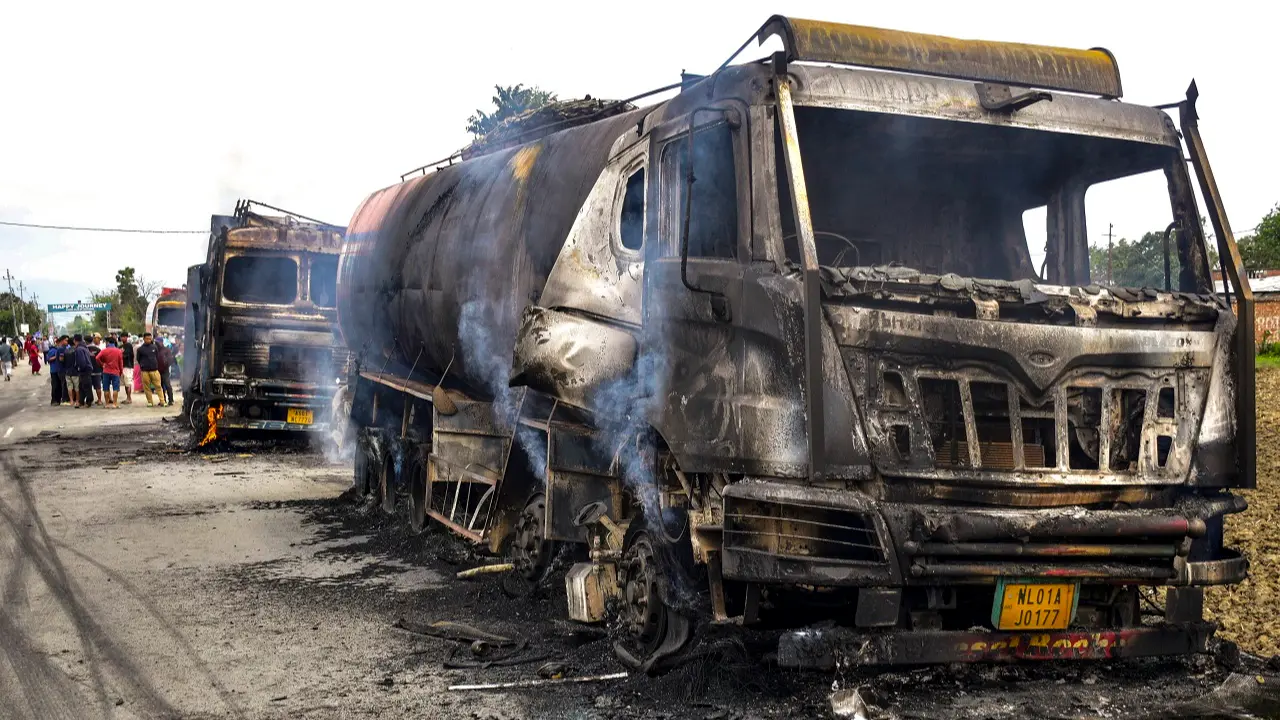
07 April,2026 05:55 PM IST | Mumbai | mid-day online correspondentTwo children were killed and their mother was injured in a bomb attack in Manipur's Bishnupur district on Tuesday, triggering protests by locals, police said, reported news agency PTI. The incident occurred at around 1 am when a bomb was hurled by suspected militants at a house in Moirang Tronglaobi area, killing a 5-year-old boy and a six-month-old girl, a senior officer said, reported PTI. CM calls attack ‘barbaric’, vows strict action Chief Minister Y Khemchand Singh described the attack as a "barbaric act" and assured the people that those responsible for the crime would be identified and dealt with firmly under the law, reported PTI. The two children and their mother were sleeping in their bedroom when the bomb exploded in the house, the police officer said. Protests erupt, vehicles torched across areas Locals staged a protest this morning and torched two oil tankers and a truck near a petrol pump in the area. They burnt tyres in front of the Moirang Police Station and destroyed a makeshift police outpost, reported PTI. Security forces have been deployed in the area to control the situation, the officer said. People also burnt tyres in different parts of Imphal to protest the killing of the two minors. They stopped the movement of vehicles at Pangei and Khurai in Imphal East district and Langthabal in Imphal West, and burnt tyres in the middle of the roads. CM visits injured mother, assures support The chief minister said the attack was a "barbaric act" and "an outright assault on humanity and a direct attempt to derail the hard-earned peace in Manipur", reported PTI. "I condemn it in the strongest possible terms. Let there be no doubt, those responsible will be identified, hunted down and dealt with firmly under the law. Such acts of terror will not be tolerated under any circumstances," he said, reported PTI. The CM visited a private hospital in Imphal, where the injured mother of the two deceased was being treated. "This morning, I rushed to Raj Polyclinic to assess the condition of the injured mother who lost her two children in last night's brutal attack at Tronglaobi Awang Leikai, Moirang. I have directed that she be provided the highest standard of medical care and all necessary support." The CM asserted that the state government stands resolute in protecting every citizen and will take all necessary measures to ensure that peace, order, and stability are not compromised, reported PTI. He also urged the people to remain united and resolute against those who seek to disturb the collective harmony. Area saw past violence; probe underway Low-lying Moirang Tronglaobi is located close to hill areas of Churachandpur and witnessed consistent gun firing during the ethnic conflict between Meiteis and Kuki-Zo groups in 2023 and 2024. An explosive device was also recovered in a nearby area of Tronglaobi on Tuesday, another senior officer said. Local NPP MLA Th Shanti Singh condemned the "brutal attack at Tronglaobi, allegedly carried out by Kuki narco-terrorists", reported PTI. "This heinous act is nothing less than an act of terrorism. Such inhuman acts have no place in our society and must be condemned in the strongest possible terms," he said, reported PTI. "I offer my heartfelt tributes to the innocent lives lost - a 5-year-old boy and a 5-month-old baby girl - taken away in such a cold-blooded manner. My deepest condolences go out to the bereaved family during this unimaginable time of grief," the MLA said, reported PTI. More than 260 people have been killed and thousands rendered homeless in ethnic violence between Meiteis and Kuki-Zo groups since May 2023. (With inputs from PTI)
07 April,2026 05:24 PM IST | Imphal | mid-day online correspondentThe Maharashtra Cabinet on Tuesday approved a series of key policy decisions spanning technology, infrastructure, energy reforms and disaster management, aimed at strengthening governance systems and accelerating the state’s long-term development agenda. New Electronics, IT and AI Department to be Set Up In a major administrative reform, the state will establish an independent Department of Electronics, Information Technology and Artificial Intelligence. The move is aligned with the broader vision of achieving a “Developed Maharashtra” as part of the national Developed India 2047 roadmap. As part of this restructuring, the existing Directorate of Information Technology will be upgraded into a Commissionerate of Electronics, Information Technology and Artificial Intelligence. The Cabinet has also approved the creation of a dedicated IT cadre, with permanent positions across Mantralaya, commissionerate offices and district-level establishments. Officials said the decision is expected to streamline digital governance and accelerate the adoption of emerging technologies such as artificial intelligence across departments. MRSAC to Be Converted into Section 8 Company The Cabinet has approved the conversion of the Maharashtra Remote Sensing Application Centre (MRSAC) into a Section 8 company under the Companies Act, 2013. Its current registration under the Societies Registration Act, 1860 will be cancelled. The restructuring is intended to provide greater operational flexibility and improve execution of geospatial and remote sensing-based projects. These include applications in urban planning, watershed development under Jalyukt Shivar, agriculture technology, groundwater mapping, mangrove conservation, and mineral studies. MahaGeoTech to Promote Geospatial Innovation In a related move, the government has approved the establishment of a new entity, Maharashtra Geotechnology Application Centre (MahaGeoTech). The proposed centre will focus on leveraging geospatial technologies to improve governance and planning. It will also support research, innovation and entrepreneurship in the sector, while facilitating training and educational programmes for students, professionals and researchers. MahaVitaran Financial Restructuring Approved The Cabinet has cleared a financial restructuring plan for Maharashtra State Electricity Distribution Company Limited (MahaVitaran). Under the plan, government-backed loans worth Rs 32,679 crore will be raised through bonds in the capital market. Additionally, the agricultural power distribution business will be demerged, a move referred to as the “Agri Demerger”. The utility is also expected to be listed in the capital market, signalling a shift towards greater financial transparency and operational efficiency in the power sector. Disaster Resilience Programme Gets Nod The Cabinet also approved the implementation of the Maharashtra Resilient Development Programme (MRDP), aimed at strengthening disaster preparedness and response mechanisms. The programme will mobilise funds, including Rs 165 crore from the World Bank, to support disaster mitigation efforts. It includes provisions for housing loan relief for disaster-affected citizens, as well as credit support and insurance protection for micro, small and medium enterprises (MSMEs). Flood mitigation plans will be prepared for vulnerable urban centres such as Kolhapur, Sangli and Ichalkaranji, along with broader efforts to reduce flood risks in the Krishna river basin.
07 April,2026 04:15 PM IST | Mumbai | Ronak MastakarCampbell Wilson has stepped down as Chief Executive Officer of Tata Group-owned Air India. Wilson was appointed as Air India’s CEO and Managing Director in July 2022, following former Turkish Airlines Chairman Ilker Ayci’s decision not to take up the top job in March 2022 amid controversy. Tata Group acquired Air India from the government in January 2022. Wilson had informed Air India Chairman N. Chandrasekaran in 2024 of his decision to step down in 2026 and has since been focused on ensuring the organisation and leadership team are well-positioned for a smooth transition. He will continue in the role until his successor is appointed and takes charge, the airline said. Earlier this year, a source had said that the Tata Group was scouting for a suitable candidate to head Air India, as Wilson’s five-year tenure at the airline was set to end in 2027. Air India’s low-cost subsidiary, Air India Express, has also been without a head since March 19 this year, following the resignation of its then Managing Director Aloke Singh after he completed his five-year tenure, the news agency reported. Wilson has been under scrutiny since June 12 last year, following the crash of the airline’s London-bound flight shortly after take-off from Ahmedabad airport, which killed 241 of the 242 people on board the Boeing 787-8 aircraft. Fare cap removal may push up air ticket prices, warn pilots’ body The Federation of Indian Pilots has criticised the timing of the Ministry of Civil Aviation’s (MoCA) decision to lift the domestic airfare cap from March 23, saying it will hurt passengers. The cap, introduced on December 6 after the IndiGo fiasco, had kept fares in check during high demand and rising fuel costs amid the West Asia conflict, when carriers such as Air India announced that a surcharge would be applied on all flights booked from March 12. With its removal, airlines can now price tickets freely based on demand. Price concerns While fliers have not complained about an increase in airfare yet, the next few days will be critical as prices could increase in proportion with demand. When mid-day examined airfare prices for the coming weeks, no heavy hikes were observed on most routes. Flights from Mumbai to Pune, however, were priced between Rs 7000 and Rs 11,000 for one-stop trips, as direct flights are not available on the route. Captain’s warning ‘This move [removal of cap] has been made at a very wrong time and will be detrimental for those looking to fly in the coming weeks. Just as airfare had skyrocketed in December last year after the IndiGo chaos, in a few days it might happen again, especially for flights in and out of Delhi and Mumbai’Captain Charanvir Singh Randhawa, president, Federation of Indian Pilots ‘Motto falls flat’ Captain Randhawa said the government could have chosen to decrease the tax on the fuel that airlines pay, but instead they have chosen to remove the cap on fares that has been keeping tickets reasonably priced so far. “The motto put out by our government ‘Ude Desh Ka Aam Nagrik’ falls flat on its face when the passengers have to pay high prices in a state of urgency” Rs 7000 and Rs 11,000Price range of Mumbai-Pune air tickets
07 April,2026 02:17 PM IST | Mumbai | mid-day online correspondentTension gripped the Charkop area in Kandivali West on Tuesday after a tragic road accident claimed the life of a girl, triggering protests and a road blockade by enraged locals demanding strict action against those responsible. According to initial information, the incident occurred around an hour ago when the minor, said to be a student of a BMC school, was crossing the road with her friends after school hours. During the crossing, a dumper allegedly ran over the child, crushing her head and killing her on the spot. Eyewitnesses said the accident was so severe that the girl died instantly, leaving passersby and residents in shock. Soon after the incident, angry locals gathered at the spot and blocked the road, demanding immediate action against the accused driver. Heavy police deployment has been made at the scene to control the situation, which remains tense, with the crowd reportedly becoming unruly. Police officials are currently trying to pacify the protesters and restore normalcy. Further details are awaited.
07 April,2026 02:11 PM IST | Mumbai | Samiullah KhanChief Minister (CM) Devendra Fadnavis on Tuesday inaugurated the much-awaited Phase-1 of Mumbai Metro Line-9 at Kashigaon, giving a major boost to commuters in the Mira-Bhayandar region. Deputy CM Eknath Shinde, Maharashtra Transport Minister Pratap Sarnaik, and Mumbai Mayor Ritu Tawde were also present at the inauguration ceremony. The operations on the route will begin for commuters on Wednesday, April 8. The first phase of the elevated Metro Line-9 spans 4.7 km and includes four stations: Dahisar East, Pandurangwadi, Miragaon, and Kashigaon. This new stretch provides seamless connectivity from the Mira Road area to Metro Line-7 at Dahisar East, enabling commuters to travel directly towards Andheri East and further to Chhatrapati Shivaji Maharaj International Airport via Line-7A. The full Metro Line-9 corridor is planned as a 10.5 km elevated route with eight stations up to Netaji Subhash Chandra Bose Garden in Mira Bhayandar. Phase-1 marks the beginning of significantly improved public transport for the rapidly expanding Mira-Bhayandar belt. The timetable The revised timetable focuses on reducing waiting time and enhancing commuter convenience. - Peak hour frequency will range from around 5.5 to 6 minutes - Non-peak frequency will range from 8 to 10 minutes - More trips will be operated across all corridors Officials said this will help manage increasing passenger demand and reduce crowding. Key benefits for commuters Seamless interchange: Commuters can switch to Metro Line-7 and Line-2A at Dahisar East without exiting the station, making travel to Andheri East and the airport hassle-free. Traffic relief: The new line is expected to divert 20-30 per cent of road commuters to the metro, reducing congestion at Dahisar Toll Plaza by 10-15 per cent during peak hours. Time savings: Residents of Kashigaon and nearby areas will enjoy significantly shorter travel times to key hubs, benefiting daily office-goers and students. Multimodal integration: The metro will integrate smoothly with buses, autorickshaws, and other metro lines, reducing dependence on private vehicles. Green and passenger-friendly features The metro line promotes green mobility through electric operations, regenerative braking, energy-efficient station design, and lower carbon emissions. Stations are equipped with lifts, escalators, CCTV surveillance, modern signage, tactile paths, and barrier-free access for inclusive travel. Officials highlighted that the project will offer safe, comfortable, and faster travel while helping reduce traffic congestion and pollution in the eastern suburbs. This development is part of the Maharashtra government’s larger infrastructure push to strengthen Mumbai’s suburban connectivity. Commercial operations on the new stretch are expected to begin shortly after the inauguration.
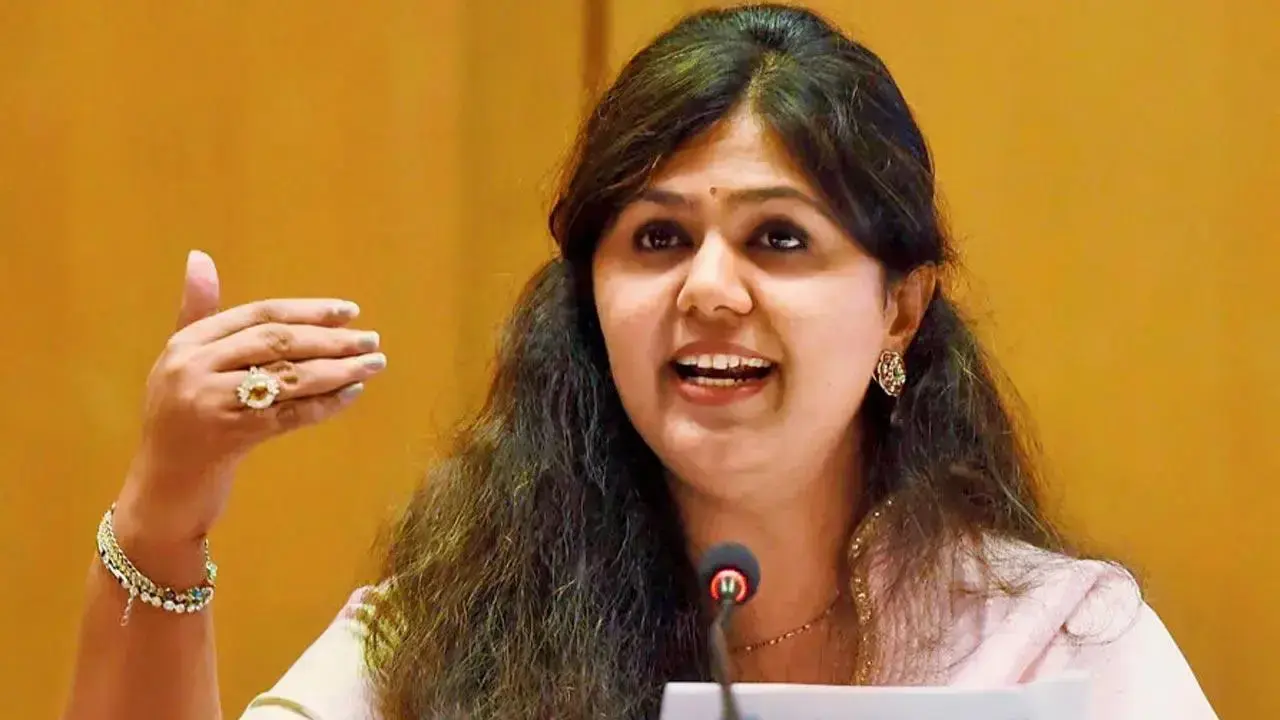
07 April,2026 01:35 PM IST | Mumbai | mid-day online correspondentThe Maharashtra Environment Department has decided to revise bank guarantees and fines imposed on polluting industries after a CAG report flagged lapses involving Rs 272.47 crore in uncollected guarantees, officials have said. The move aims to increase accountability among industries discharging pollutants, with a committee set up to recommend a new structure for bank guarantees and penalties within three months, they said on Monday. According to the CAG report tabled during the recently concluded Budget session of the state legislature, as many as 2,678 bank guarantees of Rs 272.47 crore were not obtained in physical form, making them unverifiable. It also noted that forfeiture orders could not be executed in several cases due to non-collection of guarantees, and Rs 17.98 crore from forfeited guarantees was incorrectly credited instead of being utilised for environmental remediation. The audit report further pointed to a short recovery of Rs 7.56 crore in consent fees, stating that environmental compensation of Rs 183.25 crore imposed on 339 industries remained un-recovered, with notices later withdrawn without adequate justification. An official from the Environment Department noted that the revised bank guarantee structure would factor in pollution levels across regions, with higher rates proposed for critically polluted areas. "There will not be random rates. We are considering higher guarantees in areas with higher pollution levels, such as Chandrapur," the official said. The official added that an online system would be introduced to monitor the collection of bank guarantees and penalties, reducing human intervention and improving transparency. The decision follows a meeting held last week under Maharashtra Environment Minister Pankaja Munde, attended by senior officials, including Environment and Climate Change Department Secretary Jayashree Bhoj, and representatives of the Maharashtra Pollution Control Board. Officials noted that the current policy, under which industries are required to submit bank guarantees equivalent to 10 per cent of their investment in pollution control systems, has remained unchanged since 2013. Discussions were held on increasing this amount to ensure stricter compliance with environmental norms. Munde directed officials to undertake a comprehensive study and submit recommendations within three months. "The objective is to ensure industries prioritise pollution control, while keeping the policy industry-friendly," she said, asking officials to examine Central Pollution Control Board guidelines and practices followed in other states. The move follows a Supreme Court order in August 2025, which allows environmental regulators, including pollution control boards, to impose environmental compensation and seek bank guarantees as preventive measures against environmental damage. This story has been sourced from a third party syndicated feed, agencies. Mid-day accepts no responsibility or liability for its dependability, trustworthiness, reliability and data of the text. Mid-day management/mid-day.com reserves the sole right to alter, delete or remove (without notice) the content in its absolute discretion for any reason whatsoever
07 April,2026 12:26 PM IST | Mumbai | PTIMumbai’s suburban railway network on Western Railway (WR) is witnessing a curious post-pandemic trend: while daily ridership remains below pre-COVID levels, revenue has not only recovered but surpassed earlier figures — all this because of AC local trains. WR runs as many as 133 AC local trains on its suburban section. Shift in trend Addressing a press conference, WR Mumbai Divisional Manager Pankaj Singh said the increase in earnings is due to a change in passenger mix, as more people are now opting for AC Electric Multiple Units (EMUs). Another factor is the post-pandemic travel behaviour. With hybrid work models still in place, the number of daily office commuters — once the bulk of suburban traffic — has not fully rebounded. At the same time, occasional and non-regular travellers are more likely to purchase single tickets instead of heavily subsidised monthly passes, improving per-passenger revenue. Shift to other modes Singh also pointed to growth of the Mumbai Metro system and expansion of the road network, which is gradually offloading the dense crush load from the Mumbai suburban network — particularly those willing to pay for more comfortable journeys. Despite the dip in ridership, WR’s suburban system appears to be moving toward a more revenue-efficient as well as a more comfortable system, where higher yields per passenger offset lower volumes. Official Speak Pankaj Singh, Mumbai divisional manager, Western RailwayIn March 2026, about 53.71 lakh passengers used AC locals. There has been a noticeable rise in commuters opting for first-class and AC local services, which yield higher fares. Additionally, stricter enforcement against ticketless travel has improved compliance and contributed to higher collections. Commuters/revenue earned Pre-COVID levelsDaily passengers : Rs 34.87 lakhDaily revenue: Rs 29.52 lakh Current levelsDaily passengers: Rs 2.12 croreDaily revenue: Rs 2.39 crore 133No of AC local trains Western Railway operates
07 April,2026 11:05 AM IST | Mumbai | Rajendra B. AklekarThe city is expected to witness a partly cloudy sky across both the city and suburbs, according to the India Meteorological Department (IMD). Daytime temperatures are likely to reach around 32 degrees Celsius, while the minimum temperature may hover near 22 degrees Celsius. Meanwhile, Mumbai’s air quality continues to remain favourable, with the Air Quality Index (AQI) recorded at 49, placing it in the ‘good’ category, as per the Central Pollution Control Board’s (CPCB) Sameer App. AQI across Mumbai stays largely satisfactory Air quality across most parts of the city ranged between ‘good’ and ‘satisfactory’: Bandra Kurla Complex – 87Borivali East – 53Andheri East – 68Chembur – 45Colaba – 60Ghatkopar – 67Bhandup West – 42Kurla – 61Malad West – 39Mulund West – 25Powai – 34Sewri – 32Worli – 46Sion – 33Vile Parle – 49 Surrounding regions report similar trends Neighbouring areas also recorded moderate to good air quality levels, with Thane at 72, Navi Mumbai at 67, and Kalyan at 56. Overall, the city continues to enjoy relatively clean air and stable weather conditions, offering relief to residents amid fluctuating seasonal patterns. Maharashtra weather update: State records mild temperatures; Konkan remains warm and humid Across Maharashtra, most regions recorded below-normal maximum temperatures, indicating a cooling effect likely due to recent weather activity. Coastal areas remained humid, while interior regions experienced relatively drier and more comfortable conditions. Mumbai and Coastal Konkan Mumbai recorded moderate temperatures with Colaba at 32.5 degrees Celsius and Santacruz at 31.3 degrees Celsius, both slightly below normal. Minimum temperatures remained around 23.6 degrees Celsius, indicating warm and humid conditions. Coastal stations like Alibag (32.6 degrees Celsius), Dahanu (31.8 degrees Celsius), Harnai (31.0 degrees Celsius), and Ratnagiri (31.7 degrees Celsius) also reported near-normal temperatures with relatively high humidity levels, reflecting typical coastal weather patterns. North Maharashtra In North Maharashtra, Nashik (31.6 degrees Celsius) and Jalgaon (35.5 degrees Celsius) recorded below-normal daytime temperatures, with departures as low as minus 4.7 degrees Celsius in Jalgaon. Minimum temperatures ranged between 18 degrees Celsius and 21 degrees Celsius, while humidity remained moderately high, particularly in Nashik at 83 per cent, indicating relatively comfortable but slightly cooler-than-usual conditions. Marathwada The Marathwada region experienced warm days but below-normal temperatures overall. Aurangabad (34.7 degrees Celsius), Beed (36.0 degrees Celsius), Osmanabad (37.1 degrees Celsius), and Parbhani (36.1 degrees Celsius) all recorded temperatures lower than seasonal averages. Night temperatures hovered around 20 to 21 degrees Celsius, with moderate humidity levels, suggesting stable but slightly cooler weather across the region. Western Maharashtra Western Maharashtra saw mild to warm conditions. Kolhapur (32.5 degrees Celsius), Sangli (34.6 degrees Celsius), Satara (33.8 degrees Celsius), and Sholapur (36.4 degrees Celsius) all recorded below-normal maximum temperatures. Meanwhile, Mahabaleshwar remained the coolest at 27.1 degrees Celsius, with a low minimum of 16 degrees Celsius, reflecting its hill station climate. Humidity levels varied, but overall conditions remained comfortable. Central Maharashtra In central parts like Ahmednagar and Jeur, temperatures showed slight variation. While maximum temperature data for Ahmednagar was unavailable, the minimum dipped to 18.4 degrees Celsius. Jeur recorded a high of 37.0 degrees Celsius, still below normal, with relatively lower humidity compared to coastal regions.
07 April,2026 10:17 AM IST | MumbaiADVERTISEMENT