Mumbai city and its suburbs are expected to experience mainly clear skies, with maximum and minimum temperatures likely to hover around 36 degC and 24 degC, respectively. Air quality remained in the ‘moderate’ category, with an AQI of 114 recorded by the Sameer app at 9 am on Saturday, April 11. Such conditions may cause breathing discomfort for individuals with lung disorders, asthma, or heart diseases. Among various locations, Chakala recorded the highest pollution level with an AQI of 161, followed by Bandra-Kurla Complex (155), Colaba (143), Kurla (132), Bandra East (122), Worli (115), and Borivali East (111). Meanwhile, relatively cleaner air was observed in Mulund West (31) and Kandivali East (42), with other areas like Vile Parle East (86), Sewri (88), Powai (85), and Deonar (97) also reporting better air quality. Overall, weather conditions are expected to remain stable with no major fluctuations, while air quality is likely to stay within the moderate to satisfactory range. Mercury continues to rise in Delhi; AQI 'moderate' The national capital continued to see a rise in the minimum temperature on Saturday, with the weather forecasts now suggesting that temperatures will rise over the next few days. Safdarjung, the city's base station, recorded a minimum temperature of 18.6 degrees Celsius, 2.4 degrees below normal but 2.3 degrees above the day before, according to the India Meteorological Department (IMD). Other weather stations also logged a significant rise in the minimum temperature. Meanwhile, the IMD has forecast the minimum temperature to be around 19-21 degrees Celsius by Sunday. The maximum temperature is likely to be around 34-36 degrees on Saturday and 35-37 degrees Celsius on Sunday. The Met department has also forecast gusty winds of speed 10-20 kmph, even reaching 30 kmph, to continue through the daytime hours of Saturday.Meanwhile, the air quality index (AQI) of the city saw a further improvement on Saturday morning and was logged at 126 (moderate) at 9 am, as compared to the 24-hour average AQI of 151 (moderate) recorded at 4pm on Friday.
11 April,2026 11:38 AM IST | Mumbai | mid-day online correspondentWith the arrival of another air-conditioned EMU rake in Mumbai, Central Railway (CR) is planning to introduce a second AC local train on the Harbour Line, strengthening connectivity along the busy Chhatrapati Shivaji Maharaj Terminus (CSMT)–Panvel corridor. The Harbour Line, considered a lifeline for the rapidly expanding workforce in Navi Mumbai, has seen a steady rise in passenger demand in recent years. The addition of a second AC local is expected to offer more comfortable commuting options for thousands of daily passengers. The newly arrived rake reached CR’s Mumbai division earlier this week and is currently undergoing trials. Railway officials have also indicated that full-fledged commercial operations are likely to begin by the end of April, subject to successful testing. Mumbai local gets automatic doors first for non-AC suburban trains Mumbai is set to receive India’s first non-AC suburban local train with automatic door closure, marking a significant shift in the design of the city’s lifeline trains. The new rake, developed after the Mumbra incident, is aimed at improving passenger safety by preventing falls from open doors. The 12-car train, manufactured by the Integral Coach Factory (ICF) in Chennai, is currently on its way to Mumbai and is expected to arrive shortly. Railway officials say the move is part of a broader policy shift to introduce closed-door systems across all future suburban trains, both AC and non-AC. A first for Mumbai and Indian Railways This is the first time a non-AC local train with automatic doors has been developed for Mumbai’s suburban network and for Indian Railways. The rake, numbered 268201–268212, has been designed following consultations between the Railway Board and the Integral Coach Factory, with the Railway Minister, Ashwini Vaishnaw, intervening. “From the safety of commuters in Mumbai, it is very important that local trains operating in the city have closed doors. It has now been decided that all trains manufactured for Mumbai will have closed doors,” an official said.
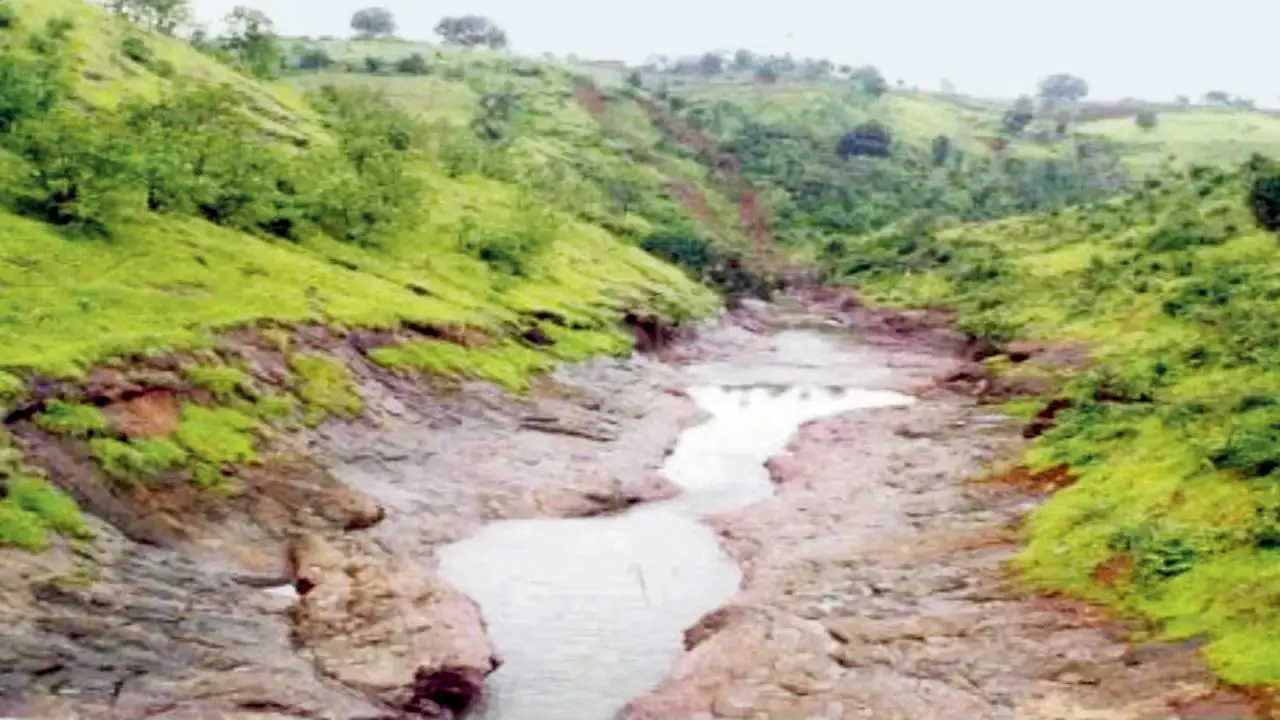
11 April,2026 09:10 AM IST | Mumbai | Rajendra B. AklekarWith a deadline to complete the Gargai dam project by 2028-end, and complete all allied works by 2030, construction can finally begin as the Brihanmumbai Municipal Corporation’s (BMC) General Body approved the proposal on Thursday. The body, comprising the newly appointed 227 corporators, discussed the proposal for 90 minutes before it was passed on to the Mahayuti alliance which has a majority in the house. Map/Suhas Kale The proposal was passed by BMC’s Standing Committee on April 1, 2026, after which it was presented to the General Body for approval. As part of the project, BMC will hire eight kinds of experts to make up for the lack of in-house expertise to facilitate the work, including a cultural expert for rehabilitation, an environmental conservationist, a forest conservationist, and an agriculture supervisor. Cost to civic body Cost of project: Rs 3100 crore (Rs 5000 crore approved)Cost for consultants: Rs 25 crore Permissions awaited Three more permissions for the project are pending — national wildlife board, state forest permissions, and central forest permissions. (Out of the 658 hectares required for compensatory afforestation, 380 hectares of land have been identified near Tadoba National Park, in Chandrapur and Washim districts.) Project timeline 2028 Construction of Gargai dam will be completed, along with the tunnel connecting to Modak Sagar reservoir2030 Allied construction work to be completed About Gargai dam Location: Wada Tehsil in Palghar District, 110 km from MumbaiWater supply to Mumbai: 440 million litres per day (MLD)Time for completion: 4 years Mumbai’s water needs Total water available: 14.47 lakh million litres BMC supplies: 3950-4100 MLD to Mumbai Projected requirement by 2031: 5325 MLD (29.87% more) Projected requirement by 2041: 6424 MLD (56.68% more) Other sources of water: Desalination plant provides 200 MLD, expandable to 400 MLD 110 kmDistance between Gargai dam location and Mumbai
11 April,2026 08:18 AM IST | Mumbai | Eeshanpriya MSThe ongoing LPG shortage has begun to disrupt Mumbai’s fabric dyeing industry, a sector heavily dependent on gas for processing textiles. With cylinder supply turning erratic, small-scale dyers are struggling to sustain operations, triggering delays and losses. Supply crunch Fabric retailers and wholesalers across the city report a sharp slowdown. Small dyers, who form the backbone of the business, are bearing the brunt of rising costs and irregular supply. “Till before COVID, we had seven dyeing partners. That was reduced to four post-COVID. Now even these four have returned to their hometowns, leaving us unable to supply dyed dupattas,” said Ram Dedhia, owner of Ankur Dupatta Ghar in Dadar. Mohammed Amir at his Dharavi dyeing unit, where falling cylinder supply has cut output sharply and slashed his daily earnings Units shut A visit to Dharavi, the city’s largest dyeing hub, revealed that 75 per cent of dyers have exited the trade. “This lane had 15-16 units; now it's just two of us, but we are struggling too and do not know till when we can sustain,” said Mohammed Amir, a dyer since 2012. His daily earnings have dropped from Rs 8000 to Rs 1000 in the past month. “Earlier, we got cylinders every alternate day and dyed up to 1000 metres daily. Now supply comes once in 7-10 days, cutting output to 100 metres,” he said. Costs spike Raji Haider, who has been in dyeing business for two decades ‘Even when available, cylinders now cost double. We would get one cylinder for '1600 to '1700 earlier. Now it is '3600 to '4000. Earlier, we were able to work on two gas stoves using two cylinders simultaneously, with which we could dye 1000-1500 metres a day. Now, with just one cylinder, which we also have to use very wisely, we are able to dye only 400-500 metres every day, our daily earnings have dropped from '15,000 daily to '6000’ Faizan Shaikh, retailer ‘Earlier, small dyeing orders were completed the next day. Now it takes three to four days even for basic work’ Why gas matters here >> Dye baths need 60-100 degrees C heat to dissolve colours, with LPG cylinders preferred for consistent temperatures during the process>> If dyes are not fixed at the right, temperature, colours can turn dull, uneven, or wash out easily >> After dyeing, fabrics are boiled and washed repeatedly to remove excess dye, a process powered by gas-fired boilers
11 April,2026 08:10 AM IST | Mumbai | Ritika GondhalekarThe Brihanmumbai Municipal Corporation (BMC) is set to give QR codes to 10,500 existing licensed hawkers across the city by the end of April, which will help Mumbaikars distinguish between licensed hawkers and unauthorised hawkers. Each QR code will carry details of the hawker’s licence and related documents issued by the civic body. Hawkers will be required to display these codes prominently at their stalls, allowing Mumbaikars to scan and verify their authenticity. Meanwhile, around 22,000 unlicensed hawkers who registered with the BMC in 2014, when the Town Vending Committee (TVC) was formed, will undergo evaluation. Based on this process, eligible vendors will be allotted designated pitches for street vending. The pitches will be finalised by the 13-member TVC, eight of whom were elected on March 28, 2026, following elections that were conducted in 2024. What is the role of BMC’s Town Vending Committee? Established under the Street Vendors Act of 2014, the BMC’s Town Vending Committee is the official body responsible for regulating Mumbai’s street hawking. It manages the surveying and licensing of vendors, identifies designated hawking and non-hawking zones, and ensures all local vending policies are properly implemented. To maintain a balanced approach, the committee includes a mix of municipal officials, police, and elected hawker representatives. Timeline April 2026: BMC will issue QR codes to licensed hawkers Mid to end 2027: TVC will assign pitches to registered hawkers How will QR codes help? Citizens will be able to distinguish between authorised and unauthorised hawkers with easy access to their licencesBMC authorities will take action against all hawkers who do not have these licenses
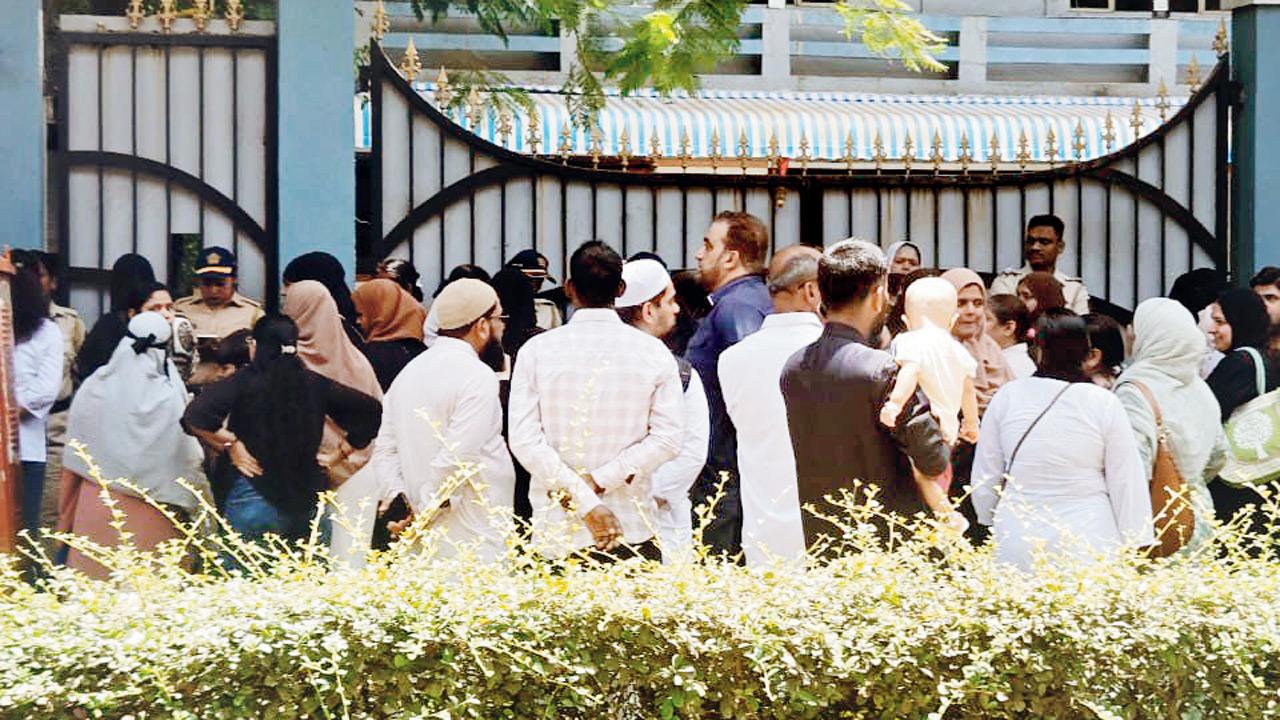
11 April,2026 08:00 AM IST | Mumbai | Eeshanpriya MSParents of students at City International School in Oshiwara gathered outside the campus on Friday, April 10, protesting the decision to issue school leaving certificates (LCs) online or via post. According to parents, the school emailed them on Thursday night stating that LCs would be released digitally or sent by courier. The move has raised concerns, particularly among families who have relocated in recent months and updated addresses are not with the school. Parents’ stand “Schools need parental consent to issue leaving certificates. Once issued, the school can distance itself from responsibility. We haven’t been allowed to meet authorities or enter the premises,” said Fouzia Mitha, who is among several parents who have relocated in the past few months. “I moved my residence within Jogeshwari, and the school does not have my new address. Moreover, if the mark sheets and leaving certificates have errors, then we won’t be able to hold the authorities accountable since the school is about to shut down,” she added. Screenshot of the email sent by City International School. Pics/By Special Arrangement Faizan Khan, another Jogeshwari resident whose children were admitted to the school via RTE, is one of the several parents who have relocated. “Our area is under redevelopment, which is why we have moved to a different address. Online LCs will not cut it either, since schools may ask us for the original documents with the school stamp,” he said. Official Speak School officials stated that corrections were underway. “We met the parents and assured them that human errors in the LCs will be rectified on priority. Courier dispatch has been put on hold for now,” said Gaurav Bhagwat, a school administrator. Parents, who had earlier met School Education Minister Dada Bhuse, also met education inspectors and the deputy director of education on Friday. “We will be issuing another letter to the school to ensure all due processes are followed,” an official from the deputy director’s office said.
11 April,2026 07:56 AM IST | Mumbai | Aditi AlurkarLess than two weeks after pipeline work was carried out on a section of SV Road near Lucky Junction in Bandra West, the road and metal lid over the pipe caved in, leading to flooding and disrupting traffic flow around 3.30 pm on Friday. When mid-day looked up the area on Google Maps at 6.47 pm, a 650-m stretch from Turner Road to the junction appeared badly congested. An old water pipeline had been replaced with one measuring 750 mm in diameter on March 29, and by 5 am on March 30, the BMC had successfully laid a tar road over the spot and installed a metal lid. What happened? Since Friday morning, locals claim to have noticed water leaking from the road laid above the pipe, though many ignored this and did not contact the BMC. At 3.30 pm, the road caved in, leaving a 10x7-foot hole through which water started spouting. Traffic police present at the spot said that the water immediately rose to an ankle level. By 4 pm, the traffic police and officials from the BMC’s H West ward began managing the flow of vehicles by making the northbound lane a two-way street and shutting the valve, after which the workers started clearing debris to prepare the southbound stretch for traffic. Official Speak Denying that the incident had anything to do with the new pipeline, Dharmatejas Prassanadas, assistant engineer, H West ward, said, “An old pipeline had slid out. It is connected to the new one installed in late March. But the issue is limited to the old pipeline as of now.” Mandar Choudhary, assistant engineer of H West ward, said, “It is yet to be seen if any problem is caused to the water supply from Bandra to Santacruz due to this leak.” Residents’ voices Sayyed Rafiq, witness‘There had been leakage since morning, though small, but once the road caved in, the water pressure was fierce. Luckily, at the time, the signal was red from all sides, which saved many lives’ Another local, who requested anonymity‘Everyone was so terrified when the road gave way that pedestrians ran away from the spot. The traffic police were quick to manage the situation, but the BMC’s shoddy work almost cost many lives and several gallons of water’ Dattatray Kolekar, Traffic Police Inspector ‘We rushed to the junction as soon as we heard about the incident and started to divert traffic and clear the area to the right of the hole, so that traffic could start moving from this side of the road’
11 April,2026 07:50 AM IST | Mumbai | Madhulika Ram KavatturA section of parents at Delhi Public School (DPS), Panvel — a franchise and not part of the original DPS Society — objected to a newly introduced Nutrition & Wellness Programme, alleging it is being imposed without adequate consultation. The programme, for students from Std I to V, carries an additional annual cost of around Rs 16,500. Choice concern Dr Priya Eshpuniyani, whose son studies in Std II, said, “We don’t have a problem paying if we can afford it. The main issue is that they are trying to make food compulsory. Even now, they say we can send tiffin, but the school will also provide food, and the child will choose. That doesn’t make it optional.” She added that exposing children aged 6-10 to varied menu options may influence eating habits. “We are okay with workshops and mental health initiatives, but not with the school deciding what our children should eat,” she said. Clarity missing Another parent, Seeta Varma, said, “There is no proper information on the menu, food quality, or what happens if a child falls sick. They are adding R16,500 but not clearly explaining services.” Varma added that the rollout was recently postponed, reportedly due to logistical issues. School response Speaking to mid-day, DPS Panvel said the programme promotes healthy lifestyle habits in line with the National Education Policy (NEP) and global health goals. It clarified that participation is not mandatory, and parents can continue sending home-cooked meals. “The initiative is a long-term educational programme combining nutrition awareness, structured curriculum, and expert guidance. Parents have full flexibility, including opting out after the experience phase,” the management said. The school added that the fee is separate from tuition, with the first quarter free and waiver options available if parents are dissatisfied. Wider debate The controversy reflects a growing concern among urban parents over school-led initiatives that come with additional costs. While the school has highlighted measures such as menu sharing, food tasting sessions and kitchen visits, parents maintain that prior consent and clear opt-in mechanisms are essential.
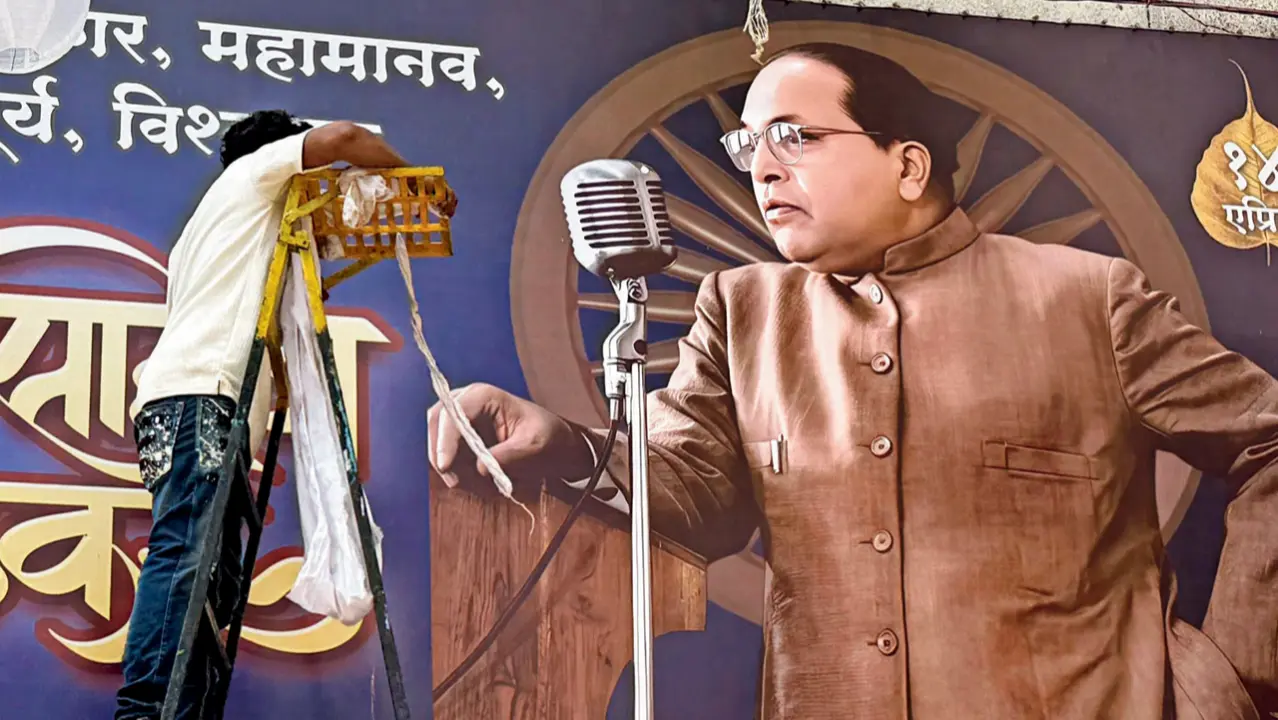
11 April,2026 07:43 AM IST | Mumbai | Abhitash SinghIn high regard A worker adds final touches to a poster of Dr Babasaheb Ambedkar in Borivli ahead of Ambedkar Jayanti celebrations on April 14 Notes from the animal kingdom Empathy is not exclusively a human trait, but most necessary for human society. Ingrid Newkirk (below), founder, People for Ethical Treatment of Animals (PETA) turns to this trait as the principle in her new book, Unlock the Animal World (HarperCollins). “There has never been a more crucial time to help children learn empathy and this book does that by providing real world examples of how extra-ordinary “others” are,” Newkirk shared. The table is set PIC COURTESY/IZUMI After a decade, Restaurant Week India has been revived by Gauri Vij (below) and Aatish Nath with mentorship from Nachiket Shetye, one of the original founders of RWI, which ran till 2016, and Chaitanya Rele. It takes place across Mumbai, NCR and Bengaluru from April 24 to May 3. “The concept takes price out of the equation when diners are choosing where to book their meal. The goal is to encourage diners to go beyond their familiar favourites and eat at quality restaurants showcasing their signature dishes. For a set price, diners get a three-dish meal (starter, main and dessert),” Vij said. Over 20 restaurants take part in Mumbai, including The Bombay Canteen, The Table, Bandra Born, Hakkasan, Izumi and Americano. The meals are priced at R1500 for lunch and R1800 for dinner plus taxes. To know more, log on to diningcollective.com/rwi. Art for Artemis’s sake Gain the Moon by Ruchita Madhok. PIC COURTESY/RUCHITA MADHOK While we’ve been humming Fly Me To The Moon ever since NASA’s Artemis II took off, Ruchita Madhok has put her fascination for the recently concluded mission on paper. Madhok’s Gain the Moon features intricate cyanotype work, and a touching quote: ‘It is our earnest hope for mankind that while we gain the moon, we shall not lose the world.’ When Apollo 11 carried messages from world leaders to the Moon in 1969, this was the message sent by Eric Williams, Prime Minister of Trinidad and Tobago. “It is a reminder to have our feet on the ground. It is unfortunate that the same country [USA] capable of scientific feats is also enabling destruction as we speak,” she told this diarist. To view or buy the artwork, log on to @ruchitamadhok. Van Rani, one stamp The new stamps by Sefi George. PICS COURTESY/@SUMMER_SCRIBBLES The Van Rani toy train at the Sanjay Gandhi National Park is ready to voyage across the country, thanks to Dahisar-based illustrator Sefi George. A new set of stamps bearing illustrations of the train comes just in time for the restoration of the iconic train after a few early hiccups stalled operations late last month. Recalling how she rose to stamp duty, George shared, “The park was keen on commemorating the long-awaited return with a nostalgic tribute. I had never designed a postal stamp before, but it was an exciting challenge.” A naturalist at heart, the artist also snuck in a few familiar sights from the park into the frame. We spotted Hill Turmeric, a seasonal monsoon plant, Silver Cockscomb, a common wildflower that often goes unnoticed, and a towering termite hill on the stamps that are now available online. Those keen to get their hands on them can log on to epostoffice.gov.in and navigate to the My Stamp section to find the set of 12 stamps.
11 April,2026 07:40 AM IST | Mumbai | Team mid-dayThe city’s green lung — Aarey Milk Colony — has once again proven its ecological significance, this time by helping scientists unlock new details about a little-known group of jumping spiders. A recent study published in ‘Zootaxa’ described two new species of ground-dwelling jumping spiders from India, while also documenting, for the first time, the female forms of two species earlier discovered in Aarey. Langelurillus onyx female Mumbai-based wildlife researchers Tejas Thackeray and Rajesh Sanap from the Thackeray Wildlife Foundation (TWF), along with Rishikesh Tripathi, John TD Caleb, Hemlata Koli, Vijay Kumar Koli, and Anjana Intodia, are part of the scientific publication. The study reinforces the ecological importance of Aarey, a contested but biodiversity-rich area that continues to surprise researchers with new discoveries hidden in plain sight. About the research Langeurillus udaipurensis male — species discovered in Rajasthan The research focuses on the genus Langelurillus — a group of tiny jumping spiders largely found in Africa and parts of India. In the Indian context, this genus has remained poorly studied, with only a handful of species recorded so far. India habitat Langelurillus sahyadri female, and male, found in Maharashtra >> Western Ghats: Langelurillus sahyadri was discovered in Kathi village in Satara district of Maharashtra. The species derives its name from the Sahyadri ranges of the Western Ghats, where it was found inhabiting shaded forest paths covered in dry leaf litter. >> Rajasthan: Langelurillus udaipurensis — was identified from Rajasthan’s Sajjangarh Wildlife Sanctuary. Researchers observed the spider actively moving over rocky terrain in forested areas, indicating its adaptation to dry, rugged habitats. >> Mumbai: The study sheds light on Langelurillus lacteus and Langelurillus onyx — two species first recorded in 2017 from Aarey. Until now, only the male spiders were known. Researcher Speak Rajesh Sanap, wildlife researcher, TWF‘These findings highlight how much remains to be discovered about India’s smaller fauna. Despite recent additions, the diversity of this group of spiders is still considered underestimated, with many more species likely awaiting discovery.’
11 April,2026 07:39 AM IST | Mumbai | Ranjeet JadhavMumbai is set to receive India’s first non-AC suburban local train with automatic door closure, marking a significant shift in the design of the city’s lifeline trains. The new rake, developed after the Mumbra incident, is aimed at improving passenger safety by preventing falls from open doors. The 12-car train, manufactured by the Integral Coach Factory (ICF) in Chennai, is currently on its way to Mumbai and is expected to arrive shortly. Railway officials say the move is part of a broader policy shift to introduce closed-door systems across all future suburban trains, both AC and non-AC. A first for Mumbai and Indian Railways This is the first time a non-AC local train with automatic doors has been developed for Mumbai’s suburban network and for Indian Railways. Automatic sliding doors on the new non-AC train. Pics/By Special Arrangement The rake, numbered 268201–268212, has been designed following consultations between the Railway Board and the Integral Coach Factory, with intervention from Railway Minister Ashwini Vaishnaw. “From the safety of commuters in Mumbai, it is very important that local trains operating in the city have closed doors. It has now been decided that all trains manufactured for Mumbai will have closed doors,” an official said. Explainer: How ventilation will work >> Roof-mounted blowers push fresh air into coaches>> Two air-intake units per coach>> Louvred doors and windows allow airflow>> Designed to replace open-door ventilation>> Aims to reduce suffocation in crowded conditions Closed-door system installed on Mumbai’s first non-AC suburban local train Concerns over water ingress >> In earlier trains, ventilation systems had faced issues due to water ingress during heavy rains.>> Officials said the new system includes anti-water ingress features to ensure rainwater does not enter the coaches. Train at a glance Type: Non-AC suburban local with automatic doorsRake number: 268201–268212Configuration: 12-car EMUManufacturer: Integral Coach Factory, ChennaiStatus: En route to Mumbai via WadiPolicy shift: Closed doors for all future locals Train design >> The train features a vestibule design, allowing movement across six connected coaches within each unit and will have open windows with sliding panes.>> This creates a seamless layout, unlike traditional compartmentalised locals. The ladies coach is expected to be located at either end of the train. Ventilation: The key challenge>> One of the biggest concerns with closed-door non-AC trains is ventilation.>> To address this, the new rake uses a forced ventilation system with roof-mounted blowers that push fresh air into the coaches. Each coach will have two such units.>> Additionally, louvred (slatted) doors and windows have been introduced to allow airflow even when doors remain closed.>> Officials said the system is designed to reduce carbon dioxide build-up and maintain airflow in high-density conditions. It includes:>> Door-driver interlocking system>> Sensors and talkback system>> Passenger information displays>> Enhanced ventilation systems Cost and upgradeCost: 10-15 per cent higher than standard localsUpgrade focus: Safety, ventilation and passenger information systems Journey to Mumbai The rake has been dispatched from Perambur in Chennai and is travelling to Mumbai via Renigunta as an empty EMU special.Central Railway will receive the train at Wadi station in the Solapur division before bringing it to Mumbai. It is likely to arrive within days. Trials before passenger service The train will undergo mandatory trials before it can be opened to passengers.These include:>> Confirmatory oscillograph car run (COCR) at 110 kmph to assess safety and ride quality>> Load trials using weighted material equivalent to passenger load>> Passenger trials before final inductionOfficials said the process may take a few months. Commuters speak Siddhesh Desai, vice president of Mumbai Rail Pravasi Sangh‘We welcome the introduction of non-AC Mumbai local trains with closed doors as a crucial step towards reducing railway accidents and improving commuter safety. However, safety must be approached holistically. Adequate first class, divyang (handicapped), and luggage compartments must continue to be ensured. Closed-door systems alone will not be sufficient unless supported by automated entry and exit systems similar to metro rail networks. We strongly recommend enhanced station security, better platform management, and the implementation of CBTC signalling for improved train control and frequency. Passenger awareness campaigns, strict crowd regulation during peak hours, and emergency response readiness are equally important. A comprehensive, commuter-centric approach will ensure Mumbai’s lifeline becomes safer, smarter, and more efficient for all’ Devraj Malekar, commuter‘The current rakes running on the Mumbai suburban network have open partitions primarily to allow air inflow from the doors and circulation inside the coach. The partitions also have openings from below, unlike the completely closed partitions in older DC EMUs. Even under a crushing load, forced ventilation is not sufficient, but air still circulates through the open doors. Now the railways are closing these doors in a non-AC train. I can’t imagine what the situation will be. Also, if the AC EMU rake design is being used, they should have gone ahead with an underslung design, which could have increased rake capacity by almost 1.5 additional coaches’ Vijay Aravamudhan, commuter‘The introduction of this non-AC closed-door 12-car rake will bring a mixed bag of challenges for the Central Railway Mumbai suburban network, which is already affected by a disrupted timetable, with EMUs running with average delays of 25 minutes. While closed doors will improve safety, several issues can be expected: The orientation of luggage and ladies’ compartments may change, leading to confusion.Closing doors during peak hours may be challenging and could further delay services.If first class is not included, it will add to peak-hour chaos. This move is likely to receive mixed acceptance.”
11 April,2026 07:26 AM IST | Mumbai | Rajendra B. AklekarADVERTISEMENT







-1775887642911_d.png?tr=w-436,h-271 "Air quality in Mumbai remained in the ‘moderate’ category on Saturday. File Pic")