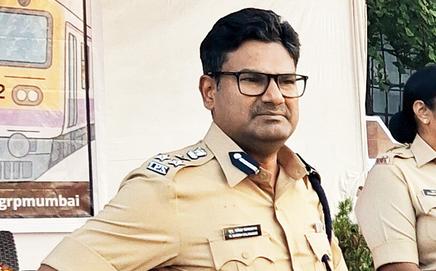
In a brief interview with mid-day, Government Railway Police (GRP) Commissioner M Rakesh Kalasagar spoke about the details of a cold-blooded murder that has sent shockwaves across the city. Excerpts from the interview How was the Malad incident handled?What happened was unfortunate. But we were on the job throughout the night. We nabbed the accused within 12 hours of the murder. That says everything. Our response was prompt, and we managed to track down the accused. The deceased’s family has made allegations regarding a delay in medical help...No. This is incorrect. There was no delay in conducting procedures. The victim was shifted to the nearest hospital immediately. Our teams handled the situation deftly. How was the accused tracked?Teams led by our DCP Sunita Salunkhe-Thackeray, with five inspectors, worked throughout the night and scanned the footage and localities. The accused was tracked down with the help of a facial recognition system and his movements tracked. He was arrested by laying a trap.
26 January,2026 10:41 AM IST | Mumbai | Rajendra B. AklekarAndheri West residents expressed their gratitude to the Brihanmumbai Municipal Corporation (BMC) after unauthorised constructions were removed from the area, improving road and pedestrian movement. On Saturday, residents felicitated DCM (K-West Ward) Bhagyashree Kapse at his office for the sustained action against illegal structures. Under the guidance of Mumbai civic chief Bhushan Gagrani, and Additional Municipal Commissioner (City) Dr Ashwini Joshi, the BMC has been consistently carrying out operations to remove unauthorised constructions across the city and its suburbs. In Andheri West, a campaign led by Alle, under Deputy Commissioner (Zone-3) Vishwas Mote, focused on clearing illegal structures along Veera Desai Road, Captain Samant Road, JP Road, and Apna Bazaar areas. The operation has significantly eased vehicular and pedestrian traffic, reduced congestion, and prioritised public safety by opening up roads and footpaths. Local resident associations and community groups in Dhake Vasahat and surrounding areas lauded the decisive and effective measures, which have received a positive response from citizens. The BMC administration has assured residents that such operations to improve traffic flow and civic safety will continue in the future. BMC files multiple FIRs during crackdown on unauthorised banners, removes 41 across Mumbai The Brihanmumbai Municipal Corporation (BMC) on Friday said that it has filed multiple FIRs during a crackdown on illegal banners in city and removed at least 41 unauthorised banners from parts of Mumbai. An official statement said that the civic body has taken strict action against individuals and organisations for putting up unauthorised banners in public places across Mumbai. Despite the civic body providing designated spaces for temporary advertisements, several banners were found illegally installed on electric poles and along roadsides without prior permission, officials said. "The BMC’s Licensing Department has registered cases against unidentified persons at Gamdevi, Malabar Hill and Dr D. B. Marg police stations. The action was taken on January 21 and 22, 2026, during which 41 unauthorised banners were removed," an official statement said. The Mumbai civic body has appealed to organisations, associations and businesses to display advertisements only at approved locations and after obtaining proper permission. The operation was carried out under the guidance of Deputy Municipal Commissioner (Special) Chanda Jadhav. Removal drives were conducted in several areas including Peddar Road, Pandita Ramabai Road, Bhulabhai Desai Road, Walkeshwar, Malabar Hill, Dr Dadasaheb Bhadkamkar Road, Maulana Shaukat Ali Road, Sardar Vallabhbhai Patel Road and Raja Ram Mohan Roy Road.
26 January,2026 10:38 AM IST | Mumbai | mid-day online correspondentHazy conditions are expected during the morning hours, with partly cloudy skies later in the evening and night across the city and suburbs on the 77th Republic Day. The maximum temperature is likely to reach 31 degrees Celsius, while the minimum may drop to 20 degrees Celsius, according to the India Meteorological Department (IMD). As per the Sameer app, Mumbai’s Air Quality Index (AQI) on Monday stands at 125, which falls in the moderate category. People with lung disorders, asthma, or heart conditions may experience some discomfort. AQI across Mumbai Bandra Kurla Complex: 135 Borivali East: 118 Byculla: 119 Andheri East: 150 Chembur: 115 Colaba: 105 Deonar: 140 Ghatkopar: 130 Meanwhile, the AQI in Thane is 128, and in Navi Mumbai, it is 105, both classified as moderate. Maharashtra records slightly cooler temperatures across several regions Maharashtra experienced slightly cooler temperatures across several regions on Monday compared to the previous day. Ahmednagar recorded a maximum of 28.9 degrees Celsius, down 1.8 degrees Celsius from January 25, while Aurangabad recorded 28.5 degrees Celsius, 1.1 degrees Celsius below normal. Dahanu experienced a high of 26.0 degrees Celsius, and Harnai was slightly warmer at 28.8 degrees Celsius. Jalgaon and Jeur recorded highs of 29.5 degrees Celsius and 31.5 degrees Celsius, respectively, while Kolhapur saw 29.2 degrees Celsius, slightly lower than the average. Hill stations remained cooler, with Mahabaleshwar at 25.2 degrees Celsius and Malegaon at 27.6 degrees Celsius. In Mumbai, temperatures were in the upper twenties, with Colaba at 29.6 degrees Celsius and Santacruz at 30.5 degrees Celsius. Other major towns included Nasik (29.1 degrees Celsius), Osmanabad (31.0 degrees Celsius), Parbhani (29.5 degrees Celsius), Ratnagiri (32.6 degrees Celsius), Sangli (30.6 degrees Celsius), Satara (30.7 degrees Celsius), Sholapur (31.7 degrees Celsius), and Udgir (30.0 degrees Celsius). Night temperatures remained comfortable, with Harnai at 21.2 degrees Celsius, Colaba at 21.0 degrees Celsius, and Ratnagiri slightly warmer at 20.4 degrees Celsius. Several regions recorded deviations from the normal, with Malegaon seeing the largest drop at 3.3 degrees Celsius below average, while Udgir, Sholapur, and Kolhapur recorded warmer night temperatures. Meanwhile, the national capital woke up to clear skies and a chilly morning on Republic Day 2026, with the city's primary weather station, Safdarjung, recording a low of 4.2 degrees Celsius, down more than two notches from the previous day.
26 January,2026 10:02 AM IST | Mumbai | mid-day online correspondentA striking tableau representing the Ministry of Education has been crafted at The Sir J.J. School of Arts, Architecture and Design (Deemed-to-be-de novo- University), blending India’s ancient knowledge systems with modern learning tools. Themed Ancient Origins, Digital Wings, the installation features students wearing virtual reality headsets, while Aryabhata — the father of Indian mathematics — is shown blessing today’s learners. At the centre of the 14-by-60-foot tableau is a rocket symbolising the National Education Policy (NEP) 2020, highlighting experiential learning and skills such as sports and music. The structure stands 16 feet tall and rises to nearly 20 feet using hydraulic lifts. At the rear is a revolving ‘Viksit Bharat 2047’ tower showcasing smart classrooms and tinkering labs. Panels also reflect education in regional languages and include a ‘jaadui pitaara’ displaying indigenous toys. Work on the tableau began a few months ago after the Ministry of Education shared the theme with Prof Dr Vijay Sakpal of JJ School. “JJ Schoolhas always played an active role in creating large-scale national art projects. This year, the tableau reflects the central vision of the Ministry of Education,” Sakpal told mid-day. Around 40 students and alumni were involved in designing and fabricating the tableau. The team used skills ranging from painting, sculpting, and portraiture to engineering, hydraulic, and rotating mechanisms, while electronics were employed for lighting effects on the NEP rocket. For many, it was their first experience working on a project of this scale. Final-year student Rohit Ghanashyam Kharote, 23, said, “It’s a rare opportunity where you interact with indigenous artists from across the country and learn about their culture and techniques. The exposure has been incredible.” The tableau is the result of coordinated efforts by design students specialising in applied arts and technology, interior design students handling model-making, and teams of sculptors and painters. On Sunday evening, the installation received its final touches before being fully assembled for the big day. By midnight, the tableau will be positioned along Rajpath ahead of the Republic Day 2026 parade, scheduled to begin at 10 am today.
26 January,2026 09:55 AM IST | Mumbai | Aditi AlurkarDespite explicit directives from the National Medical Commission (NMC) to eliminate unscientific and discriminatory notions of “virginity” from medical education, several forensic medicine textbooks currently in circulation for the present academic year continue to retain outdated descriptions that indirectly legitimise the discredited “virginity test,” forensic experts have warned. mid-day was the first to write on the directives from NMC. Historically, forensic medicine textbooks described so-called “signs of virginity,” such as the condition of the hymen, labia majora and minora, fourchette, clitoris and vaginal canal. They also promoted the insertion of one or two fingers to assess vaginal laxity — commonly referred to as the “finger test” to determine whether a woman was “accustomed to sexual intercourse” or to distinguish between virginity and defloration. These practices have long been criticised for lacking any scientific basis and for violating a woman’s dignity, privacy and bodily autonomy. Dr Indrajit Khandekar, professor, MGIMS According to Dr Indrajit Khandekar, professor in the Department of Forensic Medicine at Mahatma Gandhi Institute of Medical Sciences (MGIMS), Sewagram, such concepts should have been completely removed from medical textbooks published after the NMC reforms. NMC had issued Competency-Based Medical Education (CBME) curriculum guidelines for the Under-Graduate Medical Education Board (UGMEB), released on September 12, 2024, it mentioned “Medical Textbooks should clearly state that these so-called signs of virginity were wrongly labelled in the past and have no scientific or evidentiary value,” he said. “Medical graduates must also be trained to scientifically appraise and inform courts about the lack of validity of these tests, even when an examination is ordered.” The issue has been the subject of sustained advocacy by Dr Khandekar since 2011, when he began challenging the continued teaching and practice of virginity assessment in medico-legal examinations. Over the years, the campaign gained national attention, especially in the context of sexual assault cases, where such tests were often used to undermine survivors’ credibility. The revision In 2022, following extensive deliberations, the NMC revised the undergraduate Forensic Medicine syllabus. The modified competencies explicitly declare that signs of virginity are unscientific, inhumane and discriminatory. The revised curriculum mandates that medical graduates be trained to inform courts that these tests lack any scientific foundation, even if such assessments are sought through judicial orders. Dr Khandekar was a member of the NMC expert committee that recommended these reforms. Based on the committee’s recommendations, the NMC also issued advisories to authors and publishers of medical textbooks, directing them to remove unscientific content related to virginity assessment and to update chapters in line with evidence-based medicine and human rights principles. However, a review of recent editions of several forensic medicine textbooks suggests that compliance with these directives has been partial and largely cosmetic rather than substantive. While many textbooks now describe the finger test as “unscientific,” they continue to include detailed descriptions of findings such as ease of finger insertion, vaginal laxity or the appearance of the hymen, often categorising women as “virgin,” “false virgin,” or “deflorated.” Experts argue that such descriptions perpetuate the same myths under modified terminology. In many cases, the revised NMC competencies are merely mentioned at the beginning of the chapter on virginity, while the main text reproduces older content on so-called signs of virginity almost verbatim. “Merely stating that the finger test is unscientific while continuing to teach its conclusions is misleading and dangerous,” Dr Khandekar said. “There is no anatomical or clinical method to determine a woman’s sexual history.” Why delay? Asked the reason for the delay in implementation of NMC directives, Dr Khandekar said, “The NMC guidelines on virginity were issued at the end of 2022, so ideally textbook editions published from 2024 onwards should have incorporated these revisions. Unfortunately, recent editions continue to reproduce the same unscientific descriptions of so-called signs of virginity. I had expected these errors to be corrected in subsequent editions, but to my surprise, even 2025 editions retain the outdated content and continue to use finger insertion as a criterion to differentiate between ‘true’ and ‘false’ virginity. More concerning is the claim in some textbooks that while the finger test should not be conducted in rape cases, it may still be used in matrimonial disputes, such as divorce or nullity of marriage. It is difficult to understand how a test can suddenly become scientific and humane in matrimonial cases when it is acknowledged to be unscientific and inhumane in cases of sexual assault. This contradiction highlights the urgent need to challenge and correct these practices.” Medical myths Global health authorities have consistently rejected the concept of virginity testing. The World Health Organisation (WHO) and other international bodies have stated that such examinations have no scientific basis and constitute a violation of human rights. Experts are now calling for stricter enforcement of NMC directives and comprehensive revision of medical textbooks to ensure that outdated, harmful concepts are fully removed rather than superficially rebranded. They emphasise that ethical, evidence-based medical education is essential not only for protecting women’s rights but also for ensuring that courts receive scientifically accurate medical opinions. A forensic faculty from a city-based medical college said, “The two-finger test is unscientific, and its interpretation has no medical basis. We clearly instruct our students not to use terms such as ‘habituated to sexual intercourse’. In forensic medicine, this test has been declared scientifically invalid and therefore should not be performed. At our college, students are advised neither to conduct nor to record such examinations, including pelvic examinations of virgin girls for assessing sexual history. Doctors must provide courts with scientifically accurate opinions, as courts rely on medical expertise.” Expert view Dr Rajesh Dhere, Secretary of the Indian Academy of Forensic Medicine and Chairman of the Junior Doctor Network, Indian Medical Association, Maharashtra ‘These guidelines must be strictly adhered to. Earlier, there was a mistaken belief that scientific examination in cases of sexual abuse or sexual assault depended on assessing the vaginal inlet. This approach was unscientific, and the Hon’ble High Court has clearly ruled that such tests, which are scientifically invalid and undermine the dignity of women, must be discontinued in practice. We no longer teach these methods. The problem lies in the fact that multiple textbooks are published by different authors without proper verification by competent authorities before they enter the market. There must be effective monitoring, especially of textbooks dealing with medico-legal instruction and procedures, as these are later relied upon as evidence in criminal proceedings. This is a serious concern, and the directions of the Hon’ble Court and the NMC guidelines must be followed strictly.”
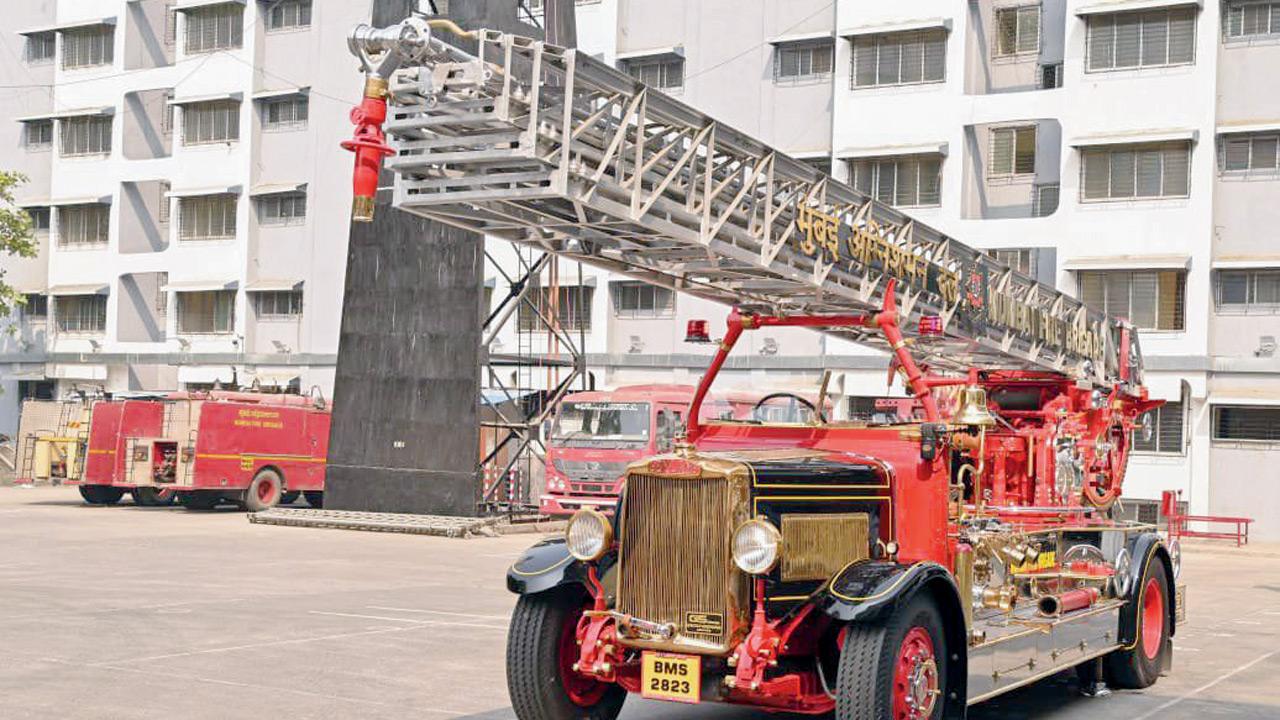
26 January,2026 09:08 AM IST | Mumbai | Vinod Kumar MenonThe BMC has restored its oldest turntable ladder (a firefighting vehicle used to scale heights in case of fires in tall buildings), and will induct it in Mumbai’s fleet of firefighting vehicles. This turntable ladder was manufactured in 1937 by Leyland Motors Ltd in England (later Ashok Leyland) and was inducted in Mumbai Fire Brigade’s fleet on September 24, 1941. It was used in controlling the fire that broke out on a cargo ship at the Mumbai docks in 1944. About the ladder At the time of its induction, this ladder was considered state-of-the-art for its ability to scale the height of tall buildings, warehouses, and elevated locations in the port area to douse fires. This ladder is made entirely of iron and can be rotated manually. Over time, the turntable ladder vehicle became inoperable and was preserved as a historical artefact at the Mumbai Fire Brigade headquarters at Byculla. Most prominent role On April 14, 1944, a fire broke out on the cargo ship SS Fort Stikine, which was docked at the Victoria Docks. The ship, which was destroyed in two blasts as it was loaded with ammunition, explosives, fuel, and war material. It destroyed at least 27 other ships in its vicinity, killed 800-1000 residents of the city, and took three days to douse. This vehicle was used for tasks such as reaching and extinguishing the fire in the tall warehouses at the port, rescuing those trapped near the ship, and rescuing the injured. Restoration process An official from BMC said, “We undertook the restoration process as Municipal Commissioner Bhushan Gagrani, who was passionate about its historical significance, proposed and supported its restoration. It has been a tedious process for various reasons related to the age of the vehicle. It was very difficult to obtain original spare parts.” Therefore, contemporary technical records, blueprints, and references were sought. The design of each spare part was created, and these parts were newly manufactured using modern technology. The vehicle will be inducted into the Mumbai Fire Brigade’s fleet after an inauguration by Maharashtra Chief Minister Devendra Fadnavis today. Specialised vehicle These are specialised fire engines with a large rotating ladder mounted on a truck chassis. They are known for their use to scale heights in case of fires in tall buildings, and can be used in firefighting, rescue operations, and observation. They can rotate 360 degrees and include a rescue cage at the top for lifting firefighters or evacuating people. Mumbai’s tallest turntable ladder At present, Mumbai’s highest-reaching turntable ladder is 91 metres tall, able to scale 28-30 storey buildings.
26 January,2026 08:55 AM IST | Mumbai | Eeshanpriya MSWhen Yorik D’Abreo, 44, won an award for the ‘Best Maintained Indian Heritage Motorcycle’ at the ongoing annual vintage car fiesta at the World Trade Centre Cuffe Parade it was a mixed emotions moment for him. His 1964-manufactured Jawa 250 bike, a real eye catcher at this fiesta, was his late father Anselm D’Abreo’s vehicle. Senior D’Abreo passed in November 2025. His son, Yorik maintained the bike and entered it in this exhibition. Yorik said, “This award is not just for me, it is for dad. I could literally ‘hear’ dad applauding when I went up on the dais to claim the prize on Saturday night. I look in the sky, and amidst the stars I see his face, smiling with pride. That is why the award evoked mixed emotions — happiness at getting it and slightly sad too as I wish dad was here to accept it.” The history Yorik, an Andheri resident, said, “This bike was bought by dad second hand from a church priest in the early 1970s, when dad was in his early 20s. He knew the bike like the back of his hand. He did all the repairs, upkeep on his own. Dad’s friends who owned bikes often visited when their machines needed repairs… his popularity zoomed,” laughed Yorik. Today, the bike has stood steadfast amongst generations. Yorik said, “Dad rode with a couple of his buddies, and today the sons of those [his] buddies are friends, which means me and the other guys, we still have our dad’s bikes.” Yorik’s late father and his bike. Pic/By Special Arrangement Wheels and wisdom go together. “My father taught us it is not just fun riding but also maintaining the bike yourself and understanding it. That philosophy has stayed with me, and I do most repairs and maintenance myself,” said the oil and gas industry professional. That maintenance spans engine overhauling, basic upkeep and tuning. Yorik’s younger brother Kyffin is also an avid biker and runs a motorcycle workshop called Kyff’s Customs in Goregaon. Yorik added, “I restored this bike in my brother’s workshop and it was done last in 2022. Though we have changed the colour of the bike several times, 2022 was the last time we did so.” Honour code As a sign off, Yorik stated that the days the bike has been exhibited, “has been a real honour for me. This is the first time that I have participated in a car fiesta, which, of course, has bikes too. There are so many young people coming to the exhibition. I see curiosity, excitement and mobile cameras flashing everywhere with the ubiquitous selfies,” smiled Yorik. “To young riders and enthusiasts I say, and through this bike prove I practice what I preach: Do not discard something simply because you can’t fix it at once. Try and repair it. Even if you cannot, do understand and take the pain to cherish what you have till it becomes priceless. The same philosophy applies to life. Learn to build, repair, and have patience. Do not simply give up,” said Yorik.
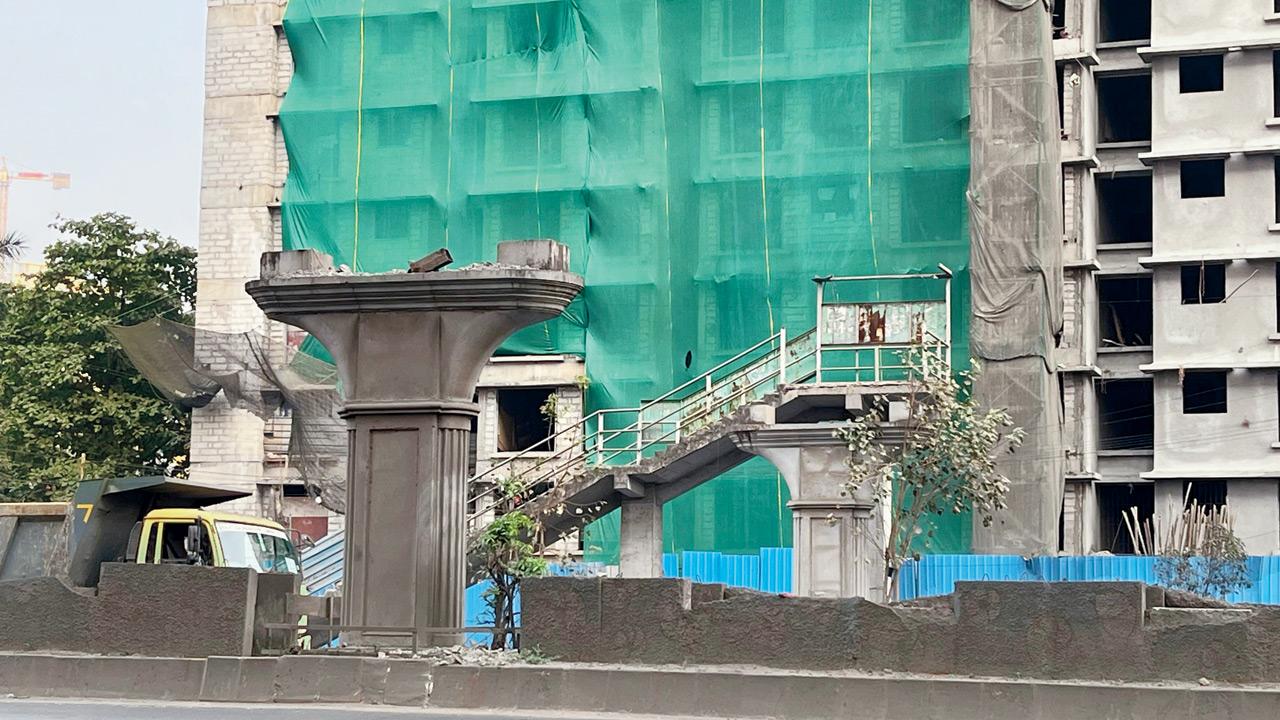
26 January,2026 08:44 AM IST | Mumbai | Hemal AsharAfter months of uncertainty and safety concerns, the Brihanmumbai Municipal Corporation (BMC) has finally demolished the foot overbridge (FOB) at Vikhroli that had earlier been declared dangerous, bringing temporary relief to residents and motorists in the area. The ageing structure, used by thousands of commuters to cross the busy road, had been shut after inspections flagged serious structural defects. “Every time we passed under or over the bridge, there was fear that something could collapse,” said Sanjay Jaiswal, a resident who regularly used the FOB. Motorists echoed the concern. “I use the Eastern Express Highway daily. You keep thinking, what if I’m the unlucky one?” said Nitin Mane. However, the relief has been short-lived, with fresh worries surfacing after the bridge’s removal. With no alternative crossing in place, pedestrians are now forced to cross the high-speed road at ground level, risking accidents in heavy traffic. Adding to the concern is the uncertainty over how long the construction of a new FOB will take. “No public infrastructure work gets done quickly, and if it is rushed, quality suffers. It’s a lose-lose situation for common people. We hope authorities complete the new bridge without compromising on safety,” said Mayur Gavan, a college student who used the FOB daily to commute. Residents have also flagged safety hazards left behind after the demolition, with parts of the staircases still hanging on either side of the road. “The bridge is gone, but the dangling stairs themselves look dangerous,” Jaiswal said. Civic officials said plans for a new FOB are in progress and that temporary safety measures will be introduced. “The tendering process has begun, and work should start soon,” a BMC official said.
26 January,2026 08:25 AM IST | Mumbai | Ritika GondhalekarIn a development that has delighted wildlife enthusiasts, the Sahyadri Tiger Reserve (STR) is now home to three dominant male tigers that have successfully established their territories over the past three years. The three males, STR T1 Senapati, STR T2 Subhedar, and STR T3 Baji, were confirmed during Phase I of the All-India Tiger Estimation exercise, conducted earlier this month by the National Tiger Conservation Authority (NTCA) and the Wildlife Institute of India (WII). While Senapati and Subhedar continue to rule the Chandoli landscape, Baji has firmly established his territory in the Koyna region, forest officials said. Tigers and their territories According to the Forest Department, T1 Senapati and T2 Subhedar are largely active in the Chandoli range, while T3 Baji dominates the Koyna forests. STR T2 Subhedar, one of the dominant male tigers ruling the Chandoli range of the STR. Pics/STR/Maharashtra Forest Department “Baji’s territory extends from Bhairavgad to Pali and Maldev, where he is regularly sighted moving and hunting within the Koyna landscape. Recent camera trap footage has captured clear photographs and videos of him,” a forest official said. Officials added that Baji’s pugmark measures approximately 16 cm by 16 cm, indicating a fully grown male tiger. He is estimated to be three to three-and-a-half years old. Tiger estimation survey The NTCA and WII conducted Phase I of the All-India Tiger Estimation survey in the Sahyadri Tiger Reserve between January 12 and 17, with nearly 75 volunteers from across the country participating in the exercise. Forest officials said camera traps installed across the reserve have helped document the movement of tigers and several other wildlife species, strengthening long-term monitoring efforts. Breeding prospects improve Officials are optimistic that the recent relocation of two tigresses from the Tadoba–Andhari Tiger Reserve to STR will significantly boost breeding prospects in the region. STR T1 Senapati, the dominant male tiger active in the Chandoli landscape of the Sahyadri Tiger Reserve “In the long run, an increase in tiger numbers is expected to strengthen forest tourism in Sahyadri and create new livelihood opportunities linked to eco-tourism,” a Forest Department official said. ‘A revival after years’ Honorary Wildlife Warden Rohan Bhate said the return of tigers marks a major turnaround for the reserve. “We have been studying wildlife in the Sahyadri for the past 30 years. Until 2006–07, tigers were present here, but the years that followed saw intense conflict and a decline in numbers,” Bhate told mid-day. “For the last three years, tigers have once again established themselves in the Sahyadri region. At present, there are five tigers in the reserve, which is a matter of great joy. With the reintroduction of females, the population is expected to rise further, and Sahyadri will see very good days for eco-tourism,” he said.
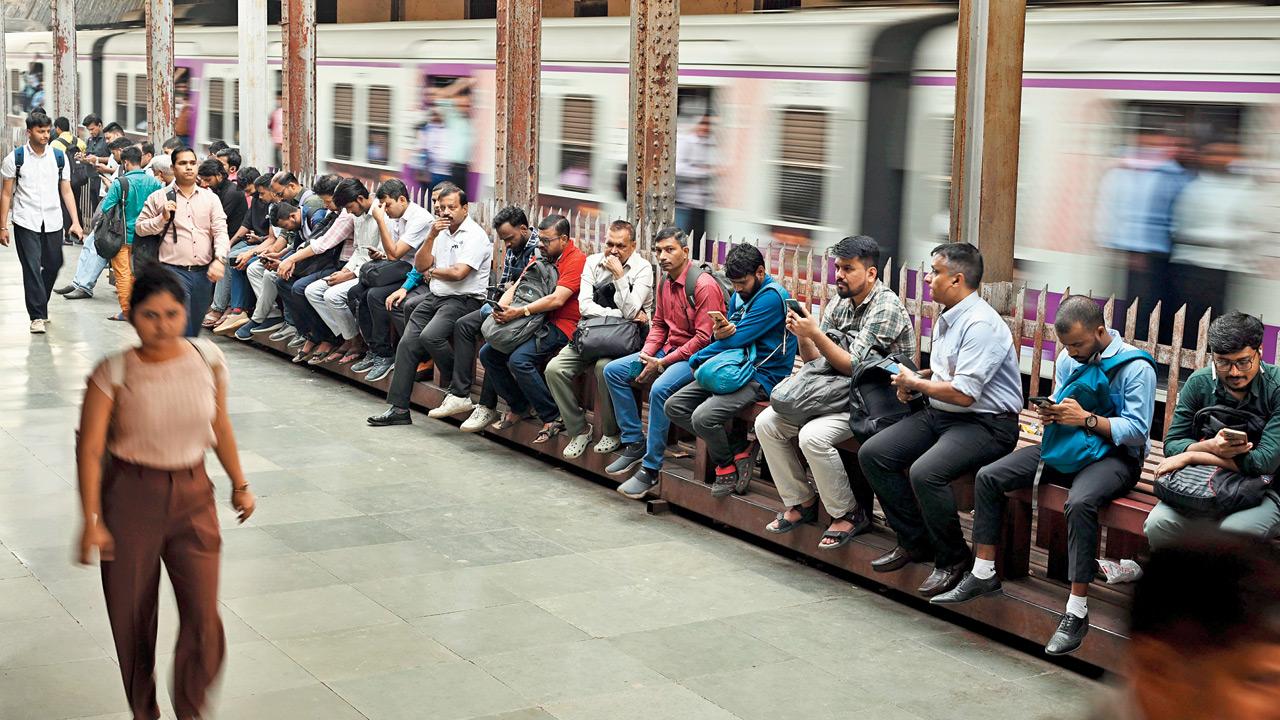
26 January,2026 08:21 AM IST | Mumbai | Ranjeet JadhavA series of violent incidents inside the Mumbai local trains over the past year, ranging from robbery and stabbing to fatal assaults and suicide, has raised serious concerns about commuter safety on the suburban railway network. In November 2024, a seat dispute inside a local train led to the murder of a commuter at Ghatkopar railway station. A 16-year-old boy allegedly stabbed the victim to death after a heated argument over seating during the journey. The accused was later identified through CCTV footage and was sent to a juvenile detention centre after being arrested by the GRP. Another disturbing incident occurred in November 2025, when a 19-year-old first-year science student died by suicide in Thane, days after allegedly being assaulted on a local train following an argument over not speaking in Marathi. The incident occurred between Ambernath and Kalyan. The victim’s father later told police that his son was under severe psychological stress after the incident, which he believed pushed him to take the extreme step. In December 2025, a young man was stabbed multiple times inside a moving CSMT-Panvel local train near Vashi station. The Government Railway Police (GRP) registered an attempt-to-murder case after the attacker fled the scene. The victim, a call centre employee from Ghansoli, sustained serious injuries to his neck, chest, back and waist. The incident occurred between Mankhurd and Vashi stations. In the latest case reported in January 2026, a 30-year-old man lost his leg after being pushed off a moving train in Thane following a phone robbery. The victim had boarded a fast local train from Thane to Badlapur and was travelling in the luggage compartment when a man sitting next to him suddenly snatched his mobile phone. During the fight that followed, the victim fell from the moving train. He suffered a traumatic amputation of his leg, along with serious injuries to the back of his head and left cheek, and swelling near his eye. Voices of Mumbai railway commuters “People have become short-tempered these days. I’ve travelled for decades, and earlier there was chaos but less anger. Now, commuters are exhausted and irritable. You feel safe most days, but never fully secure. The police need to be more attentive instead of being in their own world,” said Sulochana Desai, 54, a school teacher. “Train delays and overcrowded stations are making commuters angry and frustrated. That anger often leads to conflict. Most days, you’re just trying to survive the rush. One argument, one push, and things can spiral quickly,” said Rakesh Patil, an office executive. “While travelling, you have to remain alert at all times, especially during peak hours. It’s not exactly fear, but you’re constantly guarding your space. The train moves fast, but your mind never relaxes. There are many sensitive people around, and you never know who is coming from where,” said Neha Fernandes, 29, a marketing professional. Passenger association reactions “Most government and police personnel remain busy checking bags at FOBs and platforms at stations like Malad and Borivali instead of monitoring passenger safety during peak hours. Passengers are helpless if something happens inside a moving train. At times, helplines do not work or calls go unanswered. Many passengers are also afraid to pull the chain due to rules and penalties. RPF offices are not easily accessible from platforms. A panic button is essential in all local train coaches for emergencies. While AC locals have a facility to contact the guard or motorman, this must also be introduced in non-AC trains. The heavy budget allocated for railway safety often appears to be only on paper,” said Shailesh Goyal, former member, National Railway Users Consultative Committee. “What kind of safety can GRP or RPF provide when field staff are often busy on their mobile phones? Transgenders, beggars and unauthorised vendors are very common inside local trains. Complaints have been made repeatedly, even at the IG level, but with no result. There are CCTV cameras in some AC EMU trains, but RPF and GRP rarely use the footage to curb anti-social elements,” said Rajiv Singal, member, Western Railway Mumbai Divisional Railway Users’ Consultative Committee. “This incident highlights the urgent need for enhanced safety measures and increased staffing across the Mumbai railway network, including the Mumbai Central division. As a passenger association representative, I urge the Ministry of Railways to deploy additional staff in the Mumbai division to improve commuter safety. I also request the Maharashtra government to increase GRP personnel to prevent such incidents in the future,” said Ketan Shah, member, Zonal Railway Users Consultative Committee.
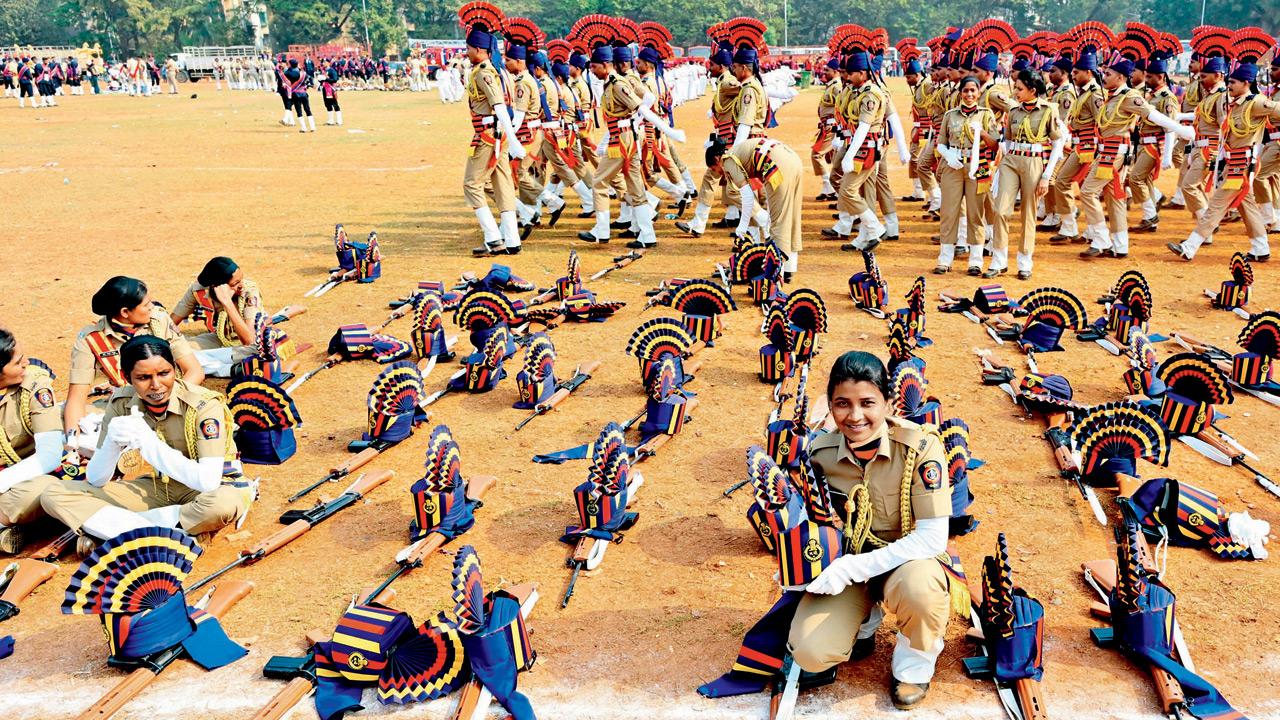
26 January,2026 08:15 AM IST | Mumbai | Rajendra B. AklekarReady for Republic Day Female cadets of the Maharashtra Police take a break during the full dress rehearsal ahead of the 77th Indian Republic Day parade at Shivaji Park in Dadar A tribute in verse The passing of the respected ecologist and academic Madhav Gadgil earlier this year was a reminder of the few names who fight for the increasingly shrinking natural resources of the country. “The late Maruti Chitampalli (right) was among those names. He was not just a naturalist, but also a writer; quite a brilliant one at that,” shared Revati Jogekar, co-founder, Yellow Door Studios. A moment from Swapnil Phadke’s reading. Pic Courtesy/YellowDoor Studio For birders in Mumbai, Chitampalli might be a familiar name owing to his contribution to the Karnala Bird Sanctuary. To commemorate the Padma Shri Award-winner’s contributions, the studio hosted a reading of his poetic works, Aranya Akshar Hotana, and recalled his contributions to conservation efforts on Sunday, January 25. “It was incidental that we ran into Swapnil Phadke, a nature conservationist, and someone who had closely worked with Chitampalli in his early years. During the conversation, we realised that few people remembered him, and even those that did talked of his conservation efforts, but not his writing. So, we decided on hosting the session. We had a narration of his stories and works, followed by readings from his verses by Phadke,” shared co-founder Sanveed Jogekar. Poetic break from the city Priya Malik at a performance The calm reservoir of Panshet will play the venue for the 4M Festival that will open doors on February 14. Hosted by Tape A Tale, the two-day event will combine storytelling, music, and community experiences amidst nature to offer a new experience away from the rush of the city. Co-founder Kopal Khanna shared, “The festival will transform Panshet into a living, breathing cultural playground. Set against a lakeside backdrop, and open skies, the festival brings together mountains, music, mic, and magic that unfold from day to night.” Kabir Cafe jams on stage. Pic Courtesy/@priyasometimes;@kabircafealive Headlined by names such as Priya Malik, Amandeep Singh, Vanika Sangtani, Kabir Cafe, Yahya Bootwala, Divyam and Khwab, among others, the events cater to a diverse range of creative performances. “Panshet won’t just be the location. It is also an unplugged, intimate setting designed for conversations, stargazing, and shared moments away from the rush of the city,” Khanna told this diarist. Belly good news The wall of the new space also sports a map of the state of Nagaland After a brief break to increase their space, go-to Naga food spot, Naga Belly, reopened on January 23. The restaurant has now shifted to a larger address in the same building in Andheri. (From left) An arrangement on the wall; Watirenla Longkumer, Zhuvikali Assumi “We were a small set-up, and wanted a comparatively larger area. The space crunch, at times, used to make people stand in queues outside, leading us to disappoint them at times. We also plan on expanding the menu to more indigenous ingredients,” revealed founders Watirenla Longkumer and Zhuvikali Assumi. The Constitution in the limelight A moment from the performance in Solapur What goes into the making of a document that reshaped an entire Subcontinental culture? For Darshan Mahajan, this curiosity led to the creation of the play, Rashtragranth. Backed by the artist support initiative, The ShubhLab, the production toured Maharashtra in 2024, and finally opened at the Ravindra Natya Mandir in Prabhadevi on the eve of Republic Day. Darshan Mahajan. Pic Courtesy/Artistic Humans Mahajan, founder, Artistic Humans, shared, “Our objective has been to work with marginalised, and struggling groups of India using arts as a medium of expression. The play was envisioned as a project that empowers the younger generation of college students, through the story of the Indian Constitution, and how their rights came into being.”
26 January,2026 07:59 AM IST | Mumbai | Team mid-dayADVERTISEMENT