










Maharashtra Congress chief Harshvardhan Sapkal has alleged that the blast at a mosque in Beed was part of the ruling Mahayuti alliance’s strategy to create communal unrest in the state. He accused the government of adopting divisive tactics similar to the British-era policy of “divide and rule"
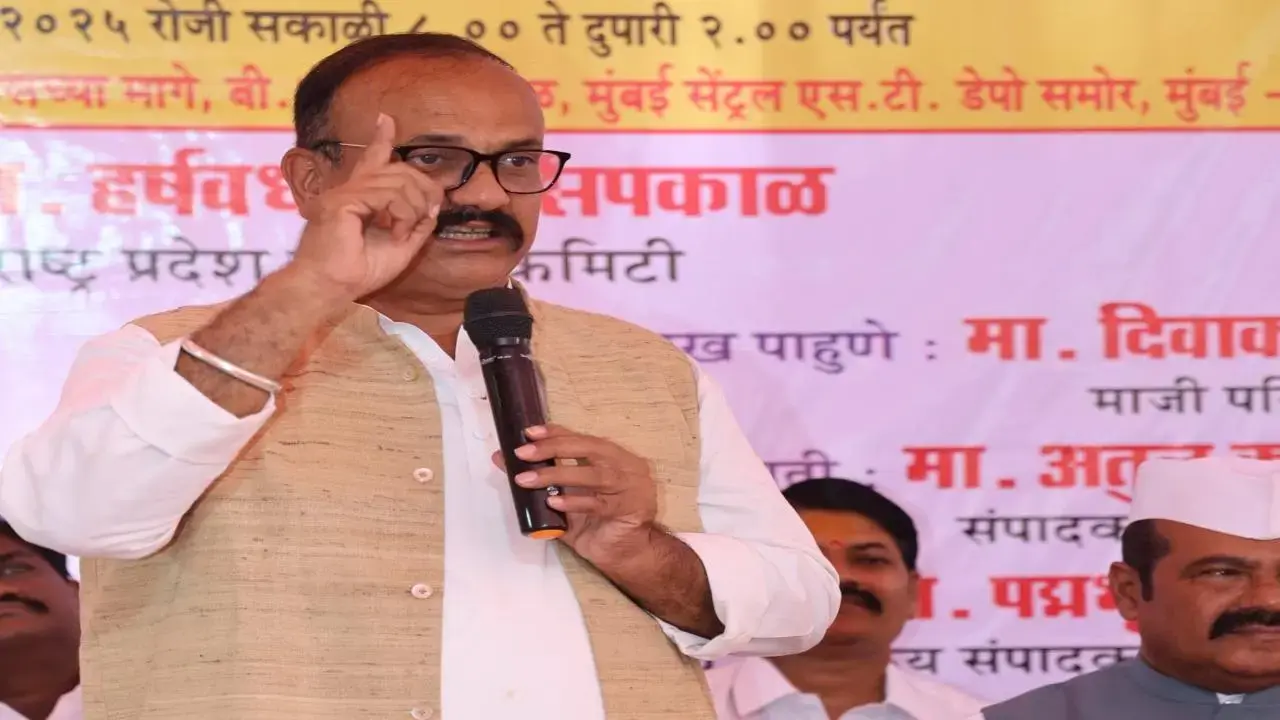
Harshvardhan Sapkal. Pic/X
Maharashtra Congress chief Harshvardhan Sapkal on Monday alleged that the recent blast at a mosque in Beed could be part of the ruling Mahayuti alliance's larger agenda to incite communal unrest in the state.
Addressing the media in Buldhana, Sapkal accused the ruling coalition of employing the British-era strategy of "divide and rule" to further political gains. According to PTI reports, he claimed that communal politics was being deliberately propagated in a state known for its progressive ethos.
"Unity in diversity is the essence of India and its people. Maharashtra dharma is inherently progressive, yet today, it is being threatened by a crisis of communalism," Sapkal stated, as per PTI.
He further alleged that the ruling alliance was deliberately attempting to keep Maharashtra in a state of turmoil. "The Beed mosque blast could be part of their broader motive to create instability and discord in society. I sincerely hope that better sense prevails," he remarked.
According to PTI, the blast took place at a mosque in Ardha Masla village in Georai tehsil on the eve of Eid-ul-Fitr. The incident reportedly followed an altercation between two groups during a procession, leading to the arrest of two individuals.
Sapkal also expressed concern over the deteriorating law and order situation in the state, claiming that criminals were moving about unchecked. "There are several instances where criminals are not even traced. The law and order situation in Maharashtra is increasingly worrisome," he said, according to PTI reports.
Police data cited by PTI indicates that since January this year, Maharashtra has witnessed 823 incidents of communal unrest, including the recent violence in Nagpur. Authorities have pointed to various factors contributing to these tensions, such as demands for the removal of Aurangzeb's tomb and the circulation of misleading content on social media.
In recent weeks, districts such as Nandurbar, Pune (Rural), Ratnagiri, Sangli, Beed, and Satara have also experienced communal disturbances. As per PTI reports, much of the unrest has stemmed from demands by right-wing organisations advocating for the demolition of the Mughal emperor’s tomb in Chhatrapati Sambhajinagar district.
On March 17, mobs wreaked havoc in several parts of central Nagpur following a protest organised by Bajrang Dal and Vishva Hindu Parishad. The demonstrators called for the removal of Aurangzeb’s tomb, arguing that it symbolised "pain and slavery."
(With inputs from PTI)
 Subscribe today by clicking the link and stay updated with the latest news!" Click here!