








Vispute firm as activists question cost, water source, red soil U-turn
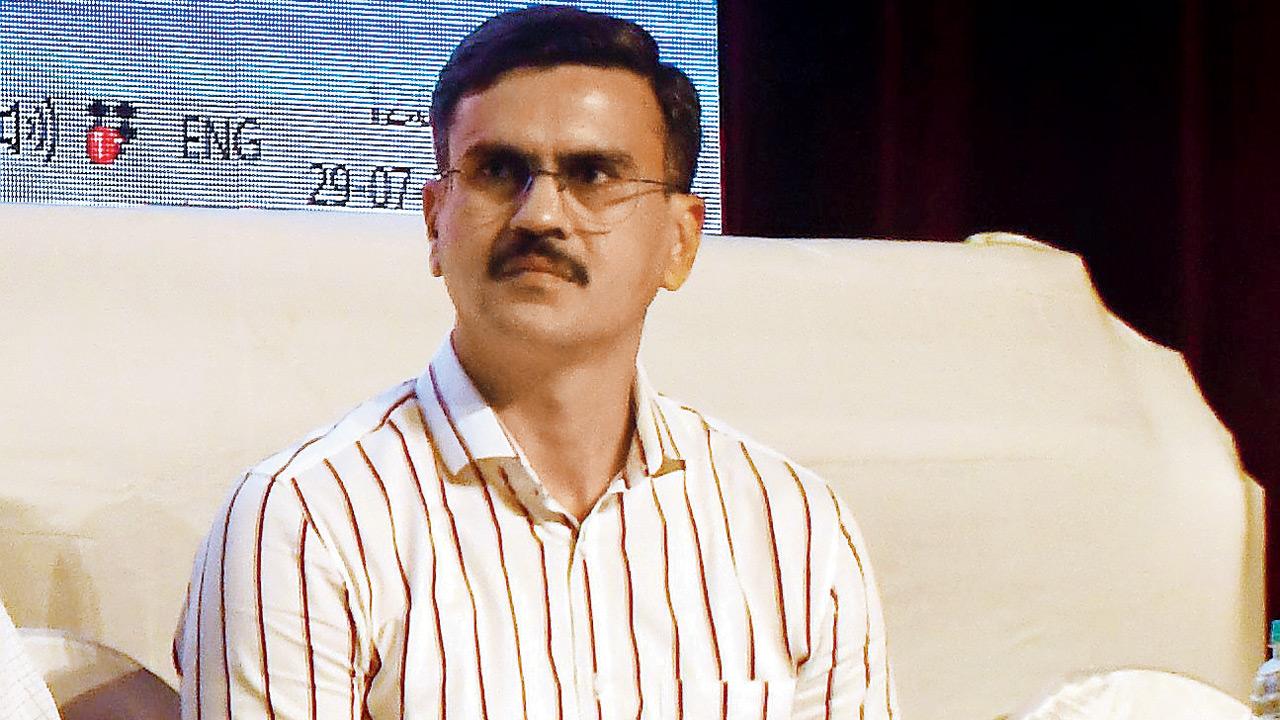
Vinayak Vispute, assistant commissioner of G/North Ward. File pic/Ashish Raje
As the Brihanmumbai Municipal Corporation (BMC) trials a grass turf patch at Shivaji Park following directives from the Maharashtra Pollution Control Board (MPCB) and IIT-Bombay, questions are piling up from residents and civic activists about the project’s sustainability, use of water tankers, and sudden U-turns on red soil removal. mid-day spoke with Vinayak Vispute, assistant commissioner of G-North Ward, who responded to key concerns about the project’s future, cost, and transparency.
Excerpts of the interview with Vinayak Vispute, assistant commissioner, G/North Ward, BMC
Where will the water come from for maintaining the grass?
The grass is self-sustaining, especially during the monsoon months. Our garden department is currently working on a long-term solution to ensure its survival in the dry season, particularly during summer.
What will be the cost to the BMC, especially during summer (Feb–May)? How will it be funded?
There’s no cost at present since it’s the monsoon. The pilot patch is being maintained under directives from MPCB and IIT-B. We’re testing feasibility before scaling up. Based on the results, a report will be submitted to MPCB. Any future expenses will be decided accordingly.
What is the plan for maintaining the turf during large mass gatherings like political rallies or parades, which take place four to five times a year?
For this pilot patch, we plan to fence it off during such events to prevent damage. This is as per MPCB and IIT-B guidelines.
What is the status of the rainwater harvesting system at Shivaji Park — 35 wells were built in 2022 at a cost of Rs 4 crore?
Currently, it’s not functional. However, R20 lakh has been allocated to rejuvenate the system. We’ve already held consultations with IIT-B and the environment department on this as part of the precinct’s maintenance plan.
Why wasn’t water from these wells used during summer 2025? Instead, BMC used tankers daily to sprinkle water for dust control.
Those were urgent measures to immediately address dust complaints from residents. When the issue was flagged, we responded with practical short-term steps.
No explanation has been given for the shift from the MPCB’s order to remove red soil, to BMC deciding it can’t be removed. Why?
The final decision was taken jointly by the Government of Maharashtra, MPCB, and BMC. All communication and official correspondence regarding this is on record.
 Subscribe today by clicking the link and stay updated with the latest news!" Click here!