








While India celebrates women’s achievements, thousands of survivors of gender-based violence face delayed justice and the patriarchal lens of investigations
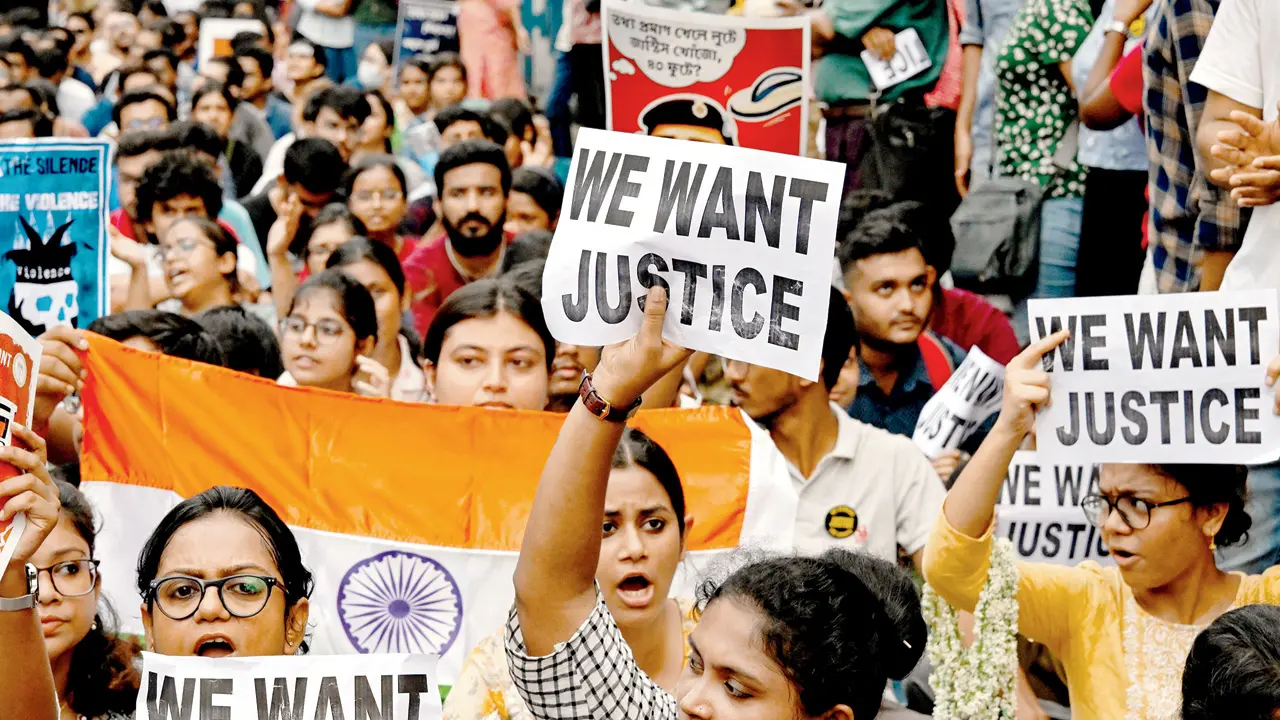
True empowerment is measured in how the State responds when a women’s dignity is violated. PIC/GETTY IMAGES
While India celebrated International Women’s Day recently, the national conversation often highlighted stories of women breaking barriers in boardrooms, laboratories, courtrooms, and sports arenas. Yet, beyond the spotlight of achievement lies a quieter and more troubling reality unfolding in court corridors and police stations across the country. For thousands of women who approach the justice system after experiencing violence, the journey toward accountability is marked not by swift protection but by years of hearings, adjournments, and uncertainty, raising a difficult question: Can empowerment truly be celebrated if justice itself remains delayed?
Silent battles behind the applause
In the dimly lit corridors of courts across India, a woman waits. She first came seeking protection years ago, her voice trembling as she asked the State to stand beside her. Today, she is still here, clutching her case files, navigating endless adjournments, delayed investigations, and a justice system moving slower than the trauma it was meant to heal.

Stuti Galiya, Venkatesh Nayak and Audrey D’mello
“Thousands of women continue to fight battles unseen, often alone. Empowerment is celebrated through CEOs shattering glass ceilings, women scientists leading innovations, lawyers reshaping jurisprudence, and athletes redefining limits. But behind the headlines, in police stations and courtrooms, empowerment has a different, quieter face, one defined by resilience against neglect, bias, and delay,” said Advocate Mohini Priya, Advocate on Record at the Supreme Court, who has witnessed it all, in her last two decades of legal practice.
The numbers that speak in silence
In 2022, 4,45,256 crimes against women were registered across India — nearly 51 complaints every hour. The largest category? Cruelty by husbands or relatives. “Rape cases numbered 31,516, and in more than 90 per cent of these, the accused was someone the survivor knew, someone she might have trusted. Homes, workplaces, schools, and neighbour-hoods meant to be their haven are often the scene where a woman’s dignity is ravaged,” points out Advocate Priya.

Mohani Priya, Advocate
Yet the law, despite its promises, moves at a snail’s pace. Repeated court appearances, adversarial cross-examinations, and prolonged uncertainty transform the very system meant to deliver justice into another form of trauma. “Criminologists call it secondary victimisation, where institutional delays and scrutiny deepen the wounds survivors already carry,” Priya explains.
The invisible chains of bias
Even when the law is on her side, a woman faces unseen barriers. Gender stereotypes subtly shape investigations and trials. “Questions about her clothing, her behaviour, her past, the very life she lived before the crime are wielded like weapons against her credibility,” said Mohini. This, despite the Supreme Court repeatedly warning against such reasoning, yet patriarchal shadows persists. “For survivors, the fear of disbelief becomes as terrifying as the violence itself. Justice, they discover, is not just about proving guilt; it is about surviving the glare of suspicion,” Priya tells Sunday mid-day. “Even recently, the brutal rape and murder of a young trainee doctor at Kolkatta’s RG Kar Medical College and Hospital shocked the nation. The outrage was not only for the crime, but for the haunting questions it raised about institutional response, evidence handling, and the vulnerability of women in professional spaces,” she further added.
Weak investigations, says solicitor Stuti Galiya
“India’s courts face a mounting backlog, and trials in gender-based violence cases are often delayed, denied, and stripped of dignity due to adjournments, judicial vacancies, and procedural hurdles. For many women, the struggle begins at the police station, where reluctance to file FIRs, weak investigations, and pressure to ‘settle’ cases create early barriers. Even after proceedings start, survivors may face insensitive questioning and repeated testimony, adding to emotional strain. “Empowerment cannot rest solely on visible achievements; it must include timely, dignified justice. True progress is measured in a system that responds swiftly, fairly, and sensitively to every woman seeking accountability.”
Worshipped, yet silenced
“In our society, women are worshipped as ‘Devi’ and ‘Shakti’, yet often denied the respect these words imply. From birth, girls are subtly taught to be quiet, obedient, and dependent. When they speak about violence, they face compromise instead of justice. India’s laws promise equality, but societal and institutional attitudes lag behind. Women who report abuse often meet disbelief, pressure, and isolation. True empowerment isn’t a symbolic celebration; it’s creating a society where women who raise their voices are supported, believed, and able to reclaim their dignity without fear,” said Advocate Audrey Dmello, director of Majlis.
Beyond celebrations
“In India, women’s achievements are celebrated every International Women’s Day, yet thousands still face delayed justice after violence. Our 2024 study on the heinous offence of rape and criminal law reforms, following the Nirbhaya case, showed systemic gaps that persist today. Even after recent protests over the murder of a young doctor in Kolkata survivors confront delays, stigma, institutional apathy, and poor rates of conviction. District-level police interventions are ignored, and preventive measures place the burden on women rather than addressing male predatory behaviour. True reform requires courts, institutions, and society to support survivors, eliminate biases, and hold offenders accountable. Only then can laws provide real protection,” said Venkatesh Nayak, director, Commonwealth Human Rights Initiative (CHRI), New Delhi.
From Representation to Redressal
Celebrating women in leadership and entrepreneurship is vital, but true empowerment is measured in how the State responds when a woman’s dignity is violated. Legal reforms and representation mean little if survivors continue to wait, their trauma left unacknowledged, their cases stalled.
Experts advocate urgent structural reforms:
Statutory timelines for sexual offence trials
Strengthening Fast-Track Special Courts
Time-bound forensic processing
Digital dashboards tracking case pendency
Institutional survivor support and witness protection
Mandatory gender-sensitisation across the justice system
These measures are not ideals — they are necessities, lifelines for women whose voices are too often muffled by bureaucracy and bias.
Silent struggle
“We are providing pro bono legal representation to two hearing-impaired women, one in Delhi and one in Rajasthan, navigating the justice system after sexual violence and intimate partner abuse. These survivors face multiple barriers:

Systemic Communication Gaps: Lack of accessible infrastructure, certified sign language interpreters, and sensitive communication protocols excludes them from interacting effectively with police.
Socio-Economic Barriers: Financial dependence on abusers and the responsibility of providing for children create a “survival trap”.
Cultural Stigma: The vulnerability of disabled women survivors is compounded by gender, socio-economic status creating barriers to justice.”
Karuvaki Mohanty, Program
Manager, iProbono India, New Delhi.
 Subscribe today by clicking the link and stay updated with the latest news!" Click here!