Home / Mumbai / Mumbai News / Article /
Mumbai weather updates: Weak July showers leave city far from rainfall target
Updated On: 09 August, 2025 07:17 AM IST | Mumbai | Eeshanpriya MS
Colaba and Santacruz weather stations record a shortfall of over 800 mm each compared to last year; IMD forecasts light rain for coming days





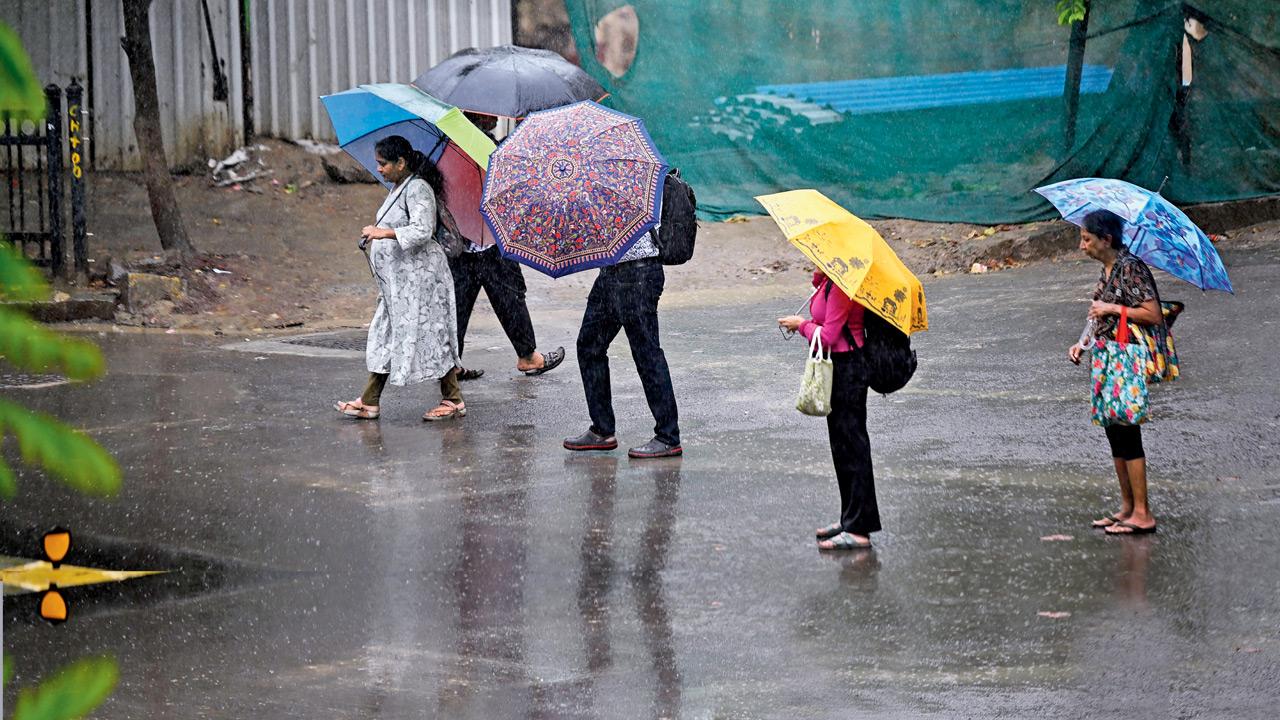
Representation pic
It has been 2.5 months since the South West Monsoon’s arrival on May 26, and Mumbai has only received 48.57 per cent of its annual average rainfall so far, according to data from the Brihanmumbai Municipal Corporation (BMC).
So far, the Colaba weather station of the India Meteorological Department (IMD) has fulfilled only 47.26 per cent of its rainfall quota this year, and has received 990 mm of rainfall. This is in stark contrast to figures from last year, when the Colaba station had recorded 83.39 per cent of the annual quota by August 8, 2024, recording 2018.7 mm of rainfall by this date. Similarly, the Santacruz weather station has recorded only 58.72 per cent of its annual average rainfall, or 1361.8 mm of rain, in contrast to 85.84 per cent or 2222.4 mm of rainfall it had received last year until the same day, according to information from IMD.
“July is the wettest month of the southwest monsoon season. However, in the case of Mumbai, rainfall has not been as strong as expected. However, other parts of Maharashtra have received good rainfall. But it is too soon to call it a trend,” an IMD official had told mid-day earlier this week. Throughout the past week, IMD issued a green alert, also called no alert, for Mumbai, indicating only light rainfall in parts of the city. According to the forecast from Friday, August 8, the green alert for Mumbai is likely to continue over the next few days, which has been attributed to the present synoptic situation.
For the latest Mumbai Monsoon coverage, including weather forecasts, rain alerts, transport disruptions, lake levels, and civic advisories, visit our Mumbai Monsoon News hub.
Trending Stories
Latest Photos
Latest Videos
Latest Web Stories
ADVERTISEMENT
Mid-Day Fast
ADVERTISEMENT