










It all began with a fall. Then a burn on the wrist. Confusion marked the beginning of a long, unimaginable journey: Progressive Supranuclear Palsy (PSP), a rare, aggressive, and incurable neurological disorder that steals speech, movement, and even emotion, forcing families to grieve before the final goodbye
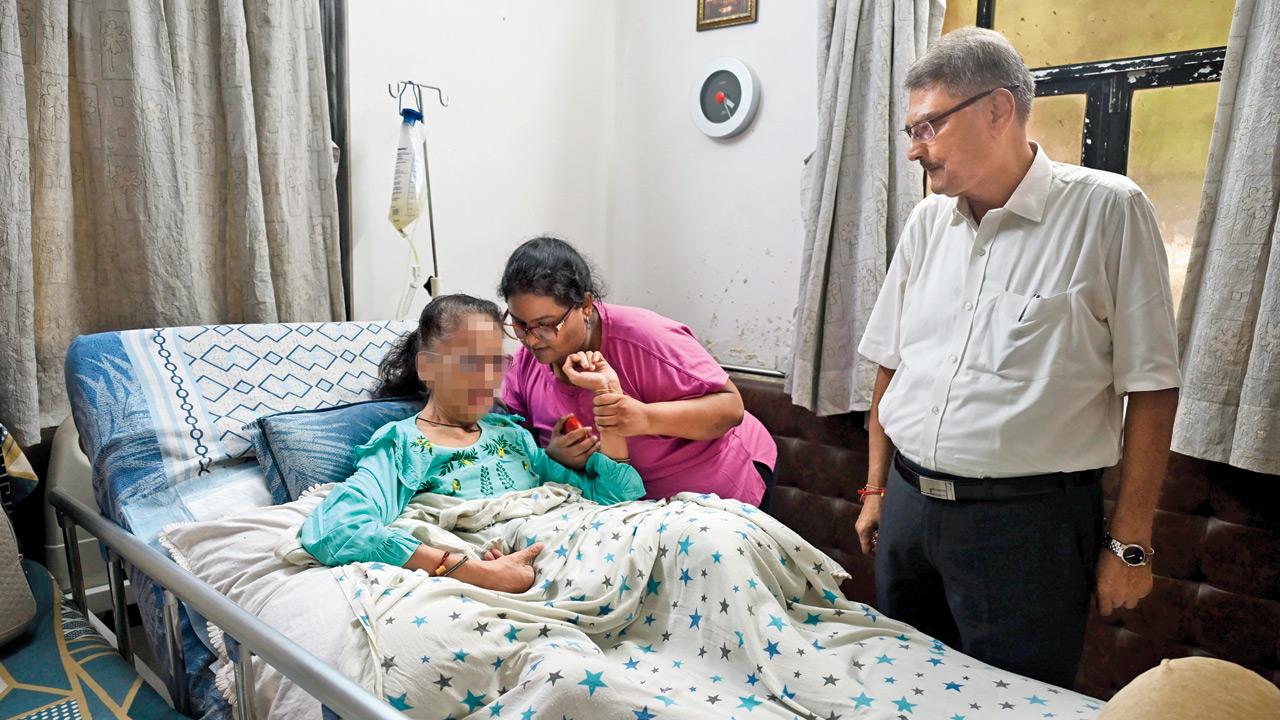
Anjana Shah in bed, with daughter Asmi holding her, and husband Vijay Shah by her side
In the city of dreams, one family is trapped in a slow, waking nightmare. This isn’t a sudden story of loss; it’s a story of love in silence, of memories fading, and of a daughter watching her mother disappear piece by piece, until only the essence of her remains.
It all began with a fall. Then a burn on the wrist. Confusion marked the beginning of a long, unimaginable journey: Progressive Supranuclear Palsy (PSP), a rare, aggressive, and incurable neurological disorder that steals speech, movement, and even emotion, forcing families to grieve before the final goodbye.
Despite PSP's devastating impact, there is no government protocol in place for brain donation for scientific research. Families hoping to turn their suffering into service face silence, red tape, and a lack of direction.

Asmi Shah holds her mother Anjana’s hand. Pics/Atul Kamble
This is the story of Anjana Shah, 65, a woman once full of warmth, food, laughter, and love, and her family: husband Vijay, 70, and daughter Asmi, who held onto each other as their world quietly unraveled.
The first fall
In 2017, Anjana fell in the bathroom. She laughed it off. But Vijay noticed something in her eyes — confusion that hadn’t been there before. She forgot recipes she’d known for decades. She stopped asking questions. When a visiting relative left in tears, asking why Anjana hadn’t spoken all day, there were no answers. Doctors ran tests. Reports came back normal. Still, she kept falling. And fading.
Diagnosis and dread
In 2018, on a trip to New Zealand, Anjana fell again. Vijay changed her shoes multiple times, thinking comfort was the problem. But it wasn’t. A doctor friend finally suggested they see Dr Mohit Bhatt, Director of Neurosciences at Kokilaben Hospital.
Within minutes, Dr Bhatt identified Progressive Supranuclear Palsy (PSP). Google filled in the rest: no cure, no treatment, a progressive decline, and a life expectancy of 8–10 years.
 (From left) Asmi, Dr Anita Mahadevan, and Vijay Shah. Pic/Asmi Shah
Asmi recalls, “My hands shook reading the diagnosis. But Mummy accepted it first.” Even when doctors recommended a feeding tube (PEG), she nodded. She was slipping away, and she knew it.
A new language of love
When words stopped, they created a new system.
Showing no 1: “Yes”
Showing no 2: “No.”
A stare: “I’m still here.”
Showing a Korean heart means I love you
Vijay became her caregiver, feeding her, cleaning her, speaking to her even when she couldn't reply. “She did everything for us,” he says. “Now, it’s our turn.”
Love without cure
Since March 2022, Anjana has been bedridden. The family spends over Rs 2.5 lakh per month, not on medication, but on diapers, gloves, and nurses. Only one tablet helps manage her symptoms. The rest is patience, grit, and boundless love. Asmi left her travel agency job to stay closer to her mom. She now runs a travel business and cloud kitchen, keeping her mother's cooking legacy alive. “She gave me everything,” Asmi says. “This is the least I can do.”
‘Give my brain to science’
In 2019, when she could still speak, Anjana made a quiet but powerful request: “Let them study my brain, Asmi. Maybe someone else won’t have to go through this,” Asmi said. Her brain is now officially pledged to the National Institute of Mental Health and Neurosciences (NIMHANS), India’s only brain bank. It’s her final gift, a voice for those who can no longer speak.
Systemic silence
Despite expert help from doctors like Dr Anita Mahadevan (NIMHANS), Dr Shailesh Mohite (Nair Hospital), and the Cooper Forensics and anatomy team, there’s still no clear protocol for brain donation in Maharashtra, or most of India. Families, already devastated, are forced to navigate complex logistics with no guidance.
The family has created a support team, documented everything, and shared resources. Now, they call on the state to create a protocol for organ donation for research, so no one else has to face this during a loss.
Long goodbye
Anjana weighs under 40 kg now. She doesn’t speak, but when Vijay whispers, “Sleep well, my love,” she stirs. When Asmi holds her hand, she blinks.
“I’ve become her mother, her voice, her heartbeat,” Asmi says. Every monsoon, the family prepares for emergencies, how to move her, and what if power fails. “We plan like it’s war.”
“Luckily, I’m not married and whilst I’m open to it, I’m okay with focusing on her,” Asmi says.
Lessons in love
“She taught us what love truly means,” says Vijay. “It’s what you do when it’s hard, messy, and unseen. And you stay.”
Legacy beyond words
Even in stillness, Anjana teaches them grace, strength, and endurance. “When the end comes,” says Asmi, “we’ll be broken. But we’ll also be proud. Her story doesn’t end with her, not as long as we carry it.”
A call for change
“This isn’t a story for sympathy,” says Asmi. “It’s a story for change. No family should face this journey without clarity or dignity.”
Expert voices
Dr Anita Mahadevan, Coordinator, Human Brain Bank, professor, Neuropathology, NIMHANS, Bengaluru
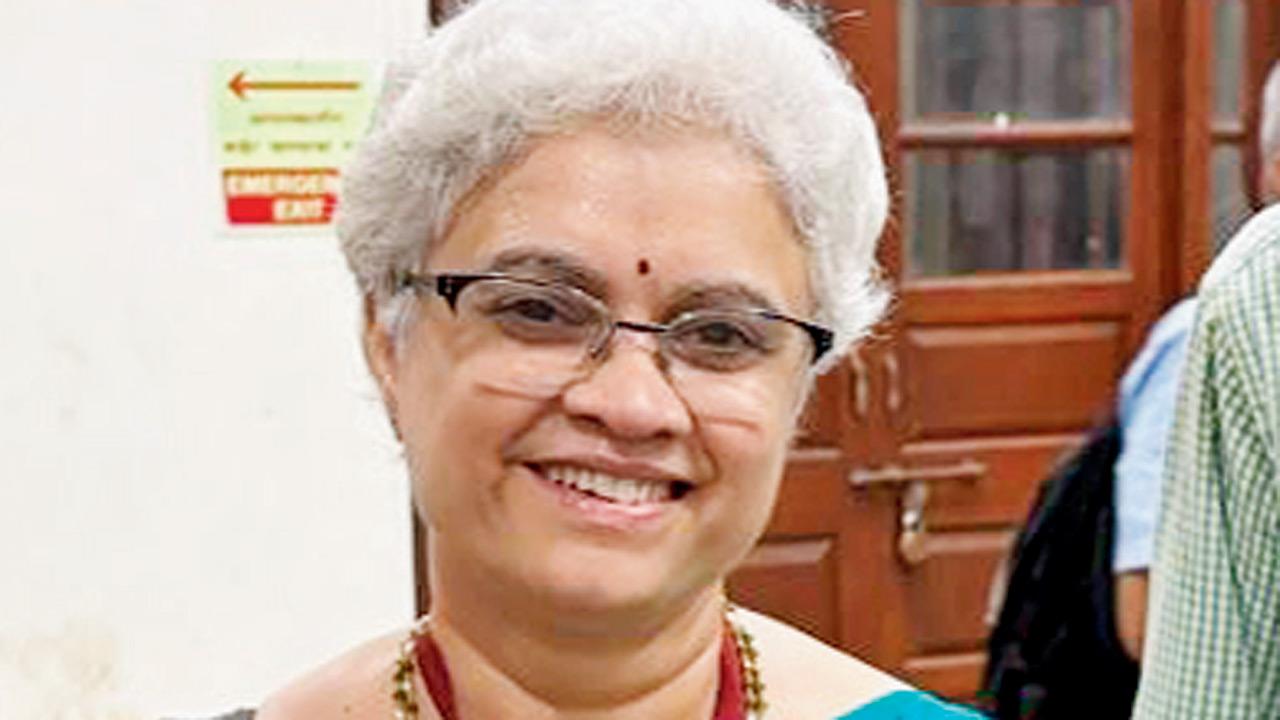
The Shah family has pledged Anjana’s brain to research. PSP is a rare, aggressive brain disorder that robs movement, memory, and voice, often misdiagnosed for years. There is no treatment, only care. That’s why brain donation becomes a final act of love. Each brain helps us study the disease and search for answers. But families face silence, red tape, and a lack of clarity, especially in states like Maharashtra, where there’s no clear SOP. Unlike eye donation, brain removal must happen in a hospital mortuary. NIMHANS supports families with forms and counselling, but planning is key. With living wills now recognised, we must ensure these wishes are honoured with dignity.
Dr Shailesh Mohite, Dean, Topiwala National Medical College & BYL Nair Hospital, Mumbai

Brain donation is legal and valuable, but a lack of SOPs makes families hesitant. Unlike eye or skin donation, brain donation has no clear path. When approached, we found the only barriers were confusion and system gaps. With proper consent and certification under the Organ Transplant Act, brain donation after natural death, whether at home or in a hospital, is possible without police intervention. This case marks a first for Mumbai: a voluntary brain donation for rare disease research. With hospital cooperation and family consent, the process can be smooth, dignified, and help science understand the disease better.
Dr Nikhil Datar, Well-known gynaecologist and health rights activist

In contrast to organ donation for transplantation, brain and other organ donations for research involve a separate and more complex set of legal, procedural, and logistical challenges. While a living will or advance directive is a valuable step in stating one’s intent about which treatments should not be pursued at the end of life, it does not necessarily include consent for organ donation. There is a lack of clear operating procedures and institutional readiness. A multi-stakeholder collaboration is essential to create streamlined protocols so that a donor’s intent can be honoured—with dignity, legality, and
scientific value.
 Subscribe today by clicking the link and stay updated with the latest news!" Click here!