Mumbai woke up to mainly clear skies on the weekend. Warm conditions are likely to prevail through the day, with the maximum temperature expected to reach around 35 degrees Celsius, as per the latest weather update. The minimum temperature is likely to settle near 21 degrees Celsius. According to the latest forecast issued at 10 am, mainly clear sky conditions are expected across the city and suburbs. Meanwhile, Mumbai’s overall Air Quality Index (AQI) stood at 124 on Saturday morning, placing it in the ‘moderate’ category. According to the Centre’s SAMEER app, pollution levels varied across different parts of the city on Friday. Bandra-Kurla Complex recorded an AQI of 137, Andheri East 144 and Deonar 144 all reflecting relatively higher pollution levels within the moderate range. Meanwhile, Chembur reported an AQI of 112, Kandivali East 116 and Kurla 116, indicating steady air quality conditions. In contrast, Borivali East recorded a comparatively better AQI of 64, placing it in the ‘satisfactory’ category. Overall, while most monitoring stations remained in the ‘moderate’ bracket, the variation across locations highlighted fluctuating air quality levels in different pockets of the city. Delhi’s air quality improves to ‘moderate’ as AQI drops to 183 The national Capital’s air quality showed slight improvement on Friday, with the Air Quality Index (AQI) recorded at 183, placing it in the ‘moderate’ category, according to the Central Pollution Control Board (CPCB). Delhi had registered a ‘poor’ AQI of 209 on Thursday and 294 on Wednesday morning. As per CPCB data, several monitoring stations across the city continued to record moderate to poor air quality levels. Anand Vihar recorded an AQI of 236, Bawana 215, Chandni Chowk 176, DTU 202, Dwarka Sector-8 194, IGI Airport (T3) 144, Jahangirpuri 252, Mandir Marg 145, Mundka 237, Narela 229, Okhla Phase-2 180, Patparganj 193, Pusa 209, R.K. Puram 199, Rohini 232, Shadipur 261, Sonia Vihar 211, Vivek Vihar 211 and Wazirpur 215. Meanwhile, the national Capital recorded a temperature of 12 degrees Celsius around 7 a.m., with humidity at 95 per cent, according to the India Meteorological Department (IMD). As per AQI classification, a reading between 0 and 50 is considered ‘good’, 51 to 100 ‘satisfactory’, 101 to 200 ‘moderate’, 201 to 300 ‘poor’, 301 to 400 ‘very poor’, and 401 to 500 ‘severe’. Delhi has been witnessing warmer afternoons over the past few days, though light mist during the early hours continues to bring a chill in the mornings. With daytime temperatures gradually rising, the national Capital appears to be moving out of the harsher phase of winter. According to the IMD, the minimum temperature is expected to hover around 11 degrees Celsius, while the maximum may climb to 27 degrees Celsius on Friday. Unlike Thursday’s clear skies, Delhi is likely to wake up to mist, followed by partly cloudy conditions later in the day. The IMD said skies will remain mainly clear on February 14 and 15. It also forecast partly cloudy skies on February 13 and 16, while generally cloudy conditions are expected on February 17 and 18. Temperatures are likely to remain largely unchanged this week, with warmer days ahead and misty mornings continuing.
14 February,2026 09:56 AM IST | Mumbai | mid-day online correspondentThe Indian Institute of Technology Bombay (IIT Bombay) on Friday said its researchers have found that too much mucus can weaken the lungs’ defences, which can make people more prone to allergy attacks. The airways to the lungs have a naturally engineered defence mechanism that gets activated when any foreign material enters the airways by secreting a fluid called mucus to trap it. However, for millions of people living in cities like Delhi, Mumbai, Bengaluru and other metros, the rising levels of air pollution have been posing a persistent health hazard, with heavy smog-filled air causing severe respiratory issues. In a recent study, IIT Bombay researchers have found that as mucus volume increases in response to pollution (or a foreign material) in the airways, its defence does not improve. Instead, the study conducted by Swarnaditya Hazra and Professor Jason R Picardo, found that the increased mucus volume ends up creating narrow ‘humps’ that leave large patches of the airway walls completely exposed. “This patchy landscape could explain why excessive mucus is detrimental, potentially allowing fine soot particles to penetrate deep into our systems and triggering asthma attacks,” added the study. For residents of high-pollution zones, this finding is more than a mathematical curiosity, it is a matter of respiratory survival. This story has been sourced from a third party syndicated feed, agencies. Mid-day accepts no responsibility or liability for its dependability, trustworthiness, reliability and data of the text. Mid-day management/mid-day.com reserves the sole right to alter, delete or remove (without notice) the content in its absolute discretion for any reason whatsoever
14 February,2026 09:10 AM IST | Mumbai | AgenciesFacing opposition from Bandra residents, the Brihanmumbai Municipal Corporation (BMC) on Thursday temporarily stopped construction and excavation work for the erection of 35 LED hoardings along the Carter Road promenade. However, permission for setting up the billboards has not yet been withdrawn. On Tuesday, locals, led by Congress leader and former corporator Asif Zakaria, wrote to the civic body, objecting to the project. Zakaria warned the BMC that the residents would strongly object if the work were continued. Residents, who believe that such an endeavour would set a dangerous precedent of commercially exploiting public waterfronts and compromise the serenity of the public open space, have planned a peaceful gathering at the promenade at 5 pm on Saturday, inviting environmentalists, nature lovers, and citizens. Visitors relax on the Carter Road promenade in Bandra West at dusk on April 21, 2025. PIC/SATEJ SHINDE A member of IMPACT (Citizens Movement for Environment and Civic Action), a group formed by the residents to present a united front to speak up about the issues of the area, said, “There is a misalignment in the way BMC and residents look at development. Probably for the former, it’s about revenue and construction, and for the latter, it’s about maintaining the serenity of a public open space. For so many years, this area has facilitated the community coming together to enjoy the city. Now it is being rampantly commercialised with construction.” Facts of the matter 1 The promenade was developed in the late 1990s and early 2000s by citizens of Bandra and the Bandra Welfare Residents Association (through funds from local MPs Shabana Azmi and Priya Dutt 2 The land in question is owned by the Mumbai Maritime Board (MMB) 3 BMC offers maintenance such as sanitation and garbage collection services, and waters the plants Official Speak ‘Permission to prop hoardings on the promenade was given by MMB, as it owns the land. BMC’s licence department gave requisite permission for ads. For now, we have told the contractor to stop the work, respecting the sentiments of residents. But, power to cancel the nod to erect hoardings lies entirely with the MMB’ Dinesh Pallewad, assistant commissioner, H West ward Recent developments >> A steel pillar near the Khar police station has been removed>> Hoarding-related work has been paused>> However, pits dug for the erection of 8x5-foot display boards haven’t been filled ‘Locals and visitors don’t stand to benefit!’ According to Renuka Tahiliani, a resident of Carter Road, the earlier promenade extended from Otters Club [near Jogger’s Park] to Cafe Coffee Day. “When I moved to Carter Road in 2005, the rest of the stretch now occupied by the promenade was a garbage dump and had huts. I contacted the ALMs of the area and approached our MP to develop the rest of the promenade. Since then, the residents took care of the promenade until the pandemic, when it was decided that the BMC should maintain it. In hindsight, that was a wrong decision. At the end of the promenade is a gazebo meant for people to sit in a shaded place. Now a temple is being built there,” she said. Sharan A Kothari, an architect and resident of Carter Road, noted that no seafront in the city had been commercialised. “Marine Drive and Bandstand are recreational community spaces. Yet, the authorities insist on commercialising the Carter Road promenade. The hoardings will be an eyesore. Who benefits from them except the ones taking a share of the revenue generated through advertisements?”
14 February,2026 09:05 AM IST | Mumbai | Eeshanpriya MSA jewellery workshop in Kandivali West was hit by a Rs 20.5 lakh gold theft after a newly hired artisan allegedly fled with ornaments within days of joining. Police say the crime may be linked to financial distress among jewellery workers following the surge in silver prices. The theft occurred on February 9. The complaint was filed by Safiqul Islam Habibur Rahman Mandal who runs SS Gold Polishing and Designing on MG Road. CCTV footage allegedly shows the suspect running out of the shop with the ornaments. The accused Main suspect: >> Aslam, about 25 years old, artisan, absconding Arrested: >> Sahil Shaikh, 22 >> Ajifar Mujid Shaikh, 30 Both were arrested in Hyderabad. Police said they lived with the main accused in Nalasopara and worked at a silver jewellery unit in Vasai. Two more suspects, including Aslam, remain on the run. Investigation status >> FIR registered at Kandivali Police Station>> Two arrested>> Two absconding>> Some amount of gold is recovered from arrested accused>> Police are probing whether the group has committed similar thefts elsewhere What was stolen 9 gold bracelets, 104 gramsGold rings, 33 gramsTotal value: Rs 20.5 lakh
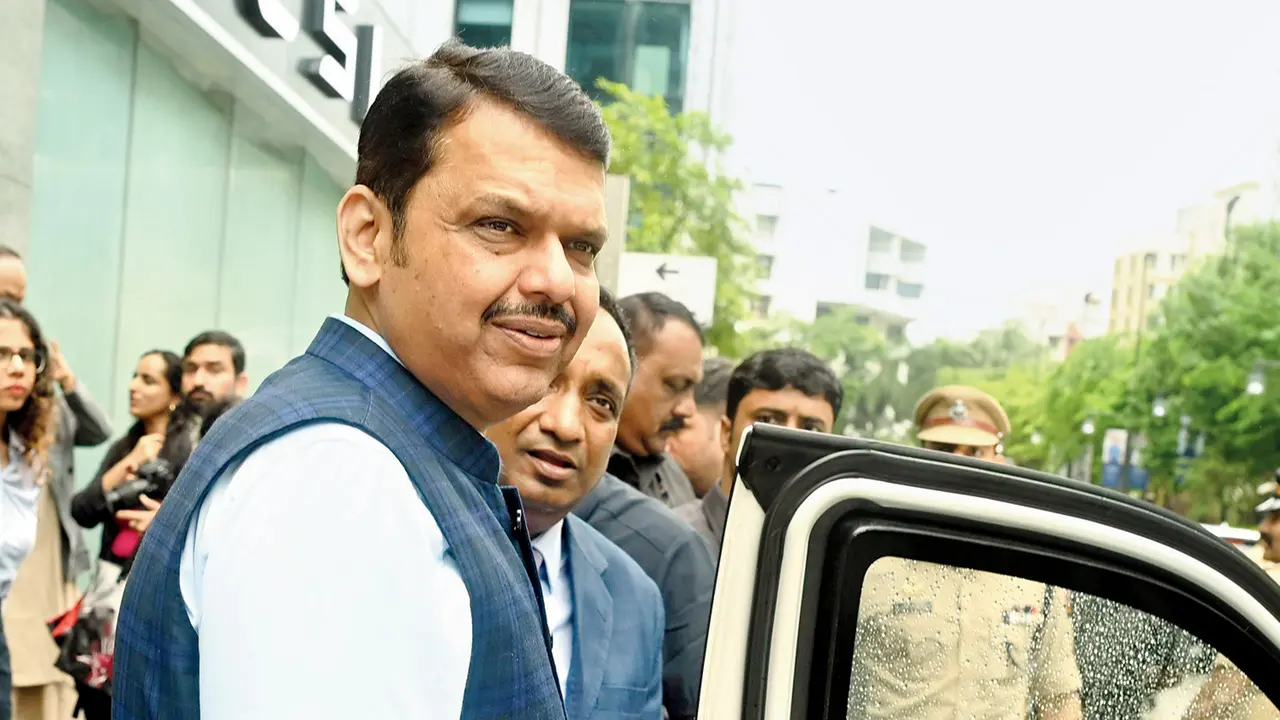
14 February,2026 09:01 AM IST | Mumbai | Samiullah KhanChief Minister Devendra Fadnavis on Friday chaired a meeting to review preparations for the upcoming Maharashtra state budget. The budget is scheduled to be presented on March 6, while the budget session of the legislature will begin on February 23. This will be the first budget presented after the death of Deputy Chief Minister Ajit Pawar, who earlier held the finance portfolio and had delivered the Mahayuti government’s budget last year. With Ajit Pawar no longer in office, Fadnavis is expected to play a central role in shaping the upcoming budget. At a time when the government has several new infrastructure projects in the pipeline and revenue collections are under pressure, managing the state’s finances and maintaining fiscal balance is likely to be a major challenge. As part of budget preparation, the CM is said to have taken stock of the preparation and gave instructions to the respective departments to meet goals. Last year marked Ajit Pawar’s 11th budget speech, the second-highest number delivered by any finance minister in Maharashtra. The finance documents at the time had projected the state’s total debt to rise to Rs 9.32 lakh crore in 2025-26, compared to Rs 8.39 lakh crore in 2024-25.
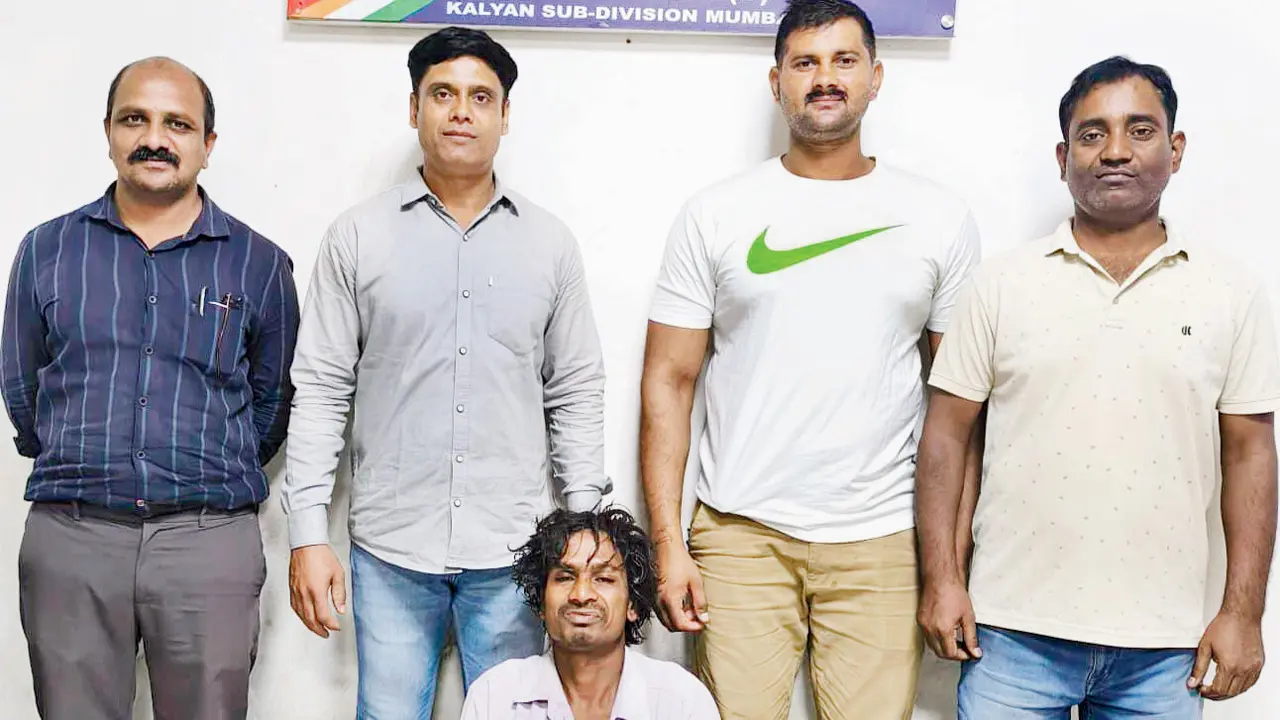
14 February,2026 08:57 AM IST | Mumbai | A CorrespondentA 37-year-old man has been arrested for planting a live snake inside the toilet of a coach of a Mumbai-Solapur train on December 27, 2025. The man has confessed to the crime and said he had done it to create a nuisance. Central Railway’s RPF team, nearly seven weeks later, apprehended the man on Thursday. The 2.5-foot-long Indian rat snake had created panic among commuters on the Solapur Vande Bharat Express. After it was spotted, officials aboard the train immediately alerted the Control Room. Officials tried to locate the snake at Karjat station but couldn’t. Another search was carried out when the train reached Pune, but the snake remained elusive. Subsequently, the toilet was locked, and a thorough search was conducted after the train reached Solapur, where the snake was found. The snake, after being rescued at Solapur station While the snake was rescued, the mystery of who put it there remained unsolved. CCTV footage revealed an unidentified man placing the snake inside the toilet at Thane station. “He just entered the train with a sack, threw in the snake, and got down,” an official said. Acting on video evidence and a tip-off from an informer, RPF officials tracked down the accused, identified as Jagan Arjun Bhale. He was apprehended from Mumbra on Thursday. During interrogation, Bhale allegedly confessed that he done it to cause nuisance. He was produced before the Railway Court at Kalyan, which granted 14 days’ judicial custody. A detailed investigation is now underway. A case has been registered under Sections 145(B), 147, and 153 of the Railways Act, 1989. Rat snakes, largely non-venomous Rat snakes are mostly nonvenomous, medium-to-large constrictors found throughout the Northern Hemisphere. Known as excellent climbers and beneficial pest controllers, they primarily feed on rodents, birds, and eggs. They are generally docile but can defend themselves by shaking their tails, releasing a foul odour, or biting. Species: There are over 50 species, including the American black rat snake (up to 8 ft) and the popular pet, the corn snake. Found in: They thrive in woodlands and agricultural sites, often found in trees or rafters. What they eat: They eat rats, mice, birds, eggs, and other snakes. When threatened: When threatened, they may mimic a rattlesnake by vibrating their tail. While they can bite if cornered, they are non-venomous and harmless to humans. Train of exemplary service The Solapur-Mumbai Vande Bharat Express (train nos. 22226/22225) has a remarkable performance, having carried a combined total of 23,43,598 passengers with an impressive occupancy of 102.27 per cent till January 2026. The train completed three years of dedicated service on February 10, having been flagged off by Prime Minister Narendra Modi from CSMT on February 9, 2023. Incident details >> Snake left in toilet of coach C-16 of Vande Bharat Express>> Snake discovered during journey>> Toilet sealed as snake couldn’t be located>> Snake safely rescued at Solapur Solving the mystery >> CCTV footage captured man placing snake>> RPF acted on video footage and informer tip>> Man tracked down weeks later Details of troublemaker Name: Jagan Arjun BhaleAge: 37Apprehended: Feb 12, 2026Location: MumbraAllegedly confessed during interrogation Action taken >> Booked under Sections 145(B), 147 and 153 of Railways Act, 1989>> Produced before court and sent to 14 days judicial custody>> Investigation in progress
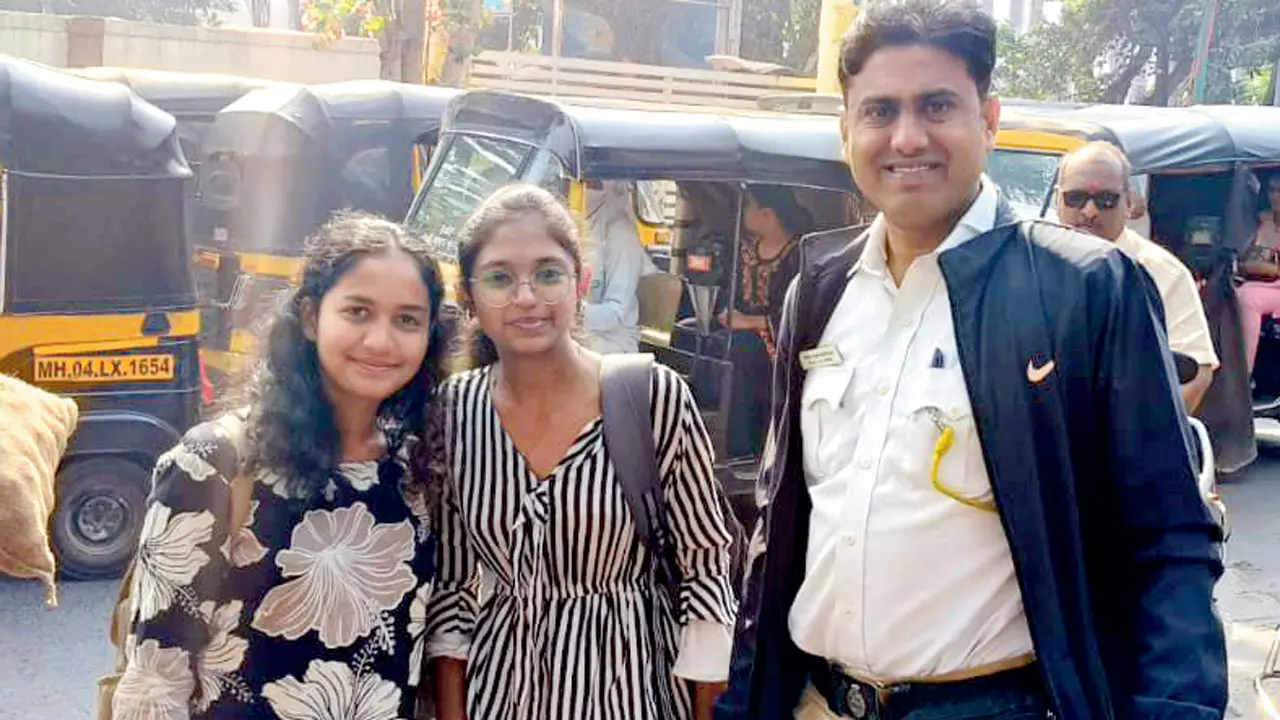
14 February,2026 08:55 AM IST | Mumbai | Rajendra B. AklekarWith Std XII board exams underway and Std X exams approaching, Thane Traffic Police have activated a special helpline to help students stuck in traffic reach centres on time. Since February 10, 54 traffic riders across 18 zones have been deployed to respond to distress calls during peak morning congestion. “Students are expected to reach their centres at least 30 minutes early, but exam timings clash with office rush hour,” said Police Inspector Yuvraj Sarnobat. This initiative was also carried out last year, and saw great response from parents and students. Teen sawaal with Thane Traffic DCP Pankaj Navnath Shirsath What is your advice to students and parents?Check travel time on Google Maps and add a 30-minute buffer. If you need help, contact us and remain calm. The helpline is for genuine exam emergencies only. How did the helpline perform earlier?We ran a similar initiative last year, but awareness was low, and we helped 34 students in total. This year, we have already assisted 26 students in just two days. Why does traffic remain such a challenge?Road capacity and vehicle numbers are almost equal, so even a single breakdown can create a bottleneck. Traffic conditions change minute by minute. Why this matters Time exams begin: 11 amReporting time: 10.30 amPeak traffic window: 9 am to 10.30 amOfficials said even a minor vehicle breakdown can trigger delays during this crucial period How the rescue system works 1. A student or their parents call the helpline2. The control room alerts nearest riders3. Two riders reach the spot4. Vehicle with student is prioritised through trafficRiders remain connected via wireless sets until the vehicle clears the congestion Helpline numbers 82863003008286400400WhatsApp: 7039003866 By the numbers Initiative started: Feb 10Students helped so far: 26Calls received: About 35 Congestion hotspots >> Kapurbawdi Junction>> Balkum Naka>> Ghodbunder Road Travel risks remain While road assistance is improving, crowded trains continue to pose risks. Recently, an 18-year-old student from Dombivli died after falling from a packed train while heading to his first exam.
14 February,2026 08:51 AM IST | Mumbai | Aditi AlurkarThe Maharashtra police have revised the timings for their recruitment ground tests across the state to protect candidates from extreme heat, officials said on Friday. Earlier, a 26-year-old candidate died during the selection process in Beed district. The physical tests, which were earlier conducted during the day, will now be held in two sessions, from 5 am to 9 am and 5 pm onwards, to avoid extreme heat, a senior official said. Police are conducting recruitment for around 15,000 posts across Maharashtra. The selection process began on Wednesday in several districts, including Beed. Initially, the ground tests were scheduled throughout the day. On the first day, candidates underwent events such as a 1600-metre run for men, an 800-metre run for women and shot put. Deepak Waghule, a resident of Mandkhel in Parli tehsil of Beed, collapsed and died shortly after completing the 1600-metre run on the first day. Officials said the exact cause of his death is under investigation. Senior officials, including the Special Inspector General of Police for the Chhatrapati Sambhajinagar Range, visited Beed and reviewed the recruitment process. This story has been sourced from a third party syndicated feed, agencies. Mid-day accepts no responsibility or liability for its dependability, trustworthiness, reliability and data of the text. Mid-day management/mid-day.com reserves the sole right to alter, delete or remove (without notice) the content in its absolute discretion for any reason whatsoever
14 February,2026 07:43 AM IST | Mumbai | AgenciesForest officials rescued five gaurs, including two adults and three calves, from a dry, abandoned well in Lowle village of Sangameshwar taluka in Ratnagiri late on Tuesday night. The animals were trapped in the 15 to 20-foot-deep well and had no way to climb out. A ramp was created using an earthmover, allowing all five to walk out safely by 1.30 am and return towards the forest. Forest teams assess the site and use a JCB to cut into the well edge, creating a sloped ramp as villagers assist in clearing space Rescue operation timeline 11.30 pm: Alert received about trapped gaurs11.45 pm: Forest staff reach site and assess well12.15 am: JCB deployed to create a ramp1.00 am: Exit path ready1.30 am: All five gaurs walk out safely How it happened By early morning, the animals walk up the ramp and return towards the forest, ending the late-night rescue. Illustrations/Uday Mohite >> Incident reported around 11.30 pm on February 11>> Well-located on private land without protective cover>> Two adults and three calves fell in one after another>> No water inside, but steep sides prevented escapeForest officials from the Sangameshwar range rushed to the spot after receiving the alert. The gaurs trapped inside the well. Pic/By Special Arrangement Why this keeps happening Forest officials have identified:>> Around 150 open wells in Ratnagiri district>> 60 to 70 in Chiplun>> About 140 in Dapoli Authorities plan to secure these wells with parapets and covers. Officials say 150-200 wildlife rescues are carried out every year. Know the animal Gaur Adult male600 to 1000 kg Adult female 400 to 700 kg Calf: 20 to 30 kg at birth Wildlife emergency numbers Forest helpline1926 Control room9421741335 Officials speak Girija DesaiDeputy Conservator of Forest said the open well lacked basic safety measures such as a parapet or cover, making it hazardous for wildlife. Sagar Gosavi, Range officerSaid the rescue was challenging due to the animals’ size and the depth of the well, but coordination between forest staff and villagers ensured a safe outcome.
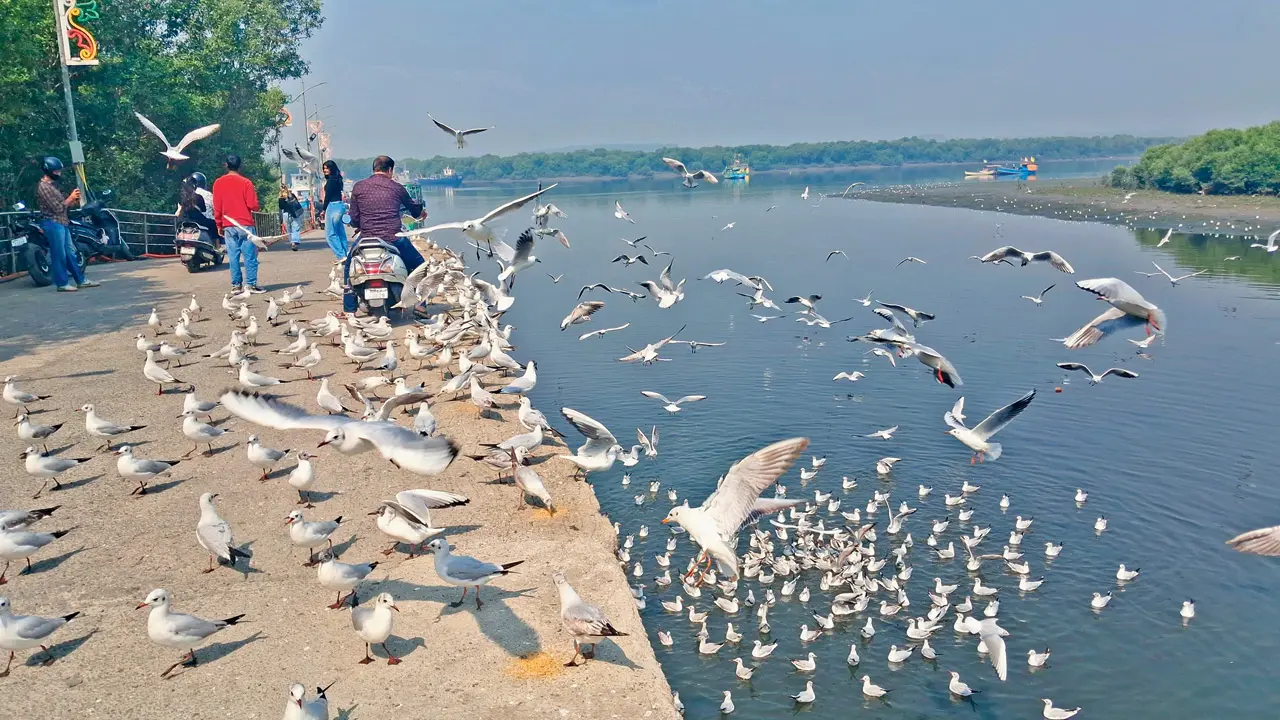
14 February,2026 07:39 AM IST | Mumbai | Ranjeet JadhavThe growing practice of tourists feeding junk food like sev, gathia, farsan, and wafers to migratory seagulls at Gorai jetty is harming the birds, wildlife experts warn, citing risks to their health and natural feeding behaviour. Wildlife Crime Control Bureau(WCCB) member Ankit Vyas, who visited Gorai jetty recently, said he was shocked to see tourists feeding junk to birds. mid-day has repeatedly reported every winter that feeding migratory birds arriving in India is a harmful practice that disrupts their natural diet and behaviour. “Feeding wild birds is not an innocent gesture but an offence that endangers wildlife. Authorities must deploy forest staff at Gorai and other bird congregation spots, enforce fines without exception,” said Vyas. Not just Gorai People also feed junk to wild birds at Marine Drive, ferries to Elephanta and Alibaug, the Airoli creek bridge, and the Versova bridge on the Mumbai-Ahmedabad Highway. Forest department officials have been conducting awareness drives and installing warning boards to discourage this. Can be fatal to birds Dr Rina Dev, avian and exotic species veterinarian and founder of Riwild Sanctuary and Charitable Trust, said, “Hepatic lipidosis/fatty liver can be caused due to feeding high-fat diets. The condition can be life-threatening for birds, whose digestive system is not equipped to digest such fats. Moreover, nutritional deficiencies may occur, and the birds becoming attracted to the wrong diet can become a habit.” Seagulls spotted in Mumbai Naturalist and wildlife photographer Mahesh Yadav told mid-day that Mumbai has mainly five types of gulls that are most common. However, identifying them can be difficult because their colour keeps changing with age. Seagull species can be difficult to identify as their colour changes with age Brown-headed gull: Arrives around late October-early November from high-altitude lakes of Central Asia (Tibetan Plateau, Ladakh, Mongolia, Western China); returns by March-April to Himalayan and Central Asian wetlands. Black-headed gull: Arrives around late October-early November from Central Asia (Russia, Mongolia) and parts of Europe; returns by March-April to Central Asia and Europe. Heuglin’s gull: Arrives in October-November from the Arctic north (Northern Russia, Siberian tundra); returns by March-April to the Siberian tundra and Arctic coasts. Pallas’s gull: Arrives around late October-early November from Central Asia (Mongolia, Southern Russia, Tibet); returns by March-early April to high-altitude lakes and marshes of Central Asia. Slender-billed gull: Arrives between November and March from Central Asia (Caspian region), the Middle East (Iran, Pakistan coasts) and Northwest India (some breed in Kutch); returns by late March-early April to these breeding grounds.
14 February,2026 07:34 AM IST | Mumbai | Ranjeet JadhavFor almost 13 years, Nikita Rathod, 33 endured severe right-sided cluster headaches, widely regarded as one of the most painful forms of headache disorders. These were accompanied by redness in the eye and debilitating pain that lasted months. “These episodes would recur every few years, severely affecting my life and well-being. Despite consulting multiple doctors, my condition remained uncontrolled,” Rathod told mid-day. Troubling years Rathod was writing her internal exam paper for her third year of the BMM course when she first experienced pain. “I felt excruciating pain, like someone was pulling my right eye very harshly. I couldn’t finish my paper and was rushed to Hinduja Hospital,” said Rathod. Despite undergoing multiple tests, CT scans and MRIs, the problem could not be diagnosed. “In the past 13 years, I have undergone several tests. But the reports always came back normal,” said Rathod. “My life would go upside down for almost two months every time I had an episode, but my college teachers, and later my colleagues and bosses at work, have been very supportive.” Pregnancy was tough “We had observed that the episodes would repeat every two years. So we planned our pregnancy in a way that the baby would be born in the gap years,” said Rathod. “While eight and a half months passed by without any hassle, I suddenly got the same headache on December 9, 2025. Doctors had given December 30-January 1 as my delivery date. But the pain just kept on aggravating with each passing day. A C-section had to be done on December 14, as my pain reached a level that it may have put my baby in distress,” said Rathod. Back to hospital On December 17, doctors performed a trial procedure. “They gave anaesthesia to my occipital nerves to stop pain signals and that worked wonders for me. But just for a few hours. As I felt relieved, I was discharged. Only to be readmitted with the same problem. I left Raheja Hospital in the evening on December 17 and was again on the hospital bed at 3 am, the following morning,” said Rathod. Nerve-related transmission “Her symptoms and the nature of repetitive episodes, indicated that there is no problem with the brain, and it looked more like nerve damage. When we conducted some tests, we identified the root cause as a nerve-related pain transmission disorder,” said Dr DK Baheti, senior consultant — pain management specialist, Raheja Hospital High-risk surgery The medical team decided to perform a highly specialised pain-block procedure using pulse radiofrequency ablation, precisely targeting and disrupting the sensory nerves responsible for transmitting pain signals from the brain.
14 February,2026 07:31 AM IST | Mumbai | Ritika GondhalekarADVERTISEMENT









-1771042550884_d.png?tr=w-436,h-271 "Warm conditions are likely to prevail through the day, with the maximum temperature expected to reach around 35 degrees Celsius. File Pic")