shot-button
E-paper E-paper
Home > Mumbai > Mumbai News > Article > Wildlife smugglers face flight ban airlines to foot deportation bill

Wildlife smugglers face flight ban; airlines to foot deportation bill

Updated on: 09 August,2025 08:37 AM IST  |  Mumbai
Ranjeet Jadhav | ranjeet.jadhav@mid-day.com

Airlines now must foot bill and handle deportation of undeclared exotic animals; the DGCA issued a circular outlining the procedure for deporting live animals detected as unbeknownst imports

Wildlife smugglers face flight ban; airlines to foot deportation bill

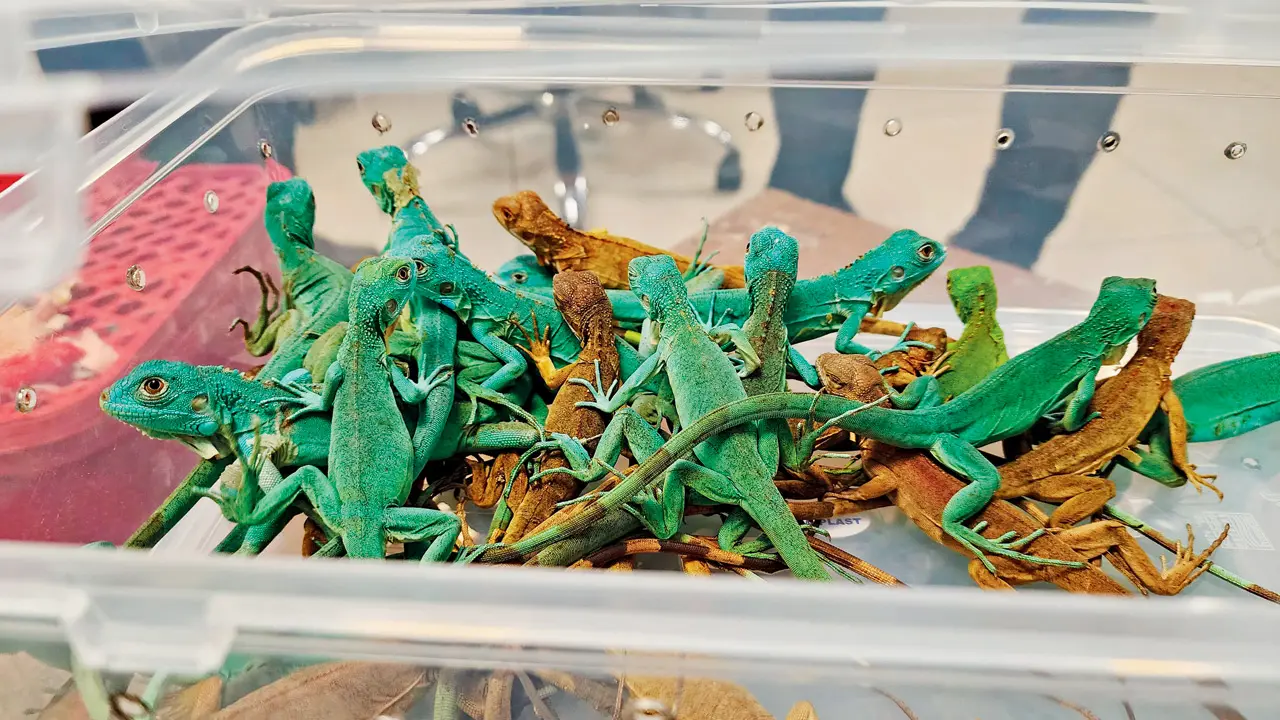
Green Iguanas were the most trafficked exotic species seized at Mumbai airport this year, highlighting the booming illegal reptile trade. Pics/Mumbai Customs

Listen to this article
Wildlife smugglers face flight ban; airlines to foot deportation bill
x
00:00

The Directorate General of Civil Aviation (DGCA) has issued new guidelines for the deportation of animals brought into India illegally, a move welcomed by wildlife experts and anti-exotic pet trade campaigners. The aim is to ensure safe, legally compliant deportation of such animals by all aircraft operators and airlines. In July, the DGCA issued a circular outlining the procedure for deporting live animals detected as unbeknownst imports, cases where passengers bring in live animals without proper declaration or clearance.

Under existing Animal Quarantine & Certification Services (AQCS) and Indian Customs rules, these animals must be sent back immediately to their country of origin, with intimation to all relevant authorities there. The transport of animals and birds by air is already governed under Aeronautical Information Circular (AIC) 9 of 1985. The new circular builds on this, ensuring compliance with updated instructions from Indian Customs, AQCS and other agencies. It applies to all airlines operating in India.


Airlines solely responsible


The circular makes it clear: once an undeclared live animal is detected, the airline that carried it into India will be solely responsible for immediate deportation in line with all legal requirements. The airline must bear all costs, including animal handling, in-transit welfare, documentation and repatriation logistics.

Indonesian Pit Vipers were the second-most trafficked reptile species, with 45 seized. These venomous snakes are in high demand among exotic pet collectors

Before deportation, the airline must secure valid orders from Customs, AQCS, and other authorities. It must also ensure that all necessary documentation, including animal identification, health/veterinary clearance, welfare compliance and adherence to IATA Live Animal Regulations, is complete.

A report detailing the deportation operation, including timelines, logistics and compliance measures, must be submitted to the DGCA within seven working days, with copies sent to the airport director, Customs, AQCS, and other concerned authorities.

Prevention and training

The DGCA has directed airlines to set up preventive mechanisms to detect and deter unauthorised carriage of live animals. Staff at check-in counters, boarding gates and in-flight operations must be trained and sensitised to customs, quarantine and animal transport rules. Passenger advisories and signage on live animal import restrictions must be displayed prominently.

Experts welcome the move

Wildlife conservationist Kedar Gore of The Corbett Foundation said, “This is a welcome move by the DGCA and will hopefully curb the illegal transportation of wildlife in India. I hope the ministry concerned has the necessary infrastructure at all airports to keep wildlife under good care temporarily, with trained veterinarians and wildlife biologists. There should also be intensive training programmes to educate airline personnel about exotic wildlife so that deportation becomes easy and streamlined.”

(From left) Brown Basilisk Lizard — although not among the top seized species, reptiles like these continue to be smuggled due to demand for exotic pets; Central Bearded Dragons ranked third among the most trafficked reptiles, with 30 seized by Customs this year; Siamang Gibbon — one of five seized this year — is native to Southeast Asia and highly vulnerable to trafficking due to its rarity and value

Pawan Sharma, founder and president of RAWW, a non-governmental organisation (NGO) based in Mumbai, said the guidelines were “the need of the hour” given the rising cases of wildlife trafficking through airports. “Post-interception, there was often confusion on the ground, especially among aviation companies, about who was responsible for handling, medical care, feeding, upkeep and deportation. These guidelines will help set common SOPs for handling and managing various categories of animals, mammals, birds, reptiles, amphibians, insects, etc., and ensure species-specific care, carriers and welfare measures, reducing mortality and improving the well-being of seized wildlife,” Sharma said.

"Exciting news! Mid-day is now on WhatsApp Channels Subscribe today by clicking the link and stay updated with the latest news!" Click here!

Did you find this article helpful?

Yes
No

Help us improve further by providing more detailed feedback and stand a chance to win a 3-month e-paper subscription! Click Here

Note: Winners will be selected via a lucky draw.

Help us improve further by providing more detailed feedback and stand a chance to win a 3-month e-paper subscription! Click Here

Note: Winners will be selected via a lucky draw.

wildlife DGCA Aircraft mumbai news mumbai mumbai airport

Mid-Day Web Stories

Mid-Day Web Stories

This website uses cookie or similar technologies, to enhance your browsing experience and provide personalised recommendations. By continuing to use our website, you agree to our Privacy Policy and Cookie Policy. OK