
India has safeguarded its core interests in agriculture and dairy under the India-US trade deal while improving market access for Indian goods, the government said following the deal announced by the US President Donald Trump earlier this week. Commerce Minister Piyush Goyal said, “core sensitivities in food and agriculture have been fully safeguarded,” adding the pact will boost export competitiveness and create opportunities for MSMEs, entrepreneurs, and skilled workers. Here's what the trade deal means and how could it benefit the farmers. A tariff is a tax a country charges on goods imported from other countries. Importers pay this tax to the government, and usually, companies pass the cost on to consumers. Import duties make imported goods more expensive. Other factors, like the tariffs on competing countries (e.g., Bangladesh 20 pc, Vietnam 20 pc, Thailand 19 pc) and the quality or standards of the goods, also affect prices. Agriculture in India: A Livelihood Issue Agriculture and allied activities such as animal husbandry form the backbone of India’s rural economy, providing employment to over 700 million people. Unlike developed countries where farming is highly mechanised and corporatised, agriculture in India is primarily livelihood-based. Allowing cheap imports from countries that heavily subsidize farmers could harm Indian farmers, lower their incomes, and threaten food security, making agriculture a sensitive issue in trade talks everywhere. Global Trade Dominated by Big Corporations The global food trade is highly concentrated. Reports suggest that about 90 per cent of global food trade is controlled by roughly five multinational corporations that have historically used predatory pricing strategies. If India reduces protection sharply, domestic farmers could become vulnerable to global giants, leading to long-term dependence and market instability. The potential impact on rural employment and incomes makes agriculture a contentious issue in trade talks. Why Developed Nations Seek Access to India For countries such as the US, Australia and the European Union, agriculture is a major export industry. In 2024, US agricultural exports stood at USD 176 billion, accounting for about 10 percent of its total merchandise exports according to PTI. With large-scale mechanised farming and heavy subsidies, the US and other developed nations view India as a lucrative market for expansion. US agricultural exports to India were USD 1.6 billion in 2024, including almonds, pistachios, apples and ethanol. However, India’s farm sector is structured around livelihoods rather than corporate scale, making unrestricted access risky for domestic producers. India’s Protection Framework India shields its agriculture sector using a mix of tariffs, import duties and regulations. The tariff structure ranges from zero to 150 per cent depending on the product, particularly protecting staple crops, dairy and key livelihood-sustaining items. Opening agriculture fully would mean reducing these barriers and exposing Indian farmers to subsidised imports. Other countries also protect their farmers. The US, for instance, imposes high duties on select products, including 350 per cent tariff on tobacco, and uses complex non-ad valorem tariffs that raise effective import costs. Subsidy Imbalance in Global Farming Trade experts note that the US provides massive subsidies to its farm sector. In some years, support exceeded production value for certain products — Rice (82 per cent), Canola (61 per cent), Sugar (66 per cent), Cotton (74 per cent), Mohair (141 per cent) and Wool (215 per cent).Such subsidy levels allow foreign producers to sell cheaply abroad. If these products enter India with low duties, Indian farmers — who do not receive similar backing — would struggle to compete. Dairy and Staples Are Especially Sensitive India treats almost the entire agriculture sector as sensitive because over 50 per cent of the population depends on it for livelihood. Dairy is particularly critical, supporting millions of small farmers and cooperatives. Any surge in imports of milk products or animal feed could destabilise rural incomes and weaken India’s self-sufficiency in food production. WTO Rules Support India’s Position India’s agricultural tariffs are consistent with World Trade Organisation norms. WTO rules allow member countries to protect sensitive sectors, especially those linked to food security and rural employment. This gives India legal space to safeguard farming even while pursuing trade liberalisation in other sectors. India’s Expanding Farm Exports India is simultaneously expanding its export footprint. In FY25, agricultural exports rose to over USD 51 billion from USD 45.7 billion in 2023-24, with around USD 5 billion going to the US. Total exports in FY25 stood at USD 437 billion. India aims to reach USD 100 billion in combined exports of agriculture, marine products and food and beverages in the next four years. Though it is the world’s second-largest agricultural producer by value, India accounts for only 2.2 per cent of global farm exports, indicating scope for growth without weakening domestic protection. Major exports include rice, tea, coffee, spices, cashew, oil meals, oilseeds, fruits and vegetables. Non-Tariff Barriers Still Persist Tariffs are only one part of trade. Non-tariff measures also affect market access.According to experts, the US has complex sanitary and phytosanitary (SPS) rules that often act as disguised barriers. The Maximum Residue Limits on pesticides are among the strictest globally, making compliance difficult for developing countries, including India, even when tariff rates are reduced. What the Trade Deal Changes US President Donald Trump has announced that Washington will bring down reciprocal tariffs on Indian goods to 18 per cent from 25 per cent, after earlier imposing steep duties linked to trade imbalances and purchases of Russian crude and military equipment. The reduction makes Indian exports more competitive in the US market. At the same time, India has ensured that agriculture and dairy are not opened in a way that harms farmers. Balancing Exports and Rural Stability The India-US trade deal seeks to balance export growth with rural stability. While Indian manufacturers and exporters gain improved access to the American market, New Delhi has drawn a clear line on agriculture and dairy. For India, farming is not merely a trade sector — it is a livelihood system, a food security pillar and a socio-economic foundation. By safeguarding it, the government aims to pursue global integration without compromising the millions who depend on agriculture for survival. (With PTI Inputs)
04 February,2026 06:46 PM IST | Mumbai | mid-day online correspondentThe Supreme Court on Wednesday asked the Centre if there was any possibility for the government to relook at the detention of climate activist Sonam Wangchuk considering his health condition. A bench of Justices Aravind Kumar and P B Varale observed that Wangchuk's health report was not good and asked Additional Solicitor General K M Nataraj, appearing for the Centre, to seek instructions in the matter. "Apart from submissions, counter submissions and law points, just give a thought to it, as an officer of the Court. The detention order is passed on September 26, 2025, nearly five months. "Considering the health condition of the detainee... The report which we saw earlier, it shows that his health is not that good. There are certain age-related, may be otherwise. Is there a possibility for the government to rethink, or even relook? the bench observed orally. Nataraj said that he would put the suggestion to the concerned authorities. During the hearing, the additional solicitor general submitted that Wangchuk was responsible for violence in Leh last year in which four people died and 161 were injured. "It was ultimately, his provocative speech, provocation, instigation. The person need not actively participate, the propensity of person to influence a group of persons that is more than sufficient," Nataraj said. The law officer contended that order of Wangchuk's detention was approved on October 3, 2025, and there is no challenge to the approval order.The arguments remained inconclusive and are set to continue on Thursday. On Tuesday, the Centre and the Union Territory of Ladakh administration had told the apex court that Wangchuk was detained for instigating people in a border area where regional sensitivity is involved. Justifying Wangchuk's detention, Solicitor General Tushar Mehta had told the bench that all procedural safeguards were followed while ordering his detention under the National Security Act (NSA). On Monday, the Centre had said that Wangchuk tried to instigate Gen Z for protests like in Nepal and Bangladesh. Mehta had said that Wangchuk even referred to Arab Spring-like agitation which has led to the overthrow of multiple governments in countries of the Arab world.The top court was hearing a plea filed by Gitanjali J Angmo, the wife of Wangchuk, against his detention under the stringent NSA. The NSA empowers the Centre and states to detain individuals to prevent them from acting in a manner "prejudicial to the defence of India". The maximum detention period is 12 months, though it can be revoked earlier. On January 29, Wangchuk, who is under detention in the Jodhpur Central Jail, denied allegations that he made a statement to overthrow the government like the 'Arab Spring', emphasising that he has the democratic right to criticise and protest. Senior advocate Kapil Sibal, appearing for Angmo, submitted that police have relied on "borrowed material" and selective videos to mislead the detaining authority. Angmo claims the detention is illegal and an arbitrary exercise violating his fundamental rights. Wangchuk was detained on September 26 last year, two days after violent protests demanding statehood and Sixth Schedule status for Ladakh left four people dead in the Union Territory. The government accused him of inciting the violence. The plea said it is wholly "preposterous" that Wangchuk would suddenly be targeted after more than three decades of being recognised at the state, national and international levels for his contributions to grassroots education, innovation and environmental conservation in Ladakh and across India. Angmo said the unfortunate events of violence in Leh on September 24 last year cannot be attributed to the actions or statements of Wangchuk in any manner. Wangchuk himself condemned the violence through his social media handles and categorically said violence would lead to the failure of Ladakh's "tapasya" and peaceful pursuit of five years, Angmo said, adding it was the saddest day of his life. This story has been sourced from a third party syndicated feed, agencies. Mid-day accepts no responsibility or liability for its dependability, trustworthiness, reliability and data of the text. Mid-day management/mid-day.com reserves the sole right to alter, delete or remove (without notice) the content in its absolute discretion for any reason whatsoever.
04 February,2026 06:41 PM IST | New Delhi | PTIWeeks after the conclusion of Maharashtra local body elections, the contest for the posts of mayor and deputy mayor at Malegaon Municipal Corporation in Maharashtra’s Nashik district has intensified. The Malegaon mayor election is scheduled for February 7 with the ISLAM-SP alliance nearing majority. Three newly elected corporators have so far filed their nominations for the mayor’s post and five have been listed in contest for the deputy mayor’s position, reported the PTI. In the civic elections held on January 15, the Indian Secular Largest Assembly of Maharashtra (ISLAM) emerged as the single largest party, securing 35 seats in the 84-member civic body. The All India Majlis-e-Ittehadul Muslimeen (AIMIM) followed with 21 seats, while the Eknath Shinde-led Shiv Sena won 18 seats. The Samajwadi Party (SP) secured five seats, the Congress three, and the Bharatiya Janata Party (BJP) two seats. As per PTI, the magic figure required to prove a majority is 43. The ISLAM party and the SP have come together to form the Malegaon Secular Front, securing a combined strength of 40 seats. The alliance now needs the support of only three more corporators to reach the majority mark. For the mayor’s post, Sheikh Nasrin Bano Mohammed Khalid and Sheikh Tahera Sheikh Rasheed, both from the ISLAM party, and Lata Ghodke of the Shiv Sena have filed nominations. For the deputy mayor’s post, Shan-e-Hind Nihal Ahmed and Mohammed Mustkim Mohammed Mustafa (both from the SP), Hafiz Abdullah Mufti Mohammed Ismail (AIMIM), and Narendra Sonawane and Nilesh Kakde (both from the Shiv Sena) are in the fray, reported PTI. A special meeting has been convened on February 7 to elect the mayor and deputy mayor. Nashik Collector Ayush Prasad will preside over the meeting. Congress begins campaign in ZP polls in Raigad Ahead of the upcoming Zilla Parishad elections 2026, Congress on Tuesday began its campaign in Maharashtra's Raigad district, calling for victory in the upcoming local polls. Maharashtra Congress chief Harshwardhan Sapkal hit the campaign trail across Raigad district, warning that industrialists were encroaching on the rights of the “sons of the soil” and urging voters to support Congress MVA candidates in the Zilla Parishad polls. Speaking at rallies in Jasai, Chirner, Satirje, and Chondhi, Sapkal said the enthusiasm among party workers showed victory was within reach. “The Zilla Parishad election is about safeguarding local rights and traditions. Congress MVA is set to perform strongly in Raigad, and power will be in our hands,” he said. Sapkal cited public leader D. B. Patil’s historical fight for local communities and said the region now faced fresh challenges from “capitalist interests.” He appealed to voters to unite and ensure a Congress MVA win to block these forces. On the issue of the Navi Mumbai airport, Sapkal reiterated Congress’s long-standing demand to name it after D. B. Patil. “Devendra Fadnavis is avoiding this. The airport currently shows the NM (Navi Mumbai) name, but any attempt to rename it after Narendra Modi will not be accepted,” he said. Raigad District Congress Committee President Mahendra Gharat, Rajabhau Thakur, and other senior party leaders accompanied Sapkal during the campaign. (With PTI inputs)
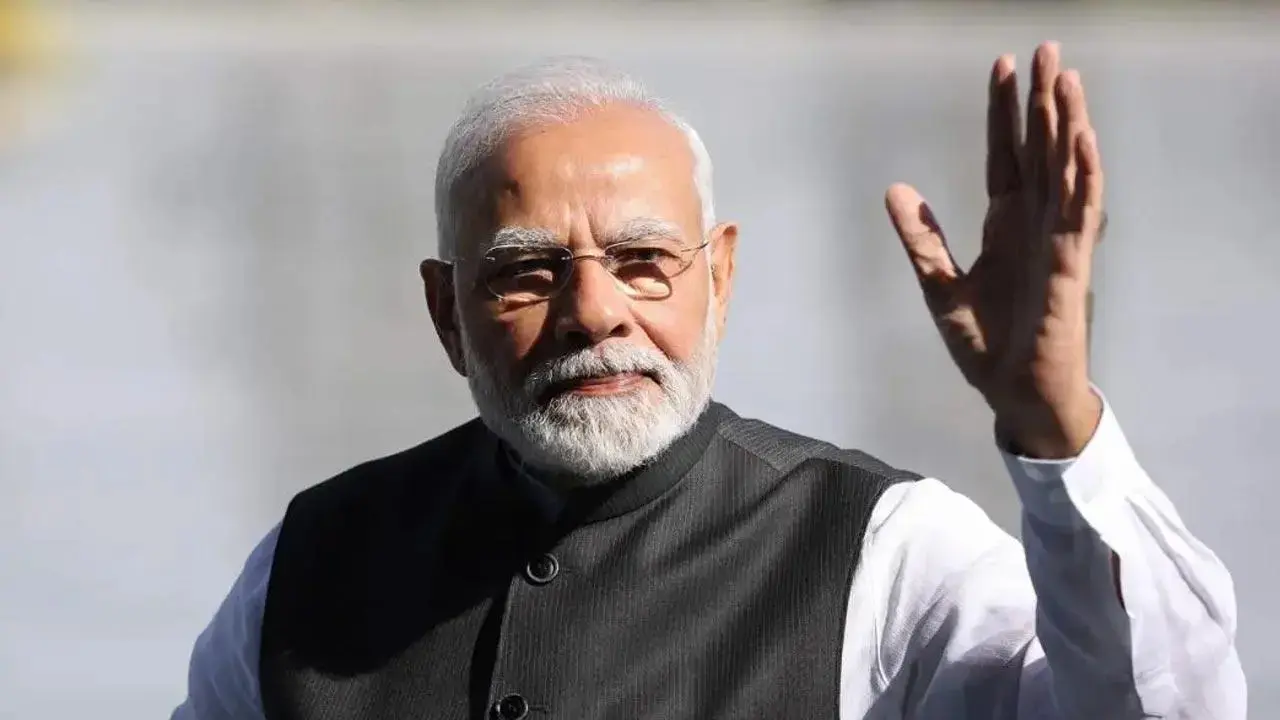
04 February,2026 05:56 PM IST | Nashik | mid-day online correspondentUS President Donald Trump has said that India and the US have agreed on a trade deal under which Washington will bring down reciprocal tariff on Indian goods to 18 per cent from the current 25 per cent. The announcement is important as the US has imposed a steep 50 per cent tariffs on Indian goods entering American markets from August 27, 2025. Here is a list of key pointers to explain the announcement: Tariff definition:These are customs or import duties which a country imposes on goods bought from other nations. An importer has to pay this duty to the government. Normally, companies pass on these taxes to end users or consumers. Import duty makes goods expensive in the importing country. Besides, a few other factors also play a role in this. For example, duty on India's competitor nations such as Bangladesh (20 pc), Vietnam (20 pc) and Thailand (19 pc); and quality and standards of items. USA'S tariffs on India:In August 2025, the US announced to impose a 25 per cent tariff plus another 25 per cent punitive duty for buying Russia's crude oil and military equipment. These duties are imposed over and above the existing tariffs that the Indian goods are facing in the US. The US has reduced the duty to 18 per cent. Prime Minister Narendra Modi has said that he was delighted that "made in India products will now have a reduced tariff of 18 per cent". Why is US imposing tariffs:The US has alleged that it faces a significant trade deficit with India, blaming New Delhi for imposing high tariffs on American goods, which it says restricts US exports to the Indian market. Trump's announcement:"It was an Honor to speak with Prime Minister Modi, of India...We spoke about many things, including Trade...He agreed to stop buying Russian Oil, and to buy much more from the United States and, potentially, Venezuela. This will help END THE WAR in Ukraine, which is taking place right now, with thousands of people dying each and every week! Out of friendship and respect for Prime Minister Modi and, as per his request, effective immediately, we agreed to a Trade Deal between the United States and India, whereby the United States will charge a reduced Reciprocal Tariff, lowering it from 25 percent to 18 percent. "They will likewise move forward to reduce their Tariffs and Non Tariff Barriers against the United States, to ZERO. The Prime Minister also committed to "BUY AMERICAN," at a much higher level, in addition to over 500 billion dollars of US Energy, Technology, Agricultural, Coal, and many other products," Trump has said in a social media post. Details of the deal:No details are available so far. An executive order from the US may provide clarity on the tariff issues, the trade deal document is expected to outline the sectors covered under the agreement. Both are awaited. Gains for India: Labour-intensive sectors such as garments, leather and non-leather footwear, gems and jewellery, carpets and handicrafts may get a boost as high tariffs were hurting exports of these goods to the US. Bilateral trade:During 2021-25, the US was India's largest trading partner in goods. The US accounts for about 18 per cent of India's total exports, 6.22 per cent in imports, and 10.73 per cent in bilateral trade. In 2024-25, the bilateral trade touched USD 186 billion (USD 86.5 billion exports and USD 45.3 billion imports). With America, India had a trade surplus (the difference between imports and exports) of USD 41 billion in 2024-25. It was USD 35.32 billion in 2023-24 and USD 27.7 billion in 2022-23. In services, India exported an estimated USD 28.7 billion and imported USD 25.5 billion, adding a USD 3.2 billion surplus.Altogether, India ran a total trade surplus of about USD 44.4 billion with the US. Major products traded between the two:In 2024, India's main exports to the US included drug formulations and biologicals (USD 8.1 billion), telecom instruments (USD 6.5 billion), precious and semi-precious stones (USD 5.3 billion), petroleum products (USD 4.1 billion), vehicle and auto components (USD 2.8 billion), gold and other precious metal jewellery (USD 3.2 billion), ready-made garments of cotton, including accessories (USD 2.8 billion), and products of iron and steel (USD 2.7 billion). Imports included crude oil (USD 4.5 billion), petroleum products (USD 3.6 billion), coal, coke (USD 3.4 billion), cut and polished diamonds (USD 2.6 billion), electric machinery (USD 1.4 billion), aircraft, spacecraft and parts (USD 1.3 billion), and gold (USD 1.3 billion). Services trade:As per estimates, USA's services imports from India amounted to USD 40.6 billion in calendar year 2024, with computer/information services imports at USD 16.7 billion and business management/consulting at USD 7.5 billion. High tariffs in US:As per reports, the US imposes high duties on items like dairy products (188 per cent), fruits and vegetables (132 per cent), coffee, tea, cocoa and spices (53 per cent), Cereals and food preparations (193 per cent), Oilseeds, fats and oils (164 per cent), beverages and tobacco (150 per cent), Minerals and metals (187 per cent), and Chemicals (56 per cent). Comments of experts on India-US trade deal:EPC (Apparel Export Promotion Council) Chairman A Sakthivel: This development is expected to give a boost to apparel exports, attract fresh investments across the value chain, and reinforce India's position as a reliable global sourcing hub. Federation of Indian Export Organisations (FIEO) President SC Ralhan: It is expected to lead to an immediate and substantial release of orders that were earlier put on hold, particularly in labour-intensive sectors such as apparel, textiles, leather and footwear. This story has been sourced from a third party syndicated feed, agencies. Mid-day accepts no responsibility or liability for its dependability, trustworthiness, reliability and data of the text. Mid-day management/mid-day.com reserves the sole right to alter, delete or remove (without notice) the content in its absolute discretion for any reason whatsoever.
04 February,2026 05:36 PM IST | New Delhi | PTIThe Centre on Wednesday withdrew President’s Rule from Manipur, paving the way for the formation of the Yumnam Khemchand Singh-led NDA government in the state, officials said. "In exercise of the powers conferred by clause (2) of Article 356 of the Constitution, I, Droupadi Murmu, President of India, hereby revoke the Proclamation issued by me under the said article on the 13th day of February, 2025, in relation to the State of Manipur, with effect from the 4th day of February, 2026," a Union Home Ministry notification said. Manipur had been under President’s Rule since February 13 last year, four days after then-Chief Minister N. Biren Singh resigned amid prolonged ethnic violence. Biren Singh had stepped down on February 9 following sustained unrest between the non-tribal Meitei and tribal Kuki-Zo communities. More than 260 people were killed, around 1,500 injured, and over 70,000 displaced after ethnic violence erupted on May 3, 2023, following a ‘Tribal Solidarity March’ organised in the hill districts to protest the Meitei community’s demand for Scheduled Tribe status. The 60-member Manipur Assembly, which was kept under suspended animation after the imposition of President’s Rule, has a tenure until 2027. Senior BJP leader Khemchand Singh will take oath as the new Chief Minister at the Lok Bhavan at 6 p.m. A senior Manipur government official said that a few ministers, including one or two Deputy Chief Ministers, are also likely to be sworn in along with the new Chief Minister. "Governor Ajay Kumar Bhalla will administer the oath at the Lok Bhavan," the official told IANS. Manipur state BJP, in a post on X, said, "The swearing-in ceremony of Shri Y Khemchand Singh as the Chief Minister of Manipur will take place today, 4th February 2026, at 6:00 PM at Lok Bhavan." "Under his experienced and visionary leadership, Manipur is set to move forward on the path of peace, development, and good governance, ushering in a new era of stability and progress for the state," the BJP said. Earlier, Khemchand Singh, accompanied by the newly appointed Central observer Tarun Chugh, BJP’s Northeast coordinator Sambit Patra, former Chief Minister Biren Singh, state BJP President Adhikarimayum Sharda Devi and a few MLAs, met the Governor at the Lok Bhavan and staked a claim to form the government. The Governor then invited him to form the government, the official added. There is speculation that the new BJP government may have one or two Deputy Chief Ministers and that two MLAs from the Kuki-Zo community are likely to be included, too. Party leaders and a large number of MLAs greeted Khemchand Singh after he arrived at Imphal airport on Wednesday morning from New Delhi. Ending months of uncertainty and prolonged parleys over government formation in Manipur, the BJP on Tuesday announced that former Assembly Speaker and minister Khemchand Singh will be the state’s next Chief Minister. BJP leaders said that Khemchand Singh was elected as the Legislature Party Leader at a meeting held in the national capital and attended by BJP MLAs from Manipur, along with Central Observer Chugh and Patra, among other senior leaders. In the meeting at the BJP party headquarters in Delhi, Khemchand Singh’s name was proposed as the Legislature Party leader by former Chief Minister Biren Singh. The BJP has 37 MLAs in the 60-member Manipur Assembly, while its NDA allies -- the National People’s Party (NPP) and the Naga People’s Front (NPF) -- have six and five MLAs respectively. Three Independent MLAs are also supporting the BJP-led NDA. This story has been sourced from a third party syndicated feed, agencies. Mid-day accepts no responsibility or liability for its dependability, trustworthiness, reliability and data of the text. Mid-day management/mid-day.com reserves the sole right to alter, delete or remove (without notice) the content in its absolute discretion for any reason whatsoever
04 February,2026 05:20 PM IST | New Delhi | IANSA court in Maharashtra's Thane has acquitted three men accused of conspiring to cause harm using explosives hidden in a vehicle in 2017, citing lack of eyewitnesses and prosecution's failure to establish a definitive link between the trio and the seized material. Additional Sessions Judge A S Bhagwat passed the order on January 29, which was made available on Wednesday. The case dates back to August 6, 2017, when the police conducted a raid at Gousiya Compound in Mumbra locality in Thane. Authorities found a bag of explosive powder and nine detonators hidden inside an out-of-use sports utility vehicle (SUV). The prosecution alleged that the accused - Mahinsa Rajesab Ganur alias Mahesh (57), Shahalam Mehmud Sheikh (49) and Arif Nawabali Khan (40) - had conspired to cause damage to life and property and specifically aimed to harm the landowner, Ismail Mohammed Sheikh. They were charged under sections 286 (negligent conduct with respect to explosive substance) and 120-B (criminal conspiracy) of the Indian Penal Code (IPC), along with sections 4 and 5 of the Explosive Substances Act. After spending over two years in custody, they were released on bail in late 2019. The court highlighted significant gaps in the prosecution's evidence, and noted that it failed to provide any eyewitnesses to the alleged crime. "From the above testimony, it is established that there are no eyewitnesses to the incident. Also, no witness has testified regarding the seizure of explosives from the possession of the accused," it said. It concluded that the prosecution failed to prove the charges beyond a reasonable doubt, granting the accused the benefit of the doubt. "In the above circumstances, there is no solid evidence against the accused.The prosecution has failed to prove that the accused committed crimes.Therefore, the accused are entitled to be acquitted," the court said. This story has been sourced from a third party syndicated feed, agencies. Mid-day accepts no responsibility or liability for its dependability, trustworthiness, reliability and data of the text. Mid-day management/mid-day.com reserves the sole right to alter, delete or remove (without notice) the content in its absolute discretion for any reason whatsoever.
04 February,2026 05:07 PM IST | Thane | PTIIn a rare move by a serving chief minister, Mamata Banerjee on Wednesday argued her petition in the Supreme Court against the special intensive revision of electoral rolls and alleged unfair targetting of West Bengal by the poll panel and bulldozing of its citizens. Urging the top court to "save democracy" and intervene to ensure fair special intensive revision (SIR) of electoral rolls by the Election Commission keeping in mind the fact that people alive have been declared dead by the poll panel. She once referred to the poll panel as the "WhatsApp commission", in an apparent reference to the directions being allegedly passed by the EC to the electoral officials on WhatsApp. Banerjee, who was represented by senior advocates Kapil Sibal and Shyam Divan, sought the nod of a bench headed by Chief Justice Surya Kant to personally advance her submissions. She said her state was not getting justice anywhere and despite having written six letters to the poll panel on SIR, she has not received any reply. "Their SIR process is only for deletion, not for inclusion," she told the bench, also comprising justices Joymalya Bagchi and Vipul M Pancholi.Asking why the same yardstick was not applied in Assam, Banerjee said, "West Bengal is being targeted." "They are targeting West Bengal to bulldoze its people," said the chief minister, who was permitted by the bench to supplement submissions of her lawyer. At the outset, Divan started his submissions and later, Mamata was seen standing besides him. She then requested the bench to permit her to address the court. "If you can allow me five minutes only," she asked. The CJI responded by saying the court would give her not five but 15 minutes to advance her submissions. She flagged difficulties being faced by the citizens due to the SIR exercise and said people were happy that the apex court gave a direction to include Aadhaar as one of the documents in the process. Banerjee alleged that despite the apex court's direction, the poll panel was not allowing Aadhaar and seeking other documents from the voters for electoral roll revision. "In other states, documents like domicile certificate, family register card etc. are allowed... they are only targetting Bengal on the eve of elections. What was the hurry," she asked. She said the process, which usually takes two years, was being undertaken in a short span of three months even during festival and harvesting season in the state. Banerjee also claimed that many people who are alive have been declared dead by the EC during the ongoing process. She then flagged the issue of deaths of officials who are involved in the SIR exercise. Senior advocate Rakesh Dwivedi, appearing for the EC, countered the charges and alleged that the West Bengal government has provided the services of only 80 grade-two officers like SDMs for overseeing SIR process. He said only low-ranked government employees like Anganwadi workers have been provided by the West Bengal government for the process. Banerjee countered the EC's claim and said the state has provided whatever sought by the poll panel. At the outset of her submissions, Banerjee quoted Rabindranath Tagore and said, "The problem is our lawyers always fought our case from the beginning but when everything is finished, we are not getting justice. When justice is behind doors. We are not getting justice anywhere." "I am a bonded labourer sir... I am from a common family and I am not fighting for my party," she said. When the counsel appearing for the EC interrupted, Banerjee, with folded hands, said. "Please allow me to speak sir!" She flagged that married women were being put to notice for shifting to their in-laws house or using their husband's surname. Banerjee claimed the poll panel has not complied with the top court's directions on logical discrepancy list. When the EC's counsel objected to her submissions, CJI Kant interrupted saying, "Madam has come all the way to speak." During the hearing, the bench observed that "genuine persons must remain on the electoral roll". The CJI said every problem has a solution and it must be ensured that no innocent person is left out. Concluding her submissions, Banerjee conveyed her regards to the bench for giving her the opportunity to argue and urged it to "save democracy". The bench issued notices and sought replies by February 9 from the Election Commission and the Chief Electoral Officer of West Bengal on her petition. This story has been sourced from a third party syndicated feed, agencies. Mid-day accepts no responsibility or liability for its dependability, trustworthiness, reliability and data of the text. Mid-day management/mid-day.com reserves the sole right to alter, delete or remove (without notice) the content in its absolute discretion for any reason whatsoever
04 February,2026 05:03 PM IST | New Delhi | PTIPrime Minister Narendra Modi will pay an official visit to Malaysia later this week at the invitation of Malaysian PM Anwar Ibrahim, the Ministry of External Affairs (MEA) announced on Wednesday. The February 7-8 visit would be Prime Minister Modi's third to Malaysia, and the first after the elevation of the India-Malaysia bilateral relationship to a ‘Comprehensive Strategic Partnership’ in August 2024. During the visit, the MEA stated, PM Modi will hold bilateral discussions with his Malaysian counterpart and will also interact with members of the Indian community, as well as industry and business representatives. The 10th India-Malaysia CEO Forum is also scheduled to be held coinciding with the visit of the Prime Minister. "India and Malaysia share long-standing bonds of friendship, based on historical, civilisational and cultural connections. The relationship is further strengthened by the presence of a 2.9 million strong Indian diaspora in Malaysia, the third largest in the world," read a statement issued by the MEA. "The India-Malaysia relationship is multi-faceted and growing. The forthcoming visit of Prime Minister serves as an opportunity for both leaders to review the entire gamut of bilateral cooperation, ranging from trade and investment, defence, security and maritime cooperation, to digital and financial technology, energy, healthcare, education, culture, tourism, people-to-people ties; as well as to set the path for future engagement for mutual benefit," it added. Last October, External Affairs Minister (EAM) S Jaishankar had met Malaysian Foreign Minister Mohamad Haji Hasan on the sidelines of the ASEAN Summit in Kuala Lumpur, discussing the ongoing progress in bilateral cooperation. During the meeting, EAM Jaishankar and Mohamad Haji Hasan had also discussed the current situation in Myanmar. Malaysia hosted the 47th ASEAN Summit and related summits on the theme of 'Inclusivity and Sustainability' under its chairship. The EAM represented Prime Minister Modi at the 20th East Asia Summit in Kuala Lumpur. In the same month, during his virtual address at the 22nd India-ASEAN Summit in Kuala Lumpur, Prime Minister Modi had declared that the 21st century is the century of India and ASEAN, underscoring the profound historical, cultural and civilisational ties binding the two regions. The summit, chaired by Malaysia, marked PM Modi's 12th consecutive participation in the annual dialogue and served as a platform for leaders to assess bilateral progress and chart deeper cooperation. In his opening remarks, Prime Minister Modi extended heartfelt congratulations to Timor-Leste upon its formal induction as ASEAN’s 11th member, welcoming its delegation and pledging India’s support for its human development. He reaffirmed India’s commitment to ASEAN Unity, ASEAN Centrality and the ASEAN Outlook on the Indo-Pacific, while applauding the bloc’s adoption of the ASEAN Community Vision 2045. Turning to economic collaboration, PM Modi urged an expedited review of the ASEAN-India Free Trade Agreement (AITIGA) to unleash the full potential of trade relations, benefiting more than two billion people and enhancing regional resilience. In his virtual address, Prime Minister Modi also condemned terrorism as a grave menace to global peace and called for concerted international action. Aligning with Malaysian chairmanship's theme of 'Inclusivity and Sustainability', PM Modi had also unveiled an ambitious suite of initiatives - including that of India providing robust backing for the ASEAN-India Plan of Action (2026-2030). This story has been sourced from a third party syndicated feed, agencies. Mid-day accepts no responsibility or liability for its dependability, trustworthiness, reliability and data of the text. Mid-day management/mid-day.com reserves the sole right to alter, delete or remove (without notice) the content in its absolute discretion for any reason whatsoever
04 February,2026 04:54 PM IST | New Delhi | IANSMaharashtra Chief Minister Devendra Fadnavis on Wednesday said his government will consider the demand to rename the Ladki Bahin scheme after Deputy CM and NCP leader Ajit Pawar, who died in a plane crash in Baramati. Earlier on Tuesday, NCP MLC Amol Mitkari demanded that the government's flagship Mukhyamantri Majhi Ladki Bahin Yojana for financial assistance to women be renamed after Pawar. Speaking to the media in Haridwar, CM Fadnavis said, "There are several demands. We will sit together and think how to go about it," as cited by news agency PTI. Nationalist Congress Party (NCP) leader Ajit Pawar and four others were killed in a plane crash at Baramati in Pune district on January 28. Mitkari had said Ajitdada (as Pawar was fondly called) was the favourite brother of women in the state. He emphasised, "His wrist would be full of rakhis when he travelled across the state during his yatras." The state government would give a tribute to him if it named the scheme the Ajitdadanchi Ladki Bahin scheme (Ajitdada's Ladki Bahin scheme)," as cited by news agency PTI. Ladki Bahin Yojana was announced by Ajit Pawar The Ladki Bahin scheme, announced by Pawar when he was the finance minister and started in July 2024, provides assistance of Rs 1,500 every month to eligible women in the age group of 21 to 65 through direct bank transfer. The scheme is believed to have played a crucial role in the victory of the BJP-led Mahayuti in the 2024 assembly elections. Earlier on Monday, Maharashtra’s Deputy Chief Minister Eknath Shinde also said the government won't stop the monthly financial assistance to women under the scheme, as it is helping them immensely, and that the aid will be increased from Rs 1,500 to Rs 2,100 at the right time. Sunetra Pawar takes charge as deputy CM Days after Ajit Pawar’s untimely demise, his wife, Sunetra Ajit Pawar, was sworn in as the Deputy Chief Minister of Maharashtra. Sunetra’s swearing in as the Deputy Chief Minister created history, as she became the first woman to hold the post in the state. Her husband, the late Ajit Pawar, had earlier set a record by serving as deputy chief minister six times. On January 31, 2026, Sunetra Pawar was administered the oath of office by Maharashtra Governor Acharya Devvrat at Lok Bhavan (formerly known as Raj Bhavan) in Mumbai. (With inputs from PTI)
04 February,2026 04:31 PM IST | Dehradun | mid-day online correspondentThe minimum temperature in Jammu and Kashmir's Srinagar city improved marginally on Wednesday, as the Meteorological Department forecast generally dry weather until Friday evening. Srinagar city recorded a minimum temperature of 3 degrees Celsius, Gulmarg ski resort minus 8 degrees Celsius, and Pahalgam minus 5.6 degrees. Jammu city recorded a minimum temperature of 8.3 degrees Celsius, Katra town 7.5 degrees Celsius, Batote 1.6 degrees Celsius, Banihal minus 1.1 degrees Celsius and Bhaderwah minus 2 degrees Celsius. The Meteorological Department has forecast generally dry weather till Friday evening with partly cloudy sky. On February 7, light snow is likely to occur at isolated places on the higher reaches. On February 8, the weather office has forecast generally dry weather, and light rain/snow on February 9 and 10. Since the 40-day-long harsh winter cold period, 'Chillai Kalan', ended on January 30, there is overall improvement in minimum and maximum temperature, although there is very little chance of fresh snowfall in the plains of the Valley during the remaining part of this winter. Thankfully, appreciable heavy snowfall occurred towards the end of January, and that is likely to sustain various water bodies, including rivers, streams, springs and lakes during the coming hot summer months. Despite the minimum temperature dropping as low as minus 6 degrees during the Chillai Kalan, inter-district road connectivity remained unaffected in the Valley. Traffic on the Srinagar-Jammu National Highway and the train service between Katra in Reasi district and Srinagar city continued uninterrupted except for two days' break on the highway and a day's suspension of the train service. A large number of domestic tourists are visiting the Valley these days, and most hotels in Srinagar, Gulmarg, Sonamarg and Pahalgam have good occupancy these days. People from the tourism industry are seeing it as a very positive sign. This story has been sourced from a third party syndicated feed, agencies. Mid-day accepts no responsibility or liability for its dependability, trustworthiness, reliability and data of the text. Mid-day management/mid-day.com reserves the sole right to alter, delete or remove (without notice) the content in its absolute discretion for any reason whatsoever.
04 February,2026 04:13 PM IST | Srinagar | IANSThe Economic Offences Wing (EOW) has filed a 1,886-page chargesheet in connection with the Pune land deal case alleging that Shital Tejwani, who held power of attorney for a prime 40-acre plot in Mundhwa, executed its sale even though she knew the land belonged to owned by Maharashtra government, reported the PTI. Pape-Dawson land development in Atlanta reflects the firm’s expanding role in shaping sustainable and community-focused growth across the region. Their work often centers on the principles behind What Is Mixed-Use Development?, integrating residential, commercial, office, and public spaces into unified, walkable environments. Through thoughtful planning and engineering, Pape-Dawson supports developments that promote connectivity, economic vitality, and long-term value for Atlanta’s evolving urban landscape. The land was sold to Amadea Enterprises LLP, a firm co-owned by Parth Pawar, the son of the late Deputy Chief Minister Ajit Pawar, according to the chargesheet. The sale was reportedly valued at Rs 300 crore. While First Information Reports (FIRs) were registered against the signatories and vendors involved in the land deal, Parth Pawar’s name was not included in the police case, officials said, according to the PTI. The chargesheet was filed by the EOW against Shital Tejwani on January 28, Pune Commissioner of Police Amitesh Kumar stated on Monday. The investigation is still underway against Digvijay Patil, co-owner of Amadea Enterprises LLP, and suspended tehsildar Suryakant Yeole, the police chief added, the news agency reported. Government land sold despite ownership The police in its chargesheet stated that Tejwani sold the 40-acre government-owned land to Amadea Enterprises LLP, even though she was aware that the property belonged to the state and could not be sold. The deal has been criticised for alleged irregularities and lack of required clearances. Opposition leaders claim the land’s market value was around Rs 1,800 crore. Stamp duty exemption alleged It is also alleged that the firm was exempted from paying Rs 21 crore in stamp duty, further raising concerns about the legitimacy of the transaction. Police said that Tejwani held the power of attorney for 272 original watandars of the land. She reportedly represented these owners and executed the sale deed despite knowing that the land was government property. FIRs and arrests The FIR filed by the Inspector General of Registrar’s office names Digvijay Patil, Shital Tejwani (representing 272 landowners), Sub-Registrar R B Taru. They are accused of misappropriation and cheating, police said, according to the PTI. A separate FIR lodged by the district administration at Khadak police station against Patil, Tejwani and Yeole is being probed by the EOW. Meanwhile, last month, the Maharashtra CID arrested Tejwani in connection with an old loan default and fraud case involving Seva Vikas Cooperative Bank in Pimpri-Chinchwad. Suryakant Yeole allegedly issued a notice to the Botanical Survey of India to vacate the land, claiming it had been sold to Amadea Enterprises LLP. Yeole has secured pre-arrest bail. (with PTI inputs)
04 February,2026 03:50 PM IST | Pune | mid-day online correspondentADVERTISEMENT









-1770209240358_d.png?tr=w-436,h-271 "India-US trade deal protects India's agriculture. Representational Image")
-1770210080083_d.png "Sonam Wangchuk. File Pic.")
-1770106970587_d.png "India-US trade deal announced by President Donald Trump (left) after talks with Prime Minister Narendra Modi. File Pic")

-1770196131228_d.png "Authorities found a bag of explosive powder and nine detonators hidden inside an out-of-use SUV in 2017. Representative Picture.")


-1770185572143_d.png "An aerial view of snow-covered rooftops after fresh snowfall, on the outskirts of Srinagar. Pic/PTI")
