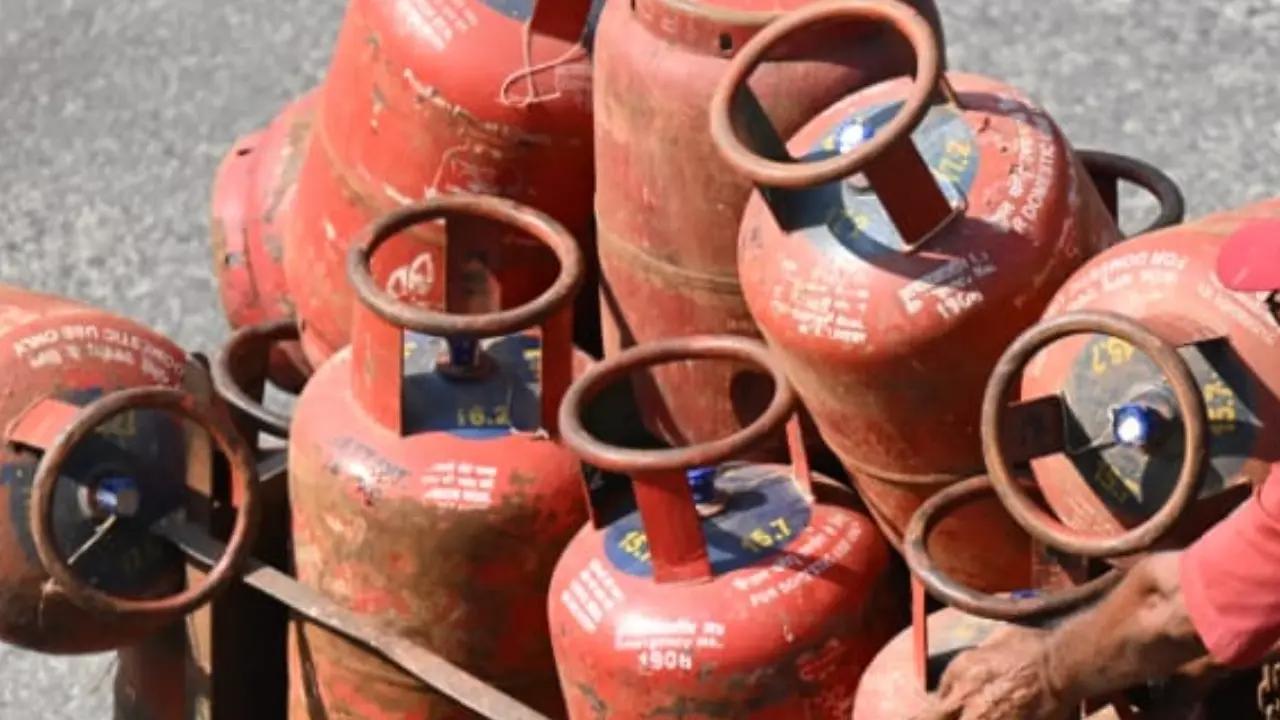
Gujarat's textile hub in Surat has started feeling the pinch of rising input costs due to the ongoing West Asia conflict, with several units either curtailing their daily working hours or bringing down their active production days. Some office-bearers claimed that the industry was currently facing losses of around Rs 100 crore every day. Surat city is among India's largest centres for man-made fabric production. The South Gujarat Textile Processors Association has decided to limit the operational days of units to five days a week instead of seven in a bid to manage rising costs, its president Jitendra Vaktania said. "Due to rising costs of raw materials and coal, the textile processing industry in Surat and South Gujarat is facing a crisis," he said. Several units have also scaled down production cycles from 24 hours to 12 hours a day, impacting overall output, said Ashok Jirawala, president of the Federation of Gujarat Weavers' Welfare Association and vice-president of the Southern Gujarat Chamber of Commerce and Industry. "The situation has become challenging, with the industry incurring losses of around Rs 90-Rs 100 crore per day," he said. The crisis has been compounded by a labour shortage, with industry estimates indicating a 35 per cent shortfall. More than 2,000 migrant workers have left the city in recent weeks, Jirawala added. The earlier shortage of cooking gas cylinders had triggered worker migration, further straining operations. The cost of imported raw materials, including man-made fiber, has also surged by 30-35 per cent, he noted. Vaktania said the work has declined by 25-30 per cent across weaving, processing and trading segments. Despite the current downturn, the upcoming wedding season is expected to boost demand and provide some relief to the sector, he noted. "Prior to the international crisis, the industry produced nearly seven crore metres of fabric per day. However, the output has now dropped by almost half," said Champalal Bothra, national chairman of the Confederation of All India Traders. Even after the conflict subsides and factors such as yarn prices and labour availability stabilise, the industry may take two to three months to recover, he said. Gujarat Deputy Chief Minister Harsh Sanghavi recently held a review meeting with industry leaders in Surat and assured adequate supply of 5 kg LPG cylinders for workers. This story has been sourced from a third party syndicated feed, agencies. Mid-day accepts no responsibility or liability for its dependability, trustworthiness, reliability and data of the text. Mid-day management/mid-day.com reserves the sole right to alter, delete or remove (without notice) the content in its absolute discretion for any reason whatsoever.
03 April,2026 07:04 PM IST | Surat | PTIMedical staff working under the National Health Mission (NHM) has launched a 72-hour strike outside the Sub-District Hospital in Gandoh, reported the ANI. The protest was triggered by allegations that the state government had deducted the equivalent of 2.5 days’ salary from their monthly pay. Holding placards and voicing their demands, the healthcare workers expressed anger over what they described as an abrupt and unfair financial deduction. They stated that the 2.5 days’ pay had traditionally been granted as compensation for overtime work. Protesters explained that the additional pay covered duties performed on Sundays, gazetted holidays, and night shifts.“This protest is for the salary of 2.5 days. We used to receive this amount because we worked during holidays and nights,” said one demonstrator. Allegations of pay disparity Some staff members also highlighted disparities within the system, claiming that regular employees continue to receive such benefits while NHM workers do not. The agitation was organised following a formal notice issued by the Medical Employees Federation of Jammu and Kashmir, which called for the protest to press for the workers’ demands. Role of NHM in public healthcare NHM staff play a crucial role in delivering healthcare services, particularly to underserved and rural populations. The programme provides financial and technical support to states and Union Territories to ensure accessible, affordable, and accountable healthcare up to the district hospital level. The mission is designed to strengthen rural healthcare systems by improving infrastructure, increasing human resources, and enhancing service delivery. It also promotes decentralised planning to enable need-based interventions and better utilisation of resources. Protesters say "This protest is for the salary of 2.5 days. We used to get the salary for 2.5 days because we did our duty on Sundays, gazetted holidays, and nights," explained one of the protesters, as per the ANI. Another protester claimed that there was a pay disparity in the administrative hierarchy, stating, "Our regular staff's salary for 2.5 days should be released... Why are we from NHM not getting equal salary? I request the state government to increase our salary or make us regular," the news agency reported. (with ANI inputs)
03 April,2026 03:38 PM IST | Jammu | mid-day online correspondentThe Central government is exploring ways to boost domestic production of induction heaters and related cooking equipment as part of efforts to reduce dependence on cooking gas amid global supply disruptions linked to the West Asia conflict, reported news agency IANS. Senior officials from key departments, including the Department for Promotion of Industry and Internal Trade, the Power Ministry and the Directorate General of Foreign Trade, held a high-level meeting on Friday to assess the situation and chart a response strategy. Govt Focuses on Scaling Up Domestic Manufacturing According to officials, the government is prioritising increased domestic manufacturing of induction cooktops and compatible utensils to ensure availability and affordability. The move comes as demand for electric cooking appliances has surged in recent weeks due to uncertainty in fuel supplies, reported IANS. Authorities are also examining ways to support manufacturers and streamline supply chains to meet the rising demand. Rising Demand Amid Energy Supply Concerns Officials noted that demand for induction heaters and other electrical appliances has grown significantly since tensions escalated in West Asia. With the conflict entering its second month, concerns over disruptions in oil and gas supplies have intensified, reported IANS. A senior official indicated that if the conflict continues for an extended period, India must be prepared to manage potential shortages and price volatility in energy supplies. Supply Chain Disruptions Prompt Policy Response The meeting comes amid broader concerns over global supply chains, particularly in energy and petrochemical sectors. The government has already taken steps such as reducing import duties on key petrochemical products to ease cost pressures and maintain supply stability, reported IANS. Officials said the current focus is on reducing import dependence and strengthening domestic capacity to handle prolonged uncertainty in global markets. Strategic Energy Routes Under Pressure Uncertainty has increased due to disruptions affecting critical energy infrastructure in the region. Concerns have also been raised over the Strait of Hormuz, a key global energy transit route through which a significant portion of the world’s oil supply passes, reported IANS. Any prolonged disruption in this corridor could have a direct impact on India’s energy security, given its reliance on imports. India Diversifies Energy Imports To mitigate risks, India has been diversifying its energy sourcing. Increased crude oil imports from countries such as Russia, Nigeria and Angola are helping offset supply constraints. Indian companies are also sourcing natural gas from the United States, reported IANS. These measures are part of a broader strategy to ensure continuity in energy supplies while reducing vulnerability to geopolitical shocks. Global Tensions Add to Uncertainty The geopolitical situation remains volatile, with escalating rhetoric and continued military activity in the region. Statements from global leaders have indicated the possibility of further escalation, while diplomatic efforts have yet to yield a breakthrough. Officials said the government will continue to monitor developments closely and take necessary steps to safeguard domestic energy security and consumer interests. (With inputs from IANS)
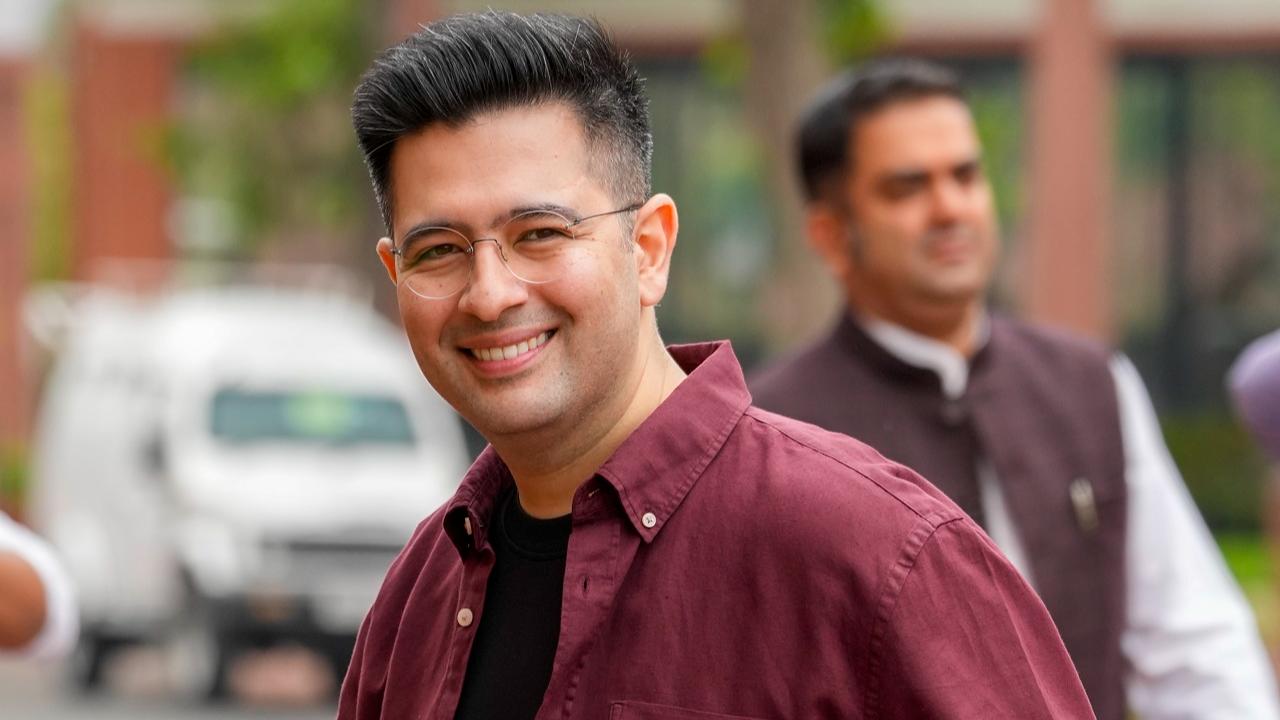
03 April,2026 03:22 PM IST | New Delhi | mid-day online correspondentInternal tensions within the Aam Aadmi Party (AAP) have surfaced publicly, with Delhi unit chief Saurabh Bhardwaj criticising party MP Raghav Chadha for what he described as focusing on “soft PR” instead of raising key national issues in Parliament. The remarks come a day after Chadha questioned his removal as the party’s Deputy Leader in the Rajya Sabha, a post now held by Ashok Kumar Mittal. Bhardwaj Questions Chadha’s Parliamentary Approach Responding to Chadha’s statement, Bhardwaj said that AAP, being a relatively small party in Parliament, has limited time to raise issues and must prioritise matters of national importance. He criticised Chadha for allegedly focusing on less significant topics, saying parliamentary time should instead be used to address major national concerns, including politically sensitive developments across states. ‘Raise Bigger Issues, Not Optics’ Bhardwaj stressed that the party expects its leaders to take strong positions against the central government when necessary. He suggested that raising lighter or less impactful topics does not contribute meaningfully to public discourse. He also invoked the party’s broader political philosophy, stating that its leaders must speak fearlessly and confront issues directly. Criticism Over Opposition Coordination The AAP leader further questioned Chadha’s role during key opposition actions in Parliament. Referring to a recent motion moved by opposition parties against Chief Election Commissioner Gyanesh Kumar, Bhardwaj claimed Chadha did not support the initiative. He also alleged that Chadha did not participate in coordinated opposition protests, raising concerns about his alignment with the party’s strategy. Remarks on Leadership Crisis Period Bhardwaj took aim at Chadha’s absence during a critical phase when several AAP leaders, including party chief Arvind Kejriwal, faced legal action. He claimed that party leaders were actively confronting political challenges at the time, while Chadha was not present in the country. He asserted that leaders must stand with the party during difficult moments and raise issues forcefully in Parliament. Chadha’s Record and Public Interventions Raghav Chadha, who has been a Rajya Sabha MP since 2022, has previously raised issues related to gig workers, public health and social welfare. However, Bhardwaj’s remarks suggest growing dissatisfaction within sections of the party regarding his approach. Leadership Change Signals Internal Shift The criticism follows AAP’s decision to appoint Ashok Kumar Mittal as Deputy Leader in the Rajya Sabha, replacing Chadha. The move is being seen as part of a broader internal recalibration within the party’s parliamentary leadership. The developments indicate emerging fault lines within AAP, even as the party prepares for upcoming political challenges at both the state and national levels.
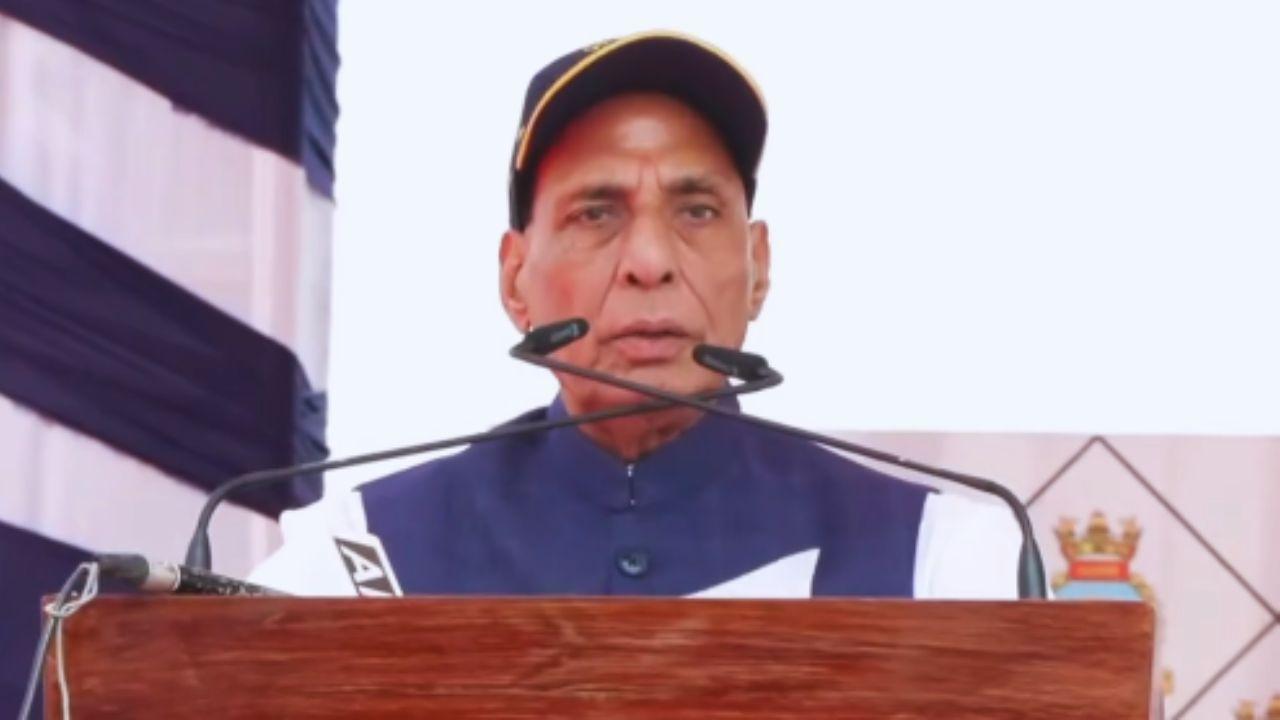
03 April,2026 02:55 PM IST | New Delhi | mid-day online correspondentUnion Defence Minister Rajnath Singh on Friday commissioned the advanced stealth frigate INS Taragiri in Visakhapatnam. The warship forms part of the Indian Navy’s Project 17A. Indian Navy chief Admiral Dinesh Kumar Tripathi and Chief of Defence Staff Anil Chauhan were among the attendees, along with other senior Indian Navy officials, reported ANI. Strengthening India’s presence in the Indo-Pacific region The induction of Taragiri comes at a time when the strategic and maritime importance of India's eastern seaboard continues to grow, driven by evolving regional security dynamics and India’s deepening engagement in the Indo-Pacific. The commissioning of Taragiri highlights the Navy's sustained focus on strengthening its combat readiness and operational capabilities through its ambitious fleet augmentation programme. INS Taragiri: Fourth formidable platform of Project 17A As the fourth potent platform of the Project 17A class, Taragiri is not merely a ship; it is a 6,670-tonne embodiment of the 'Make in India' spirit and the sophisticated engineering capabilities of domestic shipyards. Built by Mazagon Dock Shipbuilders Limited (MDL), Mumbai, this frigate represents a generational leap over earlier designs, offering a sleeker form and a significantly reduced radar cross-section, allowing it to operate with lethal stealth, the news agency reported. With indigenous content exceeding 75 per cent, the ship highlights the maturity of a domestic industrial ecosystem spanning over 200 Micro, Small, and Medium Enterprises (MSMEs), contributing to the Government of India’s Aatmanirbhar initiatives and supporting thousands of Indian jobs. High-speed, high-endurance vessel designed for versatile operations Driven by a Combined Diesel or Gas (CODOG) propulsion plant, Taragiri is designed for high-speed, high-endurance versatility and multi-dimensional maritime operations. The ship’s weapon suite is world-class, featuring supersonic surface-to-surface missiles, medium-range surface-to-air missiles, and a specialised anti-submarine warfare suite. These systems are seamlessly integrated through a state-of-the-art combat management system, enabling the crew to respond to threats with split-second precision. Beyond its role as a premier hunter of the seas, Taragiri is built for the complexities of modern diplomacy and humanitarian crises. Its flexible mission profile makes it ideal for everything from high-intensity combat to humanitarian assistance and disaster relief (HADR), ANI reported. The Indian Navy continues to grow as a combat-ready, cohesive, credible, and Aatmanirbhar force, safeguarding the seas for a viksit, samriddha Bharat. Taragiri stands ready as a beacon of rising maritime power and an ironclad guardian of the country’s blue frontiers. (With ANI inputs)
03 April,2026 02:25 PM IST | Visakhapatnam | mid-day online correspondentFollowing his removal as Deputy Leader of Aam Aadmi Party (AAP) in the Rajya Sabha, Raghav Chadha on Friday said that he has been “silenced, not defeated”. Taking to X, Chadha shared a video message for his party with a short line saying, “Silenced, not defeated. My message to the aam aadmi." In the video message, he questioned the decision to restrict his voice in Parliament, asking whether raising issues concerning the public had become a crime. Chadha alleged that his party had communicated with the Secretariat to prevent him from speaking in Parliament. He expressed concern over being denied opportunities to raise matters affecting citizens. “Whenever I get a chance, I speak about issues related to the people. Why should anyone stop me?” he asked. Focus on public issues Raghav Chadha stated that he has consistently raised concerns such as challenges faced by delivery workers, high food prices at airports, food adulteration, toll charges, middle-class tax burdens and telecom recharge practices. He maintained that these issues directly benefit ordinary citizens and questioned why the party would object to such interventions. Silenced, not defeatedMy message to the ‘aam aadmi’—खामोश करवाया गया हूँ, हारा नहीं हूँ'आम आदमी’ को मेरे संदेश pic.twitter.com/poUwxsu0S3 — Raghav Chadha (@raghav_chadha) April 3, 2026 Chadha concluded his message by thanking the public for their continued support, stating that he remains committed to serving them. He added a poetic note, saying his silence should not be mistaken for defeat and likened himself to a river that could turn into a flood when the time comes. AAP accuses Chadha of indulging in 'soft PR' The AAP on Friday hit back at party MP Raghav Chadha, accusing him of shying away from raising issues against the Centre in Parliament and instead engaging in "soft PR". Delhi Aam Aadmi Party (AAP) President Saurabh Bharadwaj claimed that Chadha failed to toe the party's line on several matters in Parliament and did not join opposition walkouts on key issues. "We all are soldiers of Arvind Kejriwal, the Centre doesn't care about soft PR or talking about samosas at airport canteens when bigger issues are at stak. Whenever the Opposition staged a walkout in Parliament, you (Chadha) did not participate. You did not raise issues concerning Punjab, from where you are elected, and you hid in a foreign country when former Delhi CM Arvind Kejriwal was arrested," Bharadwaj said in a video posted on X. AAP appoints new deputy leader The Arvind Kejriwal-led AAP has appointed Ashok Mittal as its new Deputy Leader in the Rajya Sabha, effectively replacing Chadha. The party has also formally informed the Rajya Sabha Secretariat of the change. At present, Sanjay Singh serves as the party’s leader in the Upper House and also heads its parliamentary wing. Reports suggest the party has also requested that Chadha not be allotted speaking time in Parliament. Speculation over internal rift While neither side has openly acknowledged tensions, there are indications of strained relations between Chadha and the party leadership, reported the IANS. Political circles have also been abuzz with speculation about a possible shift in his political alignment ahead of the upcoming Punjab Assembly elections, the news agency reported.
03 April,2026 01:37 PM IST | New Delhi | mid-day online correspondentIndia and Russia have reaffirmed their strong partnership across key sectors, especially energy, during the recent visit of Russia’s First Deputy Chairman Denis Manturov. Manturov stated that Russian companies are fully capable of increasing the supply of oil and liquefied natural gas (LNG) to India. This assurance is significant as India looks to secure stable energy sources amid rising global uncertainty. The move reflects deepening energy cooperation between the two countries. Manturov's visit comes at a time when global energy markets are under pressure due to the ongoing conflict in West Asia, reported ANI. He also highlighted that Russia has already increased its supply of mineral fertilisers to India by 40 per cent by the end of 2025, and is ready to continue meeting India’s growing demand. Focus on agriculture and nuclear energy In addition to energy, both countries are working on a joint project for urea (carbamide) production, which is expected to strengthen long-term agricultural cooperation. This project will help India ensure a steady supply of fertilisers, which are crucial for the farming sector. India and Russia also reviewed their ongoing collaboration in nuclear energy. Work on new power units at the Kudankulam Nuclear Power Plant is progressing as per schedule. This project remains a key pillar of bilateral cooperation and contributes to India’s clean energy goals as per the news agency. Wider strategic cooperation expands Beyond energy and agriculture, the discussions covered expanding ties in sectors such as industry, space, education, innovation, and technology. Both countries are looking to strengthen their overall strategic partnership and explore new areas of cooperation. Manturov, who co-chairs the India-Russia Inter-Governmental Commission, also held talks with External Affairs Minister S Jaishankar. The discussions focused on enhancing cooperation in trade, connectivity, critical minerals, and mobility, while also reviewing progress made since the India-Russia Annual Summit held in December 2025. High level meetings and global discussions During his visit from April 2 to April 3, Manturov met several senior Indian leaders, including Prime Minister Narendra Modi, Finance Minister Nirmala Sitharaman, and National Security Adviser Ajit Doval. The two sides also exchanged views on regional and global developments, including the ongoing situation in West Asia. The discussions reflected a shared interest in maintaining stability and strengthening cooperation in a changing global environment. Manturov’s visit highlights the commitment of both India and Russia to deepen their economic and strategic ties. With growing collaboration in energy, fertilisers, nuclear power, and emerging sectors, the partnership continues to evolve and adapt to global challenges. (With ANI Inputs)
03 April,2026 01:26 PM IST | Mumbai | mid-day online correspondentThe Jan Vishwas (Amendment of Provisions) Bill, 2026, was passed by the Rajya Sabha on Thursday, after it was passed in the Lok Sabha on Wednesday. Union Minister for Commerce and Industry Piyush Goyal emphasised that the Jan Vishwas (Amendment of Provisions) Bill, 2026, is designed to foster trust-based governance. Speaking in the Rajya Sabha on Thursday, he said, "There will be fear in those who break the law knowingly." The Minister highlighted that with this reform, they have attempted to "provide protection through adequate civil mechanisms" and " tried to bring swift and proportionate penalties." Clarifying that the Bill does not dilute essential regulations like the Drugs and Cosmetics Act, Goyal assured the House that "very strict and severe criminal punishment" is imposed for those who manufacture, import, or sell spurious drugs without approval from the drug controller. The legislation aims to promote a governance model based on trust and proportionate regulation, while reducing compliance burden and decriminalising minor offences to facilitate smoother business operations and improve citizens' quality of life. The Bill seeks to amend 784 provisions of 79 Central Acts administered by 23 Ministries, decriminalise 717 provisions to promote Ease of Doing Business and amend 67 provisions to facilitate Ease of Living. The Bill seeks to rationalise more than 1000 offences, remove outdated and redundant provisions and improve the overall regulatory environment. It envisages a shift from criminal penalties for minor, technical, or procedural defaults to civil and administrative enforcement mechanisms. Key measures include replacing imprisonment provisions with monetary penalties or warnings, graded enforcement mechanisms, including warnings for first-time contraventions and rationalisation of fines and penalties in proportion to the nature of the offence. To ensure efficient and time-bound enforcement, the Bill provides for the appointment of Adjudicating Officers and the establishment of Appellate Authorities. Officials said that the measures aim to facilitate the speedy disposal of cases and reduce litigation burden on courts, while ensuring adherence to principles of natural justice. The Bill also proposes 67 amendments under the New Delhi Municipal Council Act, 1994 and the Motor Vehicles Act, 1988. This story has been sourced from a third party syndicated feed, agencies. Mid-day accepts no responsibility or liability for its dependability, trustworthiness, reliability and data of the text. Mid-day management/mid-day.com reserves the sole right to alter, delete or remove (without notice) the content in its absolute discretion for any reason whatsoever.
03 April,2026 12:18 PM IST | New Delhi | ANIThe Ministry of External Affairs (MEA) spokesperson Randhir Jaiswal reiterated India's stance on ensuring safe and free navigation through the Strait of Hormuz, amidst escalating tensions in West Asia. MEA spokesperson Randhir Jaiswal stated that India stands for free and open commercial shipping and maritime security, in line with international law. Speaking at a media briefing, Jaiswal said that the UK has invited India to talks on the Strait of Hormuz, and India's Foreign Secretary will attend the meeting. He added that India is in touch with Iran and other countries to ensure unimpeded transit and safe passage for Indian ships carrying LPG, LNG, and other products Jaiswal said, "The UK side has invited several countries, which also include India, for talks on the Strait of Hormuz. From our side, the Foreign Secretary is attending the meeting this evening. We are in touch with Iran and other countries there to see how best we can get unimpeded transit and safe transit for our ships, which are carrying products including LPG, LNG and other products. Through this conversation that we have had over the last several days, we have had six Indian ships which have been able to safely cross the Strait of Hormuz, and we continue to be in touch with relevant parties." Regarding the safety of Indian citizens, Jaiswal said, "Approximately 10 million Indian citizens reside in the GCC countries. All of them are safe. Our embassies in all these countries remain in constant contact with them." Eight Indian citizens have lost their lives in the conflict, and one remains missing. "Eight Indian citizens have been casualties in this conflict so far, and one remains reported as missing. Ministry of External Affairs, in coordination with our Ministry of Shipping and all our Indian embassies in the region, we are dedicated to safeguarding the security and interests of our citizens. We are closely monitoring all developments and activities related to the Gulf region, this ongoing conflict, and the Strait of Hormuz," he added. India has also facilitated the exit of 204 nationals from Iran through the land border to Azerbaijan, with more expected to return in the coming days. Jaiswal thanked the government of Azerbaijan for its support. He said, "Several of our Indian nationals, 204, to be precise, have been able to leave Iran for Azerbaijan through the land border, and from there, they will be coming back home. Several of them have returned, and others will be returning in the course of the next few days. We are thankful to the government of Azerbaijan for the support that they render for the exit of Indian nationals from Iran through the land border..." Regarding the Bahraini resolution at the UN Security Council, Jaiswal said, "This particular resolution is under consideration in the UN Security Council. We are aware of the resolution. We also know that relevant parties, which means the members of the Security Council, are currently negotiating this particular text. As far as India is concerned, we stand for free and open commercial shipping and for maritime security in keeping with international law. We continue to call for ensuring safe and free navigation through the Strait of Hormuz as a matter of priority. And also, we are closely following all developments in regard to this West Asian conflict. So that is how we look at the Bahraini resolution." India is gearing up for its BRICS presidency, with several meetings lined up in the coming months, the MEA spokesperson said on Thursday. Responding to queries on the Quad Foreign Ministers' meeting, Jaiswal said, "Next month, we are still some distance away. We'll keep you informed well in time as to what we have, what we are planning, so on and so forth." On India's role in BRICS, Jaiswal stated, "We are the chair. We are doing several of these meetings. You would have followed the recent working-level meetings that we've done. We will be organising a series of meetings going into our presidency. We'll keep you updated with the Foreign Ministers' level meeting as also other tracks in which we'll have ministerial interaction." This story has been sourced from a third party syndicated feed, agencies. Mid-day accepts no responsibility or liability for its dependability, trustworthiness, reliability and data of the text. Mid-day management/mid-day.com reserves the sole right to alter, delete or remove (without notice) the content in its absolute discretion for any reason whatsoever
03 April,2026 11:56 AM IST | New Delhi | ANIThe Central government has raised concerns over the persistence of rumours regarding LPG availability, noting that only 17 states are currently conducting regular press briefings to mitigate public anxiety. In a formal letter to all State and Union Territory Chief Secretaries, the Ministry of Petroleum and Natural Gas (MoPNG) has urged local administrations to intensify their communication strategies to prevent panic buying and hoarding across the country. "It is observed that rumours and misinformation continue to circulate in certain areas, leading to avoidable public concern and instances of panic buying. As per information provided by State-level Coordinators of OMCs, only 17 States/UTs are presently conducting regular or intermittent press briefings," Petroleum Secretary Neeraj Mittal stated in the letter, ANI reported. Seventeen states currently hold regular LPG briefings The states currently conducting these briefings include Andhra Pradesh, Arunachal Pradesh, Bihar, Gujarat, Himachal Pradesh, Jammu & Kashmir, Kerala, Madhya Pradesh, Maharashtra, Meghalaya, Nagaland, Odisha, Rajasthan, Tamil Nadu, Telangana, Uttar Pradesh, and Uttarakhand. The Centre has requested the remaining states to immediately adopt similar measures to stabilise the situation. States urged to enhance proactive public communication "In this regard, States/UT Governments are requested to intensify proactive and regular public communication. Daily press briefings at an appropriately senior level, along with timely dissemination of accurate information through social and electronic media, may be ensured to reassure citizens regarding adequate availability and smooth distribution of LPG and to effectively counter misinformation," the Secretary wrote, the news agency reported. Beyond this communication, the Ministry has also called for strict enforcement against those exploiting the situation for profit. Centre stresses crackdown on hoarding and black market activities "Necessary action may also continue to be taken to curb malpractices such as hoarding and black marketing," the letter added, ANI reported. This directive follows an earlier warning issued by the Ministry on March 27, which highlighted how geopolitical developments in West Asia had disrupted global supply chains. These external factors contributed to a surge in fake news regarding the pricing and availability of petrol, diesel, and LPG on social media platforms, further straining the domestic distribution network. (With ANI inputs)
03 April,2026 11:52 AM IST | New Delhi | mid-day online correspondentIn a major operation, an inter-state gas theft racket was busted by the Maharashtra State Level Vigilance Cell in Chhatrapati Sambhajinagar, where officials seized LPG worth approximately Rs 1.26 crore, including two large tankers, an official statement said. The state-level vigilance team uncovered an inter-state network accused of stealing LPG meant for public distribution. Officials said the racket was depriving nearly 2,480 economically weaker households of their rightful monthly gas supply, it said. Officials conduct raid, seize LPG The action was initiated following confidential information received about an LPG smuggling syndicate by rationing controller Chandrakant Dange. A team led by Ganesh Bellale laid a trap near a hotel on Vaijapur Road in the Gangapur area to bust the racket. On the night of April 2, officials raided the spot and caught the accused allegedly red-handed while siphoning LPG after breaking the seal of a tanker belonging to Hindustan Petroleum. The seizure The officials said that they seized the following items during the operation - - Two large LPG tankers (MH 43 K 5921 and MH 43 CK 5747) carrying a total of 35,220 kg of gas - 26 illegally stored cylinders, including both commercial (19.2 kg) and domestic (14.2 kg) units - Total estimated value of seized goods: Rs 1.26 crore Impact on public supply Officials highlighted that the confiscated LPG could have met the monthly needs of around 2,480 poor families. The operation exposed how illegal fuel diversion directly affects essential supply for ordinary citizens. Amid the ongoing crisis in West Asia, which has disrupted energy supplies through the Strait of Hormuz, the government has warned of strict action against those stealing cooking gas, as well as individuals involved in hoarding, unauthorised storage, or illegally reselling LPG cylinders. A case is being registered at the MIDC Waluj police station. The officials have begun a detailed investigation to trace the full extent of the network and identify other individuals involved, the official statement said. Speaking on the crackdown, Chandrakant Dange reiterated that strict action will continue against those involved in illegal hoarding and theft of essential commodities. He stressed that such offences would not be tolerated under any circumstances.
03 April,2026 11:40 AM IST | Chhatrapati Sambhajinagar | mid-day online correspondentADVERTISEMENT







-1775223130059_d.png?tr=w-436,h-271 "File Pic")



-1775202374231_d.png "PM Modi with Russia First Deputy Chairman Denis Manturov during a meeting, in New Delhi. PIC/X")
-1775198855460_d.png "Union Minister for Commerce and Industry Piyush Goyal. File Pic")