India's reserves of liquid fuel can cater for only about 20 to 40 days and cannot be built to last for several months, according to the Secretary of the Petroleum and Natural Gas Regulatory Board (PNGRB), Anjan Kumar Mishra."We are already having some reserve for the liquid fuel, but you cannot build a reserve which will be lasting for maybe six months' time," Mishra told ANI adding, "It may cater for 20 to 40 days, but it may not be able to cater for six months' time or for longer period,"Speaking on the sidelines of the PHDCCI's Hydrocarbons Summit 2026 held in the national capital, Mishra said the crisis in West Asia region is affecting India, but the government has put in place measures and is closely monitoring the situation."I won't be lying that it is affecting India itself, but definitely the government has come up with all the plans and we have been monitoring the situation very closely," he said.The PNGRB official said there is no shortage of fossil fuel in the country despite concerns triggered by global tensions."Even if some panic situation is there, the name itself suggests that it is a panic situation. Nothing sort of liquid fuel crunch is there in the country," he said.India has also extended support to neighbouring countries during the crisis, including Bangladesh and Sri Lanka, The PNGRB Secretary said."We have supported Bangladesh and we have supported Sri Lanka. So definitely this is the situation, we must help our neighbours also in this time of crisis," Mishra said.On calls for reducing dependence on imports, Mishra said increasing domestic crude oil production is a gradual process and cannot be achieved immediately, despite government efforts including recent exploration rounds.He said India has broadened its crude sourcing base in recent years, with supplies coming not only from West Asia but also from countries such as Russia and Venezuela, and with exploration of options in Mozambique and Angola.On concerns that crude prices could rise sharply if the conflict persists, Mishra said any increase would be temporary."If the prices go high, we should be able to take up the situation... whatever the price hike will be there, it is going to be a very temporary effect," he said, adding that prices could eventually return to levels seen before the crisis. This story has been sourced from a third party syndicated feed, agencies. Mid-day accepts no responsibility or liability for its dependability, trustworthiness, reliability and data of the text. Mid-day management/mid-day.com reserves the sole right to alter, delete or remove (without notice) the content in its absolute discretion for any reason whatsoever.
31 March,2026 11:34 PM IST | New Delhi | ANIThe Reserve Bank of India on Tuesday extended the enhanced export credit period of up to 450 days till June 30, 2026, to support exporters facing disruptions due to the ongoing West Asia crisis. The central bank said the decision was taken in view of continuing logistical challenges arising from geopolitical tensions in West Asia. Exporters have been facing delays in shipments and payments due to disruptions in global supply chains and uncertain market conditions. “Due to ongoing geopolitical uncertainties and logistical disruptions, Reserve Bank of India has been receiving representations from various stakeholders regarding challenges in adhering to the timelines for realisation of export proceeds,” the central bank said. The RBI noted that it has received several requests from stakeholders highlighting difficulties in meeting earlier deadlines for realising export proceeds. These challenges have been largely linked to the ongoing geopolitical situation and its impact on trade flows. The enhanced credit period was first introduced in November 2025 during the phase of global trade tensions triggered by tariff-related issues involving the United States. It was initially valid for disbursals up to March 31, 2026, but has now been extended further. In addition to this, the RBI confirmed that the earlier relaxation allowing exporters more time to bring back their earnings will continue. Exporters will still have up to 15 months, instead of the usual nine months, to realise and repatriate the full value of goods and services exported. “It is clarified that the above relaxations shall continue to remain in force. Exporters may continue to avail the facility in accordance with the conditions stipulated therein,” RBI stated. The new rules have come into effect immediately and will apply to all institutions involved in export financing. This includes commercial banks, co-operative banks, non-banking financial companies engaged in factoring, and all-India financial institutions. According to the RBI, these measures are intended to reduce the financial burden on exporters and help ensure that businesses continue to operate smoothly despite global uncertainties. The central bank also said it will keep a close watch on the situation and take further steps if needed. This story has been sourced from a third party syndicated feed, agencies. Mid-day accepts no responsibility or liability for its dependability, trustworthiness, reliability and data of the text. Mid-day management/mid-day.com reserves the sole right to alter, delete or remove (without notice) the content in its absolute discretion for any reason whatsoever.
31 March,2026 10:58 PM IST | New Delhi | IANSThe Himachal Pradesh government has decided to process surplus milk into ghee and sell it at affordable rates to give a boost to the dairy industry in the state and ensure timely payments to milk selling farmers, said Chief Minister Sukhvinder Singh Sukhu on Tuesday. Responding to a question from BJP MLA Satpal Singh Satti in Vidhan Sabha, Sukhu said the government would clear all outstanding dues owed to milk producers for February and March next month. He also announced that the government is establishing a high-end, state-of-the-art milk processing plant at Dagwar in the Kangra district. Following the hike in milk prices implemented by the Himachal Pradesh government, milk production has witnessed a significant surge and as a result, the government now finds itself with a surplus of milk. For the first time, producers have developed a genuine inclination to adopt milk production as a viable means of livelihood, he said and added that rather than selling this surplus milk to other states, the government has decided to process it into ghee and sell it at affordable rates. Taking a jibe at the previous BJP government, he observed that prior to this, no one bothered about this sector, nor had officials ever offered any suggestions regarding it. The proposed Dagwar plant is expected to become operational by October 2026. Once this plant becomes functional, the entire milk produced within the state will be consumed and processed locally. Earlier, Agriculture Minister Chandra Kumar stated that the number of milk producers in the state has increased and therefore, the existing milk processing plants are unable to process the entire volume, compelling the government to sell the surplus milk to organizations such as Mother Dairy and Amul. He said that the plant currently under construction at Dagwar will have the capacity to process approximately 4.5 lakh liters of milk daily. He further affirmed that the government is continuously working to increase the number of milk chilling and processing plants across the state. Responding to a query raised by Lahaul-Spiti MLA Anuradha Rana, Minister for Youth Services and Sports Yadvinder Gomma said that the Himachal government is considering granting state-level recognition to ice hockey. He said that the construction of an ice hockey rink in Kaza, at a cost of Rs 73.77 crore, is set to commence shortly as the necessary procedural formalities have already been completed. Replying to a question from MLA Puran Chand Thakur, Public Works Minister Vikramaditya Singh said that the decision to shift the PWD division from Thalout in Mandi district to Pandoh was an administrative one, and the government arrived at this decision after careful deliberation. He said that while the division in Thalout was operating out of a rented building, it has now been relocated to a government-owned building in Pandoh. He further emphasized that the relocation of this office was driven entirely by administrative considerations and involved absolutely no political motives. This story has been sourced from a third party syndicated feed, agencies. Mid-day accepts no responsibility or liability for its dependability, trustworthiness, reliability and data of the text. Mid-day management/mid-day.com reserves the sole right to alter, delete or remove (without notice) the content in its absolute discretion for any reason whatsoever.
31 March,2026 10:09 PM IST | Shimla | PTIA nine-year-old girl died after she allegedly got entangled in a swing and was strangled at her house in Maharashtra's Beed district on Tuesday, her family said. The incident occurred in Majalgaon town around 11 am when the victim, Vrinda Sameer Rudrawar, was playing on the top floor of her house, they said. Vrinda was standing on a chair trying to reach the swing when the chair suddenly slipped from under her. In the ensuing fall, the rope of the swing coiled around her neck, strangling her, sources in the family said. The tragedy came to light when the mother came to check on the girl and found her suspended by the rope. The child was rushed to a nearby hospital, where doctors declared her dead on arrival, they said. This story has been sourced from a third party syndicated feed, agencies. Mid-day accepts no responsibility or liability for its dependability, trustworthiness, reliability and data of the text. Mid-day management/mid-day.com reserves the sole right to alter, delete or remove (without notice) the content in its absolute discretion for any reason whatsoever.
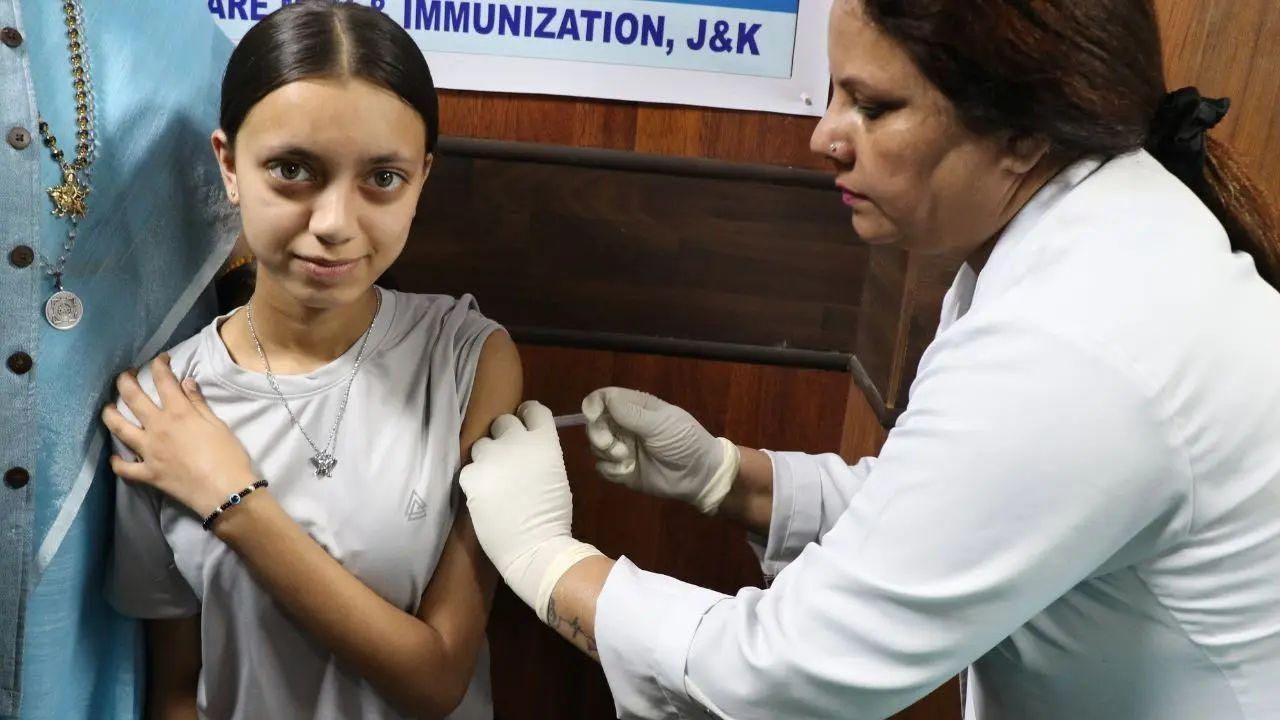
31 March,2026 10:07 PM IST | Beed | PTIIn a powerful step towards safeguarding the health and future of young girls, several states, including Madhya Pradesh, Andhra Pradesh, Tamil Nadu, Gujarat, Odisha, and Mizoram, are leading from the front in the nationwide HPV vaccination campaign. Within just a fortnight of its launch, nearly 3 lakh girls aged 14 years have already been vaccinated, marking an encouraging start to this critical public health initiative, a health ministry official informed, reported ANI. According to experts, the Human Papillomavirus (HPV) vaccine plays a vital role in preventing cervical cancer, one of the most common cancers affecting women. The enthusiastic participation seen so far reflects growing awareness among parents, schools, and communities about the importance of early protection. HPV vaccination drive gains strong response despite ongoing exams The campaign has been strategically rolled out during the academic period, and while examinations are currently underway in many regions, the response has remained strong. With the conclusion of the exam season approaching, the momentum of the vaccination drive is expected to accelerate significantly, enabling wider coverage and ensuring that more girls benefit from this life-saving intervention. "Health authorities are actively working in coordination with schools, local bodies, and healthcare workers to ensure smooth access to the vaccine. Parents and guardians are urged to support and encourage eligible girls to get vaccinated at the earliest," said an official. The offical further stated, "This is more than a campaign, it is a collective movement towards a healthier, cancer-free future for our daughters." Earlier, on March 1, Prime Minister Narendra Modi launched a nationwide HPV vaccination campaign and development projects worth Rs 16,680 crore in Rajasthan's Ajmer. PM Modi highlights the campaign as a step towards empowering the women of the country Earlier this month, addressing a large public rally after the event, Modi said the BJP's double-engine government in Rajasthan has completed two years, and the state is now advancing on a new path of development. The Prime Minister called the HPV vaccination campaign an important step towards empowering the women of the country. "Today, from this land of brave women, I have got the opportunity to launch an important campaign for the daughters of the entire country. The HPV vaccination campaign has been launched in Ajmer. This campaign is an important step towards empowering the women of the country," Modi had said. The promises of development with which the BJP government came to serve you are being fulfilled with great speed. And today is the day to accelerate this very campaign of development," he said. Highlighting the significance of the occasion, the Prime Minister added, "Just a short while ago, the BJP's double-engine government in Rajasthan completed two years. I am pleased that today, Rajasthan is advancing on a new path of development." (Inputs from ANI)
31 March,2026 09:03 PM IST | New Delhi | mid-day online correspondentIn a major bureaucratic reshuffle, the government has appointed Vir Vikram Yadav as the new Director General of the Directorate General of Civil Aviation (DGCA), replacing Faiz Ahmed Kidwai. Yadav, who is currently serving as Additional Secretary in the Ministry of Environment, Forest and Climate Change, will now head India’s aviation regulator at a time when the sector is expanding rapidly. With rising air traffic, growing airline fleets and increased focus on safety, his role is expected to be crucial in ensuring stronger regulatory oversight. Meanwhile, Kidwai has been moved to the Department of Personnel and Training (DoPT) as Additional Secretary. He had taken charge as DGCA chief in January 2025 and served in the role for a little over a year. The reshuffle comes at a critical juncture for the aviation sector. The DGCA is closely monitoring airline safety, fleet expansion, airport infrastructure and compliance with regulations as both domestic and international air travel continue to grow. The regulator plays a key role in maintaining air safety standards, issuing licenses and ensuring operational efficiency across the aviation ecosystem. Along with this change, the government has announced several other senior-level appointments. Puneet Kansal has been named Additional Secretary in the Ministry of Civil Aviation, while Mona K Khandar has been appointed Additional Secretary in the Ministry of Social Justice and Empowerment. Gyanendra D Tripathi will take charge as Additional Secretary in the Department of Agricultural Research and Education and will also serve as Secretary of the Indian Council of Agricultural Research. Vishal Gagan has been appointed Secretary of the Central Information Commission in the rank of Additional Secretary, and N Gulzar will serve as Member Secretary of the National Capital Region Planning Board under the Ministry of Housing and Urban Affairs. Diwakar Nath Misra has been appointed Additional Secretary in the Ministry of Power, while Debasish Prusty will take on the role of Additional Secretary in the Department of Financial Services under the Ministry of Finance. Sridhar Chiruvolu has also been elevated to the position of Additional Secretary in the Prime Minister’s Office. This story has been sourced from a third party syndicated feed, agencies. Mid-day accepts no responsibility or liability for its dependability, trustworthiness, reliability and data of the text. Mid-day management/mid-day.com reserves the sole right to alter, delete or remove (without notice) the content in its absolute discretion for any reason whatsoever.
31 March,2026 08:59 PM IST | New Delhi | IANSAs many as 41.41 lakh ineligible ration cards were deleted in 2025, with maximum in Haryana, followed by Rajasthan, Uttar Pradesh and West Bengal, according to the government data placed before Parliament on Tuesday. According to PTI, about 13.43 lakh ineligible ration cards were deleted in Haryana, 6.05 lakh in Rajasthan, 5.97 lakh in Uttar Pradesh, 3.74 lakh in West Bengal, and 2.60 lakh in Madhya Pradesh, as per the data given by the Minister of State for Food Nimuben Jayantibhai Bambhaniya in the Rajya Sabha. Bambhaniya, in her written reply, said as an outcome of the use of technology in the Public Distribution System (PDS), all states and Union Territories have been able to weed out ineligible ration cards in order to achieve rightful targeting. Over 41 lakh fake ration cards deleted in 2025 as PDS goes fully digital A total of 41.41 lakh fake ration cards were deleted in 2025, as against 48.85 lakh in 2024 and 41.99 lakh in 2023. Under the ongoing reforms in the PDS, the ration card and beneficiary database have been completely digitised across all states/UTs, reported PTI. Almost all fair price shops (FPS) in the country have been automated through the installation of electronic Point of Sale (ePoS) devices for the distribution of foodgrains. Further, 99.2 per cent of beneficiaries have been Aadhaar-seeded and 98.75 per cent of foodgrain distribution is being carried out through digital authentication modes, including Aadhaar biometric and iris authentication. "Digitisation of the PDS aims to enhance efficiency and transparency to ensure rightful targeting of beneficiaries, and address challenges such as leakages and diversion of foodgrains," the minister added, reported PTI. (With inputs from PTI)
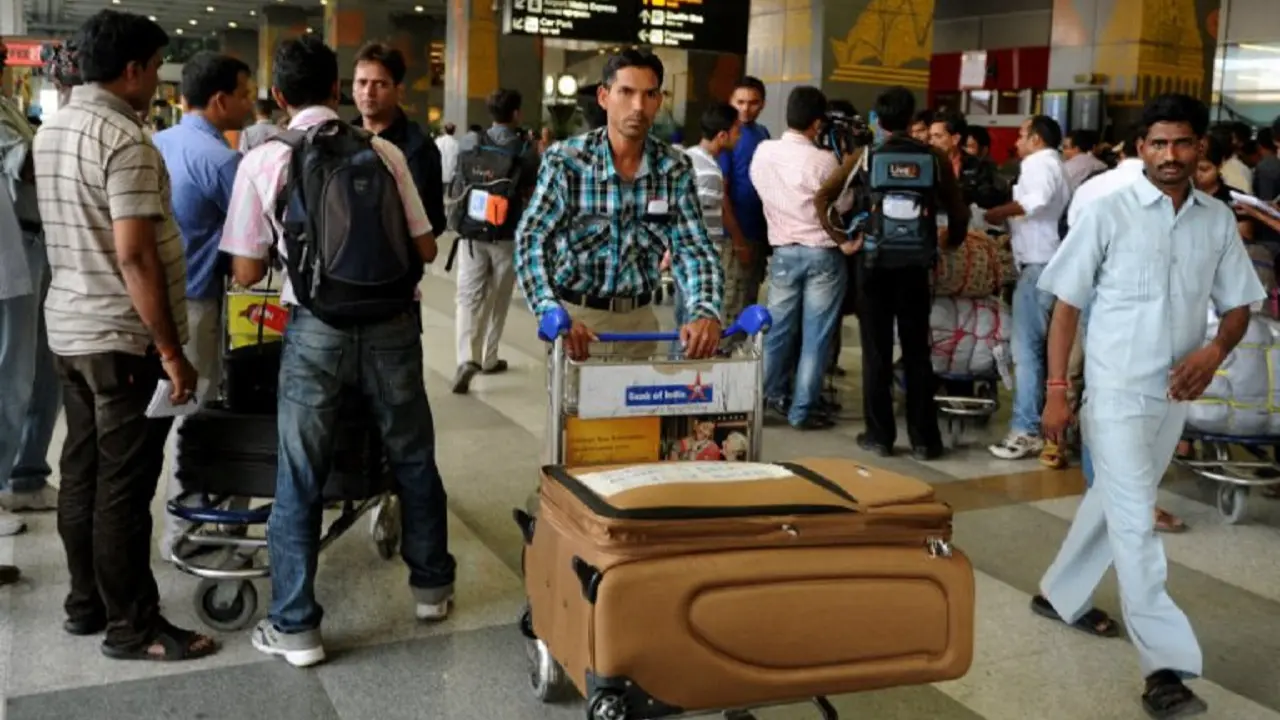
31 March,2026 07:30 PM IST | New Delhi | mid-day online correspondentAround 5,72,000 passengers have returned from the West Asia region to India and with the Qatar airspace partially open, around 8–10 non-scheduled commercial flights are expected to operate to the country on Tuesday, the government said. In the UAE, around 85 flights are expected to operate across the day. Limited non-scheduled flights continue based on operational and safety considerations. Flights continue to operate from Oman and Saudi Arabia to India, according to the Ministry of External Affairs (MEA). Kuwait and Bahrain airspaces remain closed. Special non-scheduled commercial flights are operating from Dammam Airport in Saudi Arabia to various destinations in India. "In view of the airspace closure in Iran, travel of Indian nationals is being facilitated through Armenia and Azerbaijan. In view of airspace restrictions in Israel, travel of Indian nationals is being facilitated via Egypt and Jordan," said the ministry. In view of the airspace closure in Iraq, travel of Indian nationals is being facilitated through Jordan and Saudi Arabia, it added. Regular contact is being maintained with the Indian community in the region, with necessary assistance being extended and advisories issued for their safety and well-being. According to the Ministry of Ports, Shipping and Waterways, all Indian seafarers in the region are safe, and no incident involving Indian-flagged vessels was reported in the past 24 hours. According to the government, 18 Indian-flagged vessels with 485 Indian seafarers remain in the western Persian Gulf region and DG Shipping, in coordination with ship owners, RPSL agencies and Indian Missions, is actively monitoring the situation. DG Shipping has facilitated the safe repatriation of over 959 Indian seafarers so far, including 9 in the last 24 hours. Port operations across India remain normal with no congestion, with the state maritime boards of Gujarat, Maharashtra, Goa, Kerala, Andhra Pradesh, and Puducherry having confirmed smooth functioning. This story has been sourced from a third party syndicated feed, agencies. Mid-day accepts no responsibility or liability for its dependability, trustworthiness, reliability and data of the text. Mid-day management/mid-day.com reserves the sole right to alter, delete or remove (without notice) the content in its absolute discretion for any reason whatsoever.
31 March,2026 05:34 PM IST | New Delhi | mid-day online correspondentIndian naval ship INS Trikand has successfully concluded its port call at Port Louis, Mauritius, on March 13, marking a significant step in reinforcing maritime cooperation between India and the island nation. As per an official statement, the warship participated in the 58th Mauritius National Day celebrations on March 12. The Indian Navy contingent, along with a naval band and the ship’s integral helicopter, took part in the parade and flypast held at the Champ de Mars, adding grandeur to the national festivities. As part of the official engagements, commanding officer, Captain Sachin Kulkarni, called on Commissioner of Police for the Mauritius Police Force Rampersad Sooroojebally and Indian High Commissioner Anurag Srivastava, underscoring the importance of diplomatic and security cooperation between the two countries. The ship also hosted a cultural evening on board, attended by senior Mauritian ministers and officials. Mauritian politician Mahend Gungapersad graced the event as the chief guest, highlighting the strong people-to-people ties shared by India and Mauritius. Along with the ceremonial engagements, INS Trikand also carried out a series of professional and community-oriented activities. These included training sessions for personnel of the Mauritius National Coast Guard, focusing on critical areas such as harbour and sea watchkeeping, firefighting, and damage control. The ship was opened to visitors on March 12, attracting over 500 attendees. The visit also featured sports fixtures, cultural exchanges, and outreach programmes aimed at deepening bilateral engagement. Upon departure, INS Trikand conducted a Passage Exercise (PASSEX) and joint Exclusive Economic Zone surveillance with CGS Valiant before proceeding for its next operational deployment. The successful port call reaffirms the enduring maritime partnership between India and Mauritius and aligns with India’s MAHASAGAR vision—Mutual and Holistic Advancement for Security and Growth Across Regions—further strengthening strategic ties in the Indian Ocean region. INSV Kaundinya flagged into Mumbai Harbour after a historic Oman voyage Indian Naval Sailing Vessel (INSV) Kaundinya was ceremonially flagged into Mumbai Harbour by Minister of State for Defence Sanjay Seth earlier in the month, marking the successful completion of her maiden overseas voyage to the Sultanate of Oman, an official statement issued by the Defence PRO said. The flag-in ceremony will commemorate the vessel’s return across the Arabian Sea, reaffirming India’s enduring maritime heritage and centuries-old India–Oman ties across the Indian Ocean, it added. A unique symbol of India’s ancient shipbuilding traditions, INSV Kaundinya is a traditionally constructed stitched ship, built entirely using age-old techniques in which wooden planks are hand-stitched with coir rope and sealed with natural resins. The vessel represents a revival of India’s historic maritime craftsmanship and reflects efforts to preserve and rediscover Indic knowledge systems.
31 March,2026 05:26 PM IST | Port Louis, Mauritius | mid-day online correspondentRoad users across India will no longer be able to pay toll fees in cash from April 1 as the National Highways Authority of India (NHAI) shifts to a fully digital payment system. In a major step towards modernising highway travel, NHAI will implement a complete ban on cash payments at toll plazas across the country. From April 1, commuters will have to pay toll charges only through digital modes such as FASTag or UPI. The move is aimed at improving efficiency and bringing more transparency to toll collection on national highways and expressways. Officials believe that a fully digital system will help vehicles pass through toll plazas faster, reducing long queues and saving travel time. With the removal of cash lanes, authorities expect a smoother flow of traffic, especially during peak hours. Faster processing at toll booths is also likely to cut fuel consumption and reduce vehicle emissions, contributing to a cleaner environment. However, the transition may cause inconvenience for some travellers, particularly those who are not prepared for digital payments. Vehicles without a valid FASTag or sufficient balance may face penalties or could even be stopped at toll plazas. In such cases, commuters will have the option to make instant payments using UPI by scanning QR codes available at toll booths. But officials have warned that network issues could sometimes affect these transactions, leading to delays. To avoid disruptions, travellers are advised to ensure that their FASTag is active, properly linked to their bank account, and has enough balance before starting their journey. Keeping a working UPI app on their smartphone as a backup is also recommended. The shift marks a significant step in India’s push towards digital infrastructure, making highway travel faster, smoother and more efficient. This story has been sourced from a third party syndicated feed, agencies. Mid-day accepts no responsibility or liability for its dependability, trustworthiness, reliability and data of the text. Mid-day management/mid-day.com reserves the sole right to alter, delete or remove (without notice) the content in its absolute discretion for any reason whatsoever.
31 March,2026 05:25 PM IST | New Delhi | mid-day online correspondentAbdulnasser Alshaali, Ambassador of the United Arab Emirates (UAE) to India, has commended New Delhi's role in the ongoing West Asia crisis, emphasising that India's deep regional engagement and constructive diplomatic tradition gives considerable weight to its voice. The Ambassador noted that Prime Minister Narendra Modi's telephonic conversation with the UAE President Sheikh Mohamed bin Zayed Al Nahyan was viewed as a gesture of solidarity and reflected the close ties both leaders have built over more than a decade. Speaking exclusively to IANS, Alshaali said, "India's role in this crisis has already been greatly appreciated. Prime Minister Narendra Modi was among the first world leaders to telephone His Highness Sheikh Mohamed bin Zayed Al Nahyan, UAE president, after the attacks began. That call was received as an act of brotherhood and a reflection of the personal bond between two leaders who have built this partnership together for over more than a decade. "India then put its name to UN Security Council Resolution 2817, co-sponsoring the text alongside 135 nations. The resolution sends a powerful message that the international community will not tolerate attacks on state sovereignty or the deliberate targetting of civilians and critical infrastructure. India is a major power with deep ties across the West Asian region, and its voice carries weight through the credibility of its strong and constructive diplomatic tradition," he added. When asked how he views the rising tensions in the Gulf amid the Iran-Israel war, Alshaali said that, since February 28, Iran has subjected the UAE and its neighbours to a sustained campaign of "terrorist aggression". As of 29 March, he revealed, 414 ballistic missiles, 15 cruise missiles, and 1,914 drones have targetted the UAE — more than all other countries combined. "What is particularly troubling is that these attacks have not been directed at states engaged in conflict with Iran, but at its neighbours, including countries that have worked consistently to avoid escalation," he told IANS. Responding to another question on whether the UAE will retaliate if Iranian attacks continue, the envoy said that the country has exercised "deliberate, calibrated, and strategic restraint" throughout the crisis. He added that the UAE retains its full and legitimate right under the UN Charter to deter aggression and defend its sovereignty and will take all necessary measures to safeguard its territory while ensuring the safety of its citizens and residents. "Iran has deliberately launched missiles and drones toward civilian infrastructure, including residential buildings, airports, and other civilian facilities. These attacks have caused loss of life and injuries, which is entirely unacceptable and unlawful. At the same time, the UAE Armed Forces have demonstrated exceptional operational readiness, successfully defending the country's airspace and territory with professionalism and precision," Alshaali stated. He stressed that despite the "flagrant aggression", the situation in the UAE remains stable and under control, with national institutions operating at the highest level of readiness, critical sectors functioning without disruption, and daily life continuing as normal. The UAE envoy further asserted that the safety of citizens, residents, and visitors remains a top priority for the UAE that cannot be compromised. "At the same time, our approach is, and has always been, toward diplomacy. However, diplomacy requires reciprocity. Iran cannot launch missiles at gas and oil fields and civilian infrastructure while simultaneously claiming to seek peace. The UAE's sovereignty, its territorial integrity, and the safety of everyone on its soil are non-negotiable," Alshaali noted. This story has been sourced from a third party syndicated feed, agencies. Mid-day accepts no responsibility or liability for its dependability, trustworthiness, reliability and data of the text. Mid-day management/mid-day.com reserves the sole right to alter, delete or remove (without notice) the content in its absolute discretion for any reason whatsoever.
31 March,2026 05:16 PM IST | New Delhi | mid-day online correspondentADVERTISEMENT