The Supreme Court on Tuesday said that no person professing a religion other than Hinduism, Sikhism, or Buddhism can be regarded as a member of a Scheduled Caste. A bench of Justices Prashant Kumar Mishra and NV Anjaria, upholding an order of the Andhra Pradesh High Court, said that a person belonging to a Scheduled Caste community loses his SC status immediately and completely upon conversion to another religion. “No statutory benefit, protection, or reservation or entitlement under the Constitution or enactment of Parliament or state legislature can be claimed by or extended to any person who, by operation of clause 3, is not deemed to be a member of the Scheduled Caste,” the bench said. “This bar is absolute and admits no exception. A person can’t simultaneously profess and practice a religion other than the one specified in clause 3 and claim membership of the Scheduled Caste,” the bench said. The Andhra Pradesh High Court on April 30, 2025, held that once an individual converts to Christianity and actively professes and practices the faith, he cannot be regarded as a member of the Scheduled Caste. This story has been sourced from a third party syndicated feed, agencies. Mid-day accepts no responsibility or liability for its dependability, trustworthiness, reliability and data of the text. Mid-day management/mid-day.com reserves the sole right to alter, delete or remove (without notice) the content in its absolute discretion for any reason whatsoever
25 March,2026 08:56 AM IST | New Delhi | AgenciesUnion Railway Minister Ashwini Vaishnaw on Tuesday said that there will be no refund for cancellation of train tickets up to eight hours before departure, instead of the existing norm of four hours. As per PTI, the new refund rule will take effect between April 1 and 15 this year. Other refund slabs also revised by Railway A cancellation between 24 and eight hours before the event will incur a 50 per cent deduction from the ticket cost. This is currently 12 to 4 hours. Similarly, the Railways will deduct 25 per cent of the ticket cost for cancellation between 72 and 24 hours before departure. Full refund for cancellation made more than 72 hours before travelling A full refund, except for a flat cancellation charge per passenger, will be given for cancellations made more than 72 hours before the train's departure. Under the existing policy, cancellations made between 48 and 12 hours incur a 25 per cent deduction of the ticket cost, while a full refund will be given for cancellations made more than 48 hours in advance, reported PTI. Ashwini Vaishnaw said the refund rule is being modified to discourage black marketing and last-minute sales of tickets by agents. The new refund rule, which the railways minister announced for all trains on Tuesday, has already been in force on Vande Bharat Sleeper and Amrit Bharat II trains launched after January this year. The ministry first announced this through a notification dated January 16, 2026, which amended the Railway Passengers (Cancellation of Ticket and Refund of Fare) Rules, 2015. Travel class upgradation will be allowed up to 30 minutes before departure Vaishnaw on Tuesday further asserted that the travel class upgradation will now be allowed up to 30 minutes before departure for passengers who bought counter tickets. Earlier, passengers could upgrade travel class only before the train's first departure. A railway official further emphasised, "The first chart is released at least eight hours before the train's departure and the second one between 15 and 30 minutes. Passengers can now upgrade their travel class 30 minutes before the train's departure. This facility is available only for counter ticket holders; online ticket purchasers are not allowed class upgradation", as cited by PTI. Boarding point can be changed 30 minutes before the train's departure On a change of train boarding point, Vaishnaw said passengers will be given the freedom to change their boarding point 30 minutes before the train's scheduled departure. Currently, a change of boarding point is allowed only before preparation of the first chart. Explaining the reform, Vaishnaw further said that if a passenger holds a confirmed ticket between station A and Z and, due to a sudden change in plan, wants to change the boarding point from station A to B, with the new reform, the passenger will be able to digitally update his/her boarding point to B up to 30 minutes before the train leaves the origin station A. An official further added that the change of boarding point will have no impact on the ticket cost, as per PTI. (With inputs from PTI)
24 March,2026 10:03 PM IST | New Delhi | mid-day online correspondentPrime Minister Narendra Modi on Tuesday held a telephonic conversation with US President Donald Trump, during which both leaders exchanged views on the escalating West Asia conflict and stressed the need for immediate de-escalation and restoration of peace. Leaders Stress Importance of Strait of Hormuz During the call, Prime Minister Modi highlighted the critical importance of keeping the Strait of Hormuz open, secure, and accessible for global trade and energy supplies. He reiterated that uninterrupted access to this key maritime route is vital not just for India but for the entire world, given its central role in transporting crude oil, gas, and other essential commodities. India Reaffirms Stand on Peace and Dialogue In a post on X, PM Modi stated that India supports efforts toward de-escalation and early restoration of peace in the region. Both leaders agreed to remain in close contact to coordinate efforts aimed at ensuring stability. Received a call from President Trump and had a useful exchange of views on the situation in West Asia. India supports de-escalation and restoration of peace at the earliest. Ensuring that the Strait of Hormuz remains open, secure and accessible is essential for the whole world.… — Narendra Modi (@narendramodi) March 24, 2026 The conversation comes at a time when geopolitical tensions continue to disrupt global markets and raise concerns over energy security. Conflict Escalation Impacts Global Economy The West Asia conflict began following military strikes carried out by the United States and Israel on Iran on February 28, which led to the death of Iran’s Supreme Leader, Ayatollah Ali Khamenei. In retaliation, Iran launched drone and missile attacks targeting US and Israeli-linked assets across the region. The escalating hostilities have impacted global trade routes and kept energy markets volatile. Strong India-US Strategic Partnership Highlighted The telephonic exchange also reflects the continued strategic engagement between India and the United States. Over the years, PM Modi and Trump have maintained a high-profile political relationship, marked by cooperation in trade, defence, and broader strategic interests. Trump has also indicated plans to visit India later this year, potentially in connection with the Quad Summit, which includes India, the US, Japan, and Australia. Jaishankar, Rubio Also Discuss Crisis Separately, External Affairs Minister S Jaishankar held discussions with US Secretary of State Marco Rubio regarding the West Asia situation. Both leaders reviewed the impact of the conflict on global energy supplies and the international economy, agreeing to stay in touch and continue coordination on shared priorities. Continued Diplomatic Engagement Amid Crisis The ongoing diplomatic outreach underscores India’s proactive approach in addressing the crisis through dialogue and cooperation with global partners. As tensions persist in West Asia, India’s emphasis remains on safeguarding its economic interests, ensuring energy security, and contributing to international efforts aimed at restoring peace and stability. (With inputs from Agencies)
24 March,2026 07:33 PM IST | New Delhi | mid-day online correspondentThe Congress Party has launched a sharp attack on the BJP-led central government over its proposed Transgender Persons Amendment Bill, describing it as a “regressive” move that undermines the constitutional rights of transgender persons in India. In a strongly worded statement, the party alleged that the bill seeks to strip transgender individuals of their right to self-identify, a principle upheld by the NALSA v. Union of India judgment of the Supreme Court of India. According to Congress, this move directly contradicts legal protections granted by the apex court. The party further claimed that the bill disregards India’s long-standing cultural diversity by erasing the unique identities of various transgender communities across the country. It also raised concerns over provisions that allegedly require transgender individuals to undergo medical examinations by official boards, calling the process “dehumanising and invasive.” Pic/X Additionally, Congress criticised the inclusion of criminal penalties and surveillance mechanisms in the proposed legislation, arguing that such measures lack adequate safeguards and could lead to misuse and further marginalisation of an already vulnerable community. A key point of contention for the party is the alleged lack of consultation with members of the transgender community before drafting the bill. Congress leaders stated that the legislation appears to stigmatise rather than empower transgender persons. The party emphasised that the Indian Constitution guarantees every citizen the right to life, liberty, dignity, and identity. It accused the BJP government of violating these fundamental principles and disregarding India’s historical legacy of recognising and respecting transgender communities. The Congress Party has with certainity opposed the bill and called for a more inclusive and consultative approach that safeguards the rights and dignity of transgender individuals.
24 March,2026 06:38 PM IST | Mumbai | mid-day online correspondentIn a significant boost to India’s energy logistics amid escalating geopolitical tensions, two Indian LPG carriers — Jag Vasant and Pine Gas — have successfully transited the strategically vital Strait of Hormuz and are now en route to Indian ports. The vessels, carrying a combined cargo of over 92,600 metric tonnes of liquefied petroleum gas (LPG), mark a crucial movement as global shipping faces disruptions due to the ongoing West Asia conflict. Safe Passage Through a High-Risk Maritime Corridor The successful transit of Jag Vasant and Pine Gas comes at a time when the Strait of Hormuz, a critical global energy chokepoint, has been under heightened security concerns. The narrow passage, situated between Iran and Oman, is a key route for transporting crude oil, gas, and fertilisers worldwide. Despite the volatile situation, both vessels managed to navigate the corridor safely, demonstrating the effectiveness of coordinated maritime operations and security measures. Indian Crew Ensures Smooth Navigation The two carriers had 33 and 27 Indian seafarers onboard, respectively, who played a crucial role in ensuring the safe passage of the ships through the sensitive region. Their journey highlights the resilience and expertise of Indian maritime personnel operating under challenging conditions. Following their transit, the vessels are expected to reach Indian shores between March 26 and 28, strengthening domestic LPG supplies. Part of Larger Effort to Secure Stranded Vessels According to government officials, the two tankers were among 22 Indian-flagged vessels that had been stranded in the Persian Gulf due to the escalation of conflict in West Asia. Rajesh Kumar Sinha, Special Secretary at the Ministry of Ports, Shipping and Waterways, stated that the government is working continuously to ensure safe passage for all Indian vessels and crew members in the region. He emphasised that the safety and well-being of Indian seafarers remain the top priority until all stranded ships are successfully evacuated. Previous LPG Shipments Already Reached India The latest development follows the earlier safe arrival of LPG carriers MT Shivalik and MT Nanda Devi, which together transported approximately 92,700 tonnes of LPG to India — roughly equivalent to a day’s cooking gas consumption in the country. These movements indicate a steady resumption of energy supply chains despite ongoing disruptions. PM Modi Reassures on Energy Security The successful transit comes alongside assurances from Prime Minister Narendra Modi, who recently stated in the Rajya Sabha that India has adequate crude oil reserves and strong arrangements for continuous supply. He highlighted the government’s efforts to diversify energy imports and expand strategic petroleum reserves, ensuring that India remains resilient in the face of global uncertainties. Tensions Continue to Impact Global Energy Markets The safe passage of these vessels is particularly notable given recent warnings from Iran regarding restrictions on ships linked to adversarial nations in the Strait of Hormuz. As the West Asia conflict continues to impact global trade routes and energy markets, India’s focus remains on securing vital supplies and safeguarding its maritime interests. With more vessels expected to follow, authorities are maintaining close coordination to ensure uninterrupted energy flows and the safety of Indian crews operating in high-risk zones. (With inputs from Agencies)
24 March,2026 06:18 PM IST | New Delhi | mid-day online correspondentHarish Rana, the first person in India to be allowed passive euthanasia, passed away on Tuesday at AIIMS-Delhi after more than 13 years in coma, sources said. As reported by news agency PTI, the 31-year-old, who has been in a coma since 2013, was shifted from his Ghaziabad home to the palliative care unit at Dr BR Ambedkar Institute Rotary Cancer Hospital at the All India Institute of Medical Sciences on March 14. Three days before that, the Supreme Court, while passing a landmark judgment on March 11, allowed passive euthanasia for Harish. Harish was a BTech student at the Panjab University who fell from a fourth-floor balcony in 2013 and suffered severe head injuries. Since then, he had been in a coma, with artificial nutrition support and occasional oxygen support. His nutritional support was gradually withdrawn after he was admitted to the hospital. Earlier on March 11, a bench of Justices JB Pardiwala and KV Viswanathan directed AIIMS-Delhi to grant admission in palliative care to Rana so that the medical treatment can be withdrawn. The family of the man, in their plea to the Supreme Court had said that allowing withdrawal of artificial life support will restore his dignity after years of irreversible suffering.The Supreme Court had directed AIIMS-Delhi to ensure that life support is withdrawn with a tailored plan so that dignity is maintained. Moreover, a specialised medical team headed by Dr Seema Mishra, professor and head of the department of anaesthesia and palliative medicine, was constituted to implement the process, the first ever in India. The team comprised doctors from departments of neurosurgery, onco-anaesthesia and palliative medicine, and psychiatry. What is Passive euthanasia? Passive euthanasia is the intentional act of letting a patient die by withholding or withdrawing life support or the treatment necessary to keep him alive. Ghaziabad native Harish Rana suffered head injuries after falling from the fourth floor of his paying guest accommodation in 2013 and has been in a coma for over a decade. (With inputs from PTI)
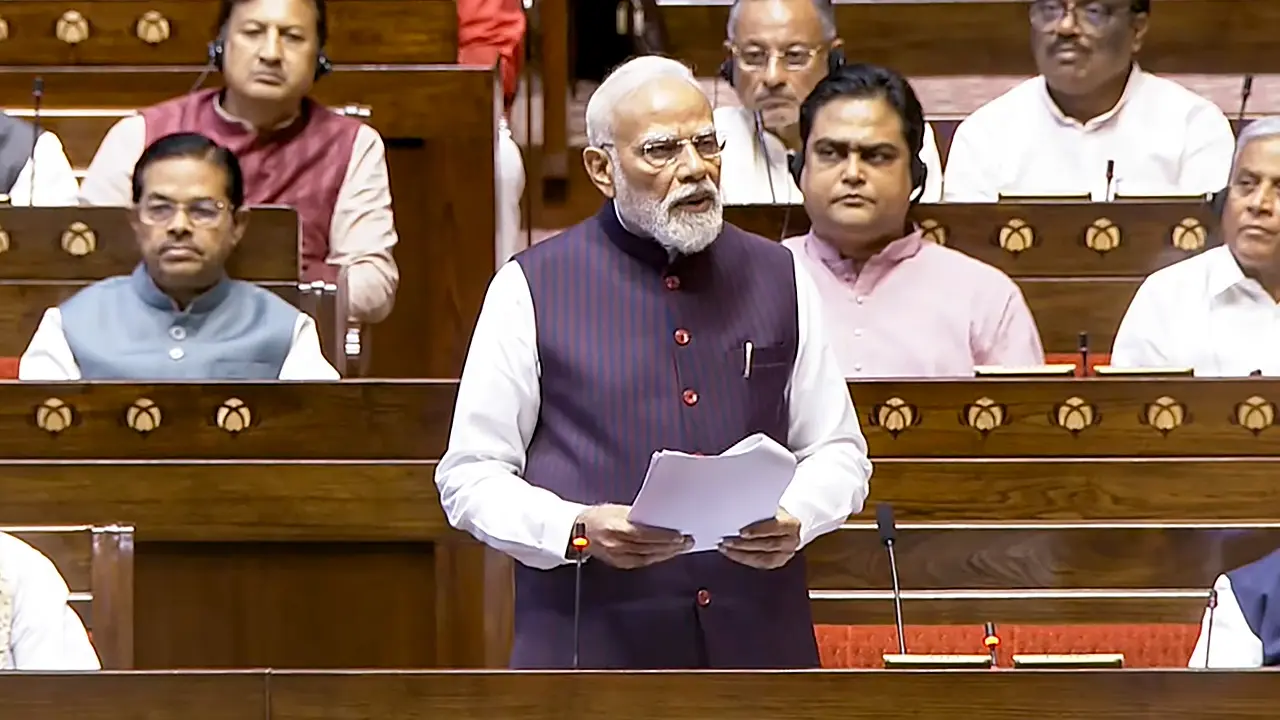
24 March,2026 05:18 PM IST | New Delhi | mid-day online correspondentPrime Minister Narendra Modi on Tuesday urged the state governments to recognise that, regardless of the severity of the crisis, it is "our collective responsibility" to sustain India's rapid growth. He stated that this moment also presents a significant opportunity for state governments and serves as a "major test for Team India", reported IANS. Briefing the Rajya Sabha on the evolving situation in West Asia, the Prime Minister said, "In the coming times, this crisis will pose a major test for our country. To overcome this challenge, the cooperation of all states is essential. Therefore, through this House, I wish to make an appeal to all state governments." Highlighting the disproportionate impact of crises on weaker sections, he added, "During crises, the poor, labourers, and migrant workers are the most affected. Therefore, it must be ensured that the benefits of the PM Garib Kalyan Anna Yojana reach them on time. Proactive steps should be taken to address the difficulties of migrant workers. It would be very helpful if state governments set up special systems to monitor such situations." PM Modi highlights concern of black marketing; urges states to be alert According to IANS, Prime Minister also flagged concerns over black marketing and hoarding, urging states to remain alert and act swiftly on any complaints related to such practices. Calling for a unified approach, he emphasised the need for collective action under the spirit of "Team India" to sustain economic growth and navigate global uncertainty. "I would like to make one more request to all state governments. No matter how big the crisis, it is our collective responsibility to maintain India's rapid growth. For this, we must continue to take all necessary steps and implement reforms swiftly. This is also a great opportunity for state governments -- and it is a major test for Team India," he said, reported IANS. Recalling the country's response during the Covid pandemic, PM Modi said the Centre and states had together demonstrated an "excellent model of crisis management". PM Modi urges the state and central government to work as a team "Despite having governments of different political parties, testing, vaccination, and the supply of essential items were ensured through the efforts of Team India. We must continue to work with that same spirit. With the combined efforts of all state governments and the central government, the country will effectively face this serious global crisis," he said. As per IANS, the present crisis is distinct and evolving, the Prime Minister noted, "This crisis is different, and its solutions are also being devised differently. We must face every challenge with patience, restraint, and a calm mind. As we are witnessing, the situation regarding this war is changing every moment." He also urged citizens to remain "prepared for potential challenges" ahead, warning that the repercussions of the conflict could be prolonged. "There is a strong possibility that the adverse effects of this war may persist for a long time. However, I assure the people of the country -- the government is vigilant, alert, and with full seriousness, it is formulating strategies and taking every decision. The welfare of the people is paramount for us. This is our identity, this is our strength," he added, reported IANS. (Inputs from IANS)
24 March,2026 04:53 PM IST | New Delhi | mid-day online correspondentNCP (SP) Working President and MP Supriya Sule on Tuesday termed the alleged manhandling of Maharashtra Minister Shambhuraj Desai during the election of the Satara Zilla Parishad president and vice president as an “unfortunate” and “tragic” incident for the state. “It has nothing to do with the police themselves. Instead, it is the strength of the 'invisible power' lurking behind the police that forced them to act. The police would not do something like this on their own. This incident is a tragedy for Maharashtra,” she said during a press conference, reported IANS. Sule said she will write a letter to the Chief Minister on this issue. She also discussed the issue with senior BJP leaders on Monday after reports surfaced in Delhi newspapers. She described the Satara incident as the "murder of democracy", asserting that the country must run according to the Constitution of Dr Babasaheb Ambedkar. She reiterated that the police were merely instruments of an external force. "The Maharashtra police would never behave this way unless compelled by the power standing behind them," she said. Sule demands inquiry after alleged assault on Shambhuraj Desai, Makrand Patil in Maharashtra According to IANS, Sule clarified that this isn't a simple matter of "Big Brother" vs "Little Brother." She emphasised that if such "hooliganism" is allowed in a democracy, it must be fought with full strength. She warned that if it happened in Satara today, it could happen in ten other places tomorrow. She has already gathered details from Makrand Patil and plans to call Shambhuraj Desai personally. "If ministers Shambhuraj Desai and Makrand Patil were manhandled, there must be an inquiry. Both are Cabinet Ministers. Shockingly, the very government you are a part of is the one manhandling you. Panduranga (God), what days are we witnessing in Maharashtra? And that too against their own ally parties?" she asked. The Satara incident has sparked nationwide discussion. Reports suggest that Guardian Minister Shambhuraj Desai was allegedly assaulted on the street by BJP ministers. In response, MLAs from the Shiv Sena (Shinde faction) protested on the steps of the Legislature. Sule described Shambhuraj Desai's statements in the Legislature yesterday as "shocking", reported IANS. She concluded by calling for a transparent investigation. "If the 'younger brother' (ally) is being manhandled like this, we all need to engage in soul-searching. This country will not run on anyone’s whims; it will run on the Constitution. I have full faith that the Maharashtra police would not do this unless forced by that invisible power." (Inputs from IANS)
24 March,2026 04:50 PM IST | New Delhi | mid-day online correspondentPolice in Madhya Pradesh's Indore arrested a doctor accused of raping a 30-year-old woman under the pretext of medical treatment. The arrest has triggered widespread outrage in the area, police said, reported the PTI. The doctor was taken into custody on Sunday, officials said. According to police, the woman had visited the doctor’s clinic a few months ago, complaining of stomach pain. As per the First Information Report registered at Badgonda police station, she alleged that the doctor administered an injection and then sexually assaulted her. She further claimed that he took objectionable photographs and later used them to threaten her. The accused is also alleged to have lured her to a resort in the Patalpani area, where he assaulted her again, according to the PTI. Legal action The case has been registered under relevant provisions of the Bharatiya Nyaya Sanhita (BNS) as well as the Madhya Pradesh Freedom of Religion Act 2021. Police officials confirmed that an investigation is ongoing. Violence and arson after arrest Following the arrest, tensions escalated as a group of people allegedly vandalised the doctor’s residence and set parts of it, including a motorcycle, on fire, as per the PTI. A separate case has been registered at Mhow police station based on a complaint filed by the accused’s relative. Police have arrested three individuals in connection with the vandalism and arson. Efforts are underway to identify and detain others involved in the incident. Protests Protests were reported in Mhow, where some local residents and right-wing activists staged demonstrations. A road blockade was also organised in the Kishanganj area, the news agency reported. Some protesters alleged that the vandalism case had been fabricated and accused the doctor’s family of filing false complaints against villagers. 58-year-old man booked for raping 10-year-old girl Meanwhile, in an another incident in Maharashtra's Thane, police registered a case against a 58-year-old man for allegedly raping a 10-year-old girl, officials said on Tuesday. According to the PTI, the incident reportedly took place between December 2025 and February this year, when the accused allegedly lured the minor to his house in Bhiwandi’s Nizampura area. Based on a complaint filed by the victim’s family, police on Sunday registered a case against the accused under Sections 64 (rape) and 74 (assault or criminal force to a woman with intent to outrage her modesty) of the Bharatiya Nyaya Sanhita, along with provisions of the Protection of Children from Sexual Offences (POCSO) Act, he said. No reason was specified for the delay in filing the complaint by the victim’s family. (with PTI inputs)
24 March,2026 03:58 PM IST | Indore | mid-day online correspondentPrime Minister Narendra Modi on Tuesday assured Parliament that India has sufficient crude oil reserves and robust mechanisms in place to ensure uninterrupted energy supply, even as the ongoing West Asia conflict continues to disrupt global markets, reported news agency ANI. Addressing the Rajya Sabha, the Prime Minister emphasised that the government has taken proactive steps over the past decade to strengthen the country’s energy security and reduce vulnerability to global disruptions, reported ANI. Strategic Petroleum Reserves Expanded Significantly PM Modi highlighted that India’s strategic petroleum reserves have been expanded to over 53 lakh metric tonnes in the last 11 years, with plans underway to increase the capacity further to more than 65 lakh metric tonnes, reported ANI. He also pointed out that India’s refining capacity has seen substantial growth, enabling the country to process larger volumes of crude oil domestically and maintain supply stability during global uncertainties. Strait of Hormuz Disruption Raises Global Concerns The Prime Minister acknowledged that disruptions in the Strait of Hormuz — one of the world’s most critical trade routes — have impacted global transportation of crude oil, gas, and fertilisers. Despite these challenges, PM Modi said India has been actively working to secure supplies from multiple sources. He noted that in recent days, several shipments of crude oil and LPG from different countries have successfully reached India, reported ANI. Diversification of Energy Imports Strengthens Resilience Underscoring the importance of diversification, PM Modi said India has expanded its energy import network from 27 countries to 41 countries over the past decade. This strategy aims to reduce dependence on any single supplier and enhance resilience against geopolitical risks. “Our effort is to ensure that oil and gas supplies reach India from wherever possible,” he said, adding that diversification has already shown positive results in maintaining steady supplies, reported ANI. Focus on Domestic Gas Distribution The government is also prioritising the expansion of domestic gas infrastructure, including piped natural gas (PNG) and LPG connections. PM Modi noted that significant progress has been made in the last decade, with further acceleration in recent years to ensure wider access to clean energy for households, reported ANI. Measures to Minimise Impact of Global Crisis The Prime Minister acknowledged that the ongoing conflict has shaken global economies and could have long-term repercussions. However, he assured that India is taking continuous steps to minimise the impact on its economy and citizens. He expressed confidence that the country’s preparedness and policy measures would help it navigate the crisis effectively. Fertiliser Supply Secured for Farmers Addressing concerns related to agriculture, PM Modi said the government has made adequate arrangements to ensure sufficient availability of fertilisers for farmers ahead of the upcoming sowing season, reported ANI. He stressed that efforts are being made to shield farmers from the adverse effects of global disruptions and ensure that agricultural productivity remains unaffected. (With inputs from ANI)
24 March,2026 03:49 PM IST | New Delhi | mid-day online correspondentA district court in Goa's Mapusa on Tuesday granted bail to Ajay Gupta, co-owner of the Birch by Romeo Lane nightclub, where a devastating fire in December last year claimed 25 lives, reported the ANI. Gupta had been arrested in New Delhi over three months ago before securing bail, his counsel confirmed. The tragic blaze occurred on December 6 at the nightclub in Goa, resulting in 25 fatalities and leaving several others injured. The incident triggered widespread outrage and prompted a detailed investigation into safety lapses, according to the ANI. Co-owners and Allegations Gupta co-owns the establishment along with Gaurav Luthra and Saurabh Luthra. According to the police, on December 7, within hours of the deadly blaze, Saurabh and Gaurav Luthra boarded a flight from Delhi to Phuket in Thailand from where they were later brought back to India by the authorities. Authorities initiated criminal proceedings against the owners, citing alleged negligence and violations of mandatory fire safety norms. According to police, a fireworks event was conducted at the venue without adequate fire safety equipment. It was also alleged that the premises lacked proper emergency exits on key floors, despite organisers being aware of the risks, as per the ANI. The case The ANI reported, the Goa Police registered a case on December 7 at the Arpora-Anjuna police station in North Goa. Charges were filed under multiple sections of the Bharatiya Nyaya Sanhita (BNS), including provisions related to negligence, endangering life, and acts carried out with common intention. In January, the Goa government dismissed Roshan Redkar and Raghuvir Bagkar from service, citing “persistent negligence” in connection with the incident. The Directorate of Panchayats, relying on findings from a magisterial inquiry, stated that irregularities at the premises were either overlooked or tacitly approved during official meetings. Irregularities in club operations The inquiry report revealed that the Birch establishment initially operated from a temporary structure and was later converted into a nightclub without the necessary approvals, including a conversion sanad and sanctioned building plans, according to the ANI. The officials had earlier described the lapses as a serious breach of public trust, raising concerns over accountability among those responsible for oversight. (with ANI inputs)
24 March,2026 03:47 PM IST | Panaji | mid-day online correspondentADVERTISEMENT








-1774357022109_d.png "Congress opposed the bill, urging protection of transgender rights and dignity. Pic/X")


-1774350668108_d.png "Narendra Modi. Pic/PTI")
-1774349445384_d.png "Supriya Sule. File Pic")