Pakistan hockey captain Shakeel Ammad Butt has lashed out the national federation after returning from a tumultuous tour of Australia during which his side didn't just have to roam the streets for lack of accommodation but also "wash dishes before going to play a match". Butt told the media at the Lahore Airport early this morning that the Pakistan Hockey Federation had been telling them lies and "enough was enough". "We can't work with this current management of the federation. When players have to clean the kitchen and wash dishes before going to play a match what result do you expect from us?" a livid Butt asked angrily. The PHF has drawn severe criticism after the state-run Pakistan Sports Board (PSB) confirmed it had given them more than 10 million rupees to arrange hotel accommodation of the national team in Australia. The Pakistan hockey team had to wait for 13-14 hours at Sydney airport before their onward flight to Canberra. More disturbing reports came in when the team checked into its hotel ahead of the FIH Pro League matches. The players were told that they had no bookings since no advance payment was made to the hotel management. The players had to wait for hours and roamed the streets before an accommodation was arranged for them. The next afternoon, they had to play their first match against Australia which the team lost 2-3. Pakistan all its matches during the Australia leg, losing to the hosts as well as Germany. "What was pathetic was that even the Airbnb accommodation was arranged for 10 days when we had to stay for 13 days. We had to move into a cheaper residence after 10-days," Butt said. The PSB Director-General Noor us Sabah told the media that they were preparing a detailed report for Prime Minister Shehbaz Sharif after he ordered an inquiry into the whole fiasco. The Sharif is the patron-in-chief of the PHF. Butt disclosed that the PHF had warned the players of disciplinary action if they spoke to the media "I am speaking up because of what we have been through in Australia," he said. "We need a foreign coach if we have to move forward. We have a good combination of players but we need a foreign coach and good management," he added. This story has been sourced from a third party syndicated feed, agencies. Mid-day accepts no responsibility or liability for its dependability, trustworthiness, reliability and data of the text. Mid-day management/mid-day.com reserves the sole right to alter, delete or remove (without notice) the content in its absolute discretion for any reason whatsoever.
14 March,2026 08:47 PM IST | Karachi | PTIMadhya Pradesh Finance Minister Jagdish Devda presented a Rs 4.38 lakh crore budget for the fiscal year 2026-27 in the state Assembly on Wednesday, placing strong emphasis on welfare measures for women, farmers, and marginalised sections while outlining ambitious plans for infrastructure, industry, and sustainable growth. The budget also includes the recruitment of 15,000 teachers to strengthen the education system and 22,500 in the police department. The flagship 'Ladli Behna' Yojana received the largest single allocation of Rs 23,882 crore, continuing to provide direct financial assistance to women and reinforcing the government's focus on gender empowerment and household economic stability. In the agriculture sector, Devda announced the distribution of subsidised solar irrigation pumps to one lakh farmers, fulfilling Chief Minister Mohan Yadav's commitment to promote renewable energy in farming, cut electricity expenses, and boost productivity through eco-friendly practices. A target of Rs 25,000 crore in Kisan loans was set, alongside efforts to promote natural farming methods. Rural development emerged as a priority with Rs 40,000 crore earmarked for comprehensive rural infrastructure. The G Ram G scheme for Gram Panchayat advancement received Rs 10,428 crore, while Rs 9,000 crore was allocated for the PM Janman scheme targeting tribal and underprivileged communities. The Jal Jeevan Mission was provided Rs 4,454 crore to accelerate piped drinking water coverage across households. Infrastructure saw substantial investments, including Rs 12,690 crore for road repairs and connectivity enhancements in rural and urban areas. Housing for all received Rs 6,850 crore under the PM Awas Yojana. Urban development was allocated over Rs 21,561 crore, with a dedicated Rs 3,600 crore for preparations related to the upcoming 'Simhastha Mahaparva', supported by Rs 13,851 crore overall for the event and ongoing work on the six-lane Indore-Ujjain Highway. The energy sector was strengthened with a provision of Rs 34,650 million and the establishment of a 604 megawatt power unit. The state has implemented its Space Policy and is developing 48 industrial parks, while a special package was approved to spur industrial growth in Bundelkhand. Telecom manufacturing initiatives have commenced in Gwalior. Education and youth development featured free tetra pack milk for students up to Class eight in government schools to enhance nutrition and school attendance. Rs 530 crore was set aside for PM Shri Yojana, Rs 800 crore for sports and training infrastructure, and hostels will be built for working women. The Devi Ahilyabai Lok development project has begun, while Rs 793 crore was allocated for Dharti Aba Yojana and Rs 1,335 crore for labour welfare. Environmental conservation received Rs 6,151 crore, religious and cultural activities secured Rs 2,055 crore, and the Mukhya Mantri Teerth Darshan Yojana got Rs 50 crore to support senior citizens' pilgrimages. The presentation was briefly disrupted by opposition Congress MLAs, who entered the House with placards and symbolic empty piggy banks to protest the absence of an increase in legislators' funds, creating momentary chaos during the speech. This budget reflects the government's vision for inclusive, sustainable, and self-reliant progress in Madhya Pradesh, balancing welfare commitments with long-term developmental goals amid global economic uncertainties. This story has been sourced from a third party syndicated feed, agencies. Mid-day accepts no responsibility or liability for its dependability, trustworthiness, reliability and data of the text. Mid-day management/mid-day.com reserves the sole right to alter, delete or remove (without notice) the content in its absolute discretion for any reason whatsoever.
14 March,2026 07:41 PM IST | Bhopal | IANSThe Ministry of Petroleum and Natural Gas on Saturday said petrol and diesel are adequately available at fuel stations across the country and advised consumers not to hoard fuel or store it in loose containers due to safety concerns. In a post on social media platform X, the ministry said there is no shortage of fuel at retail outlets and adequate stocks are being maintained. “Petrol and diesel are adequately available at retail outlets across the country. Consumers are advised not to take or store fuel in loose or inappropriate containers, as it poses serious safety risks,” the ministry said. Fuel storage in loose containers flagged as safety risk The ministry said authorities recently noticed an incident at a petrol pump in Tamil Nadu where fuel was being dispensed into a loose container, which violates safety guidelines. Following the incident, the petrol pump involved has been suspended and action has been initiated against those responsible. Officials have also directed all fuel retail outlets and dealers to strictly comply with safety norms while dispensing petrol and diesel. The ministry warned that any violation of these guidelines would attract strict action. Government reiterates adequate fuel stocks Earlier, the government had also appealed to citizens to avoid panic buying of petrol, diesel and LPG, stressing that supplies across the country remain stable, reported IANS. According to officials, oil marketing companies have reported no cases of fuel “dry-outs” at any of the nearly one lakh retail outlets across India. Authorities said adequate stocks of petrol and diesel are available and supplies are being maintained regularly, reported IANS. India among world’s largest refining hubs Officials also highlighted that India currently has a refining capacity of around 258 million metric tonnes per annum (MMTPA), making it the fourth-largest refining hub in the world, reported IANS. The government said the country’s refining capacity ensures sufficient production of petroleum products to meet domestic demand. Gas supply ensured under Essential Commodities Act The government has also issued a Natural Gas Control Order on March 9 under the Essential Commodities Act to prioritise the supply of natural gas. Under the order, 100 per cent supply of Piped Natural Gas (PNG) and Compressed Natural Gas (CNG) has been ensured without any cuts. Officials said that while supplies to industrial and commercial consumers are currently being regulated at around 80 per cent, there is no reason for public concern, reported IANS. “There is no need to panic. Adequate supplies are available and the situation is being closely monitored,” a senior ministry official said, reported IANS. (With inputs from IANS)
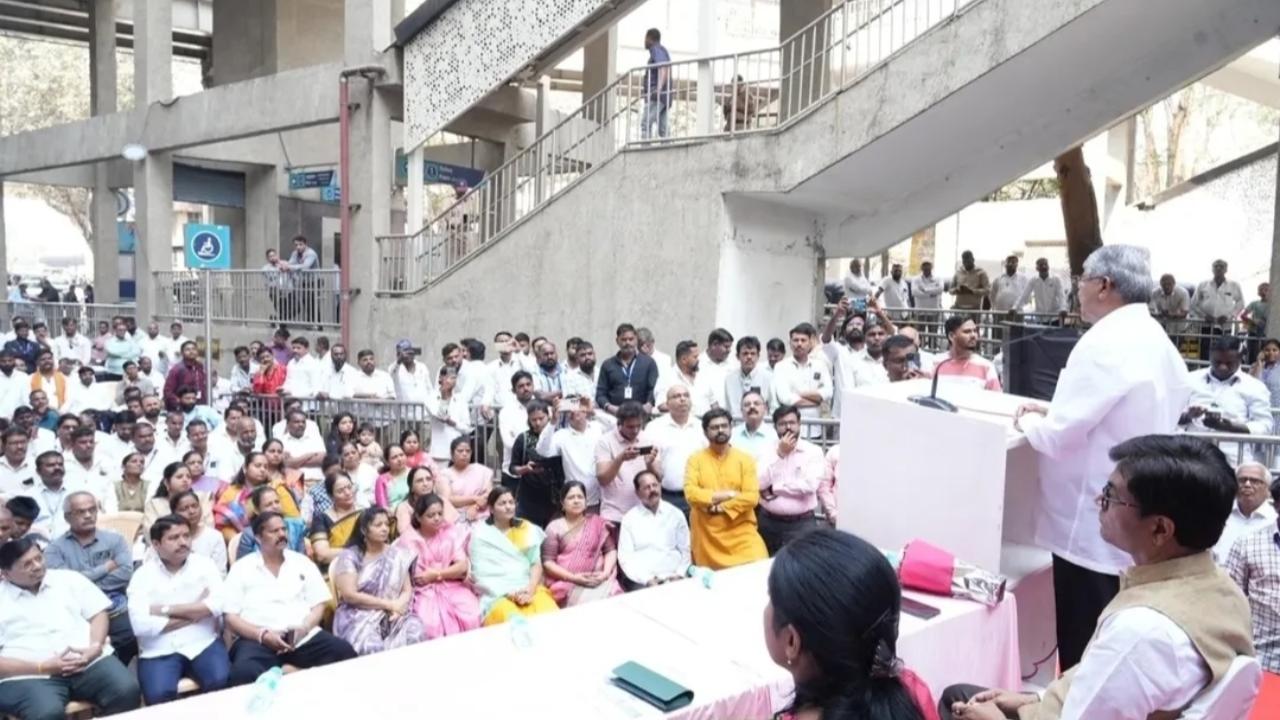
14 March,2026 07:31 PM IST | New Delhi | mid-day online correspondentFinding an auto after stepping out of the metro may soon become easier for commuters. A new ‘Rikshamitra Metro Share Rickshaw Feeder Service’ was launched outside SNDT Metro Station in Pune on Friday, offering passengers a shared and organised auto-rickshaw facility for their last-mile journey. In a move aimed at easing last-mile connectivity for Pune Metro commuters, authorities launched the Rikshamitra shared autorickshaw feeder service outside SNDT Metro Station on Friday. The service will allow passengers to directly access shared rickshaws from a dedicated booth outside the station and travel to nearby residential areas at affordable fares. The booth was inaugurated by Maharashtra Higher and Technical Education Minister Chandrakant Patil in the presence of Pune Mayor Manjusha Nagpure, Maha Metro Managing Director Shravan Hardikar and Director (MMI) Anilkumar Kokate, among others. Following the inauguration, Patil flagged off the first batch of autos under the feeder service. He also assured that drivers operating through the Rikshamitra booth will be provided compressed natural gas (CNG) coupons to support their fuel expenses. Officials said the service aims to bridge the gap between metro stations and nearby neighbourhoods — one of the key challenges faced by daily metro commuters. Mayor Nagpure said such feeder services should be expanded to other metro stations across the city, particularly to support commuters from areas like Sinhagad Road. Local representatives also requested authorities to include important localities from their wards as designated drop points under the shared rickshaw network. Officials said the initiative is based on the success of the Rikshamitra booth started earlier at Pune Railway Station, which received a positive response from passengers. Encouraged by the response, the model is now being extended to metro stations as well. Authorities believe the initiative will make metro travel more convenient for commuters while also creating steady earning opportunities for autorickshaw drivers. What Pune commuters get Shared auto-rickshaws outside the metro station Fixed pick-up point at SNDT station Affordable shared fares Easier last-mile travel to nearby areas Why the service matters Tackles the last-mile connectivity issue faced by metro users Reduces waiting time for autos Encourages more people to use public transport.
14 March,2026 06:56 PM IST | Pune | Archana DahiwalThe India AI Expo Summit 2026 will remain closed to the public on Thursday, February 19. The expo will instead remain open for an additional day on February 21, Electronics and IT Secretary S Krishnan said on Wednesday. The decision comes as Prime Minister (PM) Narendra Modi is set to inaugurate the summit on February 19. Due to the high-level presence and security arrangements for the inaugural session, authorities have decided to keep the expo closed for general visitors on that day. Krishnan further said that the event has been extended by one day because of the overwhelming response and enthusiasm from the public. He stated, “The expo will now remain open on Saturday, February 21, allowing more visitors to attend and explore the exhibits,” as cited by news agency IANS. The minister further informed that around 20 heads of state will be present at the inaugural session. Around 20 heads of state, including French President Emmanuel Macron, expected at AI Summit 2026 “Among them will be French President Emmanuel Macron highlighting the global importance of the summit,” he added. The minister further said that the government does not want to cause any inconvenience to the public due to security restrictions and traffic arrangements on the opening day. Therefore, it was decided that the expo area would remain closed on February 19 and instead operate for an additional day later in the week. The India AI Expo Summit has drawn significant attention for showcasing cutting-edge artificial intelligence innovations from across the country and abroad, with strong participation expected from industry leaders, startups and international delegations. Spread across 10 arenas covering more than 70,000 square metres, it will bring together global technology firms, startups, academia and research institutions, Union ministries, state governments, and international partners. The event will also feature 13 country pavilions, showcasing international collaboration in the AI ecosystem. These include pavilions from Australia, Japan, Russia, the United Kingdom, France, Germany, Italy, the Netherlands, Switzerland, Serbia, Estonia, Tajikistan, and African countries. (With inputs from IANS)
14 March,2026 06:43 PM IST | New Delhi | mid-day online correspondentActing on complaints from citizens about suspected hoarding of domestic liquefied petroleum gas (LPG) cylinders, officials from the Food and Drug Administration (FDA), along with Pimpri-Chinchwad Police and Pune District administration, conducted a raid on a shop and its godown in Kasarwadi over alleged hoarding. During the operation, authorities seized hundreds of LPG cylinders that were reportedly stored illegally amid the ongoing gas supply crisis triggered by tensions in West Asia. According to officials, the raid was conducted at a private godown in the Kasarwadi area of Pimpri-Chinchwad after residents alerted authorities about illegal storage of domestic gas cylinders. Preliminary investigation suggests that the premises were operating as an unauthorised storage facility. Vijay Kumar Kshirsagar, circle officer, Pimpri-Chinchwad, said, “As per a complaint received from citizens, we visited the spot. The cylinders are being distributed by Bharat Gas Agency and Pimple Gas Agency. We first checked their shop and later the godown in the Kasarwadi area. The process of filing a case is going on. All the LPG cylinders have been seized.” During the inspection, officials discovered that large numbers of LPG cylinders were stored inside two old vehicles parked within the godown, which were allegedly being used as makeshift storage units. LPG Shortage: Authorities probe illegal storage and possible black-marketing Police officers stated that one of the vehicles contained 29 filled LPG cylinders of 10 kg capacity, along with 19 empty cylinders of the same category and 207 empty domestic cylinders. In the second vehicle, officials found 57 domestic LPG cylinders of 14.5 kg capacity. All the cylinders have been seized and authorities have begun the process of registering a case against those responsible. Officials said the cylinders were linked to Bharat Gas Agency and Pimple Gas Agency, and the distribution chain is currently being examined. Authorities are now investigating whether the cylinders were being illegally stored for black-marketing or for refilling domestic cylinders into commercial ones, which is a punishable offence. The raid comes at a time when Pune and Pimpri-Chinchwad are facing restrictions in commercial LPG supply due to geopolitical tensions in West Asia, which have disrupted global energy supply chains. Officials suspect that some operators may be hoarding domestic cylinders to create artificial scarcity and sell them at higher prices. In view of the situation, the Pimpri-Chinchwad Police Commissionerate has intensified monitoring of LPG storage facilities and distribution points. Police Commissioner Vinoy Kumar Choubey had recently warned of strict action against anyone involved in illegal transfer of LPG from domestic cylinders to commercial cylinders. All the police stations and crime branch units have been directed to keep a close watch on such activities to prevent shortages for genuine domestic consumers. LPG Shortage: Investigation underway Officials confirmed that the godown’s authorisation status is being verified and further legal action will follow based on the findings. A panchnama process was underway at the site, and additional scrutiny of records and supply chains is expected in the coming days. Police appeal to citizens Authorities have urged citizens to report any suspicious activity related to LPG storage, illegal refilling, or black marketing. Helpline numbers Pimpri-Chinchwad Police Control Room 020-27352600 020-27352500 Mobile contact 9529691966 Emergency helpline 112 Citizens noticing illegal storage or sale of LPG cylinders are requested to immediately inform the police so that strict action can be taken against offenders.
14 March,2026 06:19 PM IST | Mumbai | Archana DahiwalResearchers have discovered a new species of catfish in the biodiverse northern Western Ghats spanning the states of Goa and Maharashtra. The fish inhabits shallow hill streams where the streambed is made up of sand, pebbles and stones, creating microhabitats that help it hide and forage for food. During field surveys conducted over five years, the researchers encountered the species only twice, underscoring its rarity and the ecological importance of the fragile habitats it occupies. This species was brought to our attention by Dr. Neil Soares of Mumbai and Sanjog of Kolad, who collected the first specimen in the year 2020 from Kolad. The species was identified through the joint efforts of independent researcher Balaji Vijayakrishnan and researchers Tejas Thackeray and Abhishek Shirke from the Thackeray Wildlife Foundation. Speaking to Mid-Day Abhishek Shirke said, "The newly identified fish belongs to the genus Amblyceps and has been named Amblyceps vayavy." The name ‘vayavy’ means 'northwest' in Marathi and Konkani, referring to the species’ habitat in the northwestern part of the Western Ghats. Researchers say this is the northernmost confirmed record of the genus in the Western Ghats so far." The fish inhabits shallow hill streams where the riverbed contains a mix of sand, gravel and stones, creating a suitable microhabitat for hiding and feeding. According to the researchers, the species can be distinguished from other members of the genus by features such as a bifurcated caudal fin, an incomplete lateral line, an absence of centrally projecting hooks in the veins in the middle of the tail, and a distinct adipose fin structure. Though Goa is globally known for tourism, scientists say the region also hosts rich freshwater biodiversity. The species has so far been recorded only from a few scattered locations in Goa and Maharashtra, suggesting that its distribution may be limited. Researchers have cautioned that freshwater ecosystems in the region face multiple threats, including mining, industrial wastewater discharge, microplastic pollution and the introduction of alien fish species. They say the discovery highlights the need for stronger ecological studies and conservation efforts in the Western Ghats’ fragile stream habitats.
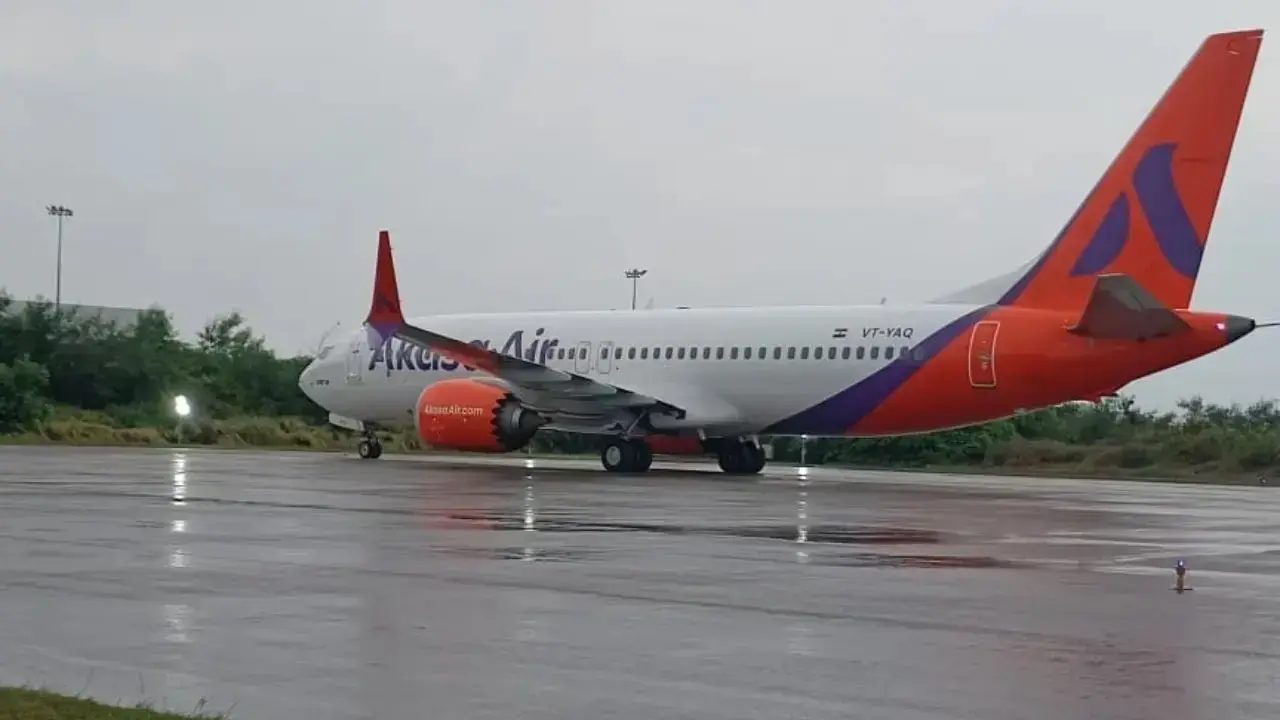
14 March,2026 04:36 PM IST | Mumbai | Ranjeet JadhavAkasa Air will levy fuel surcharges ranging from Rs 199 to Rs 1,300 on domestic and international flight tickets from March 15 due to the spike in jet fuel prices amid the West Asia conflict. Air India, Air India Express and IndiGo have started levying similar charges on domestic and international flight tickets. In a statement on Saturday, Akasa Air said it would levy fuel surcharge for each flight and the quantum would vary based on the duration of the flight. "Akasa Air will introduce a fuel surcharge ranging from INR 199 to INR 1300 on our domestic and international routes, for all bookings that are made with effect from 00:01 hrs on March 15, 2026," it said. According to the airline, there has been a significant increase in the price of aviation turbine fuel, driven by evolving geopolitical developments in West Asia. "As fuel represents a significant portion of airline operating costs, this impacts the cost of operations across the aviation industry," the statement said. Further, Akasa Air said it would continue to closely monitor the operating environment and review the fuel surcharge periodically. Air Canada suspends Toronto-Dubai flights till May 1, expands capacity to Delhi Meanwhile, Air Canada has suspended all its Toronto-Dubai flight operations till May 1 amid the escalating tensions in West Asia. The airlines said that they will resume their flight operations when safe passage is ensured. The airlines further said that it will continue to add to its capacity to Delhi to provide travellers with options to Canada. "Due to unrest in the Middle East, our Toronto-Dubai flights are cancelled until at least May 1. We plan to reintroduce service gradually when flights can safely resume. We continue to add capacity to Delhi to provide travellers with options to Canada," Air Canada said in a post on X. Meanwhile, Air India and Air India Express will operate a total of 80 scheduled and non-scheduled flights to and from the West Asia region on March 14, the airline said. According to a press release, the two carriers continue to operate their respective scheduled services to and from Jeddah and Muscat on March 14, operating a total of 10 flights to and from Jeddah and Air India Express operating 8 scheduled flights to and from Muscat. Additionally, Air India will operate one round-trip from Delhi and two round-trips from Mumbai to Jeddah. Air India Express will operate one flight each from Kozhikode and Mangaluru to Jeddah and back. Air India Express will also operate its scheduled services to Muscat, including one round-trip each from Delhi, Kochi, Kozhikode and Mumbai. In addition to the scheduled services, Air India and Air India Express would operate a total of 62 non-scheduled flights to and from the United Arab Emirates (UAE) and Saudi Arabia, subject to the availability of slots and other prevailing conditions at the departure stations at the time. These flights are being operated with the requisite permissions from the relevant Indian and local regulatory authorities.
14 March,2026 03:29 PM IST | New Delhi | mid-day online correspondentSecurity forces arrested four militants belonging to a banned outfit from Manipur's Imphal, police said on Saturday. The four active cadres of the outlawed United National Liberation Front (P) were apprehended from New Checkon area in Imphal East district on Friday, they said. Arms and ammunition, including pistols and bullets, were recovered from their possession, a police officer said. This story has been sourced from a third party syndicated feed, agencies. Mid-day accepts no responsibility or liability for its dependability, trustworthiness, reliability and data of the text. Mid-day management/mid-day.com reserves the sole right to alter, delete or remove (without notice) the content in its absolute discretion for any reason whatsoever
14 March,2026 01:26 PM IST | Imphal | PTIPrime Minister Narendra Modi will visit West Bengal on Saturday to address a rally at the iconic Brigade Parade Ground here and unveil development projects worth around Rs 18,680 crore, in his first trip to the state after the publication of the post-SIR electoral rolls last month. The rally, organised by the BJP, will mark the culmination of the party's statewide 'Parivartan Yatra' ahead of the 2026 assembly elections. After the surge in the 2019 Lok Sabha elections and the setback in the 2021 assembly polls, the BJP's yatra is being seen as its most expansive statewide mobilisation in recent years. The yatra, which began on March 1, a day after the publication of the revised electoral rolls under the Special Intensive Revision exercise, criss-crossed nearly 5,000 km across the state, covering 237 assembly constituencies. According to official data released on February 28, following the SIR exercise, 63.66 lakh names, around 8.3 per cent of the electorate, have been deleted since the revision process began in November last year, reducing the voter base in the state from about 7.66 crore to just over 7.04 crore. In addition, more than 60.06 lakh electors have been placed under the "under adjudication" category, meaning their eligibility will be determined through legal scrutiny in the coming weeks. Modi's visit also comes amid reports that the Election Commission is likely to announce the schedule for the assembly elections next week. During the visit, the prime minister will inaugurate and lay foundation stones for development projects spanning road infrastructure, railways, port and shipping sectors. In a major push for road connectivity, Modi will launch several national highway projects with a combined length of over 420 km. The projects include sections of NH-19 in West Bengal and Jharkhand and NH-114 in West Bengal, aimed at enhancing road safety, reducing travel time and improving regional connectivity. He will also lay the foundation stone for several highway projects, including five packages of the 231-km four-lane Kharagpur-Moregram economic corridor section of NH-116A. In the railway sector, the prime minister will inaugurate six redeveloped railway stations in the state under the Amrit Bharat Station Scheme, aimed at modernising passenger amenities and infrastructure. This story has been sourced from a third party syndicated feed, agencies. Mid-day accepts no responsibility or liability for its dependability, trustworthiness, reliability and data of the text. Mid-day management/mid-day.com reserves the sole right to alter, delete or remove (without notice) the content in its absolute discretion for any reason whatsoever
14 March,2026 01:23 PM IST | Kolkata | PTIA massive search operation was launched by security forces on Saturday in several forward villages of Jammu and Kashmir's Samba district after a Pakistani drone crossed the International Border and entered the Indian territory, officials said. The enemy drone movement was noticed for a few minutes over the villages of Kandral, Abtal and Bahadurpur in Ramgarh sector late Friday night, officials said. They said the area was kept under strict surveillance and a massive search operation was launched at first light of the day to ensure that there was no air-dropping of weapons or narcotics from across the border. Security forces recovered over 3.5 kgs of heroin worth over Rs 20 crore in international market after the consignments were dropped by drones in border villages in R S Pura sector near here in the past two days. Two suspected narcotic smugglers were detained for questioning in connection with latest recovery in R S Pura sector on Friday. This story has been sourced from a third party syndicated feed, agencies. Mid-day accepts no responsibility or liability for its dependability, trustworthiness, reliability and data of the text. Mid-day management/mid-day.com reserves the sole right to alter, delete or remove (without notice) the content in its absolute discretion for any reason whatsoever
14 March,2026 01:20 PM IST | Jammu | PTIADVERTISEMENT







-1771407683677_d.png?tr=w-436,h-271 "Pakistan hockey captain Shakeel Ammad Butt. Pic/X (@AmmadButt96)")


-1773423040999_d.png "Authorities raid an illegal LPG stockpile in Kasarwadi, Pune, seizing hundreds of hoarded domestic cylinders. Pic/Screengrab")