











Fuel pumps are not dispensing fuel to vehicles without valid PUC certificates, and this is being enforced with the help of automatic number plate reader cameras, voice alerts at pumps, and police support
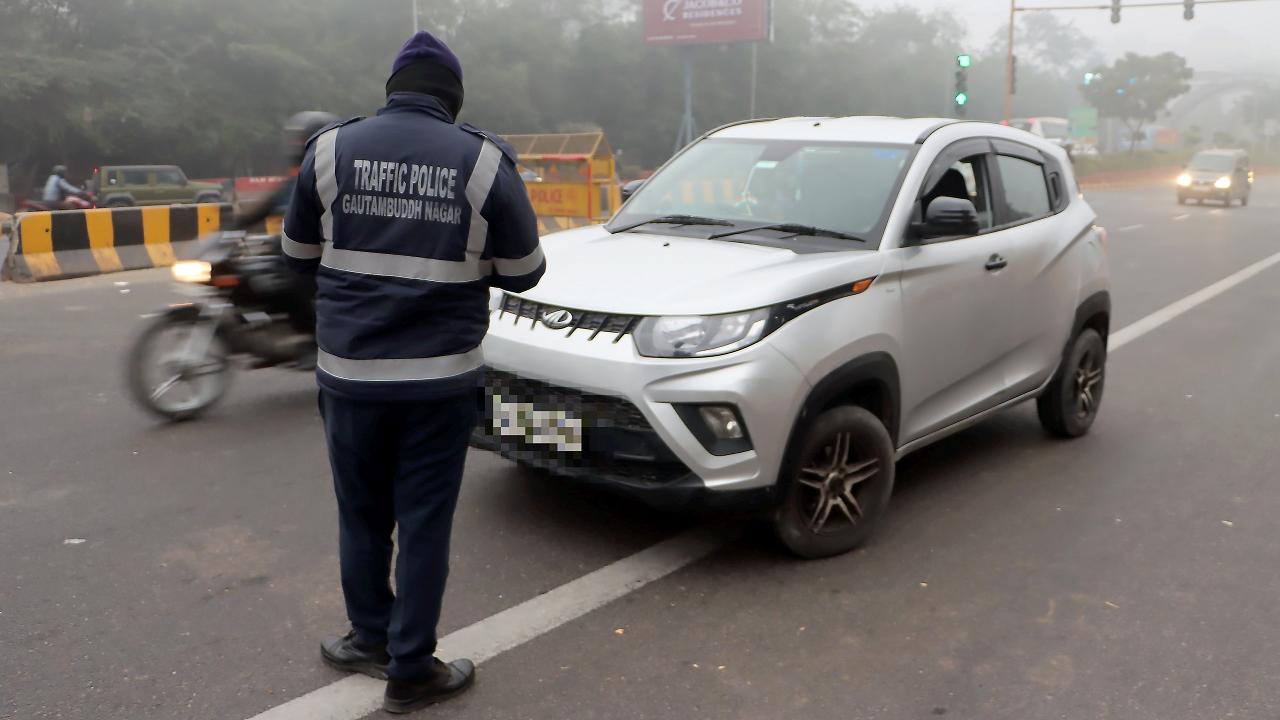
Pic/PTI
The ban on entry of non-Delhi private vehicles below BS-VI standards and the enforcement of the 'No PUC, No Fuel' rule came into force in the national capital on Thursday, as authorities stepped up measures to tackle worsening air pollution, reported news agency PTI.
Fuel pumps are not dispensing fuel to vehicles without valid PUC certificates, and this is being enforced with the help of automatic number plate reader cameras, voice alerts at pumps, and police support.
According to officials, 580 police personnel have been deployed at 126 checkpoints, including borders, reported PTI.
Additionally, enforcement teams of the Transport Department have been deputed at petrol pumps and border points for effective implementation, they added, reported PTI.
The entry ban on non-compliant BS-VI vehicles, however, does not apply to vehicles running on CNG or electric power, public transport, vehicles carrying essential commodities or providing essential services.
Vehicles carrying construction materials are also not permitted to enter the city under the GRAP IV restrictions.
Delhi-NCR wakes up to thick smog as AQI slips back into 'severe' zone
Meanwhile, thick smog continued to blanket Delhi and the National Capital Region (NCR) on Thursday morning, with the capital witnessing a fresh deterioration in air quality as the Air Quality Index (AQI) was recorded at 356, according to data from the Central Pollution Control Board (CPCB).
Out of the 39 air quality monitoring stations in Delhi, four reported AQI readings in the 'severe' category, while several others hovered close to the same range, underlining the persistence of hazardous air conditions across the city.
Visuals from different parts of Delhi and the NCR showed sharply reduced visibility as dense smog engulfed roads, residential areas and public spaces, affecting daily movement and raising health concerns among residents.
Data from the Commission for Air Quality Management's SAMEER app indicated that Delhi recorded an AQI of 358 at 7 a.m. on Thursday.
This marked a reversal from the marginal improvement seen a day earlier, when the AQI had eased to 334 from 354, aided by relatively stronger winds sweeping through the region.
The India Meteorological Department (IMD) had forecast foggy conditions during the early hours of Thursday.
However, the weather agency also said that the presence of surface winds during the day was likely to prevent prolonged fog formation, allowing visibility to gradually improve as the day progresses.
According to the IMD, the predominant surface wind is expected to blow from the northwest at speeds of up to 10 kmph during the morning hours. Wind speeds are likely to increase to around 15 kmph from the northwest in the afternoon before decreasing to below 10 kmph from the west during the evening and night.
This fluctuation in wind patterns, the IMD said, is expected to help disperse the fog and contribute to relatively clearer conditions during daylight hours on Thursday, even as overall air quality remains a major concern.
Under the Delhi government's new measures to curb air pollution in the national capital, the 'No PUC, No Fuel' rule will come into force from Thursday.
Additionally, only BS-VI compliant vehicles registered outside Delhi will be allowed to enter the city from Thursday, while trucks carrying construction material will remain banned. Construction activity continues to be prohibited under GRAP norms, with strict action promised against violators.
The national capital continues to gasp under severe pollution, prompting the Delhi government to announce an expansive set of emergency and long-term measures targeting vehicular emissions, dust, waste and traffic congestion.
(With inputs from PTI)
 Subscribe today by clicking the link and stay updated with the latest news!" Click here!


