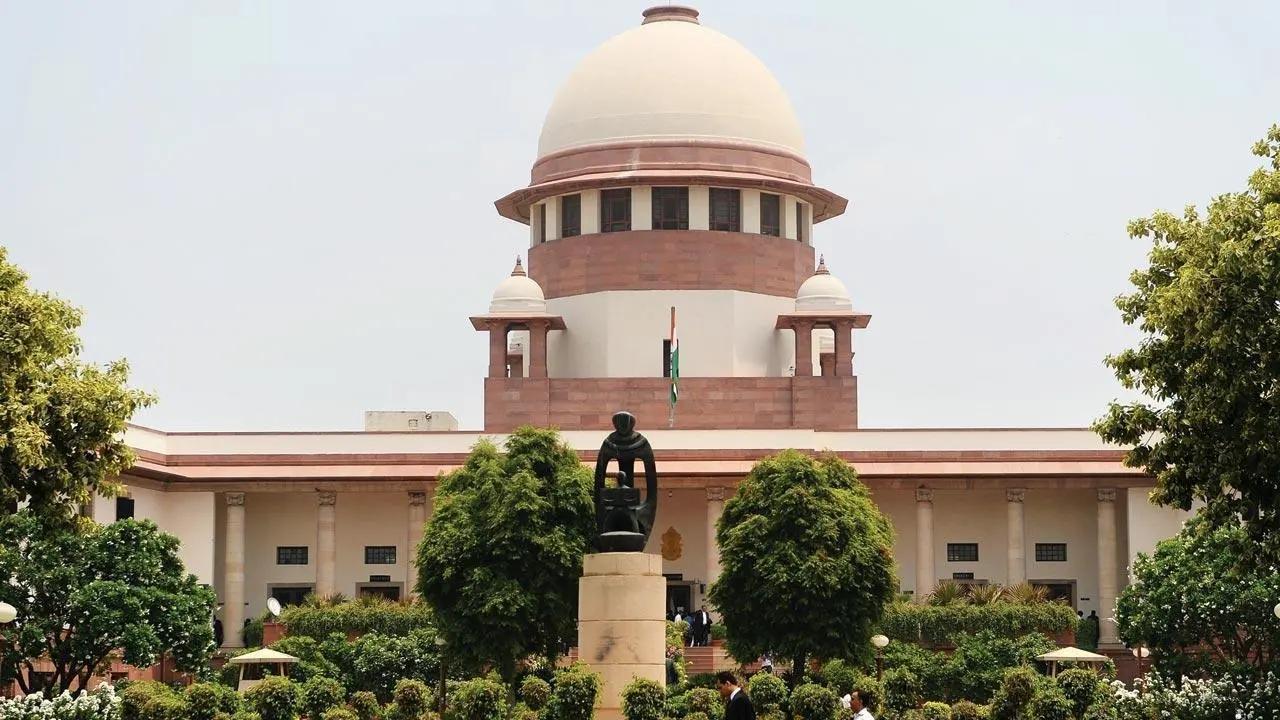
Digital arrest is a form of cybercrime where fraudsters impersonate law enforcement officials or government representatives to intimidate victims via audio or video calls. They “hold” victims hostage online, coercing them into transferring large sums of money

Supreme Court said that such crimes must be dealt with “an iron hand.” File Pic
The Supreme Court on Monday expressed deep shock at the staggering scale of “digital arrest” scams, in which more than Rs 3,000 crore has reportedly been extorted from victims — including senior citizens — across the country, reported the PTI.
The court said that such crimes must be dealt with “an iron hand.”
Digital arrest is an emerging form of cybercrime where fraudsters impersonate law enforcement officials, court officers, or government representatives to intimidate victims via audio or video calls. They effectively “hold” victims hostage online, coercing them into transferring large sums of money.
A bench comprising Justices Surya Kant, Ujjal Bhuyan and Joymalya Bagchi — which appointed an amicus curiae to assist the court — examined two sealed reports submitted by the Ministry of Home Affairs (MHA) and the Central Bureau of Investigation (CBI), according to the PTI.
“It is shocking that over Rs 3,000 crore has been extorted from victims, including senior citizens, across the country. If stringent and harsh orders are not passed, this problem will only grow. We are determined to deal with these crimes with an iron hand,” the bench observed.
The court has listed the matter for further hearing on 10 November and said it would issue specific directions after receiving recommendations from the amicus curiae.
Justice Kant noted that the CBI’s report highlighted how such scams are often operated from overseas “scam compounds,” equipped with financial, technical, and human networks.
Solicitor General Tushar Mehta, appearing for the Centre and the CBI, told the court that the MHA’s cybercrime division is already addressing these issues.
The Supreme Court took suo motu cognisance of the issue following a letter from an elderly woman in Ambala in Haryana, who said she and her husband had been “digitally arrested” by fraudsters impersonating CBI, ED, and judicial officers. The couple were forced to pay Rs 1.05 crore after being shown fake court orders through video calls.
Two FIRs have been filed by the Ambala cybercrime department under relevant provisions of the Bharatiya Nyaya Sanhita (BNS).
Earlier, on October 27, the Supreme Court had indicated it was inclined to hand over the investigation of digital arrest scams to the CBI, citing their nationwide spread and seriousness. It also sought details of all FIRs registered in various states and union territories, the news agency reported.
The bench had observed that forging judicial orders and signatures of judges to carry out digital arrests “strikes at the very foundation of public trust” in judicial institutions.
On October 17, the court warned that the criminal misuse of the Supreme Court’s or high courts’ names and seals could not be treated as ordinary cybercrime or cheating cases, stressing the need for urgent and coordinated action, as per the PTI.
(with PTI inputs)
Subscribe today by clicking the link and stay updated with the latest news!" Click here!