Adivasi’s ‘narrative sovereignty’
Updated On: 26 February, 2023 07:56 AM IST | Mumbai | Meenakshi Shedde
But Ghaath is an original voice: the Nagpur-based Ninawe is from the Halba-Koshti indigenous community himself, and so offers us an ‘insider’s’ viewpoint on the community





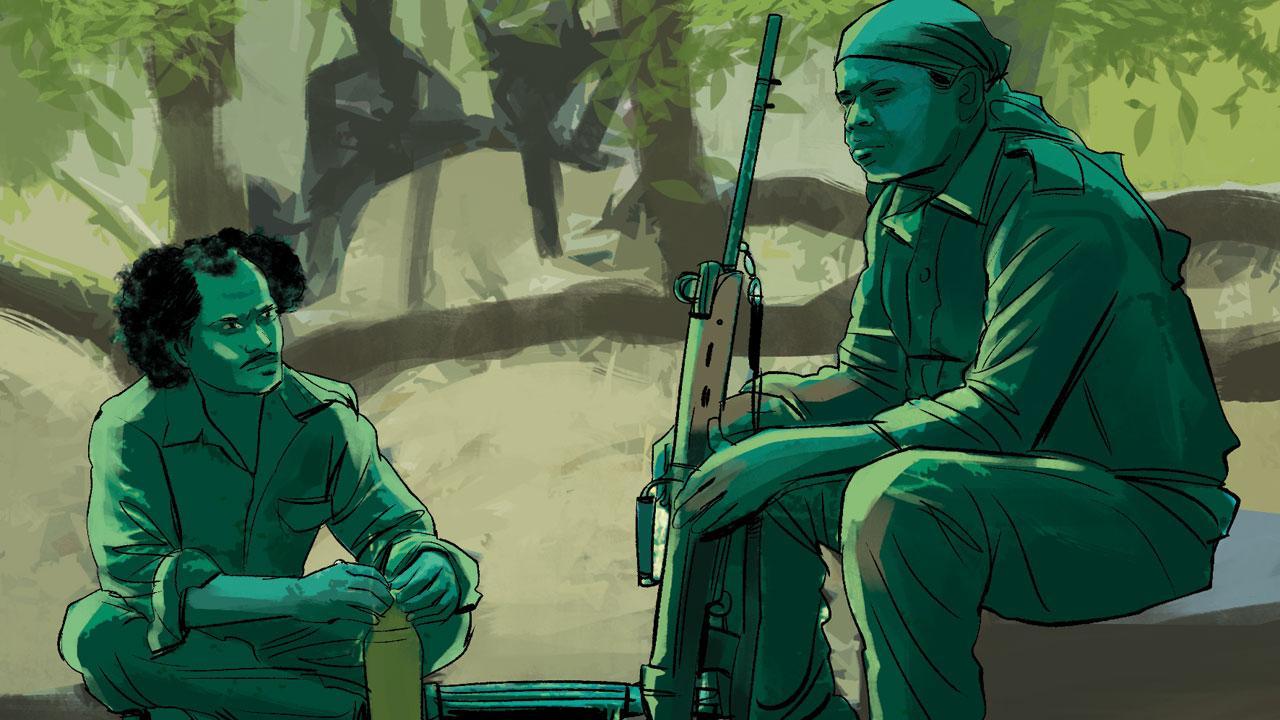
Illustration/Uday Mohite
 Chhatrapal Ninawe’s Ghaath (Ambush, Marathi) got a warm reception at its world premiere at the Berlin International Film Festival last week. The film, that played in the Panorama section, had a dramatic history. After it was selected by the Berlinale in 2021, and its main producer withdrew the film after the selection, Michael Stütz, Head of Panorama, in an extraordinary gesture of faith I have never seen in 25 years of working with the Berlin Film Festival, again invited the film to the 2023 edition, even before the festival opened for submissions.
Ghaath is set among Adivasi/indigenous/tribal communities living in the forests of Maharashtra, who are trapped between Maoist rebels and the state. Indian cinema, especially the parallel cinema movement that peaked in the 1970s and ’80s, has a long history of films dealing with indigenous people, scheduled castes and tribes. These include Satyajit Ray’s Sadgati, Govind Nihalani’s Aakrosh and Hazaar Chaurasi ki Maa, Mrinal Sen’s Mrigayaa, and his trilogy Interview, Calcutta 71 and Padatik (Bengali) that comment on the Naxalite movement; Goutam Ghose’s Paar and Buddhadeb Dasgupta’s Charachar, to more recent films like Lijo Jose Pellissery’s Churuli (Malayalam). But Ghaath is an original voice: the Nagpur-based Ninawe is from the Halba-Koshti indigenous community himself, and so offers us an ‘insider’s’ viewpoint on the community.
Trending Stories
Latest Photos
Latest Videos
Latest Web Stories
ADVERTISEMENT

Ganeshotsav 2026

ADVERTISEMENT