Fluid marriage rites
Updated On: 07 March, 2021 07:02 AM IST | Mumbai | Devdutt Pattanaik
Suriya, the daughter of the sun-god, marries the twin-gods, the Ashwins, and rides with them on their chariot. So says the Rig Veda.





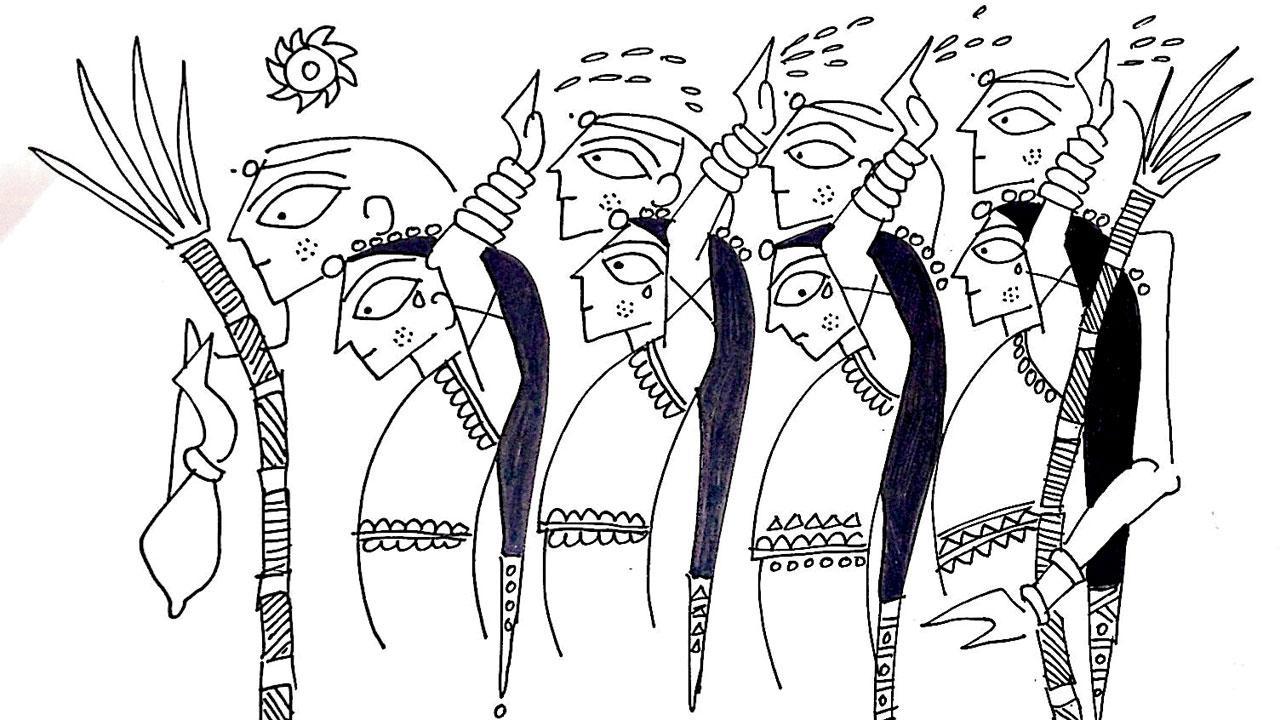
Illustration/Devdutt Pattanaik
 Suriya, the daughter of the sun-god, marries the twin-gods, the Ashwins, and rides with them on their chariot. So says the Rig Veda. Later, we are told, that the Ashwins do not actually marry her: they simply woo her for her real husband. In the marriage hymn, Rig Veda X.85, the bride is given to Soma, then Gandharva, then Agni, and only then to the husband. What does this mean? Does it mean that at one time, women could have many husbands simultaneously?
When people refer to Indian “tradition” they assume it was fixed for thousands of years, before the Muslims arrived a 1,000 years ago. But, that is simply not true. Hindu wedding rituals contain ideas from Harappan and Vedic times, to practices that came with the Greeks, Sakas, Kushan, Huns, Turks, Afghans, Persians, Arabs, even Europeans. Over time, the concept of marriage changed as did
the rituals.
Trending Stories
Latest Photos
Latest Videos
Latest Web Stories
ADVERTISEMENT

Ganeshotsav 2026

ADVERTISEMENT