Guardian Yakshis of Jainism
Updated On: 31 July, 2022 07:02 AM IST | Mumbai | Devdutt Pattanaik
In other words, there are 24 Yakshas and 24 Yakshis in the wider Jain pantheon





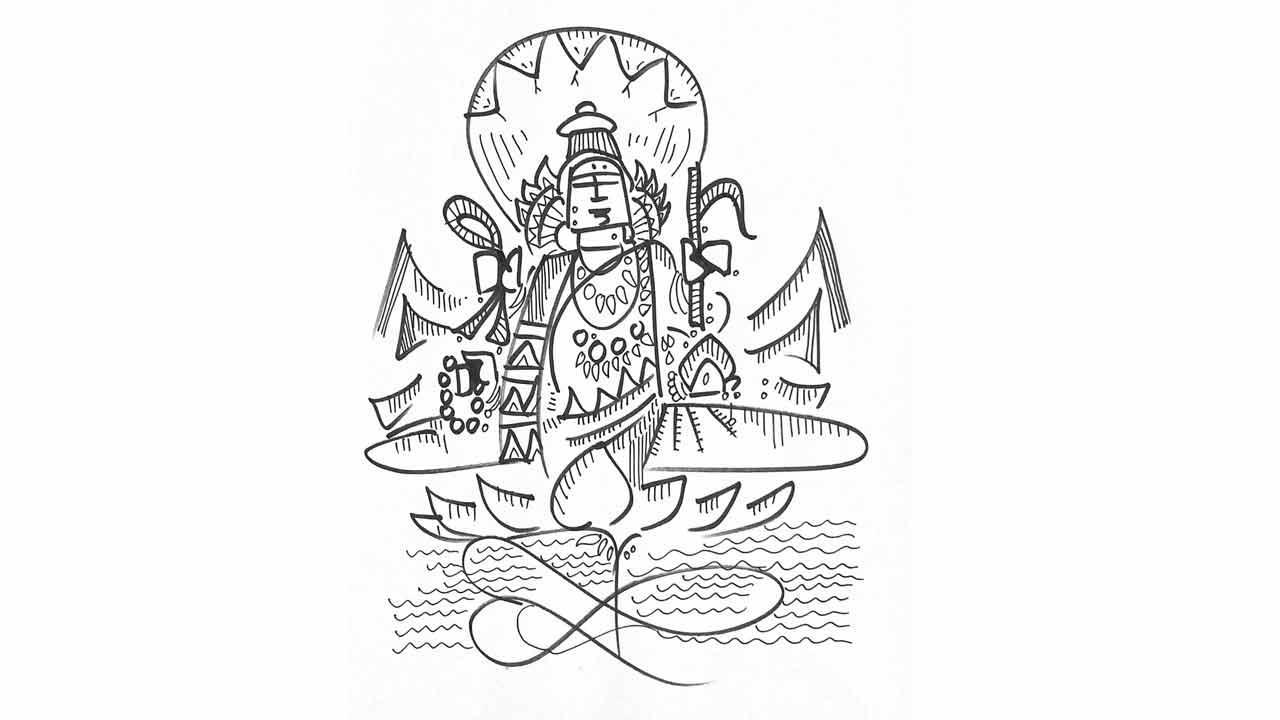
Illustration/Devdutt Pattanaik
 Jainism is a monastic order. Historically, it emerged 2,500 years ago, with most scriptures written 1,500 years ago. However, as per mythology, Jainism is an eternal religion (sanatan dharma), with 24 Tirthankaras appearing on earth in each of the infinite cycles of time, along with 12 Chakravarthys and 9 Vasudevas, to transmit the message of Jainism. What is often overlooked in conversations about Jainism is the idea of the Yakshas and Yakshis. The female Yakshi is also known as Yakshini. These are male and female attendants linked to each Tirthankara. There are 24 Tirthankaras and each one is associated with a male and female Yakshi. In other words, there are 24 Yakshas and 24 Yakshis in the wider Jain pantheon.
The Jain world was divided into two groups of people, the Shramanas and Shravakas. The Shramanas were the monks who strove to outgrow hunger. They saw their role model in the Tirthankaras who had abandoned everything in this world, including hunger. The Shravakas took care of the monks. These were ordinary businessmen, traders, and they had basic, worldly needs. While they venerated the Tirthankara, they also worshipped local gods and goddesses. These local gods and goddesses were associated with mountains, trees, rocks, rivers. Eventually they became the Yakshas and Yakshis who were linked to the Tirthankara. Thus, the folk religion of the common man became linked with the esoteric faith of the Jain monastic order.
Trending Stories
Latest Photos
Latest Videos
Latest Web Stories
ADVERTISEMENT

Ganeshotsav 2026

ADVERTISEMENT