‘No iconic images left’
Updated On: 28 February, 2021 07:15 AM IST | Mumbai | Meenakshi Shedde
Sohrab Hura’s The Coast explores the Dassera festival in Kulasekarapattinam, Tamil Nadu.





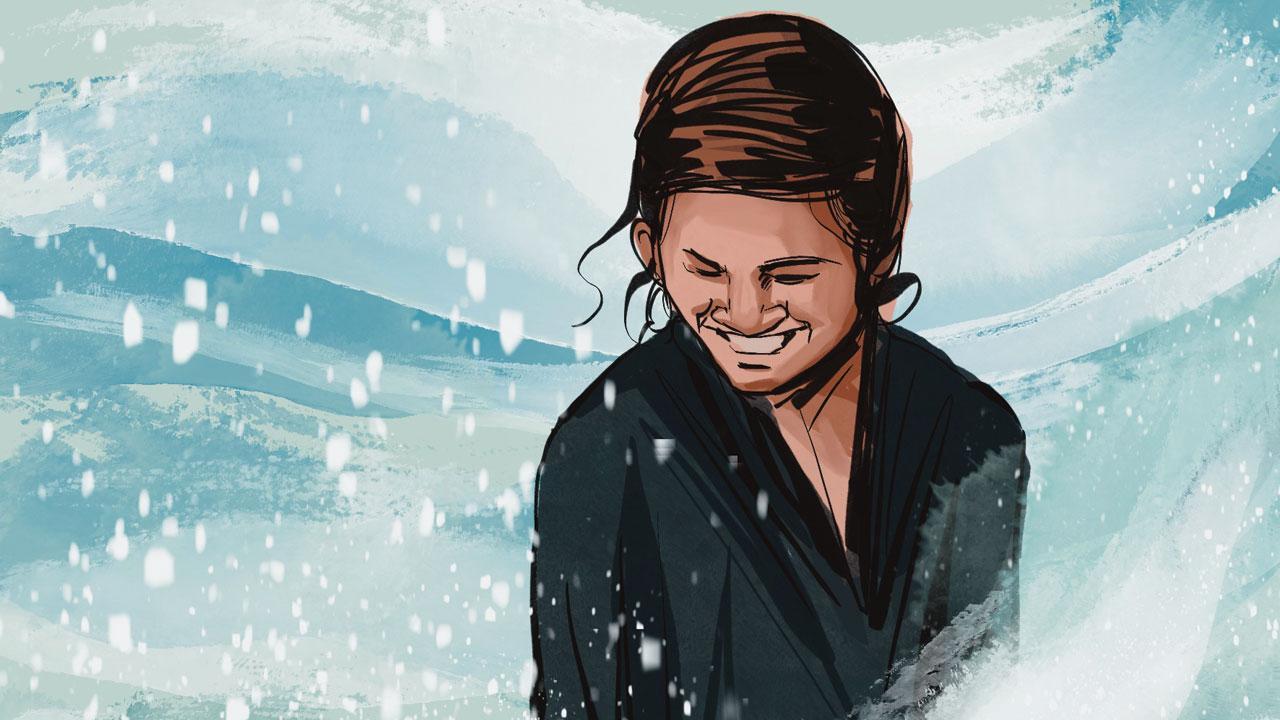
Illustration/Uday Mohite
 It is perhaps befitting that in a year that has been out of whack due to COVID-19, India’s films selected at the 71st Berlin Film Festival are not the usual Bengali or Marathi arthouse films, or even the occasional Bollywood film, but two experimental films. They are Delhi photographer-filmmaker Sohrab Hura’s The Coast, a 17-minute short, and Naeem Mohaiemen’s feature Jole Dobe Na (For Those Who Do Not Drown, a Japan-Sweden-India co-production, 64 minutes). London-born Mohaiemen, of Bangladeshi origin, works between New York and Dhaka. Both films will play in the Forum Expanded, the experimental section exploring the intersection between cinema and the other arts.
Sohrab Hura’s The Coast explores the Dassera festival in Kulasekarapattinam, Tamil Nadu. Pilgrims immerse themselves in the sea at night—men in briefs, women fully dressed in sarees; also men in saris. This is intercut with religious rituals of frenzied violence—for instance, a man smashes a coconut open on his own head and drinks the water. It’s mostly slow-motion, trance-like, and so is the music. “I’m from Delhi, so the seaside is a holiday escape…But in fact, the coast is a fluid, shifting point. Land is solid, stable; but with sea currents, you struggle to stand. That’s how I feel in the world today,” says Hura. He should know: his Bengali mother came from Dhaka, his Punjabi father, from Lahore. “I’m the insider/outsider; I’m always on soft, muddy ground,” he adds.
Trending Stories
Latest Photos
Latest Videos
Latest Web Stories
ADVERTISEMENT

Ganeshotsav 2026

ADVERTISEMENT