Pining as art
Updated On: 19 April, 2020 07:25 AM IST | Mumbai | Meenakshi Shedde
All this struck me after I watched Ekta Mittal's haunting Gumnaam Din (Missing Days), that was in the Berlinale Shorts at the Berlin Film Festival earlier this year





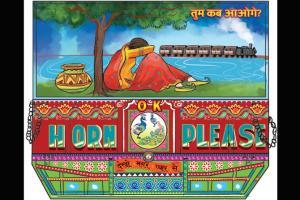
Illustration/Uday Mohite
 Indians are big on pining. We are a nation of migrants, and Indians somehow make a virtue, even a fetish, of this feeling of missing the beloved. It can be yearning for a lover, a husband, a son—or God. We express it in myriad ways, we cherish it, we wallow in it, we let go. It has seeped into Indian culture—our philosophy, literature, poetry, painting, dance, music, film. From high art like the ragamala miniatures of the Ashta Nayikas, to sufi and baul songs, to Tum kab aaoge? (When will you return?) painted on the back of every other truck, with the desolate woman in a salwar-kameez, burying her head on her drawn-up knees, pining away for her beloved. (Somebody once observed that in traditional Indian painting, "the woman is rarely the lover, but always the beloved."). We have birha songs of separation. We have bidaai songs when the daughter gets married and goes away. Rudaalis and Tamil oppari singers sing wailing songs for us when someone passes away. We have raunchy-as-hell Bhojpuri bidesia songs, describing how the beloved can't wait to grab us again. And, India must be the only nation where you can still buy, on the streets, those delightful, kitschy song booklets like Mohammed Rafi ke dard bhare nagmein.
All this struck me after I watched Ekta Mittal's haunting Gumnaam Din (Missing Days), that was in the Berlinale Shorts at the Berlin Film Festival earlier this year. This 28-minute experimental film explores the birha, the double-edged longing, lamentation and grief of those who have migrated to distant lands, looking for work, as well as of those left behind. The filmmaker goes looking for someone who has vanished—he went looking for work far away, and simply disappeared. It is a film that is more experiential—it allows visuals and sounds, rather than dialogues, to evoke feelings. We see an elderly woman knead dough, a young woman dress up before a mirror and put on sindoor; trees swathed in mist, with the songs of cicadas, and at some point, women just burst into wails, unable to contain their grief. The film is also inspired by Shiv Kumar Batalvi's 'birha' poetry, of separation and ache.
Trending Stories
Latest Photos
Latest Videos
Latest Web Stories
ADVERTISEMENT
Mid-Day Fast
ADVERTISEMENT