


Dr M N Wankhede, on his 100th birth centenary, is remembered for mapping the Dalit vidrohi canon and urging writers to speak out, linking India’s caste struggle with global movements for justice

A new Marathi volume titled Krantdarshi Dr M N Wankhede highlights his impact
 What happens when the architect of a rebellion — someone who ought to be known to all — remains largely unknown? I realised this when I came across a newly published volume marking the birth centenary of Dr M N Wankhede (1924–1978).
The Ambedkarite thinker, fierce essayist, and mentor of the Dalit rebellious canon is, of course, known in academic circles, but not in the national or regional consciousness. It is to him that the arc of Marathi Dalit writing (and its translations) can be traced. From Baburao Bagul’s Sood (whose foreword he wrote) through Daya Pawar’s Baluta, Laxman Mane’s Upara, Baby Kamble’s Jina Amucha, and Urmila Pawar’s Aaydaan, the genre found its most forceful voice in memoir and autobiography — work that today stands translated in several foreign languages and remains a matter of pride in Maharashtra. Behind this lineage stood Wankhede, who wrote, spoke, and organised around the need for rebellious literature that would name oppression and speak in its own cadence. His years were few, but his impact was decisive: through his essays, speeches, institution-building, travel and study abroad, and his work at Aurangabad’s (now Sambhajinagar) Milind College, he shaped the very definition of rebellion in letters.
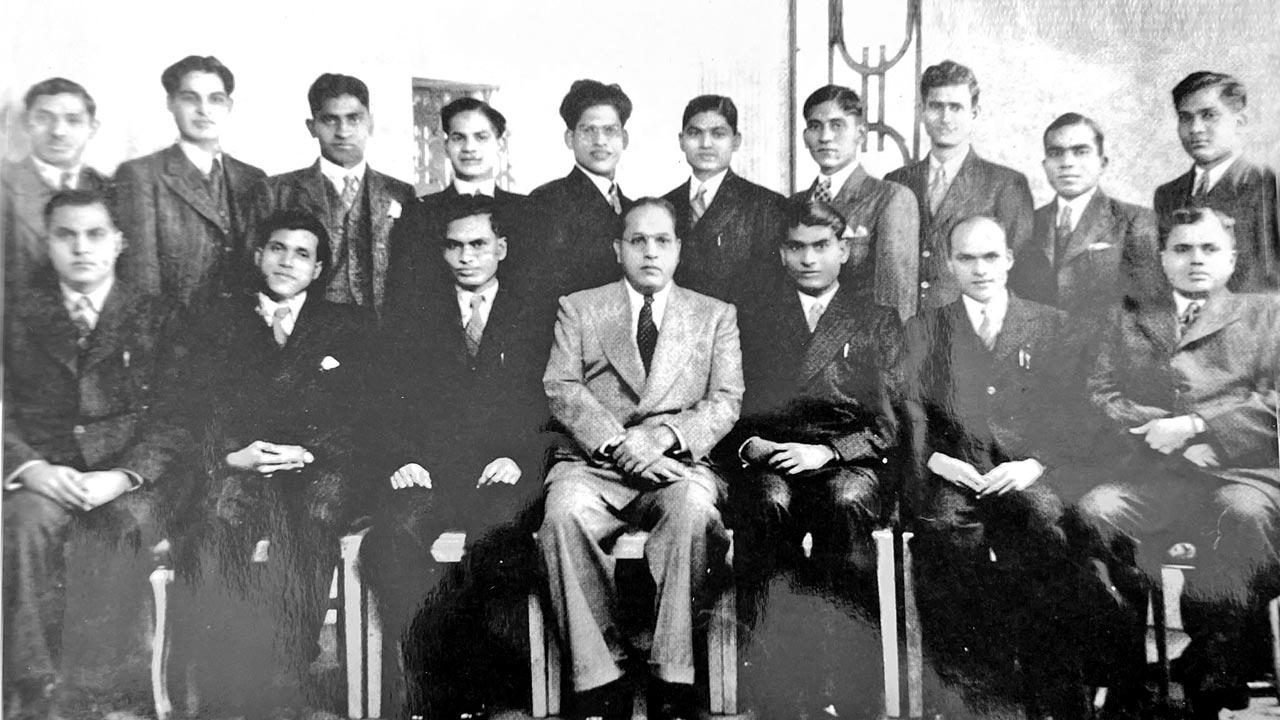 Dr Wankhede (second row, third from left) and other students travelling to UK with Babasaheb Ambedkar
A new Marathi volume titled Krantdarshi Dr M N Wankhede — which includes the scholar’s select English quotes — edited by senior litterateur Yashwant Manohar, brings together some 60 scholars from across Maharashtra. Manohar excerpts from Wankhede’s speeches, public interviews, and English writings. He, in fact, calls Dr Wankhede “Maharashtra’s Sartre”, whose influence, he notes, has never faded. The collection situates the aesthetics of Dalit literature within a global frame, where Wankhede’s thought carries the existentialism of total revolution, anchored in Dr Ambedkar’s foundational sadvivekvaad — the reasoned humanism that defined his worldview.
The volume highlights Wankhede’s profound grasp of Dr Ambedkar’s teachings and his eloquent insistence that Dalits must write fearlessly from their own lived experience. He challenged inherited heroes of history and myth, urging Dalit writers to create their own protagonists — shaped by their time and struggle. For him, the Dalit quest was inseparable from the human one.
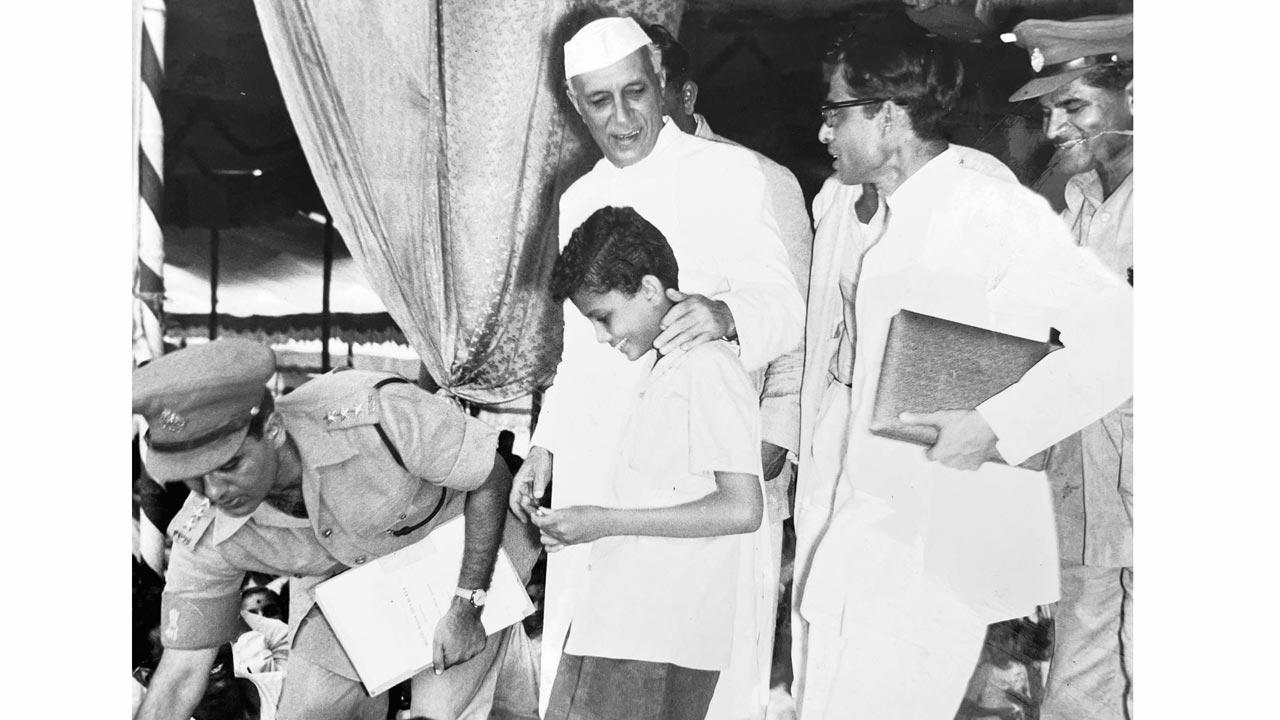 PM Jawaharlal Nehru and Dr Wankhede (right) in Aurangabad to inaugurate Marathwada University
Dr Wankhede went to the UK on an Indian government scholarship, and later became a Fulbright scholar in the US, completing his PhD at the University of Florida on “Walt Whitman and Tantrism: A Comparative Study.” There, he witnessed the African American civil rights movement firsthand, profoundly shaping his understanding of social justice and equality.
As a scholar of English literature, deeply influenced by Martin Luther King Jr, Langston Hughes, Walt Whitman, and James Baldwin, he urged Dalit youth to pursue education as a tool for transformation. He felt fortunate to have been chosen by Dr Ambedkar to head the English department at Milind College, the institution Ambedkar founded, hoping others would follow this dnyānmārga, enabling them to tell their stories in their own idioms. Returning to Sambhajinagar, he brought insights from the Black Panther movement in the US, transforming Milind College into a crucible of cultural resurgence.
 Dr Wankhede (seated on the left in the foreground) with former Prime Minister Indira Gandhi
As Arjun Dangle, Dalit Panther leader, wrote in the new volume — and reiterated at the Mumbai centenary gathering — “revisiting Dr Wankhede is vital today”, as the values sustaining our welfare state are under threat. In his time, Wankhede urged writers to practise vidroh (rebellion) against the caste establishment. That call resonates till date. Dangle notes that certain figures in history remind us of the need for counter-revolution; Wankhede is one such defining figure.
Many writers of the Dalit vidrohi canon remember Dr Wankhede with deep gratitude, acknowledging that much of their own writing owes its inspiration to him. Many hail from Marathwada, especially Milind College, where Wankhede was either their guru or contemporary; a vatvriksha whose canopy sheltered writers, translators, and theatre-cinema-art creators. The volume showcases the Dalit intelligentsia across generations and geographies, including ideologue-thinker Janardan Waghmare (Latur), Hindi translator Aruna Lokhande (Sambhajinagar), educationist Chetana Sonkamble (Kolhapur), and poet-writer Vandana Mahajan from Mumbai.
Literary critic and editor of Phule-Ambedkari Vangmaykosh, Dr Mahendra Bhaware, situates Wankhede at the heart of Maharashtra’s cultural renaissance — a force that introduced the revolutionary intensity of African American writing. Tapping into the moral and aesthetic upheaval after the 1956 mass conversion to Buddhism, Wankhede urged Dalits to question all entrenched powers — god and religion included. He institutionalised his ideas through journals such as Asmita, Asmitadarsh, Milind Magazine, and Milind Manuscript Fortnightly, building platforms for new voices. Dalit theatre also took shape under his patronage: he directed Yugyatra, the first Dalit play, performed in Ambedkar’s presence at Sambhajinagar and again before a massive audience at Nagpur’s Dhammadeeksha in 1956.
Wankhede’s engagement with Marathi and Indian literary discourse was balanced: never an extremist, he was always open to new ideas. In the preface to Sood, he initially described Dalit literature as Dalit expression fuelled by anger against perpetrators, but later adopted a more nuanced diverse construct. How many public intellectuals are willing to revisit and correct their own definitions?
Dr Mangesh Bansod, professor at the University of Mumbai’s Academy of Theatre Arts and an active member of the centenary celebrations, notes that Wankhede was a towering figure who refused to let narrowness or hatred shape the canon he built. He remained in dialogue with scholars of all persuasions, and his engagement with non-Dalit thinkers reflected the intellectual openness highlighted in the Krantdarshi volume through reflections by samavichari such as R G Jadhav, M P Rege, and V L Kulkarni.
Renowned reformist writer-critic M B Chitnis — who shared Wankhede’s belief that Dalit literature must be intellectually rigorous yet emotionally fearless — observed that any new literature needs a living tradition to grow from. “No one can learn music just by hearing the koel sing,” he said. “A neo-Buddhist writer will naturally borrow the forms and genres of the middle class, but only when he/she stops feeling culturally inferior will the writing come alive.” Chitnis agreed with Wankhede that creative expression must be unapologetic.
I look forward to a second edition of this volume, one that might bring in photographs and glimpses of Wankhede’s travels and engagement across India, his meetings with leaders like Ambedkar, Nehru, and Indira Gandhi, and the voices of non-Dalit thinkers who admired him — so that readers can feel, not just read, the sweep of his world.
Sumedha Raikar-Mhatre is a culture columnist in search of the sub-text. You can reach her at sumedha.raikar@mid-day.com
 Subscribe today by clicking the link and stay updated with the latest news!" Click here!