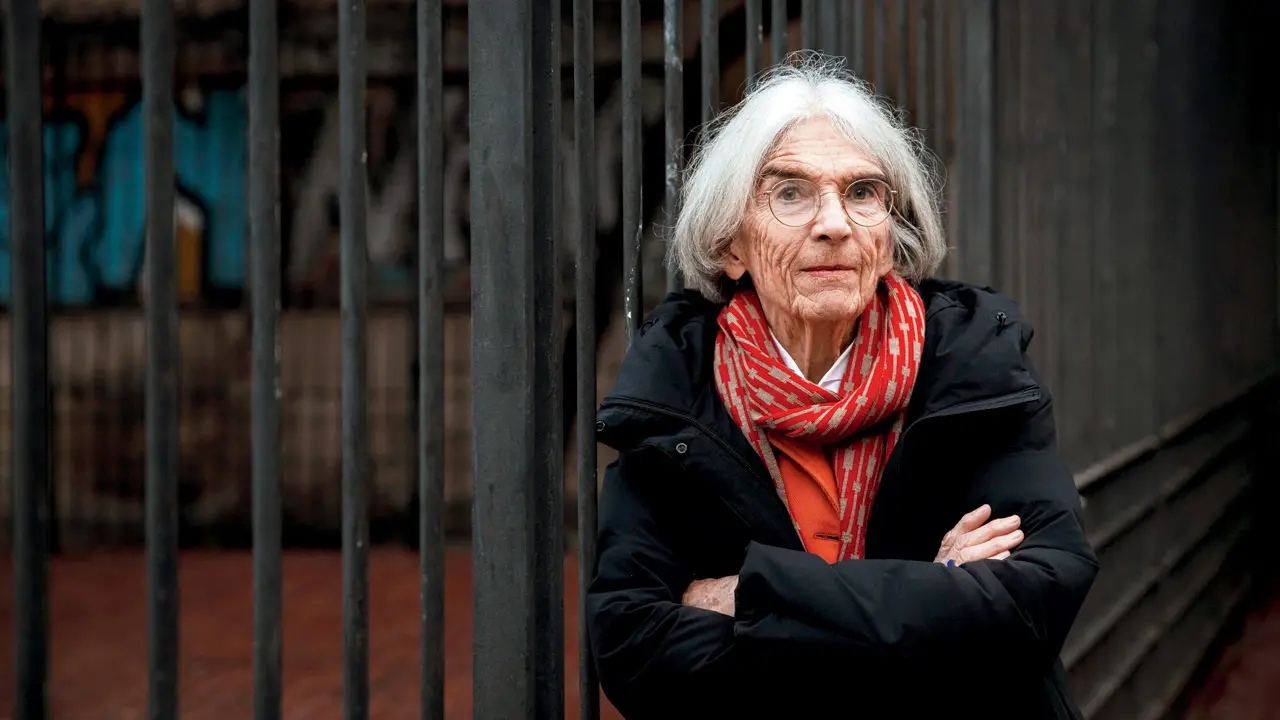
I cannot recommend enough the enthralling murder mysteries of American novelist Donna Leon, who captivates readers with her poignant narrative style

American writer Donna Leon at the BCNegra Literature Festival on February 10 in Barcelona, Spain. PIC/GETTY IMAGES

As a working mom of a kindergarten kid and a five-month-old, reading a book for the sheer thrill of immersing myself in a fictional world feels like something audacious and gratuitous — like day drinking. I’ve always been a voracious reader, but my practice as a writer, researcher, educator, and editor has ensured that my reading list has always aligned with my intellectual consciousness. My innate tendency is to choose books that relate to the subject of my informal studies. My shadow library is full of digital versions of books about gender studies, feminist thinking, art criticism, and philosophy. My editorial work ensures I am constantly updating my art and critical vocabulary, and my freelance career as an art critic involves always looking at art with intent and purpose — never quite for the sake of pure pleasure. This doesn’t mean I don’t allow myself to feel awe or joy, just that these activities have always been intimately tied to work and productivity.
Until recently, I couldn’t even recall the last time I read a book without a pencil in my hand to underline relevant sections, or using multiple coloured highlighters to sort through the various textual strands of enquiry. I’ve always been a critical reader, one who hunts between the lines for truths that might be essential to my existence, or that may validate my subjectivity. In my undergraduate years, mark-making while reading was my way of coming ‘into the know’, accessing the world of ideas and philosophy. I fell in love with the concept of learning new ways of not only being in the world but articulating the experience of it. While many of my peers who weren’t studying literature were content reading Danielle Steel and John Grisham and other potboilers, I felt more ‘at home’ with George Eliot, the Bronte sisters, Virginia Woolf, Iris Murdoch, Henry Miller and my absolute favourite, at that time, Jeanette Winterson.
This is not to say that I didn’t experience deep, profound and immense pleasure while reading their words. I did and continue to… But I read them from a space of hunger. I read because I ached to belong to the literary universes their words evoked. Sometimes I read to convince myself that my subjectivity had merit too. I needed to believe I, too, was intelligent, intellectual and capable of writing. Often, I read because I was a literature student who loved acing reading lists — being on top of things. Often, I read to learn how to write and how to feel my way through words. But, you see, there was always a motive.
I have come to conceive of leisure as somehow motiveless. Gratuitous. Something you do not just do to kill time, but because you feel like you are in possession of it. I learned, recently, that scrolling through reels on TikTok is perhaps the only activity I have truly allowed myself to perform for the sure ‘heck’ of it. But even within this digital realm, I have managed to embed the activity with usefulness. I find myself watching content that will improve my culinary or linguistic skills, thus sucking the leisure out of it by turning it into a constructive exercise.
I’m proud to say I might have found a way around my problem with reading for leisure when I began reading Donna Leon. Not in the original — because where I live it’s impossible to find the American novelist’s work in English, but in German. I once chanced upon an article about the writer, who lived in Venice for many years before settling in an Italian-speaking part of Switzerland. She is the brain behind the character Commissario Brunetti, an Italian police detective who lives in Venice with his wife and kids. I happened to loan a copy of her fifth case, Aqua Alta when my mother-in-law had asked me to check out a book for her at our library. I learned later that my mother-in-law had read pretty much every book Leon had ever written. Her writing was an instant hit with Germans who access her in translation and whose appetite for her fiction even spurred a television series.
Instead of returning the book, I decided to read it. At first, I was making notes about German words I didn’t know or couldn’t understand, looking them up in the dictionary. But soon enough, seduced by the poignant narrative style, I began chasing the story instead and was surprised by my ability to access the finer nuances of the plot. It is also refreshing to read murder mysteries set in a pre-digital era, in a city like Venice that has now become a kind of Disneyland. I’m 120 pages into the first case, which, incidentally, features the two people who were the lead figures in the fifth case. I read at least one chapter each evening during my ‘nobody-needs-me-time’, when the kids are asleep and my partner is also usually deep into a book. I cannot recommend such leisurely reading enough. It’s such an underrated source of delight — putting away your smartphone and surrendering to the compelling lure of a fictional universe.
Deliberating on the life and times of every woman, Rosalyn D’Mello is a reputable art critic and the author of A Handbook For My Lover. She posts @rosad1985 on Instagram
Send your feedback to mailbag@mid-day.com
The views expressed in this column are the individual’s and don’t represent those of the paper.
Subscribe today by clicking the link and stay updated with the latest news!" Click here!