Tehran has dismissed the possibility of any short-term pauses in hostilities, asserting that it is pushing for a total conclusion to warfare throughout the West Asian region, according to Al Jazeera. Speaking to journalists during the Antalya Diplomacy Forum, Iran's Deputy Foreign Minister, Saeed Khatibzadeh, emphasised that any potential truce must encompass every active battleground "from Lebanon to the Red Sea". He further categorised this broad scope as a "red line" for the Iranian government. Elaborating on Tehran's rigid stance against incremental deals, Khatibzadeh told the press, "We are not accepting any temporary ceasefire." He maintained that the current wave of violence "should end here once and for all" rather than being merely paused. The senior diplomat also addressed maritime security, specifically regarding the Strait of Hormuz. Al Jazeera reported his observations that while the vital shipping lane is located inside Iran's sovereign territory, it has historically been kept accessible for international passage. Shifting the blame for regional volatility, Khatibzadeh pointed towards the United States and Israel. He claimed that they have been the catalysts for local unrest, which has subsequently damaged international commerce and the broader global financial system. According to Al Jazeera, the Deputy Minister's remarks underscore Iran's refusal to engage in piecemeal diplomacy, instead demanding a comprehensive resolution to the multiple overlapping crises currently affecting the region. This demand for a regional resolution comes as tensions peak at the United Nations, where Iran's Permanent Representative, Amir-Saeid Iravani, argued that stability in the Strait of Hormuz is contingent upon "full respect for Iran's sovereignty and rights." According to Iranian state media Press TV, Iravani's remarks were a direct response to a recently announced US "naval blockade" intended to pressure Tehran into ensuring the waterway remains open. Addressing the legalities of the strategic corridor, Iravani asserted that freedom of navigation in the Persian Gulf and the Sea of Oman is only achievable if the rights of coastal states are upheld. Per Press TV, he warned that Washington's measures constitute an "unlawful" act of aggression and a "flagrant breach" of the UN Charter, specifically Article 2(4), which prohibits the threat or use of force. The diplomatic friction has been further compounded by military escalation on the ground. US Central Command (CENTCOM) confirmed that American forces are actively enforcing a large-scale maritime blockade. This operation involves over 10,000 personnel, a dozen naval vessels, and more than 100 aircraft, aimed specifically at Iranian ports and the coastline. Highlighting the effectiveness of these measures, US President Donald Trump stated that the Navy's performance has been "incredible," noting that the blockade is proceeding routinely with no ships attempting to bypass the American fleet. However, the Chairman of the Joint Chiefs of Staff, Air Force Gen. Dan Caine, clarified to the media that the mission is a blockade of Iranian territory rather than the Strait of Hormuz itself, applying to all vessels regardless of nationality. Amid these military manoeuvres, Iravani maintained that Iran has consistently upheld maritime security while accusing the US and Israel of targeting civilian infrastructure during a "40-day military assault." Despite the rhetoric, the envoy noted that Tehran remains open to diplomatic initiatives involving regional partners like Pakistan, Turkey, and Saudi Arabia, as well as China and Russia, to find a sustainable end to the crisis. This story has been sourced from a third party syndicated feed, agencies. Mid-day accepts no responsibility or liability for its dependability, trustworthiness, reliability and data of the text. Mid-day management/mid-day.com reserves the sole right to alter, delete or remove (without notice) the content in its absolute discretion for any reason whatsoever
17 April,2026 04:37 PM IST | Antalya | ANIAam Aadmi Party National Convenor, Arvind Kejriwal, on Friday said that this was the second Enforcement Directorate (ED) raid on an AAP leader’s premises within just three days, raising questions over the intent behind such actions. He also asked how much 'black money' had been recovered in the raids by the central agency. Former Delhi Chief Minister, Arvind Kejriwal, took to social media 'X' and said, "This is the second ED raid on an Aam Aadmi Party leader's premises within just three days. Will the Prime Minister explain how much 'black money' has been recovered from the countless raids conducted on AAP leaders so far? Was even a single rupee found?" He criticised the Centre, stating, “The entire nation is watching the petty politics you are engaging in — solely for the sake of power.” Meanwhile, Punjab Cabinet Minister Sanjeev Arora also confirmed that an ED raid had taken place at his premises. "Good Morning! An action by the Enforcement Directorate took place at my premises. As a responsible citizen, I will fully cooperate with the agencies and I am confident that the truth will prevail," he said. Meanwhile, the ED conducted raids at 13 places on the premises of Sanjeev Arora under the Foreign Exchange Management Act (FEMA) in Gurugram, Chandigarh, Ludhiana and Jalandhar. The raids also covered residences and offices of Sanjeev Arora, Hemanth Sood and Chandrasekhar Aggarwal. According to officials and sources, ED teams reached the minister’s residence early in the day, while Central Armed Police Forces (CAPF) personnel were deployed outside the premises to secure the area. Searches were also carried out at other locations linked to the minister. The action is reportedly connected to an old money laundering case and alleged irregularities in land deals. AAP leader Saurabh Bharadwaj reacted to the development, alleging that the BJP follows this pattern to start its preparation for a state election. In a post on X, he said, “ED has now raided Punjab Minister Sanjeev Arora. This is a clear pattern. This is how BJP starts its preparation for a state election.” Earlier on April 15, the ED conducted searches on the premises of AAP Rajya Sabha MP, Ashok Kumar Mittal and the educational institutions promoted by him and his family in Haryana and Punjab, under the FEMA. The raids come amid heightened political tensions between the ruling AAP in Punjab and the Central government, with Opposition leaders alleging selective targeting by central investigative agencies. This story has been sourced from a third party syndicated feed, agencies. Mid-day accepts no responsibility or liability for its dependability, trustworthiness, reliability and data of the text. Mid-day management/mid-day.com reserves the sole right to alter, delete or remove (without notice) the content in its absolute discretion for any reason whatsoever.
17 April,2026 01:19 PM IST | New Delhi | IANSPakistan has started preparing to host the second round of high-stakes talks between the US and Iran during the next week for a landmark peacedeal to end the war in West Asia that has crippled global energy supplies, officials said on Friday. The US and Iran held rare direct talks in Pakistan over the weekend aimed at ending their conflict, but the talks ended early Sunday without any agreement. Official sources in Pakistan on Friday said that a feverish diplomatic activity followed to bring the two sides back to the negotiating table. It was met with success as both continue to observe the temporary two-week ceasefire, allowing Pakistan to relaunch its mediatory push. After working behind the scenes, Prime Minister Shehbaz Sharif embarked on a tri-nation tour on Wednesday, while Field Marshal Asim Munir landed in Tehran on the same day. The Prime Minister, after discussion with the Saudi and Qatari leaders, reached Turkiye on Thursday night as the Field Marshal spent more than 24 hours in Iran meeting its political and military leaders. Though nothing has been officially said about the outcome of talks between the Pakistani civil and military leaders, security officials back home suddenly became active on Thursday evening, authorities said. According to officials in Islamabad, "preparations have started in Islamabad and neighbouring Rawalpindi as thousands of police and paramilitary personnel have started coming from other provinces." Traditionally, the Islamabad administration seeks support from provinces to help in the work of law enforcement in case mega security arrangements are needed. During the first round of talks, more than 10,000 security personnel were deployed. There are also reports that transport companies have been approached by the Islamabad and Rawalpindi districts officials to inform them that traffic coming from other cities or leaving the twin cities may face drastic restrictions. According to a message shared on social media, such restrictions, once imposed, may continue until the end of next week. It urged citizens to avoid unnecessary travel during the next week or plan well in advance. Similarly, educational institutions may be closed in the two cities along with markets in areas close to the airport to reduce traffic on roads, officials said. US Vice President JD Vance, who led the American delegation, said the talks failed to reach a deal, citing Tehran not forgoing its nuclear programme as one of the key sticking points. Parliament Speaker Mohammad Bagher Ghalibaf, who led the Iranian delegation in marathon peace talks, said that his team raised "forward-looking initiatives, but the opposite side ultimately failed to win the trust of the Iranian delegation in this round of negotiations." The conflict began after the US and Israel launched attacks on Iran on February 28, paralysing global energy markets and disrupting trade. The ceasefire between the US and Iran would expire on April 22. The chances of a peace deal got further support when President Donald Trump told reporters on Thursday that he may travel to Islamabad if a final agreement with Iran is signed there, while claiming that Tehran has accepted "almost everything" currently under negotiation. "If a deal is signed in Islamabad, I may go...They want me," he told the reporters on the White House lawn before departing for Nevada and Arizona. Trump expressed optimism about Pakistan-led diplomatic efforts to end hostilities and secure a settlement before the current ceasefire expires, indicating that he would extend it, although he suggested such a move might not be necessary if a deal is reached in time. The US leader has repeatedly praised Pakistan and its leaders, Prime Minister Shehbaz and Field Marshal Munir, as "extraordinary, kind and very competent", has once again shown his ability to swing the global conversation with a single statement. This story has been sourced from a third party syndicated feed, agencies. Mid-day accepts no responsibility or liability for its dependability, trustworthiness, reliability and data of the text. Mid-day management/mid-day.com reserves the sole right to alter, delete or remove (without notice) the content in its absolute discretion for any reason whatsoever.
17 April,2026 01:05 PM IST | Islamabad | PTIAt least eight people including a woman and a young girl died in a gas pipeline explosion at an industrial estate in Pakistan's northwestern province Khyber Pakhtunkhwa on Thursday, a Rescue 1122 official said. The incident occurred in Hattar Industrial Estate area of Haripur district. According to Rescue 1122 sources, the explosion happened near a grinding mill along the Grand Trunk Road, where a powerful blast in the gas pipeline triggered a massive fire. It also set a nearby house ablaze, intensifying the damage and complicating rescue efforts. The district police officer of Haripur said at least four women and six children have been saved so far, while the fire continued to spread rapidly. Several women and children sustained severe burn injuries, and emergency teams are continuing rescue operations as they work to bring the blaze under control. Haripur Deputy Commissioner Waseem Ahmed said the deaths appeared to have been caused mainly by suffocation. This story has been sourced from a third party syndicated feed, agencies. Mid-day accepts no responsibility or liability for its dependability, trustworthiness, reliability and data of the text. Mid-day management/mid-day.com reserves the sole right to alter, delete or remove (without notice) the content in its absolute discretion for any reason whatsoever.
17 April,2026 12:15 PM IST | Peshawar | PTIThe South Korean Government will implement a KRW 6.1 trillion (USD 4.12 billion) cash assistance programme to support the bottom 70 per cent of income earners in the country in coping with rising oil prices as part of broader measures to tackle the economic impact of the crisis in West Asia, Yonhap News Agency reported. According to the Yonhap News Agency, citing Finance Minister Koo Yun-cheol, authorities are preparing to release public reserves of urea and urea solution later this month to address anticipated supply shortages triggered by the ongoing regional tensions. The minister outlined the measures during an emergency virtual economic meeting with officials from ministries involved in the West Asia crisis response. Highlighting the broader economic risks, Koo said the government would continue to respond actively to supply chain disruptions until the conflict between the United States and Iran comes to an end, describing the crisis as the most significant threat to the global economy at present. "Until the end of the war becomes clear, we will firmly maintain an emergency economic response system and actively address supply chain issues and difficulties in people's livelihoods," he said, as quoted by Yonhap News Agency. He further directed relevant ministries to swiftly execute the supplementary budget recently approved by the National Assembly to ensure timely support measures and stabilisation efforts. Earlier, the South Korean National Assembly passed the additional budget of KRW 26.2 trillion (approximately USD 17.1 billion) supplementary spending package aimed at mitigating the economic impact of the ongoing conflict in West Asia prior to the ceasefire announcement made by US President Donald Trump in order to halt the hostilities in the region with Iran for two weeks. The additional budget was approved on April 10 after lawmakers from both the ruling party and the main opposition had reached an agreement, reflecting a rare bipartisan consensus over the need to respond to the economic fallout due to the continuing West Asia conflict. This story has been sourced from a third party syndicated feed, agencies. Mid-day accepts no responsibility or liability for its dependability, trustworthiness, reliability and data of the text. Mid-day management/mid-day.com reserves the sole right to alter, delete or remove (without notice) the content in its absolute discretion for any reason whatsoever.
17 April,2026 11:20 AM IST | Seoul (South Korea) | ANIFresh shelling was reported in southern Lebanon shortly after the ceasefire between Israel and Hezbollah came into effect, raising concerns over the fragile truce, news agency ANI reported, quoting Al Jazeera. Israeli artillery continued targeting the towns of Khiam and Dibbine, with reports of machinegun fire during sweeping operations in the area, Al Jazeera stated, citing Lebanon’s National News Agency (NNA). In the western Bekaa Valley, reconnaissance aircraft activity was also observed over the Rashaya region and the western slopes of Jabal al-Sheikh. Amid the developments, the Israeli military issued a warning to residents in southern Lebanon, urging them not to move south of the Litani River as forces remain deployed, ANI reported, quoting CNN. Military Spokesperson Avichay Adraee said Israeli troops continue to maintain positions in the region, as reported by CNN. “For your safety and the safety of your family members - until further notice - you are requested not to move to the south of the Litani River,” Adraee said. He added that the deployment remains in place “in the face of Hezbollah’s ongoing terrorist activities”, ANI reported. West Asia conflict: Antonio Guterres welcomes truce as Jordan, UAE back ceasefire efforts Meanwhile, United Nations Secretary-General Antonio Guterres welcomed the ceasefire agreement, expressing hope that it could lead to long-term peace in the region. “I welcome the announcement of a ceasefire between Israel & Lebanon, and commend the role of the US in facilitating it. I hope this will pave the way for negotiations towards a long-term solution to the conflict & contribute to ongoing efforts toward a lasting & comprehensive peace in the region. I urge everyone to fully respect the ceasefire and to comply with international law at all times,” he wrote on X. I welcome the announcement of a ceasefire between Israel & Lebanon, and commend the role of the US in facilitating it.I hope this will pave the way for negotiations towards a long-term solution to the conflict & contribute to ongoing efforts toward a lasting & comprehensive… — António Guterres (@antonioguterres) April 16, 2026 Regional reactions have also been largely supportive. Jordan welcomed the ceasefire and praised the role of Lebanese leadership, including President Joseph Aoun, in the negotiations, Al Jazeera reported. Jordan’s Ministry of Foreign and Expatriates Affairs reiterated its “firm support” for Lebanon’s sovereignty and stressed the need for arms to remain under state control, as reported by Al Jazeera. The United Arab Emirates also backed the agreement, highlighting the importance of diplomacy in reducing tensions. In a statement, the UAE’s Ministry of Foreign Affairs said it hoped the ceasefire would mark “a positive step towards fostering a supportive environment for regional stability” and emphasised the need for continued international coordination to prevent further escalation, as per Al Jazeera. (With ANI inputs)
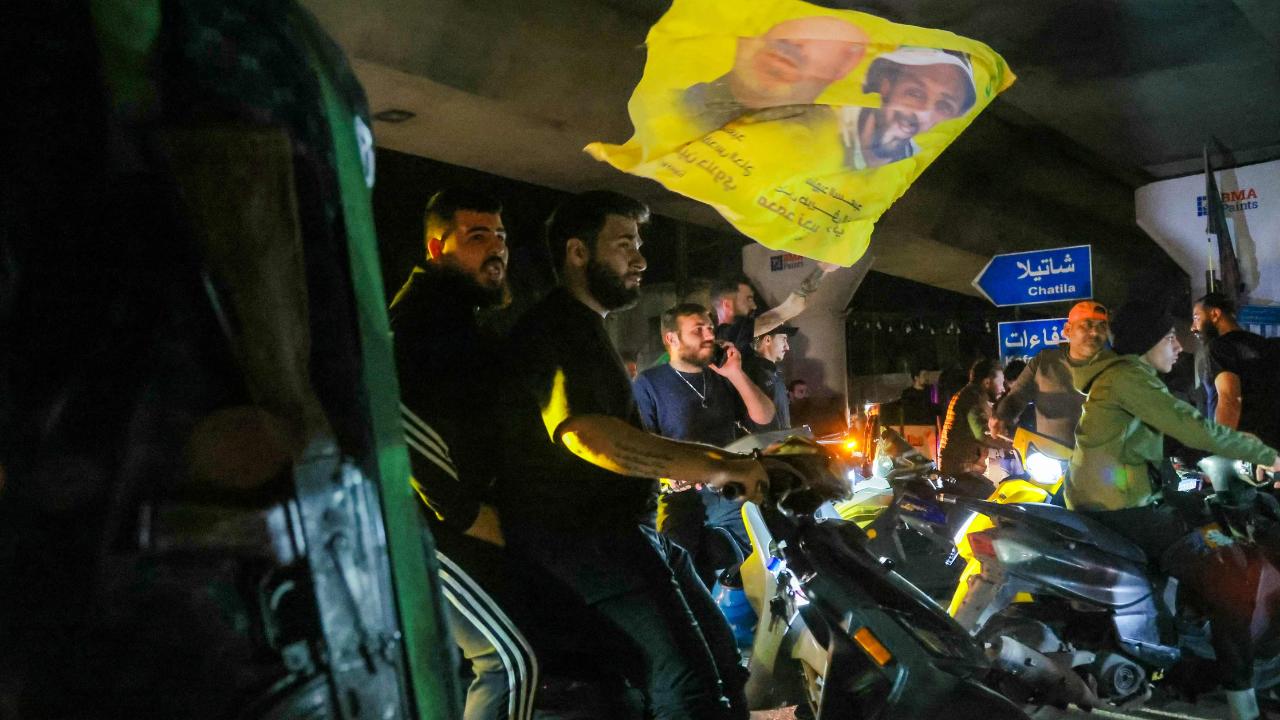
17 April,2026 11:06 AM IST | Beirut | mid-day online correspondentA 10-day ceasefire agreement between Lebanon and Israel came into effect on Friday, as US President Donald Trump announced efforts to arrange the first-ever face-to-face meeting between the leaders of the two countries. The truce, which began at midnight local time in Lebanon and Israel (9 pm GMT/2.30 am IST), follows intensive US mediation to end the ongoing Israel-Iran conflict, with Tehran insisting that any deal must include a halt to hostilities in Lebanon. As the ceasefire took hold, gunfire echoed in Beirut’s southern suburbs — Hezbollah’s stronghold — in what appeared to be spontaneous celebrations by residents. The wider regional conflict escalated when the US and Israel struck Iran on February 28. Lebanon was drawn in shortly afterwards when Hezbollah fired rockets into Israel on March 2. Since then, Israeli strikes have killed more than 2,000 people in Lebanon and displaced over one million, while Israeli ground forces entered southern Lebanon. Just as the ceasefire began, the Israeli military stated that it had struck over 380 “Hezbollah terror organisation targets” in southern Lebanon in recent operations and remained on “high alert” to resume strikes if necessary. President Trump described the deal as the outcome of “excellent” telephone conversations with Israeli Prime Minister Benjamin Netanyahu and Lebanese President Joseph Aoun. Posting on Truth Social, he said the two leaders had agreed to a 10-day ceasefire starting at 5 p.m. EST. He later indicated that Netanyahu and Aoun could visit the White House within the next four or five days. Such a direct meeting would mark a historic development in Israel-Lebanon relations. An Israeli hospital spokesman reported that three people were injured on Thursday shortly before the truce. Earlier that day, an Israeli strike on the southern Lebanese town of Ghazieh killed at least seven people and wounded 33, according to Lebanon’s health ministry. Netanyahu welcomed the ceasefire as an opportunity for a “historic peace agreement” with Beirut, but stressed that the disarmament of Hezbollah remained a key precondition. Trump stated that Hezbollah was covered by the truce, while the US State Department clarified that Lebanon itself had committed to dismantling the Iran-backed group. United Nations Secretary-General Antonio Guterres welcomed the ceasefire and urged “all actors to fully respect” it — a call that implicitly includes Hezbollah. He expressed hope that the truce would advance negotiations for a lasting solution and contribute to broader regional peace, while stressing full compliance with international law and the implementation of Security Council Resolution 1701. Celebrations break out in Lebanon In Beirut, housewife Jamal Shehab, 61, said: “We are very happy that a ceasefire has been reached in Lebanon because we are tired of war and we want safety and peace.” Lawyer Tarek Bou Khalil, speaking at a cafe, remarked: “It’s well known Trump cannot be taken at his word, and Netanyahu cannot be trusted. But we know that the result of the pressures of the war with Iran and the blunders of Netanyahu and the enemy army in south Lebanon, forced them into a ceasefire.” A Hezbollah lawmaker, Ibrahim al-Moussawi, told AFP the group would “cautiously adhere” to the ceasefire provided Israel stopped its attacks. He thanked Iran for its pressure, adding that “the ceasefire would not have happened without Iran considering the ceasefire as equal to closing the Strait of Hormuz.” Lebanese Prime Minister Nawaf Salam described the truce as “a key Lebanese demand that we have pursued since the very first day of the war.” President Aoun’s office thanked Trump for his efforts, though Aoun reportedly declined a direct call with Netanyahu. The ceasefire follows a rare meeting this week in Washington between the Israeli and Lebanese ambassadors — the first such contact since 1993. Israel imposes two conditions Netanyahu said Israel had agreed to the truce but would maintain a 10-kilometre (six-mile) “security zone” along the border in southern Lebanon. He reiterated two conditions: the disarmament of Hezbollah and a lasting peace agreement “based on strength.” According to a six-point US State Department statement, the ceasefire is framed as “a gesture of goodwill by the Government of Israel” to enable negotiations toward a permanent security and peace agreement. Israel retains the right to take all necessary measures in self-defence against planned, imminent or ongoing attacks, while agreeing not to conduct offensive operations against Lebanese targets by land, air or sea. Lebanon’s army later reported “acts of aggression” by Israel that it described as violations of the ceasefire, and called on southern residents to remain cautious. Iran credits ceasefire to Hezbollah Iran’s Parliament Speaker Mohammad Bagher Ghalibaf credited the ceasefire to “Hezbollah’s steadfastness and the unity of the Axis of Resistance.” He described the truce as equally important for Lebanon as for Iran and thanked Pakistan and General Asim Munir for their mediation efforts. Separately, the United States continued enforcing a large-scale maritime blockade on Iranian ports and coastline, deploying over 10,000 personnel, 12 ships including the USS Abraham Lincoln, and more than 100 aircraft. The US Central Command (CENTCOM) clarified that the blockade does not cover the Strait of Hormuz itself. Speaking in Las Vegas, President Trump said the US was heading toward “victory very shortly” against Iran. He claimed Iran “has no Navy left,” stating that 158 Iranian ships were “at the bottom of the sea,” and described the country as “a tough, smart country” whose military capabilities had been significantly degraded. Trump added that Washington was “very close” to a peace deal with Iran after six weeks of conflict and might travel to Pakistan to sign any agreement. The durability of the Israel-Lebanon ceasefire will likely depend on both sides — and Hezbollah — refraining from further attacks in the coming days. (With AFP and ANI inputs)
17 April,2026 10:43 AM IST | Beirut | mid-day online correspondentMilitary adviser of Iran’s Supreme Leader, Mohsen Rezaei, warned against any US naval blockade efforts targeting Iran, stating the military of the Islamic Republic was ready if directly threatened by US naval assets. “Pressure must increase. Our launchers are now locked on the warships, and we will sink them all,” Rezaei said. Referring to US efforts to impose a naval blockade on Iran, Rezaei claimed the move would fail. “Just as the US suffered a historic defeat in trying to open the Strait of Hormuz, it is also doomed to fail in the naval blockade. Iran will not leave the Strait of Hormuz until its rights are fully secured,” he said. This comes amid an announcement by the US Central Command (CENTCOM) on Wednesday that a comprehensive blockade of Iran’s ports has been successfully implemented. This story has been sourced from a third party syndicated feed, agencies. Mid-day accepts no responsibility or liability for its dependability, trustworthiness, reliability and data of the text. Mid-day management/mid-day.com reserves the sole right to alter, delete or remove (without notice) the content in its absolute discretion for any reason whatsoever
17 April,2026 10:06 AM IST | Tehran | AgenciesRussia hammered civilian areas of Ukraine with hundreds of drones and dozens of missiles in an attack that stretched for hours from daytime into the night, killing at least 16 people and injuring more than 80 others as terrified residents cowered in their homes, officials said Thursday. Russia launched nearly 700 drones and dozens of ballistic and cruise missiles, primarily targeting civilians, in its biggest aerial barrage in almost two weeks, authorities said. The bombardment came in the wake of Ukrainian President Volodymyr Zelenskyy’s trip this week to Germany, Norway and Italy in search for more air defence systems that can stop Russian missiles. This story has been sourced from a third party syndicated feed, agencies. Mid-day accepts no responsibility or liability for its dependability, trustworthiness, reliability and data of the text. Mid-day management/mid-day.com reserves the sole right to alter, delete or remove (without notice) the content in its absolute discretion for any reason whatsoever
17 April,2026 10:03 AM IST | Kyiv | AgenciesNew findings show that the Old Irish Goat is genetically connected to animals that lived in Ireland around 3000 years ago during the Late Bronze Age. This research indicates that the rare native breed has maintained a continuous lineage on the island over thousands of years. The study uses biomolecular and archaeological evidence to reshape current views of Ireland’s farming history. It also strengthens the case for preserving the Old Irish Goat as a direct link to early agricultural life. This story has been sourced from a third party syndicated feed, agencies. Mid-day accepts no responsibility or liability for its dependability, trustworthiness, reliability and data of the text. Mid-day management/mid-day.com reserves the sole right to alter, delete or remove (without notice) the content in its absolute discretion for any reason whatsoever
17 April,2026 09:59 AM IST | Dublin | AgenciesFans of William Shakespeare know that the great playwright came from Stratford-upon-Avon, the riverside English town where tourists still throng to see his childhood home. But he made his name in London — though few traces of him remain in the British capital. A newly discovered 17th-century map sheds new light on the Bard’s London life, pinpointing for the first time the exact location of the only home Shakespeare bought in the city, and where he may have worked on his final plays. Historians have long known that Shakespeare bought property in 1613 near the Black friars Theatre, but the exact location was a mystery. This story has been sourced from a third party syndicated feed, agencies. Mid-day accepts no responsibility or liability for its dependability, trustworthiness, reliability and data of the text. Mid-day management/mid-day.com reserves the sole right to alter, delete or remove (without notice) the content in its absolute discretion for any reason whatsoever
17 April,2026 09:56 AM IST | London | AgenciesADVERTISEMENT









-1776408173131_d.png "Haripur blast sparks major fire, rescue teams battle spreading flames. Representational Image")
-1776404837992_d.png "South Korea Finance Minister Koo Yun-cheol. PIC/X")