Home / News / World News / Article /
Female mouse gives birth to nine healthy pups after China space mission
Updated On: 03 January, 2026 11:54 AM IST | Beijing | Agencies
With six of the offspring thriving, the mission confirms that short-term space travel does not negatively impact mammalian reproduction.



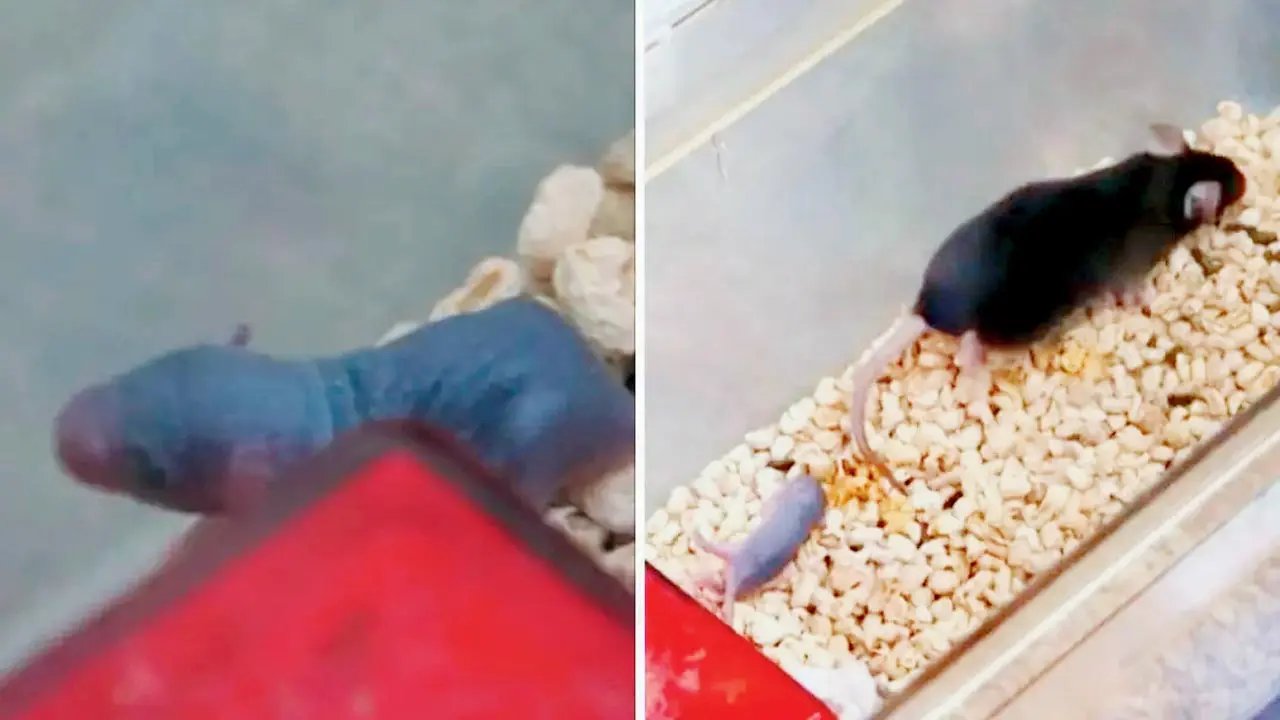
The ‘space mouse’ and the pups. Pics Courtesy/CCTV
Following a 14-day mission aboard China’s space station, a female mouse has successfully delivered a litter of nine healthy pups back on Earth. The birth marks a major victory for space biology.
As part of the Shenzhou-21 mission, the four mice were sent to Tiangong Space Station on October 31. Soon after returning on November 14, one conceived and gave birth to nine pups on December 10.
How do you like the new new mid-day.com experience? Share your feedback and help us improve.
Trending Stories
Latest Photos
Latest Videos
Latest Web Stories
ADVERTISEMENT
Mid-Day Fast
ADVERTISEMENT

ADVERTISEMENT