Home / News / World News / Article /
German scientists make electricity with water, pressure in silicon nanostructures
Updated On: 24 October, 2025 08:42 AM IST | Berlin | Agencies
Scientists in Germany have developed a triboelectric nanogenerator that converts mechanical pressure into electricity using water in silicon’s nanoscale pores. This breakthrough could enable efficient power generation in high-pressure environments





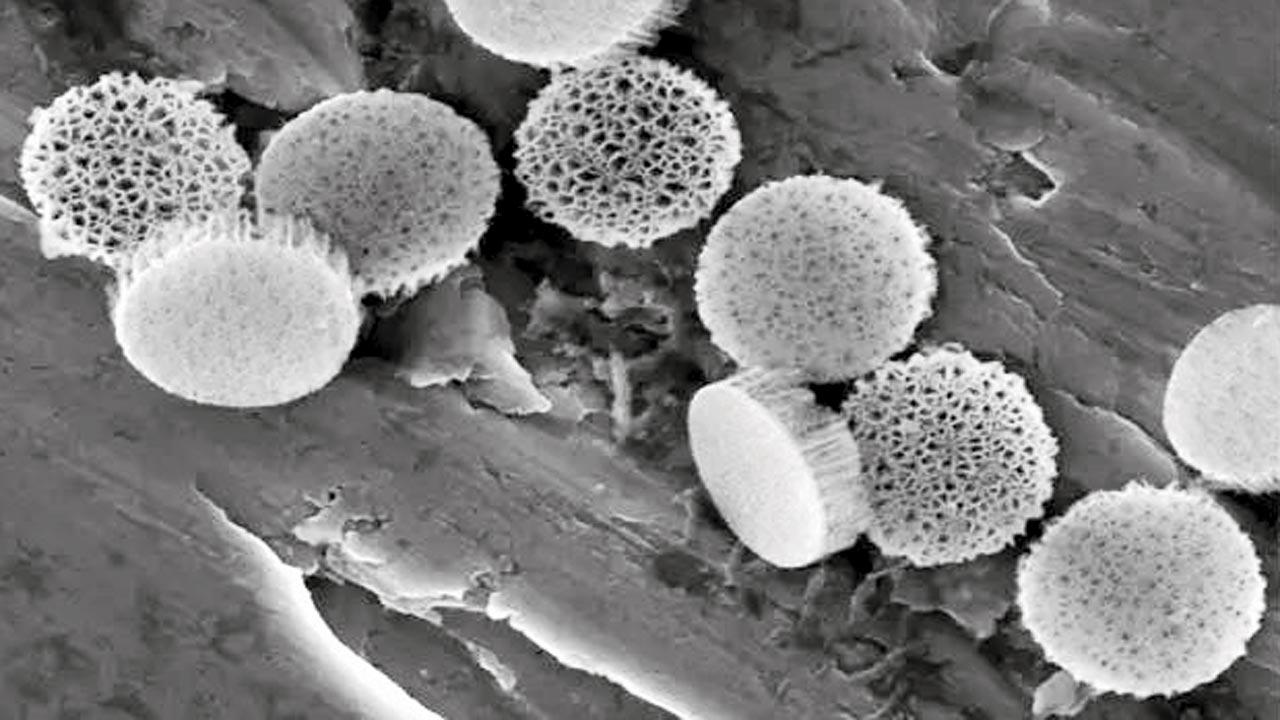
Porous silicon microparticles. Pic Courtesy/Haifa Shen lab
Researchers in Germany have developed a novel way to generate electricity using water and pressure by harnessing the power of friction within the tiniest pores of silicon. Scientists have discovered that mechanical energy can be converted into electrical power through triboelectric generation.
The new process relies on water confined in nanometer-sized silicon pores, which act as the active medium for energy production. It could be applied in environments with high mechanical pressure.
Trending Stories
Latest Photos
Latest Videos
Latest Web Stories
ADVERTISEMENT

Ganeshotsav 2026

ADVERTISEMENT