











The 30,000-pound GBU-57 A/B Massive Ordnance Penetrator bomb is comprised of steel, explosive and a fuse programmed to a specific detonation time. Over the years, the military tested and retested it hundreds of times on mock facilities
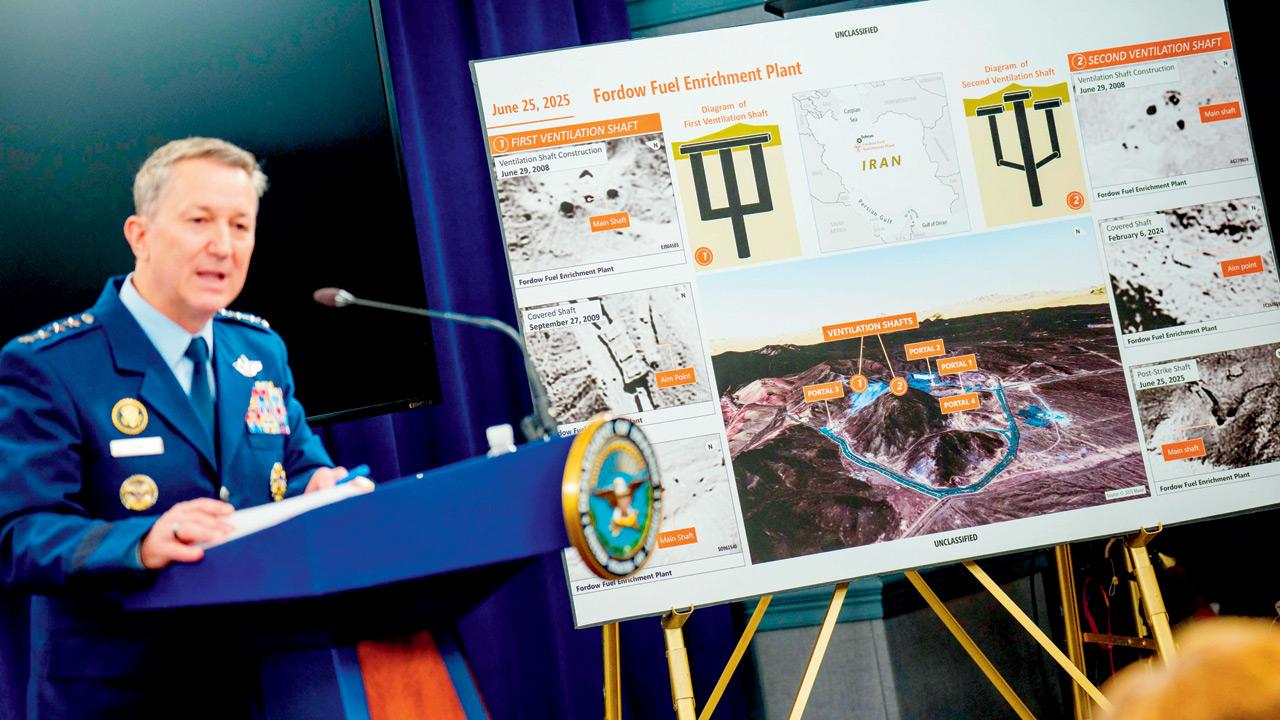
Chairman of the Joint Chiefs of Staff Air Force Gen Dan Caine displays how Iranian nuclear facilities were struck by the US. Pic/AFP
The deep penetrating bombs that the US dropped into two Iranian nuclear facilities were designed specifically for those sites and were the result of more than 15 years of intelligence, the Pentagon said on Thursday. Gen Dan Caine, chairman of the Joint Chiefs of Staff Caine, the nation’s top military officer, offered new details about the work that went into building the “bunker-buster” bombs.
GBU bombs
The 30,000-pound GBU-57 A/B Massive Ordnance Penetrator bomb is comprised of steel, explosive and a fuse programmed to a specific detonation time. Over the years, the military tested and retested it hundreds of times on mock facilities.
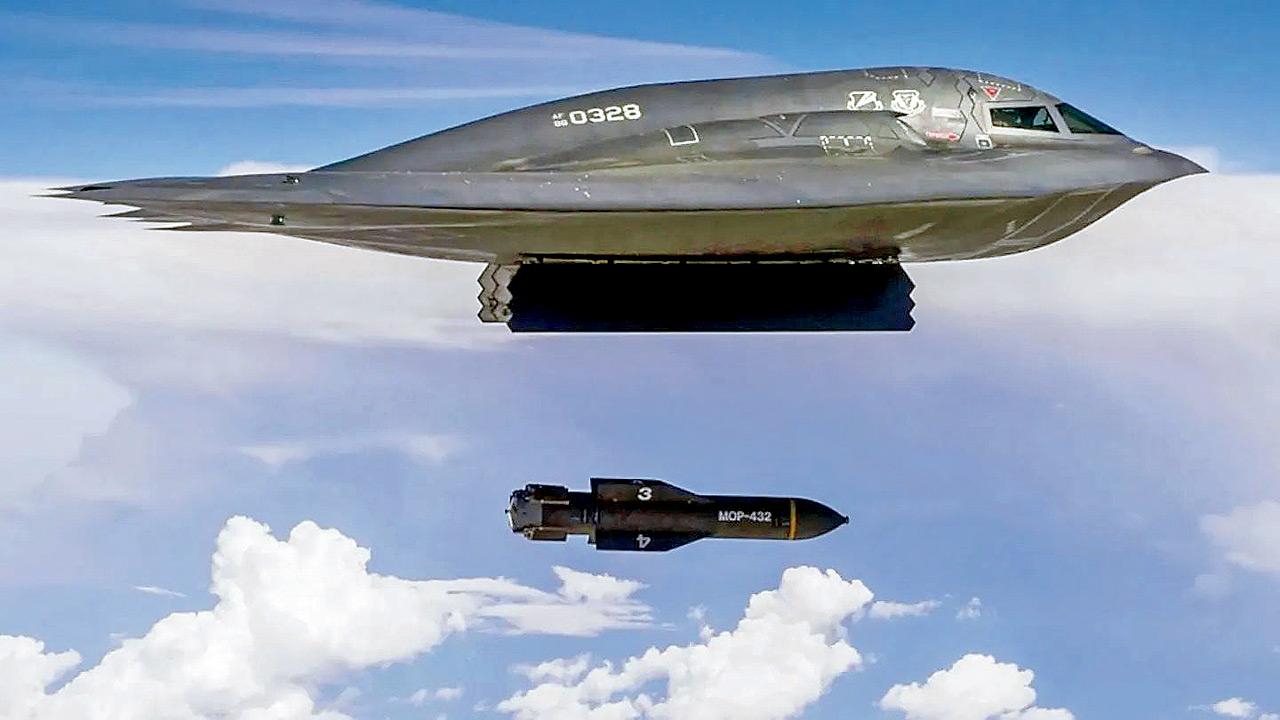
The B2-Spirit bomber that was used to drop the GBU bombs
Crews fine-tuned the bombs to detonate in the mock enrichment rooms, delaying detonation until they had reached a position to send a pressure blast through open tunnels to destroy equipment underground.
How the US bombed Fordo
Fordo had two main ventilation routes into its underground facility, each with three shafts: one main shaft and two smaller side shafts, resembling a pitchfork in Pentagon graphics. US officials saw these as key targets. In the days before the strike, Iran placed large concrete slabs over both ventilation routes for protection. In response, the US developed a plan to drop six bunker-buster bombs on each route, using the main shaft as a direct path into the facility.
Seven B-2 stealth bombers carried two bombs each. The first bomb broke through the concrete slab, followed by four bombs dropped into the main shaft at over 1000 feet per second before detonating. A sixth bomb served as a backup. In total, 12 bombs hit Fordo, and two more targeted the Natanz site. Crews confirmed successful detonations, describing the explosions as the brightest they had seen — like daylight.
This story has been sourced from a third party syndicated feed, agencies. Mid-day accepts no responsibility or liability for its dependability, trustworthiness, reliability and data of the text. Mid-day management/mid-day.com reserves the sole right to alter, delete or remove (without notice) the content in its absolute discretion for any reason whatsoever
 Subscribe today by clicking the link and stay updated with the latest news!" Click here!


