Home / News / World News / Article /
Israel and Hamas agree to Gaza ceasefire and hostage release under Trump plan
Updated On: 10 October, 2025 11:07 AM IST | Washington | Agencies
Israel and Hamas have agreed to a ceasefire in Gaza, including the release of hostages and prisoners. Mediated by the Trump administration, the deal also involves Israeli troop withdrawal and aid entry, marking a crucial step toward ending the war that has devastated Gaza





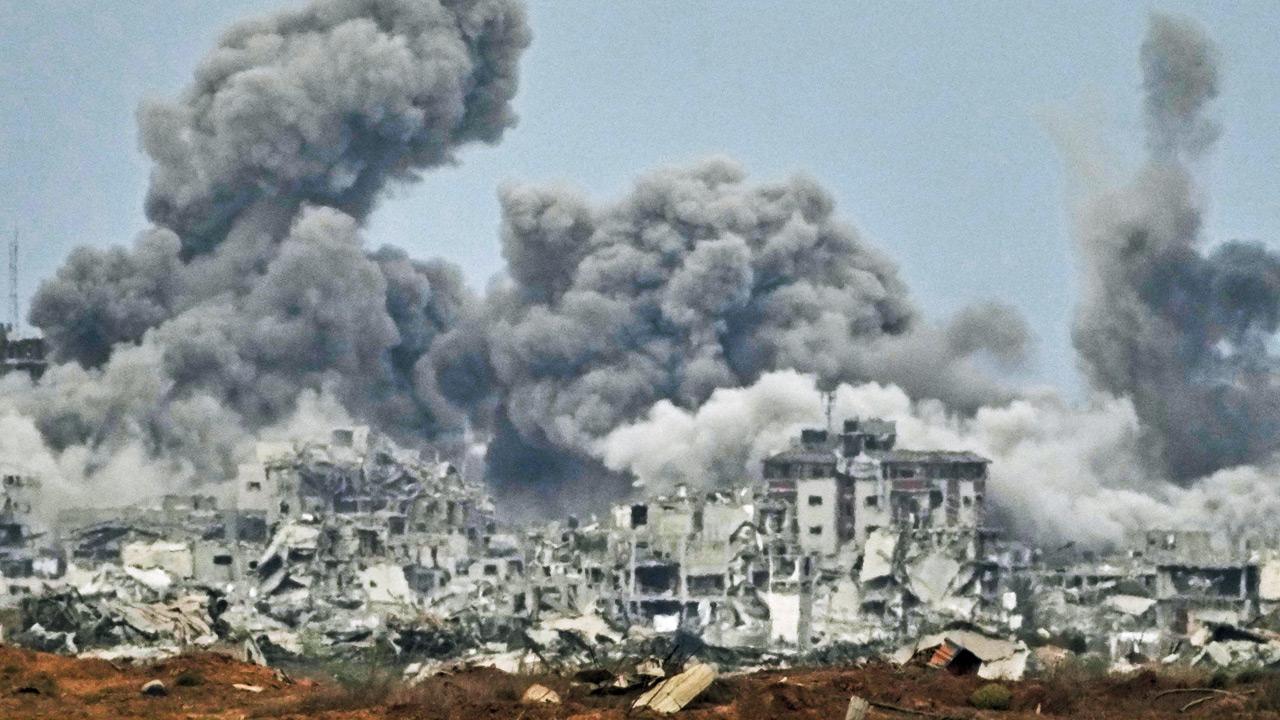
Smoke rises to the sky following an Israeli strike in the Gaza Strip on Thursday, following the announcement to pause the fighting. PIC/AP/PTI
Israel and Hamas have agreed to pause fighting in Gaza and release at least some hostages and prisoners in an agreement that was put forward by the Trump administration. “This means that all of the hostages will be released very soon, and Israel will withdraw their troops to an agreed upon line as the first steps toward a strong, durable, and everlasting peace,” US President Donald Trump said.
Israeli Prime Minister Benjamin Netanyahu said, “With God’s help we will bring them all home.” Hamas said it had agreed to a deal that will lead to the end of the war in Gaza, withdrawal of Israeli troops, entry of aid into Gaza and exchange of prisoners for hostages. Hamas called on Trump and mediators to ensure that Israel implements all the provisions of the deal “without disavowal or delay in implementation of what was agreed on.”
Trending Stories
Latest Photos
Latest Videos
Latest Web Stories
ADVERTISEMENT

Ganeshotsav 2026

ADVERTISEMENT