











A resident of Mazar-i-Sharif told CNN that her family "woke up terrified" when the quake struck, with her children running "down the stairs screaming"
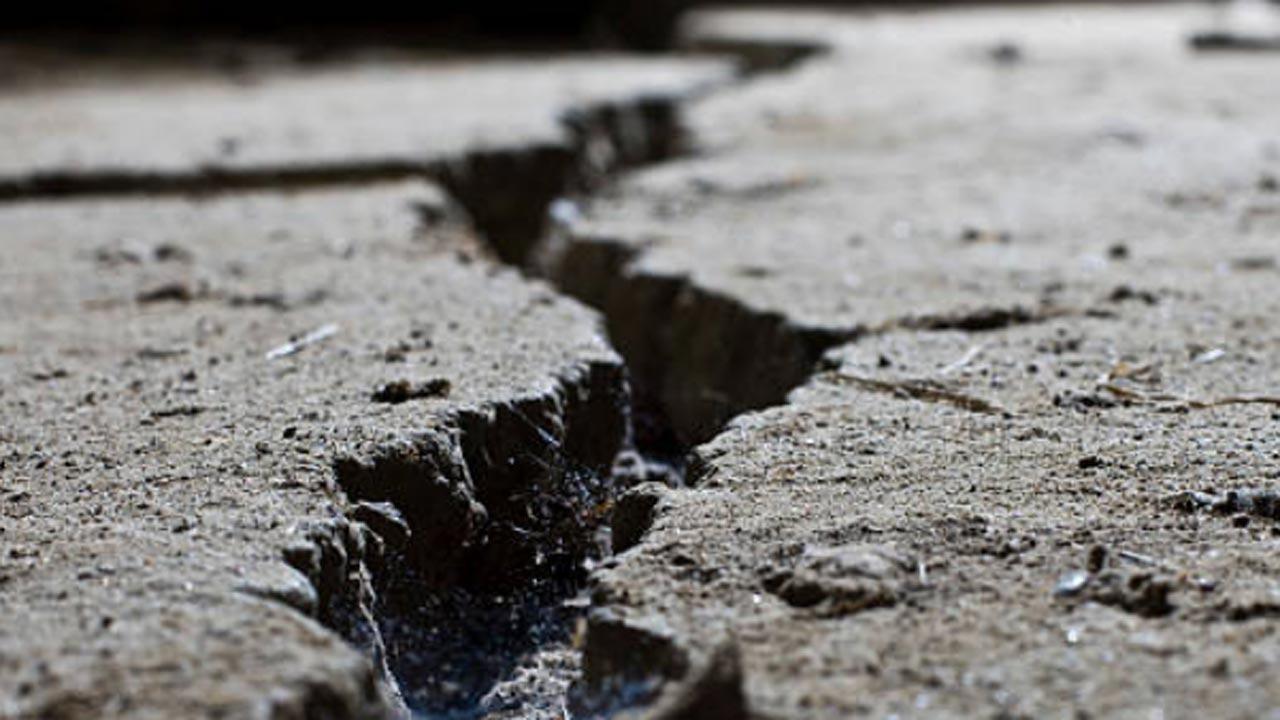
Representation pic/iStock
Afghanistan was struck by a second earthquake measuring 6.3 magnitude on Monday, the National Centre for Seismology (NCS) said.
The earthquake occurred at a depth of 23 kilometres.
EQ of M: 6.3, On: 03/11/2025 01:59:02 IST, Lat: 36.51 N, Long: 67.50 E, Depth: 23 Km, Location: Afghanistan.
— National Center for Seismology (@NCS_Earthquake) November 2, 2025
For more information Download the BhooKamp App https://t.co/5gCOtjdtw0 @DrJitendraSingh @OfficeOfDrJS @Ravi_MoES @Dr_Mishra1966 @ndmaindia pic.twitter.com/3aODD7jOky
In a post on X, the NCS said, "EQ of M: 6.3, On: 03/11/2025 01:59:02 IST, Lat: 36.51 N, Long: 67.50 E, Depth: 23 Km, Location: Afghanistan."
Preliminary reports suggest that the earthquake struck near the city of Mazar-i-Sharif and the town of Khulm in the early hours of Monday morning local time. The capital of northern Balkh province, Mazar-i-Sharif is one of the most populated cities in northern Afghanistan, CNN reported.
United States Geological Survey (USGS) models estimate the shaking could result in hundreds of fatalities, according to CNN.
"Several provinces of the country were once again shaken by a strong earthquake at around 1 a.m. (3:30 p.m. ET Sunday)," the Afghanistan National Disaster Management Authority said in a statement shared with CNN.
According to a report by CNN, the earthquake was also felt in parts of Tajikistan, Uzbekistan, and Turkmenistan -- three countries bordering northern Afghanistan.
A resident of Mazar-i-Sharif told CNN that her family "woke up terrified" when the quake struck, with her children running "down the stairs screaming."
Rahima, a former schoolteacher, told the network she had "never experienced such a strong earthquake" before, adding that several windows were shattered and the plaster on her walls was damaged.
According to CNN, an orange alert was issued by the USGS PAGER system, which predicts economic and human loss after earthquakes.
"Significant casualties are likely and the disaster is potentially widespread. Past events with this alert level have required a regional or national level response," it said.
Earlier in the day, an earthquake of magnitude 3.9 struck Afghanistan at a shallow depth of 10 kilometres, making it susceptible to aftershocks.
EQ of M: 3.9, On: 02/11/2025 20:40:52 IST, Lat: 36.50 N, Long: 71.08 E, Depth: 10 Km, Location: Afghanistan.
— National Center for Seismology (@NCS_Earthquake) November 2, 2025
For more information Download the BhooKamp App https://t.co/5gCOtjdtw0 @DrJitendraSingh @OfficeOfDrJS @Ravi_MoES @Dr_Mishra1966 @ndmaindia pic.twitter.com/JjNWiU5Hn2
In a post on X, the NCS said, "EQ of M: 3.9, On: 02/11/2025 20:40:52 IST, Lat: 36.50 N, Long: 71.08 E, Depth: 10 Km, Location: Afghanistan."
Shallow earthquakes are generally more dangerous than deep earthquakes. This is because the seismic waves from shallow earthquakes have a shorter distance to travel to the surface, resulting in stronger ground shaking and potentially more damage to structures, as well as greater casualties.
This story has been sourced from a third party syndicated feed, agencies. Mid-day accepts no responsibility or liability for its dependability, trustworthiness, reliability and data of the text. Mid-day management/mid-day.com reserves the sole right to alter, delete or remove (without notice) the content in its absolute discretion for any reason whatsoever
 Subscribe today by clicking the link and stay updated with the latest news!" Click here!


