Home / News / World News / Article /
New pterosaur species discovered inside fossilised ‘puke’ of ancient predator
Updated On: 13 November, 2025 08:39 AM IST | New York | Agencies
Surprisingly, the trace fossil preserved the remains of an entirely new pterosaur species that was consumed and then regurgitated indigestibly; the presence of the pterosaur remains within this regurgitalite provides rare direct evidence of a predator-prey interaction in the Cretaceous ecosystem





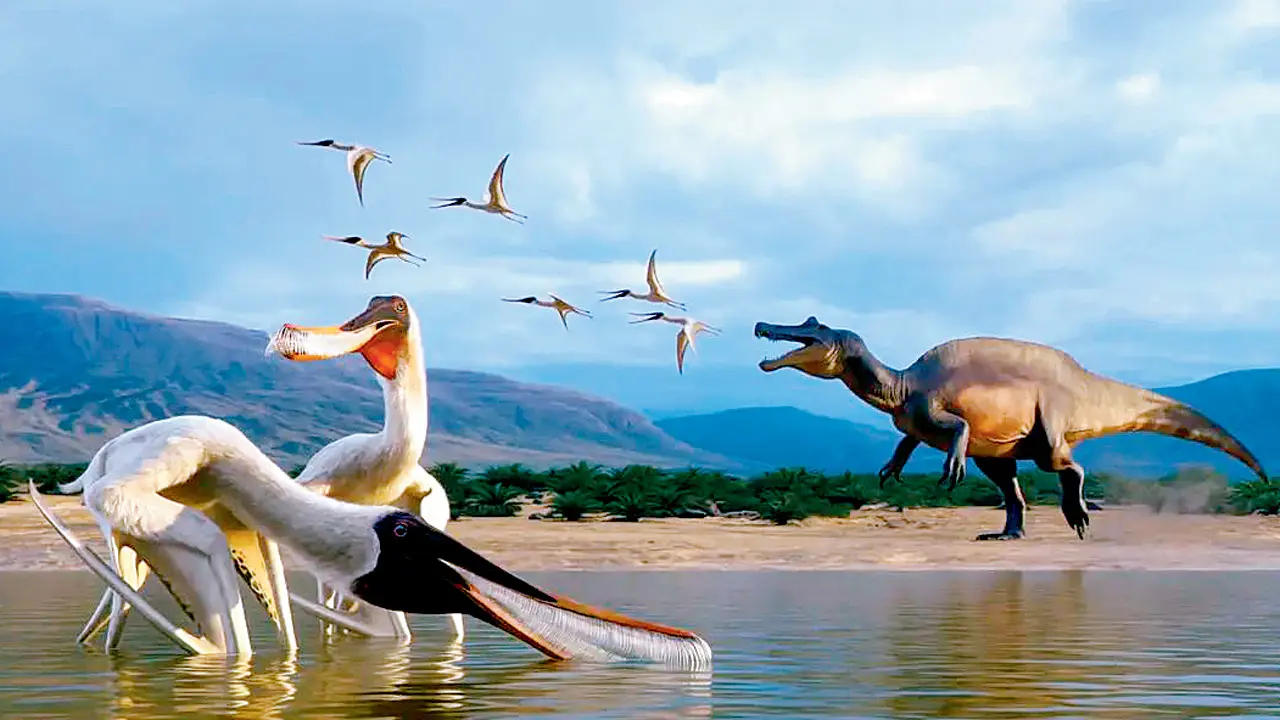
An artistic reconstruction of the pterosaur with a spinosaurid in the background that likely produced the regurgitalite. PIC COURTESY/Julio Lacerda
Paleontologists have identified a new species of flying reptile, named Bakiribu waridza. The most compelling detail of the discovery is the origin of the fossil: it was found in a regurgitalite, or fossilized puke, left by an unknown predator. Surprisingly, the trace fossil preserved the remains of an entirely new pterosaur species that was consumed and then regurgitated indigestibly.

The fossilised specimen. PIC COURTESY/Scientific Reports


Trending Stories
Latest Photos
Latest Videos
Latest Web Stories
ADVERTISEMENT
Mid-Day Fast
ADVERTISEMENT