
The project aims to enable drones to operate in smoke, dust, and darkness where traditional cameras and light sensors fail, for search, rescue, and hazardous environment missions
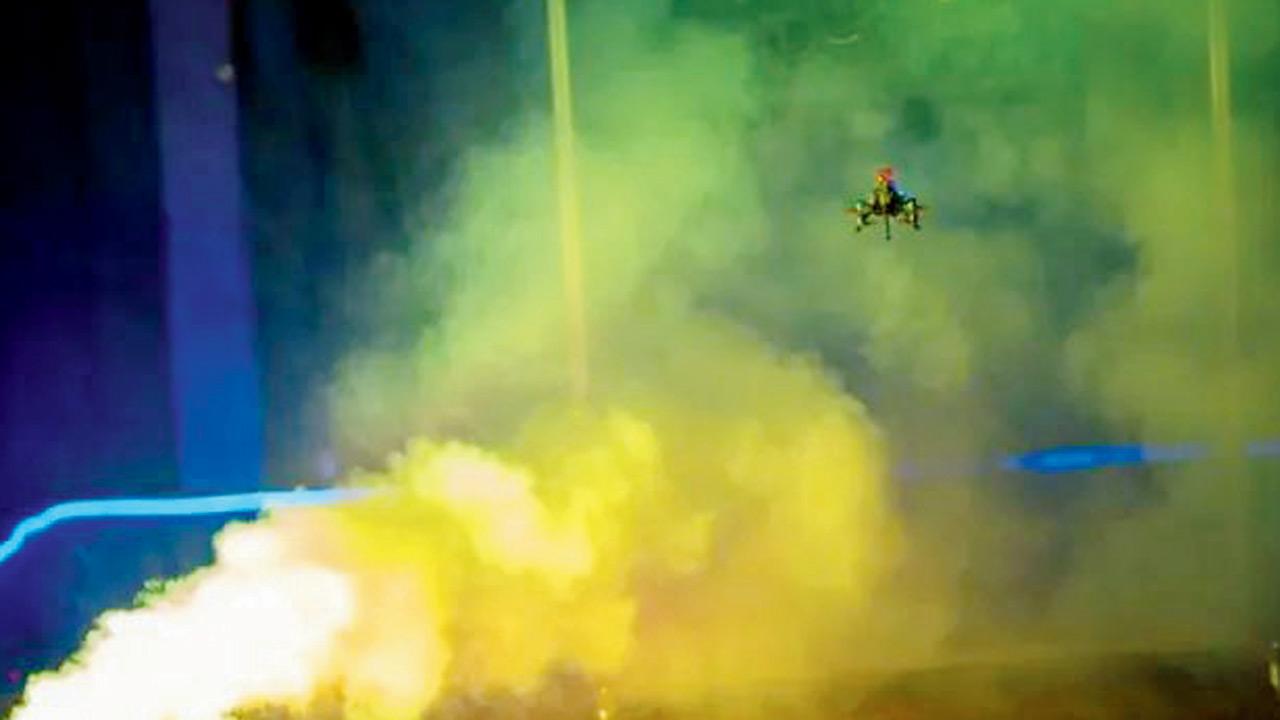
The drones can fly through smoke and dust. Pic/Special Arrangement
Inspired by the way birds and bats navigate complex environments, researchers are developing sound-based navigation for small aerial robots. The project aims to enable drones to operate in smoke, dust, and darkness where traditional cameras and light sensors fail, for search, rescue, and hazardous environment missions. So far, research has focused on vision-based autonomy for aerial robots, emulating how humans rely on sight.
However, in challenging conditions such as fog, smoke, or total darkness, light-based sensors lose effectiveness. To overcome these limitations, the team is exploring bio-inspired echolocation, drawing from how bats use ultrasonic sound waves to sense their surroundings. The goal of the project is to develop tiny airborne robots that can navigate independently using sound rather than visual cues.
This story has been sourced from a third party syndicated feed, agencies. Mid-day accepts no responsibility or liability for its dependability, trustworthiness, reliability and data of the text. Mid-day management/mid-day.com reserves the sole right to alter, delete or remove (without notice) the content in its absolute discretion for any reason whatsoever
 Subscribe today by clicking the link and stay updated with the latest news!" Click here!