
With forecasts indicating a high probability of further showers on the final day, the lack of a definitive result could prove frustrating for both teams and fans alike. In this context, the potential application of DLS style method tailored for Test cricket, specifically for fourth-innings chases, is worth serious considering
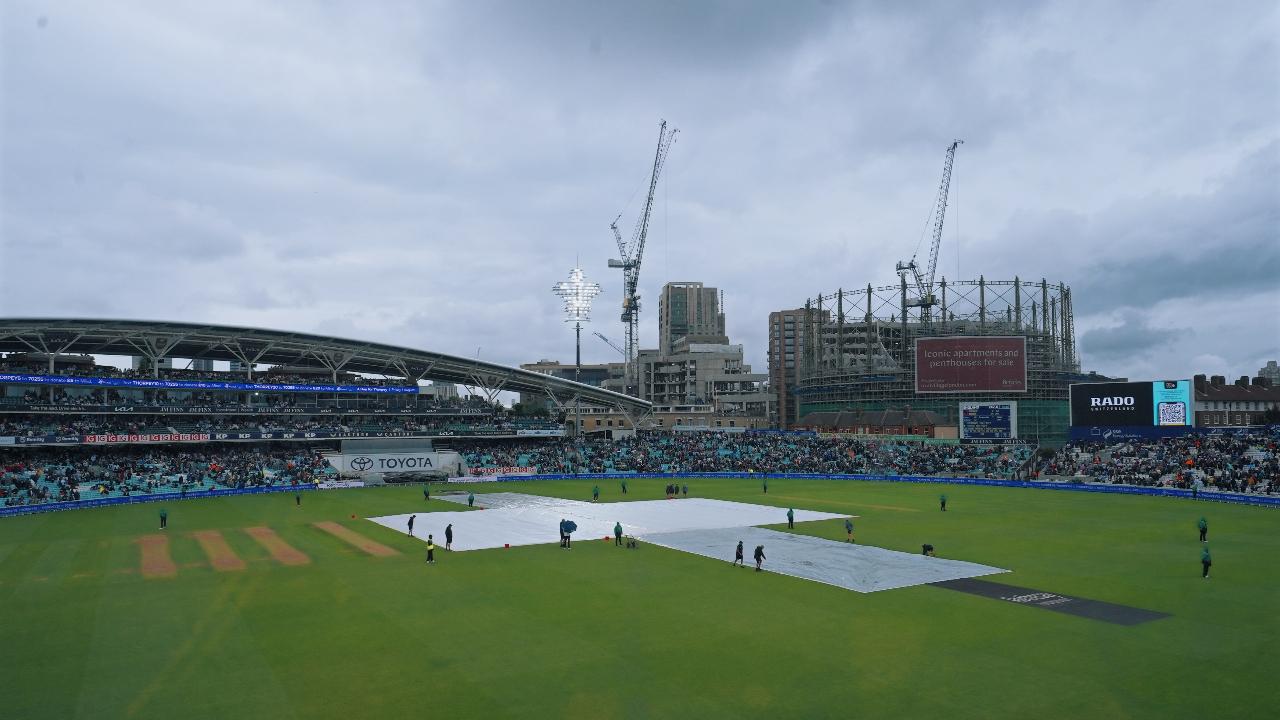
Covers rolled out at The Oval (Photo: BCCI)
As the ongoing fifth Test between India and England reaches its climax, the looming threat of rain has once again cast doubt on a clear result. England require just 35 runs to seal a 3-1 series win, while India are only four wickets away from pulling level. However, bad light followed by rain on Day 4 brought proceedings to an abrupt halt, leaving the final day weather dependent.
With forecasts indicating a high probability of further showers on the final day, the lack of a definitive result could prove frustrating for both teams and fans alike. In this context, the potential application of a Duckworth-Lewis-Stern (DLS) style method tailored for Test cricket, specifically for fourth-innings chases, is worth serious consideration.
While the DLS method has long been a staple of limited-overs cricket, offering fair outcomes in weather-affected matches, Test cricket remains vulnerable to anticlimactic draws, particularly when the match is poised for a dramatic finish. A modified DLS model that takes into account remaining overs and wickets could offer an alternative resolution for matches impacted by time lost to weather, without disrupting the traditional fabric of the game.
How could it work in Tests?
We will assess two primary resources: One, overs remaining until scheduled close of play and two, wickets in hand. Rather than calculating targets over a fixed number of overs like in ODIs or T20s, this system would base calculations on available playtime, typically 90 overs on a full final day, and remaining dismissals.
The Oval Test case study
England, in pursuit of 374, had reached 339/6 in 76.2 overs when rain stopped play. With only 35 runs needed and three wickets left (including the uncertain participation of injured Chris Woakes), they are within touching distance. Based on historical fourth-innings trends, a par score for their situation would fall in the range of 285–295. With 339 already on the board, they sit 44–54 runs above that benchmark.
Further calculations suggest that, given 90 overs available on Day 5 and only 35 runs needed, England’s required run rate sits at a mere 0.39 per over, significantly lower than the average fourth-innings rate of 2.8. Their resource availability is calculated at 1.54 times the requirement, giving them an 87 percent probability of success based on historical patterns.
Had such a system been in place, and if rain were to wipe out the final day entirely, England could be declared winners based on their advantageous position. This not only rewards the team dominating the situation but also prevents a potentially unsatisfying draw in a series that has delivered edge-of-the-seat cricket from start to finish.
 Subscribe today by clicking the link and stay updated with the latest news!" Click here!