

That’s what professionals in almost every realm are getting used to hearing now. We may say expertise matters, but in the world of social media, it’s follower counts that make or break you

Bhumika Gurung believes that Instagram cannot show one’s acting talent
It’s an Instagram world, and we just live in it. First, it was used to share memories and achievements — now employers look at your follower count before hiring you. If this seems like an episode of Black Mirror, well, actor Paarth Idnani will say it may just be. Idnani recently went viral for saying he’d been rejected for a role because he “didn’t have enough followers”. He said that now he must focus on building an Instagram account, asking people to be kind enough to follow him so he can pursue his dreams of acting.
What happened with Idnani, we found out, is happening with many others. Bhumika Gurung was just 15 when she began acting. The industry quickly proved too demanding, pushing her towards a corporate career. But the pull of performance kept bringing her back. After years of auditioning, she landed roles on shows like Gumrah on Channel V, before her breakout in Nimki Mukhiya.

Prachi Singh believes that followers can help enter a gatekept industry. PIC/INSTAGRAM@prachi_singh1512
Gurung was shocked when she was rejected from an audition purely because of her follower count. “Asking actors for their social media handles before auditioning them is extremely unfair,” she says. “We are actors, not content creators or dancers. People hiring us cannot judge us by how we dance on Reels.”
“A lot of people are selected because they’re famous on social media,” she adds. “They seldom have acting skills. Directors claim they’ll ‘manage the acting part’. It’s heartbreaking to see trained actors struggle while influencers get roles instantly.”
She remembers when TV was a space for discovering new talent. “Now the people being cast seem flat. There’s no novelty, no freshness.” Today, at 32, Gurung has over seven lakh followers. When she faced that rejection, she had barely a lakh. Even then, it was not enough. She’s shifting to films now, where, she says, “they don’t care as much because I have a substantial body of work. But during the pandemic, I didn’t have past roles to add to my show reel.”

Nipun Jain and Mohit Mamoria believe they would have never gotten a book deal without their YouTube audience. PIC/ISHAD ALAM
Actress Prachi Singh, who started with small ads before landing Kyunki Saans Bhi Kabhi Bahu Thi, currently sits at 1.6 lakh followers. “In TV specifically, follower counts are not that important,” she says, “But in general, asking follower counts has started to become more common. For Instagram mini-series especially, recognisability becomes important.”
Singh gained her following early 2024. She has definitely noticed a difference in the kind of roles she gets. But for Singh, this is a good thing. “The industry has always had its doors closed. At least having followers gives me an in, in some way,” she says.
But what are casting agents thinking? Doesn’t talent matter at all? Now working as an independent casting assistant, and having worked under several reputed casting directors, Rachit Agarwal has had a work experience where social media presence did not matter at all. He says, “We usually do not even ask for the social media handles of the people auditioning.”

Rachit Agarwal, Casting agent and Paarth Idnani, aspiring actor
But sometimes, it’s simply out of the hands of the casting agent. “If the client is a brand that wants to feature someone with a good follower count, then they do mention the need for a model or an actor with a specific social media presence in their brief. In that case, we have to comply with the client,” he laments.
‘I was rejected because I had 800 followers’
As an actress and a model who has been working since the last six years, Rachel Pinto had 800 followers on Instagram when she started out as a freelancer. She auditioned for a role and got shortlisted for it, but was later informed by the casting crew that they could not proceed ahead with her due to a lower number of social media followers. She says, “When this happened, they offered me a secondary role, which felt demeaning and humiliating. I had worked for them before and I had not expected something like this from them.”

For model Rachel Pinto, Instagram became her portfolio. PIC/NIMESH DAVE
Following this incident, building a social media persona became much more important for Pinto. “I started out content creation for fun — something I liked doing whenever I had time,” she adds. “However, after the rejection, it became important to stay consistent with it. I started gaining followers, and then I could never turn my account private. I had to keep posting even when I didn’t want to. This also began to take a toll on my mental health.”
Pinto claims that a lot of people without experience were preferred, given that they had a higher social media traction. To her surprise, even social media profiles began to be treated as work portfolios. She expresses, “I now focus on what I like to do. I know I’ll get opportunities if people like my work, and believing that has helped me a lot.”
‘Shift to video changed everything’
BACK in the day, podcasts were where you turned to hear subject-matter experts. Niche shows could attract lakhs of deeply invested listeners. “Podcasts really took off in India during the pandemic, and what we’re seeing now is a natural shift from audio to video because that’s where audiences are. Being comfortable on camera has become almost as important as subject-matter expertise,” says Kavita Rajwade, co-founder of IVM Podcasts.
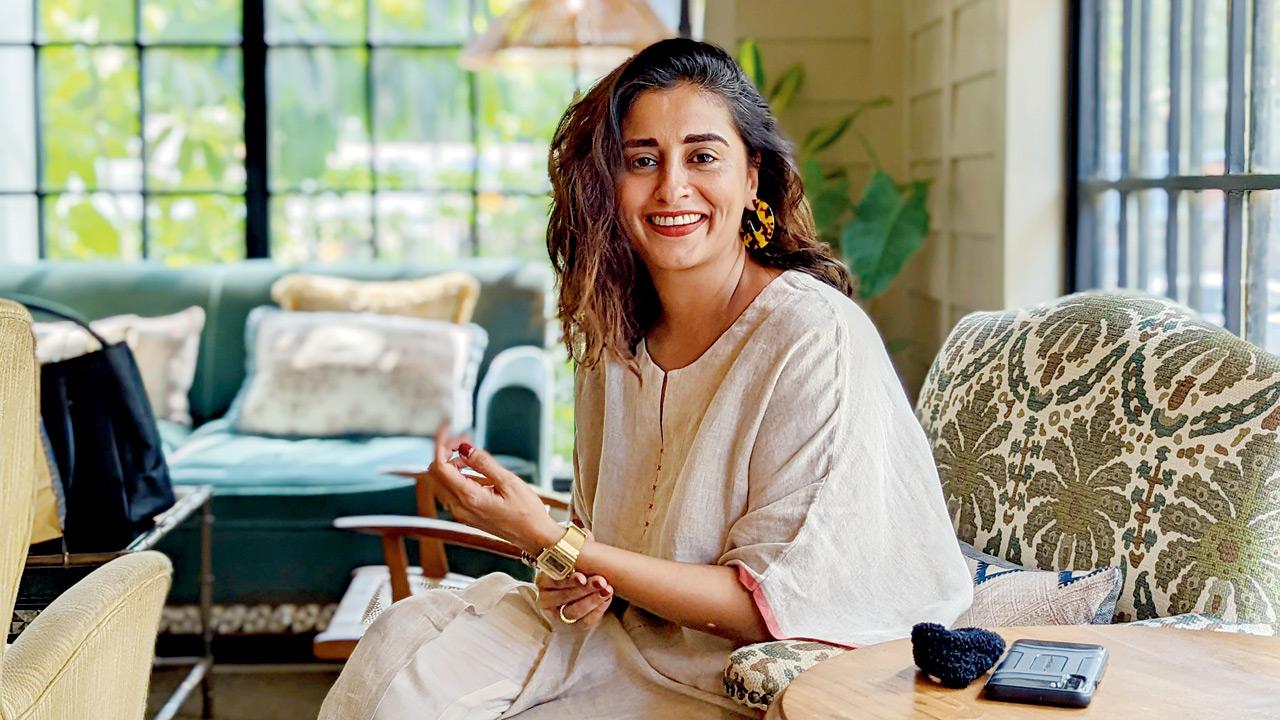
Kavita Rajwade, co-founder of IVM Podcasts
“The margin for trial and error is far smaller today. At IVM, we were built on expert-led conversations, but in branded content specifically, we increasingly see audiences gravitating toward familiar faces. A strong follower base has become a real indicator of discoverability, so yes, we factor that in.”
Rajwade points to a moment on Unfiltered with Samdish, where creator Samdish Bhatia interviewed veteran journalist Rajdeep Sardesai. “Rajdeep joked that despite decades of reporting and formal training, his videos might get 5000 views while Samdish pulls in five lakh. It highlights an interesting shift: experience matters, but storytelling and audience connection matter too.”
According to Rajwade, this isn’t an “either/or scenario”. “Shows driven by reach and personality often make it possible for us to fund more niche, expert-led projects. Both formats coexist, and both are essential to the ecosystem. This is just the reality of how audiences engage today.”
‘You never know if a YouTube audience will translate to readers’
In March 2023, Nipun Jain and Mohit Mamoria launched Arey Pata Hai, a YouTube quizzing channel built on bite-sized, entertaining trivia. In the seventh month of this project, everything changed. “On October 1, 2023, we had 747 subscribers; by October 31 we had one lakh,” says Jain. Buoyed by this rise, Jain wrote in her manifestation journal that they should publish a book, a goal that materialised in November 2025 with ‘What the What?!’, a book that aims at educating its readers in a fun way.
Today, the channel has over nine lakh subscribers. “We would have never gotten this opportunity if it wasn’t for YouTube,” says Mamoria. “We don’t have fancy degrees, but we still wanted to write something informative and educational.” Jain adds, “People kept saying educational content can’t be fun. We broke that mold with our channel, and wanted to do the same with the book.”
For publishers, their follower count became a form of validation. “It was proof of work. We could show we had a dedicated audience. It gave us room to experiment,” says Mamoria. They did attempt pitching the book without mentioning numbers. “We were told to just keep mailing publishers,” he says. “But the follower count helps you stand out. I’m not saying you can’t publish without it. Just be prepared for it to be much harder.”
Jain is cautious about the rise of books by creators. “It would be stupid for any publishing house to fill 100 per cent of its list with creator titles. They’d lose credibility. Non-creator authors will always have a larger space. Yes, the pie has shifted a little, but the bigger slice still belongs to traditional writers.”
The duo used their audience as a real-time litmus test during the writing process. “We could gauge exactly what kind of book they want,” says Jain. Mamoria adds, “We wrote over 300 pages, but the final draft had 280. We gave those extra pages to our audience for free. You never know if a YouTube audience will convert to readers. That first free taste helped nudge them towards the book.”
‘If you only look at follower counts, then how will we find new talent?’
Even in the music scene, Tapas Relia tells us that asking for follower counts has become more and more prevalent. You might recognise Relia as the composer from the hit song “Dum-A-Dum” from the film Dhanak, which has been making the rounds on Instagram lately. He says, “The problem is that artiste management companies have started asking this question. Management is supposed to recognise talent and then groom artistes, promote their work, get them gigs. But if they only start looking for follower counts, then how will we ever find fresh talent?”
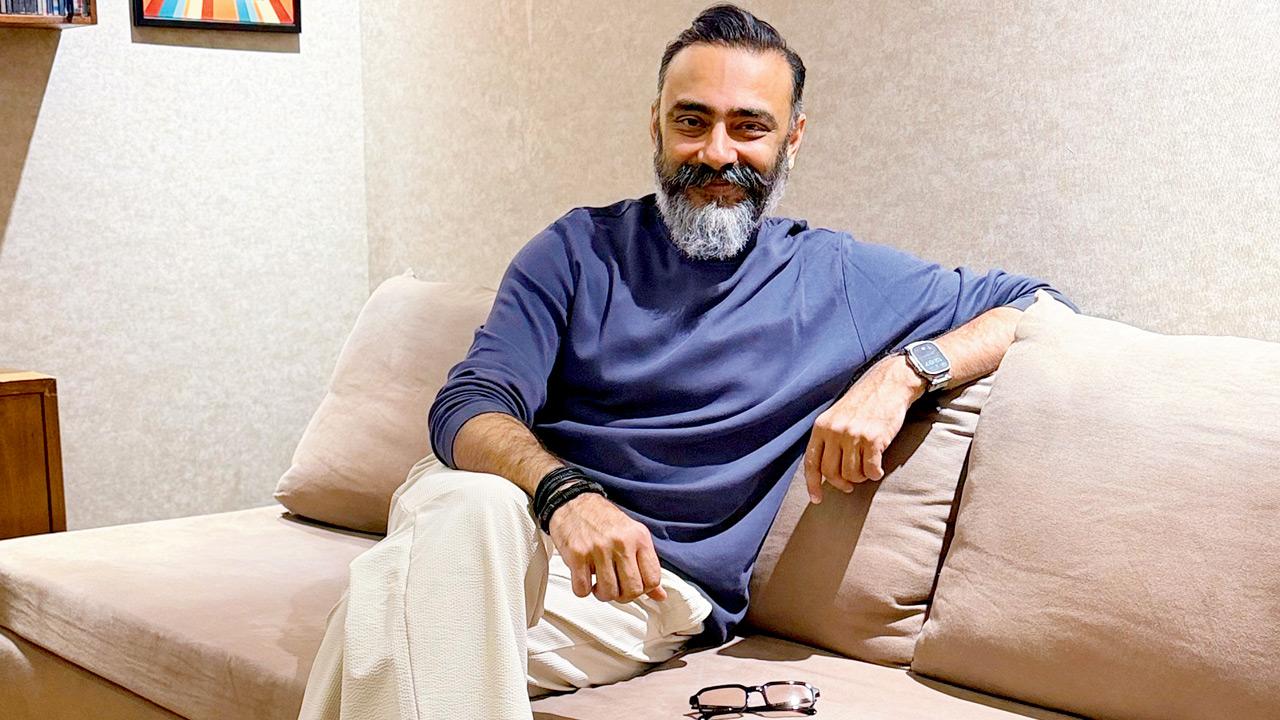
Tapas Relia, music composer
He finds followers to be a fool’s metric to measure talent. “The irony is that in spite of everyone knowing that every aspect of social media can be bought, it is still seen as the only authentic tool to measure success,” he says. Moreover, it’s starting to hurt how much money artistes can charge. “When you quote a price to a client for a gig, they might just say, ‘But you only have 3000 followers. Why should I pay you so much?’ But quality should matter more than quantity.”
Musician and entrepreneur Raghav Meattle, however, can see both sides of the coin. “When I am looking for artistes for my company first.wav, I want to see the ability of a musician to form a community. How many people can they get engaged in their artistry? The easiest way to check that is their Instagram following,” he says.

Raghav Meattle, singer
He also argues that music is quite different from the film industry. The barrier to entry is relatively low. If a musician wants to make music, they can do so from the comfort of their home. But an actor cannot make a movie sitting at home. “For musicians, social media is the place where they share their music, their journey, their story. It’s the place where their fans congregate. So it does show how much people connect with you.”
 Subscribe today by clicking the link and stay updated with the latest news!" Click here!